Analyzing a Hybrid Primary Hip Arthroplasty Patient Case
Key Takeaway
Learn more about Analyzing a Hybrid Primary Hip Arthroplasty Patient Case and how to manage it. A case title hybrid primary hip arthroplasty combines both cemented and uncemented prosthetic components. For this 76-year-old female with bilateral hip osteoarthritis, it involved a press-fit uncemented acetabular component and a cemented femoral stem (Exeter). This method was chosen to optimize bone fit for the patient's bone quality and minimize the risk of periprosthetic fractures.
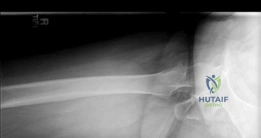
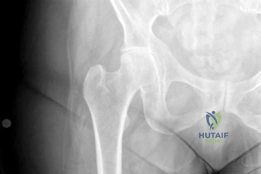
A 78-year-old male presents following a fall. He has the following AP pelvis radiograph. Describe the findings and explain the specific features that influence your decision-making regarding surgical management.
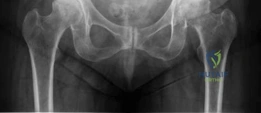
Candidate: The radiograph shows a displaced left femoral neck fracture. It is intracapsular. The head is displaced superiorly and posteriorly, which is a Garden Type IV fracture. Given the vertical orientation, it is a Pauwels III fracture, suggesting high shear forces. My management would be an arthroplasty because internal fixation is likely to fail in this age group.
Failing to mention the patient's functional status alongside the fracture classification. Candidates often focus purely on the "Garden IV" label without referencing the Pauwels angle's mechanical implications or the risk to the medial femoral circumflex artery (blood supply) which dictates the need for replacement over fixation.
Systematically address: 1. Descriptive findings: Displaced intracapsular femoral neck fracture with clear loss of trabecular alignment. 2. Classification: Garden IV (complete displacement, disconnected head) and Pauwels III (>70°, high shear). 3. Biological risk: Disruption of the medial femoral circumflex artery leading to high AVN/nonunion rates. 4. Mechanical rationale: The vertical shear force of a Pauwels III pattern makes internal fixation biomechanically unsound. 5. Clinical correlation: Given his independent baseline (0 on CFS), Total Hip Arthroplasty (THA) is the gold standard over hemiarthroplasty to optimize functional outcome.
You have decided on a Total Hip Arthroplasty. You are planning a "Hybrid" construct. Define this, explain your reasoning for using this specific implant combination, and discuss the implications for the proximal femoral bone quality as seen in this template.
Candidate: A hybrid THA uses an uncemented press-fit acetabular cup and a cemented femoral stem. The cup provides biological fixation, while the cemented stem provides immediate, secure fixation in osteoporotic (Dorr B/C) bone, reducing the risk of periprosthetic fractures during implantation.
Ignoring the "cemented technique" itself. Candidates often omit the risks of Bone Cement Implantation Syndrome (BCIS) or fail to mention that the stem choice is specifically to mitigate the higher failure rates of uncemented stems in Dorr type B/C bone seen in trauma registries (e.g., WHiTE 3 trial).
Define the hybrid construct clearly. Rationale: 1. Acetabulum: Uncemented cups show excellent durability; press-fit allows for stable biologic ingrowth. 2. Femur: In elderly/osteoporotic bone, cemented stems offer immediate load-bearing and reduce the high risk of iatrogenic periprosthetic fracture associated with uncemented stems. 3. Technical safety: Emphasize the importance of 3rd generation cementing (pulsatile lavage, vacuum mixing, and cement pressurization) to optimize mantle integrity and mitigate BCIS.
During the procedure, you perform a posterior approach. Describe the critical steps to ensure long-term stability and minimize the risk of dislocation, given the patient's active lifestyle.
Candidate: I would perform a capsulotomy at the start of the procedure and ensure a meticulous soft-tissue repair at the end. I would also ensure the cup is placed in appropriate inclination and anteversion, usually 40-45 degrees inclination and 15-20 degrees anteversion.
Forgetting to mention the "repair of the short external rotators" or the specific biomechanical targets like restoring femoral offset. Simply stating "repaired the capsule" is insufficient; the examiner wants to hear about transosseous reattachment and restoration of abductor tension.
Structure the answer around: 1. Exposure: Careful preservation of the capsule. 2. Component Positioning: Correcting cup version and inclination to avoid impingement. 3. Biomechanical Optimization: Restoring femoral offset to tension the abductors. 4. Soft Tissue Reconstruction: Meticulous, transosseous repair of the short external rotators and posterior capsule back to the greater trochanter. 5. Intraoperative Assessment: Performing the "Shuck Test" and full impingement testing (flexion/internal rotation, extension/external rotation) to ensure stability before final closure.
