العربية
Part of the Master Guide

Orthopedic Ob Trauma Review | Dr Hutaif Trauma & Fractu -...

Orthopedic Ob Trauma B Review | Dr Hutaif Trauma & Frac -...
23 Apr 2026 42 min read 136 Views
Identify the Critical Injury Shown in Figure: Orthopedic Trauma MCQ

Key Takeaway

Looking for accurate information on ORTHOPEDIC MCQS ONLINE OB 20 TRAUMA 2B? A posterior knee dislocation, the injury shown in figure, poses a significant risk of popliteal artery injury (18-45%). If the limb remains ischemic after reduction, emergent vascular exploration and reconstruction are imperative. Delaying revascularization beyond 6-8 hours substantially increases amputation rates, potentially reaching 85%. Preoperative angiography should be avoided to prevent treatment delays.

Orthopedic Ob Trauma B Review | Dr Hutaif Trauma & Frac -...

Comprehensive 100-Question Exam


00:00

Start Quiz

Question 1

A 24-year-old male is brought to the trauma bay following a high-speed motorcycle collision. He has bilateral closed femoral shaft fractures and a severe closed head injury. His initial vitals are: HR 130, BP 85/50 mmHg. Arterial blood gas reveals pH 7.15, base excess -10, and lactate 6.0 mmol/L. Resuscitation is initiated. According to the principles of Damage Control Orthopedics (DCO), what is the most appropriate initial management of his bilateral femur fractures?


Explanation

This patient is in extremis and acidotic (pH 7.15, lactate 6.0, base excess -10) with hemodynamic instability. According to damage control orthopedics (DCO) principles, patients who are unstable, in extremis, or borderline with worsening parameters should undergo rapid, minimally invasive stabilization of major long bone fractures (such as external fixation) to minimize the 'second hit' of surgery. Early Total Care (ETC) with reamed intramedullary nailing is indicated in hemodynamically stable patients without severe physiological derangement.

Question 2

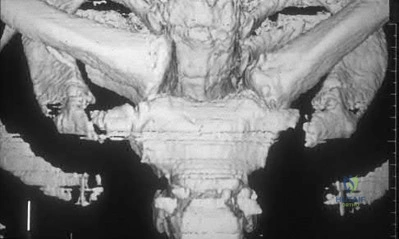
A 38-year-old female pedestrian is struck by a vehicle. She arrives hypotensive (BP 75/40 mmHg) with a mechanically unstable pelvis. An anterior-posterior compression (APC) type III injury is suspected. A pelvic binder is to be applied. What is the optimal anatomic landmark to center the pelvic binder to maximize reduction of the pelvic volume?


Explanation

For emergency stabilization of a mechanically unstable, open-book type pelvic ring injury (APC II/III), a pelvic binder or sheet should be centered over the greater trochanters. Placing the binder over the greater trochanters effectively provides an inward force vector that closes the anterior pelvic ring and reduces pelvic volume, aiding in hemorrhage control. Placement over the iliac crests is less effective and may paradoxically widen the true pelvis.

Question 3

A 42-year-old male falls from a height of 20 feet. Pelvic radiographs and CT scan are obtained. Which of the following radiographic findings is pathognomonic for an associated both-column acetabular fracture?


Explanation

The 'spur sign' is a pathognomonic radiographic feature of an associated both-column acetabular fracture. It is best appreciated on the obturator oblique radiograph and represents the intact posterior portion of the ilium (strut of bone connected to the axial skeleton) from which the articular fragments of the acetabulum have separated. In a true both-column fracture, no portion of the articular surface remains attached to the intact axial skeleton.

Question 4

A 28-year-old male sustains a closed, isolated Pauwels type III (vertical shear) femoral neck fracture. Which of the following fixation constructs is most biomechanically advantageous for mitigating the high shear forces across this fracture pattern?


Explanation

Pauwels type III femoral neck fractures in young adults have a highly vertical fracture line (>50 degrees), which subjects the fracture to tremendous shear forces. Biomechanical studies demonstrate that a fixed-angle device, such as a sliding hip screw (with a derotational screw to prevent rotation of the head during lag screw insertion and physiological loading), offers superior biomechanical stability compared to multiple parallel cannulated screws, which have a high failure rate in this specific fracture pattern.

Question 5

A 35-year-old female presents with a highly comminuted intra-articular distal femur fracture (OTA/AO 33-C3) after a motor vehicle collision. A coronal plane fracture of the lateral femoral condyle (Hoffa fragment) is identified on CT scan. What is the optimal surgical approach and initial fixation strategy for this specific fragment?


Explanation

A Hoffa fracture is a coronal plane fracture of the femoral condyle, most commonly involving the lateral condyle. Optimal fixation typically involves an anterior-to-posterior (AP) approach for screw placement, using partially threaded lag screws (or fully threaded screws placed in lag fashion) to achieve absolute stability and interfragmentary compression. This is critical for articular restoration and healing. Countersinking the screw heads is required if placed through the articular cartilage.

Question 6

A 29-year-old male sustains a closed comminuted tibial shaft fracture. On the morning following intramedullary nailing, he complains of severe leg pain out of proportion to the injury. His blood pressure is 110/60 mmHg. Intracompartmental pressure measurements are obtained. Which of the following intracompartmental pressures is an absolute indication for emergent four-compartment fasciotomy?


Explanation

The diagnosis of acute compartment syndrome is supported by calculating the Delta P (Diastolic Blood Pressure minus Intracompartmental Pressure). A Delta P of less than or equal to 30 mmHg is a strong indication for emergent fasciotomy to prevent irreversible muscle and nerve necrosis. With a diastolic BP of 60 mmHg, a compartment pressure of 35 mmHg yields a Delta P of 25 mmHg (60 - 35 = 25), which dictates emergent release. Absolute pressure thresholds (e.g., >30 or >40 mmHg) are less reliable than the Delta P in modern trauma care.

Question 7

A 40-year-old male sustains a Gustilo-Anderson IIIB open midshaft tibia fracture. Following initial debridement and external fixation, a free tissue transfer is required for soft tissue coverage. Current literature suggests that to minimize the risk of deep infection and flap failure, soft tissue coverage should ideally be performed within what time frame from the time of injury?


Explanation

Historically, Godina recommended flap coverage within 72 hours for open tibia fractures. More recent literature and modern trauma protocols indicate that coverage within 5 to 7 days provides optimal outcomes, minimizing rates of deep infection, osteomyelitis, and flap failure. Delaying coverage beyond 7 days significantly increases complication rates. Often, definitive bone stabilization and flap coverage are coordinated during this period.

Question 8

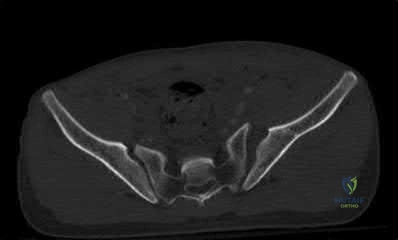
A 45-year-old male presents with a high-energy closed severe pilon fracture. There is significant soft tissue swelling, fracture blisters, and ecchymosis around the ankle. What is the most appropriate management plan regarding the timing and method of definitive internal fixation?


Explanation

High-energy pilon fractures are associated with profound soft tissue compromise. Immediate open reduction and internal fixation (ORIF) carries an unacceptably high rate of wound necrosis and deep infection. The standard of care is a staged protocol: initial application of a joint-spanning external fixator (with or without limited fibular fixation) to restore length and alignment, followed by delayed definitive ORIF of the tibial articular surface 10 to 21 days later, once the soft tissue envelope has recovered (evidenced by the return of skin wrinkles and re-epithelialization of blisters).

Question 9

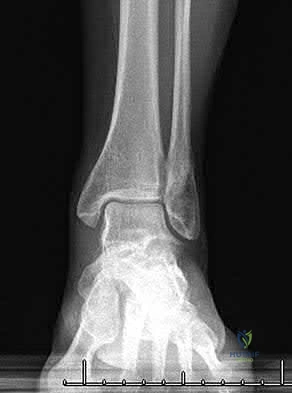
A 31-year-old male sustains a Hawkins type II talar neck fracture following an MVA. He undergoes open reduction and internal fixation. At the 8-week follow-up, an AP radiograph of the ankle demonstrates a subchondral radiolucent band in the talar dome. What does this finding indicate?


Explanation

The Hawkins sign is a subchondral radiolucent band seen in the talar dome on the AP or mortise radiograph, typically appearing 6 to 8 weeks after a talar neck fracture. It represents subchondral osteopenia secondary to disuse and hyperemia. This requires an intact vascular supply to the talar body. Thus, a positive Hawkins sign is a highly reliable indicator that the talar body has not undergone avascular necrosis (AVN).

Question 10

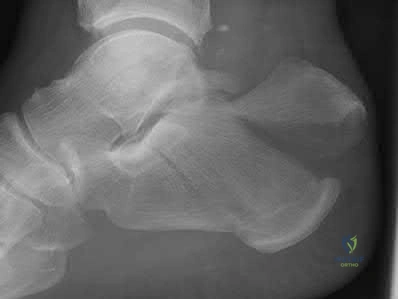
A 50-year-old male undergoes ORIF of a displaced intra-articular calcaneus fracture using an extensile lateral approach. He is a 1-pack-per-day smoker. Which of the following is the most common postoperative complication associated with this specific surgical approach?


Explanation

The extensile lateral approach for calcaneus fractures relies on an L-shaped flap that is supplied by the lateral calcaneal artery. Wound edge necrosis and dehiscence at the apex (corner) of the flap is the most common complication, with rates historically ranging from 10% to 25%, significantly higher in patients who smoke, have diabetes, or when surgery is performed before swelling has adequately subsided.

Question 11

A 22-year-old collegiate football player sustains an axial load to a plantarflexed foot. Weight-bearing radiographs reveal widening of the interval between the medial and middle cuneiforms, and between the first and second metatarsal bases, with no obvious fractures (purely ligamentous Lisfranc injury). What is the optimal surgical treatment associated with the best functional outcome for this specific injury pattern?


Explanation

For purely ligamentous Lisfranc injuries, multiple studies (including classic work by Ly and Coetzee) have demonstrated that primary arthrodesis provides superior functional outcomes, a higher rate of return to pre-injury activity level, and fewer secondary surgeries compared to open reduction and internal fixation (ORIF). ORIF in purely ligamentous variants often leads to hardware failure, loss of reduction, and painful post-traumatic osteoarthritis.

Question 12

A 65-year-old female sustains a 4-part proximal humerus fracture. Recent anatomical studies by Hertel et al. have redefined the understanding of the blood supply to the proximal humerus. According to these studies, preservation of which of the following is the most critical predictor of humeral head viability?


Explanation

Historically, the anterior circumflex humeral artery (and its anterolateral ascending branch) was thought to be the primary blood supply to the humeral head. However, landmark anatomical studies by Hertel et al. established that the posterior circumflex humeral artery provides the dominant blood supply to the humeral head. A calcar length of less than 8 mm, disruption of the posteromedial hinge, and basicervical fracture patterns are highly predictive of ischemia and subsequent avascular necrosis.

Question 13

A 55-year-old female undergoes volar locking plate fixation for a displaced distal radius fracture. At 6 months postoperatively, she presents with an inability to actively flex the interphalangeal joint of her thumb. What is the most likely cause of this complication?


Explanation

Flexor tendon ruptures, specifically the Flexor Pollicis Longus (FPL), are a recognized and severe complication of volar plating of the distal radius. This typically occurs when the plate is placed too distally, crossing the 'watershed line' (the prominence of the volar margin of the radius). The FPL tendon anatomically rests on this area and rubs against the prominent plate edge, eventually leading to attrition and rupture. EPL rupture is more classically associated with nonoperatively treated distal radius fractures.

Question 14

A 32-year-old male sustains a Galeazzi fracture-dislocation. Intraoperatively, after achieving anatomic open reduction and rigid internal fixation of the radial shaft with a compression plate, the distal radioulnar joint (DRUJ) remains unstable in both supination and pronation. What is the most appropriate next step in management?


Explanation

A Galeazzi injury involves a fracture of the distal third of the radial shaft with associated disruption of the DRUJ. The initial step is stable anatomic fixation of the radius. If the DRUJ remains unstable, it should be assessed in different forearm rotations. Supination tension the palmar radioulnar ligament and often reduces the DRUJ. If it is unstable, the DRUJ should be reduced and pinned with K-wires in supination for 4 to 6 weeks. Primary open repair of the TFCC is generally reserved for irreducibility of the DRUJ (e.g., due to interposed extensor carpi ulnaris tendon).

Question 15

A 44-year-old female undergoes open reduction and internal fixation of an intercondylar distal humerus fracture (13-C2) using an olecranon osteotomy approach. Regarding the management of the ulnar nerve during this procedure, current evidence suggests:


Explanation

Current evidence and randomized trials (e.g., Chen et al.) suggest that routine anterior transposition of the ulnar nerve during ORIF of distal humerus fractures is associated with a higher rate of postoperative ulnar neuritis compared to in situ release (decompression) alone. The nerve should be identified, protected, and decompressed, but transposition is not routinely indicated unless the hardware physically impinges on the nerve in its bed or there is a specific indication (e.g., subluxating nerve).

Question 16

An 82-year-old female with a history of a cemented right total hip arthroplasty performed 12 years ago presents after a ground-level fall. Radiographs demonstrate a fracture around the tip of the femoral stem. The stem is radiographically loose, but there is adequate remaining femoral bone stock. According to the Vancouver classification, how should this fracture be managed?


Explanation

This is a Vancouver B2 periprosthetic femoral fracture (fracture around the stem, loose prosthesis, adequate bone stock). The standard of care for a B2 fracture is revision of the femoral component. Because the proximal bone stock is compromised by the fracture and the loose initial stem, a longer revision stem that bypasses the fracture by at least 2 to 3 cortical diameters and achieves stable diaphyseal fixation (typically a fully porous-coated or fluted tapered stem) is required.

Question 17

A 68-year-old female who has been taking alendronate for 8 years presents with a 3-month history of insidious onset left thigh pain. Radiographs reveal focal lateral cortical thickening and a transverse radiolucent line extending partially through the lateral cortex of the left subtrochanteric femur. What is the most appropriate management?


Explanation

This patient presents with a symptomatic, incomplete atypical femur fracture (AFF) associated with long-term bisphosphonate use. The classic radiographic signs include lateral cortical thickening ('beaking') and a transverse fracture line. Because she is symptomatic (thigh pain), the risk of progression to a complete fracture is extremely high. The standard of care for a symptomatic incomplete AFF is prophylactic intramedullary nailing, along with discontinuation of the bisphosphonate. Medical management alone is inadequate for a symptomatic lesion.

Question 18

A 25-year-old male sustains a low-velocity, civilian handgun wound to the mid-thigh. Radiographs show a midshaft femur fracture with a non-comminuted, short oblique pattern. The bullet has exited the limb. The patient is neurovascularly intact. What is the most appropriate infection prophylaxis protocol for this injury?


Explanation

Low-velocity civilian gunshot wounds with resulting fractures are generally treated as low-grade open fractures (similar to Gustilo type I or II). The standard protocol involves superficial wound care (cleaning the entry/exit sites) without the need for formal tracking or extensive surgical debridement (unless there is gross contamination or joint involvement). Infection prophylaxis requires a short course (24-48 hours) of a first-generation cephalosporin (e.g., cefazolin), followed by standard definitive fixation such as intramedullary nailing.

Question 19

A 33-year-old male motorcyclist is struck by a truck and suffers an open pelvic ring injury with a massive perineal laceration extending to the rectum. He is hemodynamically unstable but responds transiently to blood products. Upon arrival to the OR, after initial pelvic stabilization with an external fixator and preperitoneal packing, what is the mandatory next step regarding the perineal wound?


Explanation

Open pelvic fractures with perineal or rectal involvement carry an extremely high mortality rate, primarily driven by early hemorrhagic shock and late pelvic sepsis. The contamination of the massive pelvic hematoma and open fracture site by fecal matter is a critical issue. Therefore, mandatory fecal diversion (diverting colostomy) is the standard of care for open pelvic fractures with rectal tears or massive perineal wounds in proximity to the anus, to prevent devastating pelvic sepsis.

Question 20

A 42-year-old male sustains a high-energy OTA/AO 41-C3 bicondylar tibial plateau fracture. CT scanning reveals a significant posteromedial shear fragment that is displaced distally. What is the optimal surgical approach and positioning to address this specific fracture component?


Explanation

A displaced posteromedial shear fragment in a bicondylar tibial plateau fracture is poorly visualized and nearly impossible to reduce and buttress adequately through standard anterior or anteromedial approaches. The optimal strategy requires direct visualization and buttress plating of the posteromedial apex. This is best achieved using a direct posteromedial approach with the patient in the prone or lateral decubitus position, allowing placement of an anti-glide or buttress plate to resist the apical displacement.

Question 21

When performing a posteromedial approach to the tibial plateau for a coronal shear fracture (Moore Type I), the standard surgical interval to expose the posterior aspect of the medial condyle is between the:


Explanation

The posteromedial approach to the tibial plateau is indicated for posteromedial shear fractures. The surgical interval is developed between the pes anserinus (anteriorly) and the medial head of the gastrocnemius (posteriorly). Retracting the medial head of the gastrocnemius posteriorly and laterally protects the popliteal neurovascular bundle.

Question 22

A 42-year-old male presents with a high-energy closed pilon fracture. Initial management included a spanning external fixator. Definitive internal fixation is planned. What is the most reliable clinical indicator that the soft tissues are ready for definitive surgical management?


Explanation

The timing of definitive internal fixation for high-energy pilon fractures is dictated by the soft tissue envelope. The 'wrinkle sign' (the appearance of skin lines when the ankle is dorsiflexed or naturally as edema subsides) is the most reliable clinical indicator that the swelling has resolved sufficiently to allow for safe surgical incisions and skin closure, typically occurring 10 to 21 days post-injury.

Question 23

A 35-year-old roofer falls from a height and sustains a displaced intra-articular calcaneus fracture. He undergoes open reduction and internal fixation via an extensile lateral approach. Which of the following arteries provides the primary blood supply to the lateral soft-tissue flap elevated in this approach?


Explanation

The primary blood supply to the corner of the lateral extensile flap in calcaneus fracture surgery is the lateral calcaneal artery, which is a terminal branch of the peroneal artery. Careful full-thickness, subperiosteal flap elevation and 'no-touch' retractor techniques (using K-wires into the talus and fibula) are critical to preserve this vascular supply and prevent ischemic wound necrosis.

Question 24

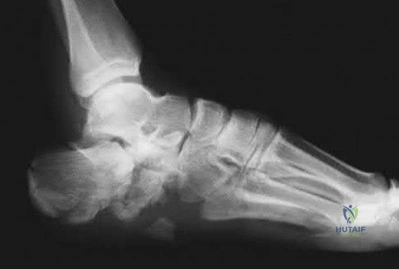
A 28-year-old snowboarder sustains a Hawkins Type II talar neck fracture. At 8 weeks postoperatively, a plain AP radiograph of the ankle demonstrates a subchondral radiolucent band in the dome of the talus. What does this finding indicate?


Explanation

The 'Hawkins sign' is a subchondral radiolucent band seen in the talar dome on an AP or mortise radiograph 6 to 8 weeks after a talar neck fracture. It represents subchondral osteopenia secondary to hyperemia, which is a definitive sign that the talar body has an intact vascular supply, thereby effectively ruling out avascular necrosis (AVN).

Question 25

The Lisfranc ligament is a crucial stabilizing structure of the midfoot. Between which two osseous structures does the true Lisfranc ligament travel?


Explanation

The Lisfranc ligament is the strongest ligament in the midfoot. It originates on the lateral aspect of the medial cuneiform and inserts onto the medial aspect of the base of the second metatarsal. Notably, there is no direct ligamentous connection between the bases of the first and second metatarsals.

Question 26

During the ilioinguinal approach to the acetabulum, the surgeon must be careful to identify and ligate the 'corona mortis' to prevent life-threatening hemorrhage. This structure typically represents an anastomosis between which two vascular systems?


Explanation

The corona mortis ('crown of death') is a vascular anastomosis between the obturator and external iliac (or deep inferior epigastric) vascular systems. It courses over the superior pubic ramus at an average distance of 5-6 cm from the pubic symphysis. If inadvertently torn during dissection or screw placement, it can retract into the pelvis and cause massive, difficult-to-control hemorrhage.

Question 27

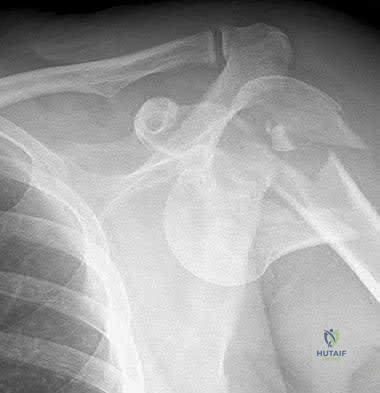
A 40-year-old male is involved in a high-speed motor vehicle collision. Radiographs of the pelvis demonstrate an acetabular fracture. Which of the following radiographic findings on an obturator oblique view is pathognomonic for a both-column fracture?


Explanation

The 'spur sign' on an obturator oblique radiograph is pathognomonic for a both-column fracture of the acetabulum. It represents the lowest intact portion of the ilium that remains attached to the axial skeleton, projecting posteriorly as a 'spur' relative to the medially displaced articular segments.

Question 28

A 25-year-old female sustains a vertically oriented, displaced femoral neck fracture (Pauwels Type III) after a fall from a horse. Which of the following fixation constructs offers the highest biomechanical stability against shear forces for this fracture pattern?


Explanation

Pauwels Type III femoral neck fractures have a vertical fracture line (angle >50 degrees), which subjects them to extremely high shear forces. Standard parallel cannulated screws have a high failure rate in this pattern. A fixed-angle device, such as a sliding hip screw (with a derotational screw) or a proximal femoral locking plate, provides superior biomechanical stability against vertical shear.

Question 29

In the treatment of intertrochanteric femur fractures, the integrity of the lateral trochanteric wall is a critical determinant of construct stability. According to orthopedic literature, a lateral wall thickness less than what threshold is considered an absolute indication for a cephalomedullary nail rather than a sliding hip screw?


Explanation

Hsu et al. demonstrated that a lateral trochanteric wall thickness of less than 20.5 mm is highly predictive of postoperative lateral wall fracture when fixed with a sliding hip screw. This converts a stable pattern into an unstable one, leading to massive collapse. Therefore, lateral wall thickness <20.5 mm is an indication for cephalomedullary nailing.

Question 30

A 30-year-old polytrauma patient presents with bilateral femoral shaft fractures, a pulmonary contusion, and a grade III spleen laceration. Which of the following physiological parameters is an absolute indication for temporary external fixation (Damage Control Orthopedics) rather than early total care with intramedullary nailing?


Explanation

Damage Control Orthopedics (DCO) is indicated in unstable polytrauma patients to avoid the 'second hit' phenomenon from early total care (ETC). Absolute clinical indicators of physiologic instability demanding DCO include: pH < 7.24, Core Temperature < 33°C, Lactate > 2.5 mmol/L, Base Deficit > 5 mmol/L, and coagulopathy (Platelets < 90,000 or INR > 1.5).

Question 31

A 34-year-old motorcyclist sustains a coronal shear fracture of the lateral femoral condyle. What is the standard eponym for this fracture, and what is the standard direction of screw fixation to secure the fragment?


Explanation

A coronal shear fracture of the femoral condyle is known as a Hoffa fracture. It most commonly affects the lateral condyle. Standard fixation involves open reduction (often via a lateral or parapatellar approach) and lag screw fixation placed from anterior-to-posterior. Although posterior-to-anterior screws are biomechanically stronger, AP screws are technically easier and avoid the risk of neurovascular injury in the popliteal fossa.

Question 32

A 28-year-old male sustains a traumatic knee dislocation during a football game. Upon arrival at the ED, the knee is reduced. His pedal pulses are palpable, but his Ankle-Brachial Index (ABI) is measured at 0.82. What is the most appropriate next step in management?


Explanation

In the setting of a knee dislocation, an ABI of less than 0.90 is an absolute indication for advanced vascular imaging (CT angiogram) or formal arterial duplex evaluation. While the presence of hard signs of vascular injury (expanding hematoma, absent pulses, ischemia) demands immediate surgical exploration, an asymmetric ABI (<0.90) with palpable pulses requires an angiogram to rule out an intimal flap or occult injury.

Question 33

A 22-year-old male is admitted with a closed midshaft tibia fracture. Twelve hours later, he complains of severe leg pain out of proportion to the injury, unrelieved by opioids. His blood pressure is 120/70 mmHg. Intracompartmental pressure in the anterior compartment is 45 mmHg. What is the patient's delta pressure, and is fasciotomy indicated?


Explanation

Delta pressure (ΔP) is calculated as Diastolic Blood Pressure minus Compartment Pressure. Here, ΔP = 70 mmHg - 45 mmHg = 25 mmHg. A delta pressure of less than 30 mmHg is highly specific for acute compartment syndrome and is an absolute indication for emergency four-compartment fasciotomy.

Question 34

A 45-year-old male farm worker caught his leg in an auger, sustaining a highly contaminated open diaphyseal tibia fracture. There is a 12 cm soft tissue laceration with extensive periosteal stripping. On examination, the foot is pulseless, and vascular surgery determines that an arterial repair is required to salvage the limb. What is the Gustilo-Anderson classification?


Explanation

The Gustilo-Anderson classification for open fractures categorizes any open fracture that is associated with an arterial injury requiring repair to restore distal perfusion as a Type IIIC, regardless of the size of the soft tissue wound or the degree of bone comminution.

Question 35

A 19-year-old male presents with a low-velocity gunshot wound to the right knee. Radiographs confirm a retained intact bullet freely mobile within the joint space, with no associated fracture. What is the most appropriate definitive management for the retained intra-articular bullet?


Explanation

A retained bullet within a synovial joint space is an absolute indication for surgical removal (either arthroscopically or open). Synovial fluid can dissolve the bullet's lead, leading to lead arthropathy (severe joint destruction) and systemic lead toxicity (plumbism).

Question 36

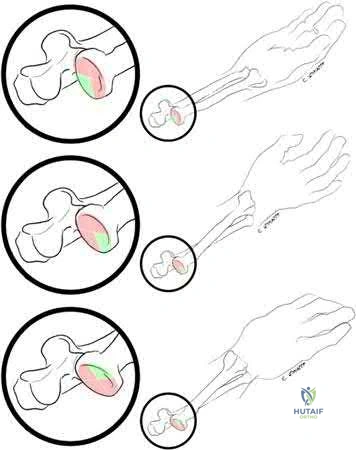
A 42-year-old female sustains a "terrible triad" injury of the elbow. She is taken to the operating room for definitive fixation. To optimize stability and clinical outcomes, what is the generally recommended sequence of surgical reconstruction?


Explanation

The standard surgical algorithm for a terrible triad injury works from deep to superficial and medial to lateral (if via lateral approach): (1) Coronoid fixation or anterior capsule repair to restore anterior stability, (2) Radial head fixation or replacement to restore the anterior and valgus buttress, (3) Lateral collateral ligament (LUCL) repair to the lateral epicondyle to restore posterolateral rotatory stability. The MCL is only repaired if the elbow remains unstable after these steps.

Question 37

A 38-year-old male sustains a subtrochanteric fracture of the right femur. During open reduction and intramedullary nailing, the surgeon notes classic multi-planar displacement of the proximal fragment. Which set of deforming forces accurately describes the displacement of the proximal fragment?


Explanation

In a subtrochanteric femur fracture, the proximal fragment is heavily displaced by muscular attachments: it is flexed by the iliopsoas (attaching to the lesser trochanter), abducted by the gluteus medius and minimus (greater trochanter), and externally rotated by the short external rotators (piriformis, gemelli, obturator internus, quadratus femoris).

Question 38

A 65-year-old female presents with a volar shear fracture of the distal radius (volar Barton fracture). Which of the following is the most appropriate surgical approach and internal fixation method?


Explanation

A volar Barton fracture is an unstable intra-articular shear fracture of the distal radius. It cannot be adequately held by cast immobilization due to shear forces. The standard of care is a volar approach and fixation with a volar buttress plate (or volar locking plate applied in a buttress mode) to counteract the palmar subluxation of the carpus.

Question 39

A 28-year-old male gymnast complains of chronic central wrist pain following a fall on an extended wrist 3 months ago. Radiographs show a widened scapholunate interval (Terry Thomas sign). The scapholunate interosseous ligament (SLIL) has three distinct regions. Which region is the primary mechanical stabilizer of the scapholunate joint?


Explanation

The scapholunate interosseous ligament (SLIL) is a C-shaped structure divided into dorsal, volar, and proximal membranous bands. Biomechanical studies have shown that the dorsal band is the thickest and strongest, acting as the primary mechanical stabilizer of the scapholunate articulation.

Question 40

A 50-year-old female falls onto an outstretched hand and sustains an isolated coronal shear fracture of the capitellum. Radiographs reveal a large osseous fragment consisting of the capitellum and the lateral half of the trochlea without posterior comminution. According to the Dubberley classification, what type of fracture is this?


Explanation

The Dubberley classification of capitellum fractures: Type 1 involves the capitellum only. Type 2 involves the capitellum and trochlea as a single articular fragment. Type 3 involves the capitellum and trochlea as separate fragments. Subtype A lacks posterior wall comminution, whereas Subtype B has posterior condylar comminution. A single fragment with capitellum and trochlea, without posterior comminution, is a Type 2A.

Question 41

During the resuscitation of a polytrauma patient with severe orthopedic injuries, monitoring lactate clearance is critical. A delay in normalizing serum lactate levels beyond what timeframe is most highly predictive of increased mortality, ARDS, and multi-organ failure?


Explanation

Failure to clear serum lactate to normal levels within 24 hours of injury is a strong predictor of increased mortality, ARDS, and multi-organ failure in polytrauma patients.

Question 42

A 35-year-old male sustains an anterior-posterior compression type III (APC III) pelvic ring injury. During surgical fixation via an anterior ilioinguinal approach, massive hemorrhage occurs near the superior pubic ramus while developing the medial window. Which of the following vascular structures is most likely injured?


Explanation

The 'corona mortis' is a vascular anastomosis between the external iliac (or inferior epigastric) and obturator vessels. It is located over the superior pubic ramus and is at high risk during the ilioinguinal approach.

Question 43

A 45-year-old male is brought to the ED after a severe crush injury to the pelvis. He is hemodynamically unstable (BP 60/40 mmHg). A pelvic binder is applied, and FAST exam is negative. Despite massive transfusion, he remains in profound hemorrhagic shock. If angiography is delayed, what is the most appropriate next step for temporary hemorrhage control?


Explanation

REBOA in Zone 3 (distal to the lowest renal artery) is indicated for life-threatening pelvic hemorrhage in patients who are crashing. Zone 1 is typically used for intra-abdominal hemorrhage.

Question 44

A 28-year-old female presents with a closed pelvic ring fracture after being run over by a truck. Examination reveals a large, fluctuant swelling over the greater trochanter with overlying skin bruising and reduced sensation. Which of the following best describes the pathophysiology of this soft tissue injury?


Explanation

This is a Morel-Lavallée lesion, caused by a closed degloving or shearing injury. It results in the separation of skin and subcutaneous fat from the underlying fascial layer, disrupting perforating vessels and causing a hemolymphatic collection.

Question 45

A 25-year-old male is diagnosed with a posterior wall acetabular fracture after a dashboard injury.

On CT scan, the fracture involves 30% of the posterior wall. What is the most accurate method to determine if this hip requires operative fixation due to instability?


Explanation

While fractures >50% are typically unstable and <20% are stable, borderline fractures (20-50%) require dynamic stress fluoroscopy under anesthesia to definitively assess hip stability.

Question 46

A polytrauma patient undergoes damage control orthopedics (DCO) for bilateral femur fractures with temporary external fixation. Which of the following laboratory parameters best indicates that the patient is adequately resuscitated and cleared for Early Total Care (ETC) conversion to intramedullary nailing?


Explanation

Normalization of serum lactate (< 2.0 mmol/L) and correction of base deficit (> -2 mEq/L) are the most reliable indicators of adequate tissue perfusion and endpoint of resuscitation.

Question 47

A 40-year-old male falls from a roof, sustaining a highly comminuted transforaminal sacral fracture extending centrally. According to the Denis classification, this involves Zone III. What is the most likely associated neurological complication?


Explanation

Denis Zone III sacral fractures involve the central sacral canal. They carry a high risk (up to 57%) of sacral nerve root (S2-S4) damage, leading to bowel, bladder, and sexual dysfunction.

Question 48

A 22-year-old male with a diaphyseal femur fracture develops confusion, tachypnea (RR 30), and hypoxia on post-injury day 2. A petechial rash is noted over his axilla and conjunctiva. According to Gurd's criteria, what is the most critical physiological driver of his respiratory insufficiency?


Explanation

Fat Embolism Syndrome (FES) is characterized by Gurd's major criteria (rash, respiratory failure, cerebral involvement). The pathophysiology involves neutral fat emboli causing both mechanical occlusion and an inflammatory cascade (free fatty acid toxicity) in the pulmonary capillaries.

Question 49

During the ilioinguinal approach for an associated both-column acetabular fracture

, the surgeon develops the 'middle window'. Which structures define the borders of this window, and what critical structure lies within it?


Explanation

The middle window of the ilioinguinal approach is bounded laterally by the iliopectineal fascia and medially by the modified conjoint tendon. It contains the external iliac vessels.

Question 50

A 32-year-old male sustains a high-energy tibial plateau fracture. The orthopedic surgeon suspects acute compartment syndrome. The patient's blood pressure is 110/60 mmHg. Intra-compartmental pressures are: Anterior 40 mmHg, Lateral 35 mmHg, Deep Posterior 45 mmHg, Superficial Posterior 30 mmHg. What is the absolute indication for four-compartment fasciotomy in this patient?


Explanation

The delta pressure (ΔP) is the most reliable indicator for fasciotomy, calculated as Diastolic Blood Pressure minus intra-compartmental pressure. A ΔP < 30 mmHg is an absolute indication for fasciotomy.

Question 51

A 38-year-old pedestrian is struck by a vehicle, sustaining an anterior-posterior compression (APC) type II pelvic ring injury. Which of the following best describes the ligamentous disruption pattern in this specific injury?


Explanation

An APC II injury involves widening of the symphysis pubis >2.5 cm, tearing of the anterior sacroiliac, sacrospinous, and sacrotuberous ligaments. The posterior sacroiliac ligaments remain intact, providing vertical stability.

Question 52

A 26-year-old male sustains a low-velocity civilian gunshot wound to the mid-thigh. Radiographs show a highly comminuted midshaft femur fracture. The patient has normal distal pulses and intact sensation. The entry and exit wounds are 1 cm each with no gross contamination. What is the most appropriate management?


Explanation

Low-velocity gunshot wounds causing femur fractures without neurovascular compromise or gross contamination do not require formal tract debridement. They are safely treated with local wound care, antibiotics, and standard intramedullary nailing.

Question 53

According to the Pape/Hannover criteria for polytrauma patients, which of the following findings would classify a patient as 'borderline' and thus potentially contraindicate Early Total Care (ETC) of major long bone fractures?


Explanation

Borderline criteria contraindicating ETC include: Initial lactate >2.5 mmol/L, platelets <90,000/µL, temperature <35°C, bilateral pulmonary contusions, or massive transfusion requirements.

Question 54

A 29-year-old male motorcyclist sustains an ipsilateral midshaft femur fracture and midshaft tibia fracture (floating knee). He is hemodynamically stable. What is the most widely recommended surgical sequence and its primary rationale?


Explanation

In a floating knee, femoral fixation is prioritized to decrease systemic embolic load, stabilize the largest bone, and allow the knee to be flexed over a triangle for antegrade tibial nailing.

Question 55

A 30-year-old male sustains a high-energy diaphyseal femur fracture. Due to the high risk of a concomitant, missed ipsilateral femoral neck fracture, what is the 'gold standard' imaging protocol?


Explanation

Ipsilateral femoral neck fractures occur in up to 9% of femur shaft fractures and are missed in up to 30% of cases. A dedicated fine-cut CT of the hip is the gold standard for diagnosis.

Question 56

A 45-year-old farmer sustains a Gustilo-Anderson IIIB open tibia fracture from a tractor rollover. The wound is heavily contaminated with soil and manure. In addition to a first-generation cephalosporin and an aminoglycoside, which antibiotic must be added to the initial regimen?


Explanation

In open fractures with severe soil or farm contamination, High-dose Penicillin (or Metronidazole) must be added to cover anaerobic organisms, specifically Clostridium species, to prevent gas gangrene.

Question 57

A pelvic binder is applied to a hypotensive patient with an open-book pelvic fracture in the trauma bay. What is the correct anatomical landmark for centering the binder, and what is the most significant complication of leaving it on for >24 hours?


Explanation

Pelvic binders must be centered over the greater trochanters to effectively reduce pelvic volume. Prolonged application (>24 hours) drastically increases the risk of pressure necrosis over the trochanters and sacrum.

Question 58

A 45-year-old male presents with a hemodynamically unstable pelvic crush injury. Angiography shows active extravasation from the 'corona mortis'. Which of the following describes the most common arterial vessels communicating at this anatomic structure?


Explanation

The corona mortis is a vascular anastomosis between the external iliac system (typically via the inferior epigastric artery) and the internal iliac system (via the obturator artery). It lies over the superior pubic ramus and is highly susceptible to injury in pelvic ring fractures.

Question 59

A 30-year-old female sustains a Denis Zone 3 sacral fracture following a fall from height. Which of the following is the most likely neurologic complication associated with this specific injury pattern?


Explanation

Denis Zone 3 sacral fractures involve the central sacral canal. Because of this central involvement, they carry a high risk of cauda equina syndrome, which frequently presents as saddle anesthesia and bowel or bladder sphincter dysfunction.

Question 60

A 35-year-old male undergoes open reduction and internal fixation of a posterior wall acetabular fracture via the Kocher-Langenbeck approach. Postoperatively, he exhibits a foot drop. Which specific neural structure was most likely injured or overly retracted during the procedure?


Explanation

The peroneal division of the sciatic nerve is situated laterally within the nerve bundle, making it most vulnerable to stretch or retractor injury during a posterior (Kocher-Langenbeck) approach to the acetabulum. Injury leads to isolated weakness in ankle dorsiflexion (foot drop).

Question 61

A 28-year-old male is admitted with a severe closed tibia fracture. His current blood pressure is 110/70 mmHg. Intracompartmental pressure testing of the anterior compartment yields a value of 45 mmHg. What is the most appropriate next step in management?


Explanation

A delta-P (diastolic blood pressure minus compartment pressure) of 30 mmHg or less is an absolute indication for fasciotomy. In this patient, the delta-P is 25 mmHg (70 - 45 = 25), warranting immediate surgical decompression to prevent irreversible ischemia.

None

Clinic OS
Medically Verified Content by
Prof. Clinic OS
Consultant Orthopedic & Spine Surgeon
Chapter Index
