Orthopedic Ob Trauma C Review | Dr Hutaif Trauma & Frac -...

Key Takeaway
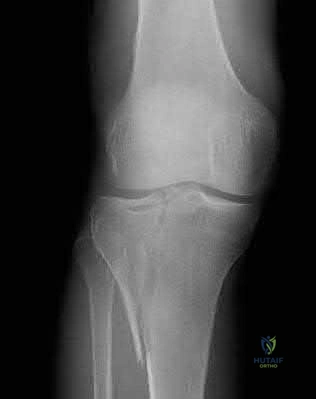
This article provides essential research regarding ORTHOPEDIC MCQS 20 OB TRAUMA 1C. Buttress plating is a surgical technique appropriate for preventing collapse and axial deformity caused by shear or bending forces, particularly in fractures like a Shatzker Type I tibial plateau fracture, as shown in illustration C. This method is crucial for stabilizing certain bone breaks, distinguishing it from other plating types such as bridging, neutralization, and dynamic compression.
Orthopedic Ob Trauma C Review | Dr Hutaif Trauma & Frac -...
Comprehensive 100-Question Exam
00:00
Start Quiz
Question 1
A 26-year-old male is brought to the emergency department following a high-speed motorcycle collision. He is hypotensive with a systolic BP of 80 mmHg. Laboratory results show a serum lactate of 4.8 mmol/L, a base deficit of -9, and a core temperature of 34.5°C. Radiographs reveal bilateral severely comminuted midshaft femur fractures. What is the most appropriate initial skeletal management?
Explanation
Question 2
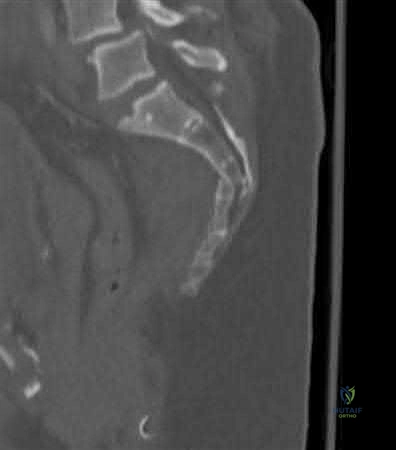
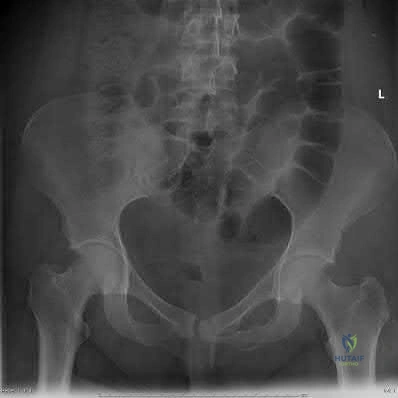
A hemodynamically unstable 35-year-old male presents after a crush injury. An AP radiograph of the pelvis demonstrates a 'symphyseal diastasis of 4 cm and disruption of the anterior sacroiliac ligaments'.
You decide to apply a circumferential pelvic binder to aid in resuscitation. To maximize its biomechanical efficacy in reducing pelvic volume, the binder should be centered precisely over which of the following anatomic landmarks?
Explanation
Question 3
A 40-year-old male sustains an ipsilateral displaced femoral neck fracture and a comminuted midshaft femur fracture. Which of the following is the most appropriate surgical strategy and sequence to minimize complications?
Explanation
Question 4
A 30-year-old pedestrian is struck by a vehicle and sustains a severe open tibia fracture. After initial debridement, a 6 cm bone defect is present in the middle third of the tibial diaphysis with exposed bone devoid of periosteum.
Which of the following local muscle flaps is most appropriate for soft tissue coverage of this specific defect?
Explanation
Question 5
A 25-year-old snowboarder sustains a high-energy dorsiflexion injury to the ankle. Radiographs reveal a displaced talar neck fracture with subluxation of the subtalar joint, while the tibiotalar joint remains congruous.
Based on the Hawkins classification, what is the approximate risk of developing avascular necrosis (AVN) of the talar body in this patient?
Explanation
Question 6
During the extensile lateral approach for open reduction and internal fixation of a displaced intra-articular calcaneus fracture, a full-thickness subperiosteal flap is developed. Which of the following neurologic structures is at greatest risk of iatrogenic injury during the dissection of the inferior limb of the incision?
Explanation
Question 7
A 45-year-old male sustains a severe valgus stress injury to the knee, resulting in a Schatzker IV tibial plateau fracture with significant posteromedial depression. You plan a posteromedial surgical approach. The standard internervous/intermuscular plane for this approach is developed between which of the following structures?
Explanation
Question 8
A 32-year-old gymnast falls from a height and presents with an elbow dislocation, a comminuted radial head fracture, and a Type II coronoid fracture. According to established biomechanical principles for treating the 'terrible triad' of the elbow, what is the most widely recommended surgical sequence?
Explanation
Question 9
A 24-year-old male sustains a closed comminuted tibial shaft fracture. Eight hours post-injury, he complains of intractable pain out of proportion to the injury. His blood pressure is 110/70 mmHg. The intracompartmental pressure of the anterior compartment is measured at 45 mmHg. What is his Delta P, and is a fasciotomy definitively indicated?
Explanation
Question 10
When utilizing a modern distal femoral locking plate for a comminuted metaphyseal distal femur fracture, the surgeon decides to leave several screw holes empty in the plate directly over the fracture site. What is the primary biomechanical advantage of increasing this 'working length'?
Explanation
Question 11
A 55-year-old female presents with a high-energy closed distal tibia (Pilon) fracture.
The limb is grossly swollen with fracture blisters developing. A spanning ankle external fixator is applied in the emergency department. Definitive open reduction and internal fixation (ORIF) is planned. What is the most reliable clinical indicator that the soft tissues are amenable to definitive surgical incisions?
Explanation
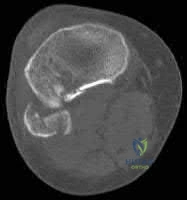
Question 12
A 75-year-old female sustains a 3-part proximal humerus fracture.
According to the Hertel criteria, which of the following radiographic findings is most highly predictive of subsequent ischemia and avascular necrosis of the humeral head?
Explanation
Question 13
A 35-year-old male arrives via trauma bay after a close-range shotgun blast to the lower extremity. The extremity is severely mangled. When using the Mangled Extremity Severity Score (MESS) to assist in deciding between amputation and limb salvage, which of the following factors specifically adds points to the patient's score?
Explanation
Question 14
A 68-year-old female on chronic alendronate therapy for osteoporosis complains of 3 months of vague left thigh pain. Radiographs reveal a transverse radiolucent line with focal cortical thickening on the lateral aspect of her left femoral shaft. What is the fundamental biomechanical reason these atypical femur fractures typically initiate at the lateral cortex?
Explanation
Question 15
A 30-year-old male falls from a ladder and sustains an intra-articular distal radius fracture. The surgeon opts for a volar surgical approach utilizing the modified Henry interval. After retracting the flexor carpi radialis (FCR) ulnarly, which structure forms the floor of the approach and must be incised to directly expose the pronator quadratus?
Explanation
Question 16
A 22-year-old football player presents with a midfoot injury and plantar ecchymosis. Weight-bearing radiographs show a 3 mm diastasis between the base of the first and second metatarsals. You suspect a Lisfranc injury. The primary stabilizing ligament of the Lisfranc complex originates on the lateral aspect of the medial cuneiform and inserts on the medial aspect of the base of the second metatarsal. What type of ligament is this primary restraint?
Explanation
Question 17
A 40-year-old male sustains a low-velocity civilian handgun injury to the right thigh. Radiographs demonstrate a comminuted midshaft femur fracture. His neurovascular exam is intact, and the wounds are small without gross contamination. What is the standard of care for definitive management?
Explanation
Question 18
A 25-year-old cyclist sustains a midshaft clavicle fracture. Which of the following displacement characteristics is most strongly associated with an increased risk of symptomatic nonunion if treated non-operatively?
Explanation
Question 19
A 45-year-old pedestrian is struck by a car and dragged, sustaining a closed pelvic fracture and a large, fluctuant swelling over the lateral greater trochanter. Aspiration yields serosanguineous fluid. This lesion is caused by a shear force that results in the separation of which two anatomic layers?
Explanation
Question 20
A 60-year-old male sustains an isolated transverse acetabular fracture involving the posterior wall. According to the Judet-Letournel classification, an isolated anterior column fracture would classically demonstrate a disruption of which primary radiographic line on the anteroposterior (AP) pelvis view?
Explanation
Question 21
A 42-year-old farmer sustains a severe open tibia fracture after being caught in a tractor bailer. The wound is 12 cm long with gross soil and organic contamination. In addition to a first-generation cephalosporin and an aminoglycoside, which of the following antibiotics is classically recommended in his initial empiric regimen?
Explanation
Question 22
According to the principles of Damage Control Orthopedics (DCO), which of the following laboratory values most strongly indicates the need for temporary external fixation rather than Early Total Care (ETC) for a patient with bilateral femur fractures?
Explanation
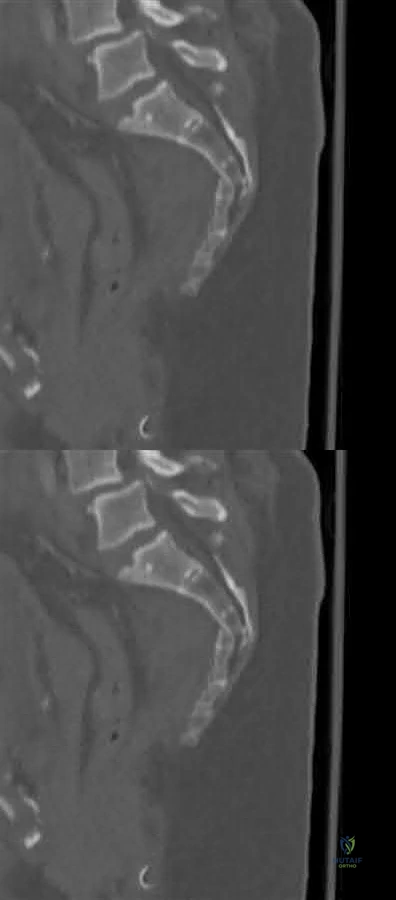
Question 23
A 30-year-old male is involved in a high-speed MVC. A Judet obturator oblique radiograph of the pelvis is obtained.
Which of the following acetabular structures are best profiled on this specific radiographic view?
Explanation
Question 24
A 28-year-old female presents after a fall from a height of 20 feet. She has a widened mediastinum on chest radiograph, a T12 burst fracture, and flaccid paralysis in her lower extremities. Her vital signs are: BP 85/50 mmHg, HR 65 bpm, RR 18/min. What is the most likely primary cause of her hypotension?
Explanation
Question 25
During the ilioinguinal approach for an anterior column acetabular fracture, significant hemorrhage is encountered just superior to the superior pubic ramus. This bleeding is most likely originating from a vascular anastomosis between which of the following two systems?
Explanation
Question 26
Based on the Lower Extremity Assessment Project (LEAP) study evaluating severe, mangled lower extremity injuries, which of the following statements is true comparing amputation versus limb salvage?
Explanation
Question 27
A 22-year-old male sustains a closed tibial shaft fracture. Twelve hours post-admission, he develops severe pain out of proportion to the injury. Which of the following pressure criteria is generally accepted as an absolute indication for emergent four-compartment fasciotomy?
Explanation
Question 28
A 45-year-old male sustains a closed pelvic ring injury. Clinical examination reveals a massive, fluctuant swelling over the greater trochanter with intact, but ecchymotic overlying skin. What is the primary pathophysiologic mechanism of this specific soft tissue injury?
Explanation
Question 29
A 24-year-old male is awaiting fixation of bilateral femur fractures. On hospital day 2, he develops acute confusion, tachypnea, and a petechial rash over his axillae. Arterial blood gas shows a PaO2 of 55 mmHg. What is the most appropriate initial management of this condition?
Explanation
Question 30
A 32-year-old polytrauma patient is in the intensive care unit after damage control orthopedic surgery. Which of the following is the most reliable indicator of adequate global tissue perfusion and the endpoint of resuscitation?
Explanation
Question 31
A 45-year-old farmer sustains a Gustilo-Anderson Type IIIB open tibia fracture severely contaminated with manure. According to current guidelines, what is the most appropriate initial intravenous antibiotic regimen?
Explanation
Question 32
A 28-year-old male presents with a knee dislocation that was successfully reduced in the emergency department. His pedal pulses are palpable, but his ankle-brachial index (ABI) is measured at 0.85. What is the most appropriate next step in management?
Explanation
Question 33
A 22-year-old male sustains a closed tibial shaft fracture. Two hours post-admission, his blood pressure is 110/60 mmHg, and compartment pressure monitoring reveals an anterior compartment pressure of 40 mmHg. What is the calculated Delta P, and what is the indicated treatment?
Explanation
Question 34
A 55-year-old male presents with an APC-III pelvic ring injury and refractory hypotension. During pre-peritoneal pelvic packing, active arterial bleeding is encountered over the superior pubic ramus. Which vascular structure is most likely injured?
Explanation
Question 35
In a patient with a severely mangled lower extremity following an industrial crush injury, which of the following is considered an absolute indication for primary amputation?
Explanation
Question 36
A 38-year-old male falls from a height and sustains a transverse with posterior wall acetabular fracture. Which surgical approach provides the most direct and appropriate access for anatomic reduction and fixation of this specific fracture pattern?
Explanation
Question 37
A 24-year-old male sustains a low-velocity gunshot wound to the thigh, resulting in a comminuted femoral shaft fracture. The entrance and exit wounds are clean and measure approximately 1 cm each. The patient is neurovascularly intact. What is the most appropriate management?
Explanation
Question 38
A polytrauma patient with bilateral pulmonary contusions and a closed midshaft femur fracture undergoes reamed intramedullary nailing on hospital day 2. Postoperatively, he develops severe hypoxemia, a petechial rash on the axilla, and altered mental status. What is the most likely diagnosis?
Explanation
Question 39
A 42-year-old roofer falls and sustains a closed, displaced, intra-articular joint depression type calcaneus fracture. The skin is severely swollen with fracture blisters. What is the optimal timing for definitive open reduction and internal fixation (ORIF) via an extensile lateral approach?
Explanation
Question 40
A 29-year-old motorcyclist presents after a high-speed crash with severe left shoulder pain, a completely flail upper extremity, and absent radial and ulnar pulses. Radiographs show a laterally displaced scapula and an intact clavicle. Which neurovascular structure is at highest risk of severe avulsion injury?
Explanation
Question 41
A 31-year-old female sustains a Hawkins Type III talar neck fracture following a severe motor vehicle collision. What is the approximate risk of developing avascular necrosis (AVN) of the talar body?
Explanation
Question 42
An 82-year-old female with severe pre-existing osteoarthritis of the knee and profound osteopenia sustains a highly comminuted, displaced intra-articular distal femur fracture (AO/OTA 33-C3). Which surgical option provides the earliest mobilization and most predictable return to function?
Explanation
Question 43
A 40-year-old male sustains a medial tibial plateau fracture with knee subluxation (Schatzker IV) after a high-energy varus-directed force. Which associated injury must be ruled out emergently?
Explanation
Question 44
A 32-year-old male presents with bilateral femur fractures and pulmonary contusions following a motor vehicle collision. Which of the following parameters is the MOST reliable indicator of adequate resuscitation, allowing the surgical team to safely proceed from a damage control approach to early total care (definitive intramedullary nailing)?
Explanation
Question 45
A hemodynamically unstable 40-year-old female presents with a severe lateral compression (LC) pelvic ring injury. After binder application and fluid resuscitation, she remains hypotensive and is taken for pelvic angiography. Which vessel is most commonly the source of life-threatening arterial hemorrhage in this specific fracture pattern?
Explanation
Question 46
A 45-year-old construction worker sustains a Gustilo-Anderson Grade IIIA open tibia fracture. According to established orthopedic trauma guidelines, what is the single most important intervention for decreasing the patient's risk of deep bone infection?
Explanation
Question 47
A 25-year-old male sustains a closed comminuted tibial shaft fracture. His blood pressure is 110/70 mmHg. He complains of severe pain out of proportion to the injury. Which of the following intracompartmental pressure measurements strictly mandates emergency fasciotomy?
Explanation
Question 48
A 22-year-old male sustains a low-velocity civilian gunshot wound to the distal thigh. Radiographs demonstrate a non-displaced distal femur fracture. Which of the following findings is an absolute indication for formal surgical debridement of the bullet track?
Explanation
Question 49
When evaluating a severely mangled lower extremity, which of the following clinical findings—historically considered an absolute indication for primary amputation—is now recognized as unreliable for predicting successful limb salvage?
Explanation
Question 50
In a polytraumatized patient with significant bilateral pulmonary contusions, early reamed intramedullary nailing of a femoral shaft fracture (Early Total Care) is most closely associated with an increased risk of developing which complication?
Explanation
Question 51
A 32-year-old male sustains a Gustilo-Anderson Grade IIIB open tibia fracture with an anterior 10x10 cm soft tissue defect. To minimize the risk of deep infection and osteomyelitis, definitive soft tissue coverage (e.g., free flap) should ideally be performed within what timeframe?
Explanation
Question 52
A 28-year-old male sustained a Hawkins Type III talar neck fracture. At 8 weeks post-fixation, an AP radiograph of the ankle demonstrates a subchondral radiolucent band in the dome of the talus (Hawkins sign). What does this specific radiographic finding indicate?
Explanation
Question 53
A patient with a complex bicondylar tibial plateau fracture requires an open reduction and internal fixation of a displaced posteromedial fragment. During a standard posteromedial approach, which neurovascular structures are at greatest risk of iatrogenic injury during superficial dissection?
Explanation
Question 54
A 19-year-old male involved in a high-speed collision presents with massive shoulder swelling and an AP chest radiograph demonstrating marked lateral displacement of the scapula. What is the most devastating, immediately life-threatening or limb-threatening associated injury that must be ruled out?
Explanation
Question 55
A 22-year-old male sustains an isolated posterior hip dislocation in a dashboard injury. To optimally reduce the risk of avascular necrosis (AVN) of the femoral head, a stable, closed reduction should ideally be accomplished within what strict timeframe?
Explanation
Question 56
A 45-year-old presents with a high-energy supracondylar distal femur fracture. Which imaging modality or specific sequence is most critical to effectively rule out an associated coronal plane articular (Hoffa) fracture?
Explanation
Question 57
When applying a temporary spanning external fixator for a proximal tibia fracture in a polytrauma patient, half-pins placed in the anterior tibial diaphysis should be placed slightly medial to the anterior tibial crest to avoid injury to which anatomical compartment/structure?
Explanation
Question 58
A 35-year-old roof worker falls from a height and sustains a severely displaced, intra-articular calcaneus fracture. Assessment of Böhler's angle on a standard lateral foot radiograph will typically demonstrate which of the following?
Explanation
Question 59
An 82-year-old female presents with a displaced femoral neck fracture. She has a history of stable coronary artery disease. According to extensive registry data and current guidelines, what is the optimal timing for surgical intervention to minimize 1-year mortality?
Explanation
Question 60
A 24-year-old athlete presents with midfoot pain after an axial load to a plantarflexed foot. Radiographs reveal a subtle widening of the first intermetatarsal space and a 'fleck sign'. This pathognomonic finding represents an osseous avulsion of the Lisfranc ligament. Which two structures does this ligament connect?
Explanation
Question 61
A 45-year-old male is 9 months post-intramedullary nailing for a tibial shaft fracture. He complains of persistent pain with weight-bearing. Radiographs show a persistent fracture line with abundant, dense 'elephant shoe' callus formation. What is the most appropriate next step in management?
Explanation
Question 62
A 25-year-old male with an isolated closed femur fracture becomes acutely confused and tachypneic 36 hours after admission. Physical examination reveals a petechial rash over his axilla and conjunctiva. Arterial blood gas shows severe hypoxemia. What is the most likely diagnosis?
Explanation
Question 63
A 28-year-old polytrauma patient develops petechial rashes over the axilla, conjunctiva, and chest 48 hours after sustaining bilateral femur fractures. He is tachypneic and confused. According to Gurd's criteria, which of the following is considered a major criterion for the diagnosis of Fat Embolism Syndrome (FES)?
Explanation
Question 64
A 34-year-old male presents with a posterolateral knee dislocation after a high-energy trauma. The joint is emergently reduced. Post-reduction, the distal pulses are palpable, but the Ankle-Brachial Index (ABI) is calculated to be 0.8. What is the most appropriate next step in management?
Explanation
Question 65
In the context of Damage Control Orthopedics (DCO), which of the following physiological parameters is the most reliable indicator of adequate resuscitation, allowing for safe transition to early total care (ETC) for a femur fracture?
Explanation
Question 66
Which of the following interventions has been proven to be the most critical factor in reducing the risk of deep infection in the management of open long bone fractures?
Explanation
Question 67
A 45-year-old male sustains an acetabular fracture. Radiographs including AP and Judet views reveal disruption of the iliopectineal line extending to the anterior iliac crest, with an intact ilioischial line. Based on the Letournel classification, what is the diagnosis?
Explanation
Question 68
A 22-year-old intubated trauma patient is hypotensive with a diastolic blood pressure of 55 mmHg. His right leg is tense and swollen following a severe crush injury. Intracompartmental pressure monitoring reveals a pressure of 30 mmHg. What is the most appropriate next step?
Explanation
Question 69
A patient presents with a vertical shear pelvic ring disruption after a fall from a height. Which of the following arterial structures is at the highest risk of injury with this specific fracture pattern?
Explanation
Question 70
A 30-year-old patient with a complete cervical spine cord injury presents to the emergency department hypotensive and bradycardic, with warm extremities. Which type of shock is this patient experiencing?
Explanation
Question 71
A motorcyclist is ejected and sustains a closed, pulseless, completely flail upper extremity. Chest radiographs demonstrate severe lateral displacement of the scapula. What is the most commonly associated vascular injury in this condition?
Explanation
Question 72
A 55-year-old male sustains a high-energy Schatzker VI tibial plateau fracture. Which characteristic of this fracture pattern most significantly increases the risk of developing acute compartment syndrome?
Explanation
Question 73
A 78-year-old female on chronic warfarin therapy sustains a displaced femoral neck fracture. Her admission INR is 3.5. To facilitate urgent surgical intervention within 24 hours, what is the best agent for rapid reversal of her anticoagulation?
Explanation
Question 74
A 25-year-old male sustains a low-velocity civilian gunshot wound to the thigh, resulting in a non-comminuted, midshaft femur fracture. The neurovascular exam is intact. What is the most appropriate management?
Explanation
Question 75
A 29-year-old male sustains a 'floating knee' injury (ipsilateral femur and tibia fractures) in a motor vehicle collision. Which of the following associated local injuries has the highest incidence of initially being missed in this patient?
Explanation
Question 76
When evaluating a severely crushed lower extremity for salvage versus amputation, the Mangled Extremity Severity Score (MESS) is often referenced. Which of the following is NOT a component of the MESS?
Explanation
Question 77
A 72-year-old female on prolonged oral bisphosphonates presents with unremitting anterior thigh pain. Radiographs reveal focal lateral cortical thickening (the 'beak' sign) and a transverse radiolucent line in the proximal third of the femur. What is the prophylactic treatment of choice?
Explanation
Question 78
A patient with a severe open tibia fracture (Gustilo-Anderson IIIB) undergoes serial debridement. According to Godina's classic principles, free tissue transfer is associated with the lowest failure and infection rates when performed within what timeframe?
Explanation
Question 79
A trauma patient undergoes pelvic radiography. The obturator oblique view of the Judet series reveals a pathognomonic 'spur sign'. This radiographic finding is specifically associated with which of the following acetabular fracture patterns?
Explanation
Question 80
A 38-year-old male sustains a severe pelvic crush injury. He develops a large, fluctuant swelling over the greater trochanter. Aspiration yields serosanguinous fluid. What is the most appropriate definitive management of this Morel-Lavallée lesion to minimize infection prior to pelvic fixation?
Explanation
Question 81
A 50-year-old male presents with an enlarging, painful anterior leg mass 15 years after a conservatively managed tibia fracture with a history of missed compartment syndrome. Imaging shows a fusiform mass with peripheral calcification. Biopsy shows necrotic muscle. What is the best management?
Explanation
Question 82
In a hypotensive trauma patient with severe pelvic hemorrhage unresponsive to initial massive transfusion and pelvic binding, Resuscitative Endovascular Balloon Occlusion of the Aorta (REBOA) is planned. In which aortic zone should the balloon be inflated to best control pelvic hemorrhage?
Explanation
None
