FRCS Oral: Abbreviated Both Bones Forearm Fracture Case Walkthrough
Key Takeaway
We review everything you need to understand about FRCS Oral: Abbreviated Both Bones Forearm Fracture Case Walkthrough. Displaced midshaft diaphyseal fractures of the forearm, often abbreviated both bones, refer to breaks in both the radius and ulna. Treatment involves careful patient assessment, splinting, and typically definitive surgical repair. This is commonly achieved with dynamic compression plating of both fractures using 3.5 mm LC-DC plates to ensure proper alignment and healing.
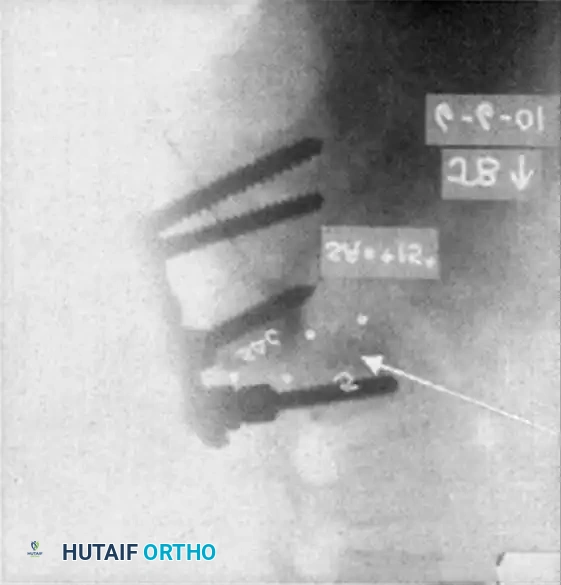
A 15-year-old competitive gymnast presents with persistent low back pain, worsening with spinal extension. Radiographs are obtained as shown below. Describe the pathology and discuss the indications for surgical intervention in this patient population.
Candidate: The radiograph demonstrates a defect in the pars interarticularis, consistent with isthmic spondylolysis. In a young athlete, I would start with conservative management including activity modification, core strengthening, and potentially a Boston brace. Surgery is considered if there is failure of conservative management, progressive listhesis, or intractable radiculopathy/neurological deficit.
Candidates often fail to distinguish between symptomatic spondylolysis and high-grade spondylolisthesis. They often suggest "surgery" too vaguely without specifying techniques like the Buck or Scott wiring or pars repair vs. instrumented fusion. Missing the importance of sagittal balance assessment in listhesis cases is a frequent error.
A high-scoring answer starts with a systematic description: "The lateral radiograph shows a lucency through the pars interarticularis of L5, which is the 'Scotty dog' collar sign. I would grade this using the Meyerding classification." Structure the management: 1. Conservative: 3-6 months of activity modification (avoiding extension), physiotherapy focusing on pelvic tilt/core, and orthotic management. 2. Indications for Surgery: Failure of conservative management (at least 6 months), slip progression >50%, or associated neurological deficit. 3. Surgical options: Pars repair (e.g., Buck, Scott, or pedicle screw/hook technique) for patients without significant listhesis vs. interbody fusion for those with instability/spondylolisthesis.
