Hemiresurfacing Case Title: Active Young Patient Beats Osteonecrosis
Key Takeaway
This topic focuses on Hemiresurfacing Case Title: Active Young Patient Beats Osteonecrosis, Case title hemiresurfacing is a surgical treatment for hip osteonecrosis in active young patients with preserved acetabular cartilage and an intact labrum. This procedure resurfaces only the femoral head, offering a less invasive alternative to total hip arthroplasty. It promotes rapid recovery and allows suitable candidates to resume demanding physical activities with positive outcomes.
Patient Presentation and History
Demographics and Chief Complaint
A 32-year-old male, active-duty military personnel, presented to the orthopedic clinic with a primary complaint of progressive, debilitating right groin and anterior thigh pain. The pain had an insidious onset approximately eight months prior to presentation. Initially intermittent and associated only with high-impact physical training, the pain had recently progressed to become constant, severely limiting his ability to perform occupational duties. He reported significant nocturnal pain, requiring non-steroidal anti-inflammatory drugs to achieve sleep. He denied any preceding acute traumatic event, mechanical symptoms such as catching or locking, or symptoms suggestive of radiculopathy.
Medical History and Risk Factors
A comprehensive review of the patient’s medical history revealed a critical risk factor: a prolonged course of high-dose systemic corticosteroids (prednisone) administered two years prior for the management of severe, refractory organizing pneumonia secondary to a viral respiratory infection. The cumulative corticosteroid dose exceeded the established threshold for increased risk of osteonecrosis.
The patient denied any history of excessive alcohol consumption, coagulopathies, sickle cell trait or disease, hyperlipidemia, or diving history (dysbarism). His body mass index was 24.5, and he was a non-smoker. Previous conservative management, including a trial of protected weight-bearing, physical therapy focusing on core and abductor strengthening, and intra-articular corticosteroid injections, provided only transient relief of symptoms.

Clinical Examination Findings
Inspection and Gait Analysis
Upon inspection, the patient demonstrated a pronounced antalgic gait, with a shortened stance phase on the right lower extremity. There was a noticeable abductor lurch (compensated Trendelenburg gait) utilized to decrease the joint reaction forces across the right hip. No gross leg length discrepancy, muscle atrophy of the quadriceps or gluteal musculature, or overlying skin changes were observed.
Range of Motion and Provocative Testing
Passive and active range of motion testing of the right hip revealed significant limitations and pain, characteristic of an intra-articular pathology.
* Flexion: Limited to 90 degrees (contralateral 120 degrees) with terminal pain.
* Internal Rotation: Severely restricted to 5 degrees in 90 degrees of flexion (contralateral 35 degrees), eliciting sharp groin pain.
* External Rotation: 30 degrees (contralateral 45 degrees).
* Abduction: 25 degrees (contralateral 45 degrees).
Provocative maneuvers were highly positive. The Stinchfield test (resisted active hip flexion with the knee extended) produced severe anterior groin pain. The FABER (Flexion, Abduction, External Rotation) test was positive for groin pain, indicating intra-articular hip pathology rather than sacroiliac joint dysfunction. The FADIR (Flexion, Adduction, Internal Rotation) test was also positive, though this was primarily due to the global capsular restriction and femoral head deformity rather than isolated femoroacetabular impingement. A log roll test of the right lower extremity produced concordant groin pain, further isolating the pathology to the hip joint.

Neurological and Vascular Assessment
Neurological examination of the bilateral lower extremities revealed intact sensation to light touch in all dermatomes (L2-S1). Motor strength was 5/5 in all major muscle groups, excluding hip flexors and abductors, which were graded 4/5 secondary to pain inhibition rather than true neurologic deficit. Deep tendon reflexes (patellar and Achilles) were symmetric and 2+. Vascular examination demonstrated palpable and symmetric femoral, popliteal, dorsalis pedis, and posterior tibial pulses. Capillary refill was less than two seconds.
Imaging and Diagnostics
Radiographic Evaluation
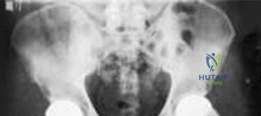
Standard radiographic series of the right hip, including an anteroposterior pelvis and a cross-table lateral view, were obtained. The AP pelvis revealed a distinct sclerotic margin within the anterosuperior aspect of the right femoral head. A classic "crescent sign" was visible, representing a subchondral fracture and impending structural failure of the articular surface.
The cross-table lateral view confirmed the presence of the subchondral radiolucency and demonstrated mild flattening of the femoral head contour, indicating early structural collapse. Crucially, the joint space remained well-preserved, and there were no signs of acetabular involvement, osteophyte formation, or secondary osteoarthritis. The contralateral left hip appeared radiographically unremarkable.

Advanced Imaging Protocol
To accurately stage the disease and assess the extent of necrosis, a non-contrast Magnetic Resonance Imaging study of the bilateral hips was performed.
The T1-weighted coronal images demonstrated a well-demarcated, band-like lesion of low signal intensity in the anterosuperior femoral head, representing the reactive interface between necrotic and viable bone. T2-weighted and Short Tau Inversion Recovery sequences exhibited the pathognomonic "double-line sign," consisting of an inner high-signal intensity line (hypervascular granulation tissue) and an outer low-signal intensity line (sclerotic bone).
The Kerboul combined necrotic angle was calculated using the mid-coronal and mid-sagittal MRI slices. The combined angle exceeded 200 degrees, categorizing this as a large necrotic lesion with a high probability of progression to severe collapse. The articular cartilage overlying the lesion showed signs of delamination, but the acetabular cartilage exhibited normal signal characteristics with no evidence of chondromalacia or subchondral edema.

Preoperative Templating
Digital templating was performed utilizing the AP pelvis radiograph calibrated with a standard radiopaque marker. The goal of templating for a hemiresurfacing arthroplasty is to determine the anatomical size of the native femoral head to ensure an exact 1-to-1 match with the implant. Sizing is critical; an oversized component will lead to excessive wear of the native acetabular cartilage, while an undersized component may alter joint biomechanics and lead to instability or impingement. The templating indicated a required femoral component size of 48 millimeters. The femoral neck geometry was also assessed to ensure adequate bone stock for the central peg of the resurfacing component.
Differential Diagnosis
When evaluating a young, active adult presenting with insidious onset groin pain, the differential diagnosis must encompass intra-articular, extra-articular, and systemic etiologies. The following table delineates the primary differential diagnoses considered in this clinical scenario.
| Diagnosis Pathophysiology | Clinical Presentation | Radiographic Findings | Key Differentiating Factors |
|---|---|---|---|
| Osteonecrosis of Femoral Head | Ischemic death of cellular elements of bone, often secondary to corticosteroid use, trauma, or idiopathic causes. Leads to subchondral collapse. | Deep, throbbing groin pain. Pain at rest and night. Antalgic gait. Decreased internal rotation. | Sclerosis, cystic changes, crescent sign (subchondral fracture), eventual head flattening. MRI shows double-line sign. |
| Femoroacetabular Impingement | Abnormal contact between the proximal femur and acetabulum (Cam or Pincer morphology) leading to labral tears and chondral damage. | Groin pain exacerbated by hip flexion and internal rotation (sitting, squatting). Mechanical symptoms (clicking). | Cam lesion (decreased head-neck offset, pistol grip deformity), Pincer lesion (coxa profunda, crossover sign). |
| Transient Osteoporosis of the Hip | Idiopathic condition characterized by spontaneous onset of hip pain and localized osteopenia. Self-limiting, usually resolving in 6-12 months. | Acute or subacute onset of severe groin/thigh pain. Weight-bearing is extremely painful. | Diffuse osteopenia of the femoral head and neck on plain films. MRI shows diffuse bone marrow edema. |
| Early Onset Osteoarthritis | Progressive degradation of articular cartilage, subchondral bone changes, and synovial inflammation. Often secondary to underlying dysplasia or prior trauma. | Activity-related groin pain, morning stiffness lasting less than 30 minutes. Gradual loss of global range of motion. | Joint space narrowing, subchondral sclerosis, osteophyte formation, subchondral cysts. |
Surgical Decision Making and Classification
Disease Staging and Classification
The patient's condition was classified utilizing the Ficat and Arlet staging system. Based on the presence of a subchondral fracture (crescent sign) and early flattening of the femoral head, with preservation of the joint space, the disease was categorized as Ficat Stage III. Using the modified Steinberg (University of Pennsylvania) classification, which quantifies the extent of involvement, the patient was classified as Stage III-C (subchondral collapse involving >30% of the articular surface).

Rationale for Operative Intervention
Non-operative management for Ficat Stage III osteonecrosis with a large necrotic angle is universally unsuccessful in preventing further structural collapse and secondary osteoarthritis. Operative intervention was definitively indicated.
Joint-preserving procedures, such as core decompression with or without bone marrow aspirate concentrate, are generally reserved for pre-collapse stages (Ficat I and II). Once subchondral collapse has occurred, the structural integrity of the femoral head is compromised, and core decompression offers no biomechanical support, leading to a high failure rate. Vascularized free fibular grafting is an option; however, it involves significant donor site morbidity, a prolonged period of restricted weight-bearing, and variable success rates in advanced stages.
Justification for Hemiresurfacing Arthroplasty
The decision was made to proceed with a femoral hemiresurfacing arthroplasty. This procedure involves replacing only the diseased articular surface of the femoral head with a metallic prosthesis, retaining the native acetabulum and the femoral neck.
This approach was selected over a standard Total Hip Arthroplasty for several critical reasons specifically tailored to this patient's demographic:
1. Bone Preservation: Hemiresurfacing preserves the proximal femoral bone stock. In a 32-year-old patient, future revisions are almost inevitable. By retaining the femoral neck, subsequent conversion to a standard THA is technically straightforward and utilizes primary THA implants rather than complex revision stems.
2. Acetabular Preservation: The patient's MRI and preoperative templating indicated pristine acetabular cartilage. Sparing the native acetabulum avoids the risks of acetabular component wear, osteolysis, and complex acetabular revisions in the future.
3. Biomechanical Restoration: The large diameter of the resurfacing component restores native hip biomechanics, allowing for a high level of stability and a significantly reduced risk of dislocation compared to standard THA.
4. Activity Level: Hemiresurfacing allows for a return to high-demand occupational duties and high-impact sports, which are often restricted following conventional THA due to concerns regarding bearing surface wear and dislocation.
The primary prerequisite for this procedure is an intact, healthy acetabular cartilage surface, which must be definitively confirmed intraoperatively.
Surgical Technique and Intervention
Anesthesia and Patient Positioning
The patient was administered general endotracheal anesthesia combined with a continuous lumbar plexus block for optimal postoperative pain management. He was positioned in the lateral decubitus position on a standard operating table. Rigid pelvic fixation was achieved using anterior and posterior padded supports. The right lower extremity was meticulously prepped and draped in a standard sterile fashion, allowing for free manipulation of the limb throughout the procedure.

Surgical Approach
A modified posterior approach to the hip was utilized. A curvilinear incision was made centered over the greater trochanter. The subcutaneous tissues were dissected, and the fascia lata was split longitudinally, extending proximally into the gluteus maximus fascia. The gluteus maximus fibers were split bluntly.
The short external rotators (piriformis, superior gemellus, obturator internus, and inferior gemellus) were identified. The sciatic nerve was palpated, identified, and protected throughout the case, though not formally neurolysed. The short external rotators were tenotomized near their insertion on the greater trochanter and tagged for later repair. A T-shaped capsulotomy was performed to expose the joint.
Joint Inspection and Preparation
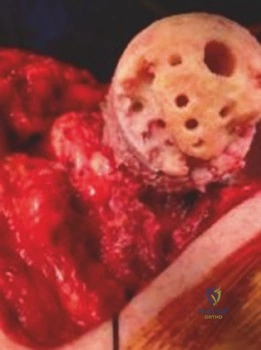
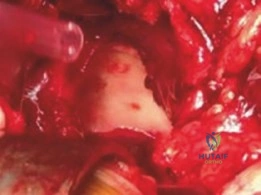
The hip was dislocated posteriorly with gentle flexion, adduction, and internal rotation. The femoral head exhibited a distinct area of chondral delamination and flattening corresponding to the necrotic segment. Crucially, the acetabulum was thoroughly inspected. The articular cartilage was found to be pristine, with no evidence of eburnation, chondromalacia, or labral pathology, confirming the appropriateness of proceeding with hemiresurfacing rather than converting to a total hip arthroplasty.
Femoral Head Machining
The preparation of the femoral head is the most critical and technically demanding phase of the procedure.
1. Guide Pin Placement: A guide pin was inserted into the center of the femoral neck, advancing into the femoral head. Meticulous attention was paid to the alignment. The pin must be placed in relative valgus and neutral version to avoid notching the superior femoral neck, which is a primary cause of postoperative femoral neck fracture. Position was confirmed with intraoperative fluoroscopy.
2. Cylindrical Reaming: A cylindrical reamer was passed over the guide pin to machine the peripheral equator of the femoral head to the templated size (48 mm).
3. Face Reaming: A face reamer was utilized to remove the superior osteonecrotic bone down to a bleeding, viable cancellous bone bed. All necrotic bone must be excised to ensure a stable interface for cementation.
4. Chamfering: A chamfer reamer was used to shape the transition zone between the cylindrical and flat cuts, matching the internal geometry of the resurfacing prosthesis.
5. Central Peg Preparation: A drill was used over the guide pin to create the channel for the central peg of the prosthesis.

Implantation and Closure
The prepared femoral head was thoroughly irrigated with pulsatile lavage and dried to remove marrow fat and debris. A highly cross-linked, high-viscosity polymethylmethacrylate bone cement was mixed and applied to the internal surface of the 48 mm cobalt-chrome hemiresurfacing component.
The component was impacted onto the prepared femoral head. Firm, continuous pressure was applied to ensure complete seating and optimal cement interdigitation into the cancellous bone. Extruded cement was meticulously removed, paying special attention to the inferior neck to avoid retained third-body wear particles.
Following cement polymerization, the hip was reduced. Stability and range of motion were assessed; the hip was stable in all extremes of motion, and there was no impingement. The capsule was closed robustly with heavy non-absorbable sutures. The short external rotators were repaired to their anatomical footprint via transosseous tunnels. The fascia lata, subcutaneous tissues, and skin were closed in a layered fashion.
Post Operative Protocol and Rehabilitation
Immediate Postoperative Phase (Weeks 0-2)
The patient was transferred to the post-anesthesia care unit and subsequently to the orthopedic ward. Deep vein thrombosis prophylaxis was initiated with low-molecular-weight heparin, transitioning to oral aspirin (81 mg twice daily) for 30 days, given the patient's low risk profile and early mobilization.
Unlike standard total hip arthroplasty, the large diameter of the resurfacing head provides inherent stability, negating the need for strict posterior hip precautions. Weight-bearing was permitted as tolerated with the assistance of crutches. The primary goal in the first two weeks was wound healing, edema control, and restoration of basic mobility. Physical therapy focused on isometric quadriceps and gluteal sets, ankle pumps, and active-assisted range of motion.
Intermediate Rehabilitation (Weeks 2-6)
Sutures were removed at two weeks, and the surgical site demonstrated excellent healing. The patient was transitioned to a single crutch or cane and progressed to unassisted ambulation as gait mechanics normalized. Physical therapy advanced to include closed-kinetic-chain exercises, stationary cycling with low resistance, and aquatic therapy once the wound was fully sealed. Emphasis was placed on restoring abductor strength to eliminate the preoperative Trendelenburg lurch.

Advanced Rehabilitation and Return to Function (Weeks 6-12+)
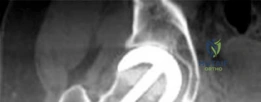
By six weeks postoperative, the patient was ambulating without assistive devices and reported a complete resolution of his preoperative groin pain. Radiographs obtained at this interval demonstrated a well-seated prosthesis with no evidence of radiolucent lines, stem subsidence, or femoral neck narrowing.
Rehabilitation progressed to dynamic strengthening, proprioceptive training, and sport-specific drills. Impact activities, such as running and jumping, were restricted until the six-month mark to allow for complete biological integration and remodeling of the femoral neck in response to the altered biomechanical load. At one year postoperative, the patient was successfully cleared to return to full, unrestricted active military duty, including high-impact physical training, demonstrating the functional efficacy of the hemiresurfacing procedure in this high-demand demographic.
Clinical Pearls and Pitfalls
Surgical Pearls
- Meticulous Acetabular Assessment: The success of a hemiresurfacing procedure hinges entirely on the integrity of the native acetabular cartilage. The surgeon must be prepared to seamlessly convert to a total hip resurfacing or a standard total hip arthroplasty if intraoperative inspection reveals significant chondral damage or eburnation.
- Guide Pin Orientation: Placement of the initial guide wire in relative valgus is paramount. Varus placement increases shear forces across the femoral neck, significantly elevating the risk of postoperative femoral neck fracture.
- Capsular Management: A robust repair of the capsule and short external rotators is critical not only for stability but also for restoring the vascular supply to the remaining femoral neck, mitigating the risk of secondary necrosis of the retained bone.
- Complete Necrotic Bone Excision: Failure to ream down to a bleeding, viable cancellous bone bed will result in poor cement interdigitation and early aseptic loosening of the component.
Potential Pitfalls
- Femoral Neck Notching: During cylindrical reaming, the surgeon must exercise extreme caution to avoid notching the superior or lateral femoral neck. Even a minor cortical defect acts as a stress riser, dramatically increasing the incidence of catastrophic femoral neck fracture.
- Thermal Necrosis: The large volume of PMMA cement required for the resurfacing component generates significant exothermic heat. Failure to irrigate the surrounding tissues or utilizing an excessively thick cement mantle can induce thermal necrosis of the remaining femoral head and neck.
- Progression of Acetabular Wear: The primary mode of long-term failure in hemiresurfacing is the progressive wear of the native acetabular cartilage against the metallic prosthesis. Patients must be counseled that this is a temporizing, bone-preserving procedure, and conversion to a total hip arthroplasty is likely required within 10 to 15 years. Regular radiographic surveillance is mandatory to monitor joint space narrowing.