Advanced Ceramic THA: Vitamin E Enhanced for Complex Acetabulum Case
Key Takeaway
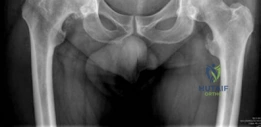
For anyone wondering about Advanced Ceramic THA: Vitamin E Enhanced for Complex Acetabulum Case, This 69-year-old male case highlights uncemented total hip arthroplasty for severe right hip osteoarthritis. Due to extensive erosions and poor acetabular bone stock, impaction autografting using the patient’s femoral head was crucial. This procedure, a significant **case title ceramic** consideration in orthopedic surgery, achieved stable implant fixation and improved hip mechanics, resolving pain and inability to walk.
A 48-year-old male presents with chronic pain following a past acetabular fracture managed non-operatively. He has an antalgic gait, fixed external rotation, and a positive Trendelenburg sign. Below is his AP pelvic radiograph. Describe the findings and state your primary diagnosis.
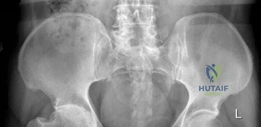
Candidate: The radiograph shows end-stage degenerative change of the left hip. There is joint space narrowing, superior and medial migration of the femoral head, and significant osteophytosis. The patient has a history of a complex acetabular fracture, so this is post-traumatic osteoarthritis. There is also evidence of protrusio acetabuli.
Describing the arthritis but failing to comment on the structural deformity. Candidates often miss the "malunion" aspect or fail to classify the severity of the bone loss, which is essential for pre-operative planning in a young patient.
Structure your answer: 1. Diagnosis: Post-traumatic osteoarthritis secondary to malunited acetabular fracture. 2. Radiological features: Concentric joint space narrowing, superior-medial migration (protrusio), and marginal osteophytosis. 3. Structural assessment: Note the heterotopic ossification (Brooker Grade II-III) and the need for CT-based evaluation of the Paprosky defect (likely Type IIIB) to plan for reconstruction, as the anatomy is significantly distorted.
This patient is 48 years old and highly active. Given the complexity of his acetabular reconstruction, why would you select a ceramic-on-Vitamin E enhanced polyethylene (VEXPE) bearing over traditional Metal-on-Polyethylene or Ceramic-on-Ceramic?
Candidate: I would choose Ceramic-on-VEXPE for a young patient because it has very low wear rates. The Vitamin E prevents the polyethylene from oxidizing, which makes it last longer. It’s better than metal-on-poly because there's less risk of metal ion release and wear-related osteolysis.
Focusing only on wear. Failing to mention "oxidative stability" or the specific benefit of Vitamin E as a free-radical scavenger, and not addressing the specific concern regarding edge-loading in a complex reconstruction where implant position might be challenging.
"I would use a Ceramic-on-VEXPE bearing. 1. Wear: Ceramic provides superior scratch resistance and hardness, reducing particulate debris. 2. Biochemistry: Vitamin E (alpha-tocopherol) acts as a sacrificial antioxidant, scavenging free radicals generated by cross-linking, preventing long-term embrittlement. 3. Clinical Utility: In a complex reconstruction where acetabular orientation might be suboptimal due to bone loss, this bearing provides high mechanical toughness and oxidative resistance, balancing longevity with survivorship requirements in a young, active patient."
During the procedure, you encounter a Paprosky Type IIIB acetabular defect. You have already debrided the area. Describe your steps to reconstruct the acetabulum.
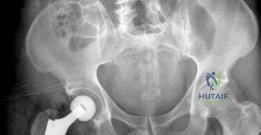
Candidate: I would use a structural allograft to fill the defect. I'd fix it with screws, then ream the acetabulum to get a good fit. Then I'd put in a standard cup, maybe with some extra screws to hold it in place since the bone is compromised.
Ignoring the "host bone contact" rule. Failing to mention the critical 50-70% rule for host-bone contact or the risks of reaming into a protrusio defect (medial wall penetration).
"Reconstruction of a Type IIIB defect requires restoring the acetabular dome. 1. Debridement: Remove all fibrous tissue to expose bleeding host bone. 2. Structural Reconstruction: Utilize a pre-contoured femoral head allograft, secured with screws to the posterior-superior column to restore the rim. 3. Preparation: Controlled reaming, ensuring at least 50-70% contact with bleeding host bone. 4. Augmentation: Ensure the cup is press-fit and augment stability with multiple cancellous screws into confirmed safe zones (e.g., ilium/posterior column) to counteract rotational forces."
