Distal Humerus Fractures: Epidemiology, Advanced Anatomy & Biomechanics
Key Takeaway
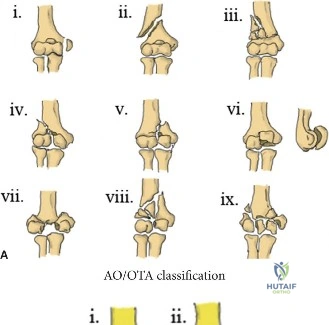
Distal humerus fractures are complex elbow injuries, primarily categorized by AO/OTA classification. Successful management demands deep understanding of surgical anatomy, including medial/lateral columns and neurovascular structures, alongside biomechanical principles of fixation. Dual plating, often orthogonal or parallel, is standard to restore stability, enabling early rehabilitation and preserving functional range of motion for improved patient outcomes.
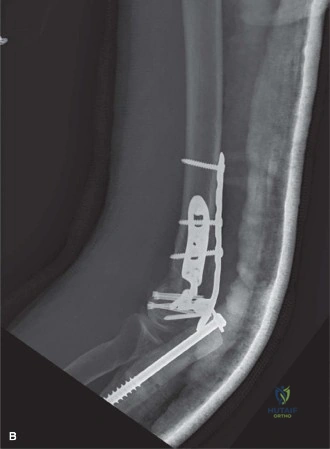
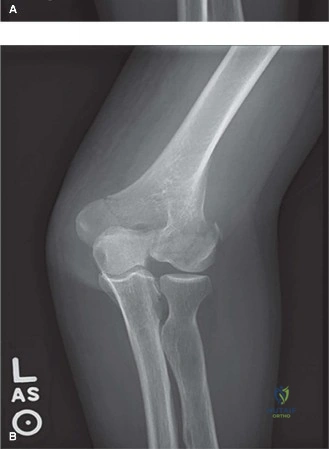
You are presented with a 45-year-old patient who sustained a high-energy distal humerus fracture after a fall from a height. Looking at the provided radiograph, describe the fracture classification and the essential components of your pre-operative planning.
Candidate: This is a complex intra-articular distal humerus fracture, which I would classify using the AO/OTA system, likely as a Type C fracture. For pre-operative planning, I would order a CT scan with 3D reconstructions to assess the articular comminution. I need to plan for a posterior approach, likely with an olecranon osteotomy for visualization, ensure the availability of dual locking plates, and have a clear strategy for the ulnar nerve.
Candidates often fail to mention the reconstruction sequence or the specific biomechanical goal (restoring the articular block before securing it to the shaft). They also frequently omit the necessity of pre-operative templating for hardware length and the specific consideration for the patient's bone quality, which dictates the plate choice.
A high-scoring answer structures the response: 1. Classification: Identify as AO/OTA Type C (complete articular). 2. Imaging: Emphasize the necessity of fine-cut CT to map the articular fragments (capitellum/trochlea). 3. Approach: Justify the choice of exposure (e.g., olecranon osteotomy for Type C to allow articular visualization). 4. Fixation Strategy: Mention the "Dual Plating" principle (orthogonal or parallel), the importance of 2.0/2.4mm lag screws for the articular block, and the definitive plan for ulnar nerve protection/transposition.
During your exposure, you are preparing to perform an olecranon osteotomy. Why is the identification and management of the ulnar nerve so critical, and what is your specific surgical protocol for it during this procedure?
Candidate: The ulnar nerve is highly susceptible to traction injury or iatrogenic damage during distal humerus surgery. My protocol involves formal identification at the cubital tunnel, neurolysis, and protection with a vessel loop. I would routinely perform an anterior submuscular transposition to move it away from the potential hardware irritation posteriorly.
The candidate ignores the "why" or assumes routine transposition is mandatory without understanding the risks of devascularization. Failing to mention "neurolysis" or simply saying "I'll protect it" without detailing the extent of mobilization is insufficient for an elite-level exam.
A perfect answer addresses the anatomy (posterior to medial epicondyle), the risks (traction, hardware impingement, and scarring), and the procedural steps: identify early, careful mobilization (8-10cm), ensure it remains viable, and perform anterior submuscular transposition as a standard measure in complex cases to prevent long-term post-operative ulnar neuropathy.
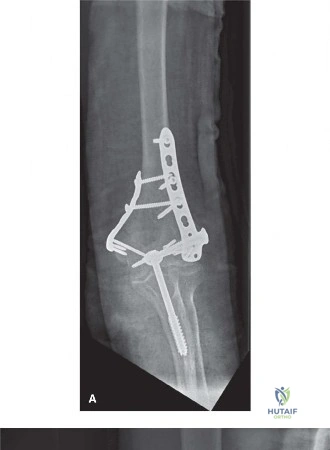
You have successfully reconstructed the articular surface. Describe the biomechanical rationale behind your choice of dual plating configuration (Orthogonal vs. Parallel) for a Type C fracture.
Candidate: Dual plating is standard. Orthogonal (90/90) plating places one plate on the medial column and one on the lateral column, providing stability against varus and valgus. Parallel plating puts both on the posterior columns, which is biomechanically stronger in torsion and reduces lateral hardware prominence.
The candidate fails to explain that screws from one plate must lock into the other plate to create a stable "locked cage" construct. Simply putting on two plates without achieving interdigitation of screws is poor practice.
The candidate must define the biomechanical principle: The goal is to restore the structural integrity of the columns. Orthogonal plating provides excellent resistance to coronal plane forces. Parallel plating is arguably superior in resisting torsional forces and allows for plate application entirely on the posterior aspect. Crucially, the candidate mentions that screws must cross-engage the opposite column (locking into the plates) to ensure a rigid construct that permits early range of motion.
