Richter Hernia Mastery: Orthopedic Board Prep & Clinical Management
Key Takeaway
A Richter hernia involves the incarceration of only a portion of the bowel wall circumference, often presenting with disproportionate pain and tenderness but incomplete obstructive symptoms. Despite partial involvement, it carries a very high risk of strangulation and gangrene due to tight constriction, making prompt diagnosis and surgical intervention crucial for preventing severe complications.
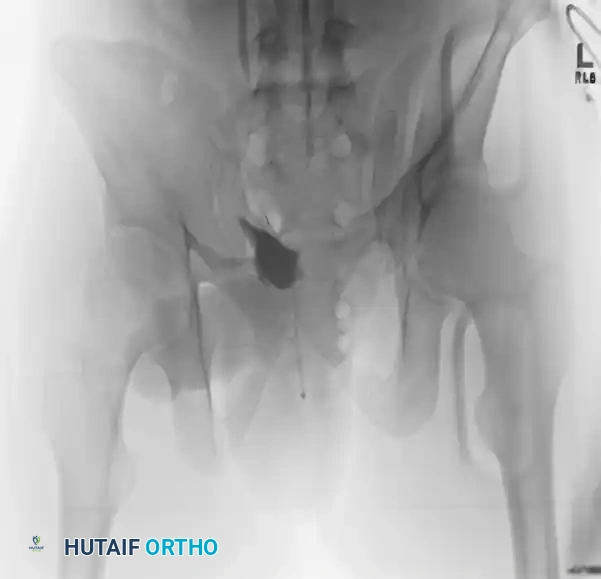
A 72-year-old male presents to the Emergency Department with acute right groin pain, disproportionate to physical examination findings, and a tender, non-reducible mass. He reports mild nausea but denies vomiting or obstipation. His past medical history includes a laparoscopic appendectomy 5 years ago. An abdominal CT scan is performed. What is the diagnosis based on the imaging provided?
Candidate: "Based on the CT image, this is a Richter hernia. It involves the incarceration of only a portion of the bowel wall circumference. It explains the patient's disproportionate pain without complete obstruction symptoms, but it is high-risk for strangulation."
Candidates often miss the diagnosis by focusing solely on "small bowel obstruction" or misidentifying it as a standard indirect inguinal hernia. Failing to mention the specific danger—that the lack of obstructive symptoms masks early gangrene—is a common examiner critique.
Structure the answer: Pathology (Richter hernia: partial wall circumference incarceration), Clinical Correlation (explains why there is no vomiting/obstipation despite the tender, irreducible mass), and Management Principle (must classify as a surgical emergency with high strangulation risk despite the lack of systemic bowel obstruction signs).
You are managing this patient in a trauma unit following a fall, and this hernia was an incidental finding. What is the surgical priority, and why must you be cautious about the 'viability' of the bowel after reduction?
Candidate: "The priority is urgent surgical exploration. I must be cautious because, even after reduction, the segment may appear viable but could suffer delayed perforation due to reperfusion injury or persistent mural necrosis. I would use warm saline packs to assess for recovery of peristalsis and capillary refill before closing."
Admitting the patient for observation or attempting manual reduction without surgical theater readiness. Also, failing to recognize that "appearing viable" does not guarantee full-thickness wall integrity.
Highlight the "Wait and See" protocol: After reducing the hernia sac, inspect the bowel with warm saline. If there is doubt regarding the serosal integrity or vascular return, resection is mandatory. Emphasize that in Richter hernias, the anti-mesenteric border is often the most damaged, making careful inspection of that specific margin essential.
