ABOS Part I & AAOS OITE Orthopedic Surgery Board Review Questions - Comprehensive Module | Part 22156
Key Takeaway
This module offers 20 advanced multiple-choice questions mirroring the ABOS Part I and AAOS OITE examinations. It covers diverse orthopedic topics including trauma, sports medicine, spine, pediatrics, and adult reconstruction. Designed for comprehensive board preparation, it provides high-yield clinical teaching cases to enhance understanding and readiness for orthopedic certification.
ABOS Part I & AAOS OITE Orthopedic Surgery Board Review Questions - Comprehensive Module | Part 22156
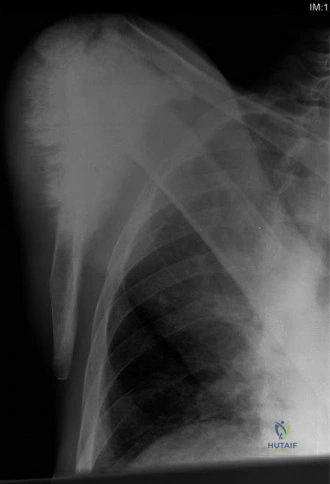
A 68-year-old male presents with a 2-year history of progressive right shoulder pain, pseudoparalysis (active elevation to 45 degrees, passive 90 degrees), and significant night pain refractory to NSAIDs and corticosteroid injections. Radiographs demonstrate severe glenohumeral osteoarthritis with superior migration of the humeral head and an acromiohumeral interval of 4mm. What is the most appropriate surgical intervention?
Correct Answer: C
This patient presents with signs and symptoms consistent with rotator cuff tear arthropathy (RCAT), characterized by chronic shoulder pain, pseudoparalysis, superior migration of the humeral head, and glenohumeral arthritis. In such cases, the deltoid muscle becomes the primary elevator of the arm, and a reverse total shoulder arthroplasty (RTSA) is indicated to medialize and distalize the center of rotation, increasing the deltoid's lever arm and restoring function. Anatomic total shoulder arthroplasty is contraindicated in the presence of an irreparable rotator cuff tear with superior migration as it relies on an intact rotator cuff for stability and function. Arthroscopic repair is not feasible given the chronic nature, pseudoparalysis, and arthritic changes. Hemiarthroplasty alone would not address the deltoid's mechanical disadvantage.
A 32-year-old competitive runner presents with 6 months of worsening posteromedial ankle pain, exacerbated by push-off and toe-off activities. Clinical examination reveals pain with resisted plantarflexion and inversion. MRI shows tenosynovitis and thickening of the tendon sheath. Which tendon is most likely affected?
Correct Answer: C
The clinical presentation of posteromedial ankle pain, exacerbated by push-off/toe-off, and pain with resisted plantarflexion and inversion, is classic for tibialis posterior tendon dysfunction (TPTD). The tibialis posterior tendon is a primary dynamic stabilizer of the medial longitudinal arch and is crucial for plantarflexion and inversion. Tenosynovitis and thickening on MRI further support this diagnosis. Achilles tendon pain is typically posterior, peroneus brevis pain is lateral, FHL pain is posteromedial but typically associated with hallux rigidus or dance, and tibialis anterior pain is anterior.
A 7-year-old male falls from a tree, sustaining a supracondylar humerus fracture. On arrival, he has a pulseless but warm and pink hand. There is no evidence of motor or sensory deficit. What is the MOST appropriate initial management step?
Correct Answer: C
A pulseless but warm and pink hand with good capillary refill following a supracondylar humerus fracture in a child suggests a vascular spasm, not complete arterial transection. The most appropriate initial step is a gentle closed reduction of the fracture. If the pulse returns after reduction, the limb should be pinned. If the pulse does not return after reduction, then further vascular assessment (e.g., Doppler, potentially angiography) and possibly exploration would be warranted. Immediate angiography or fasciotomy is premature. Observation without attempting reduction delays appropriate treatment and risks worsening ischemia.
Which of the following surgical approaches to the hip carries the highest risk of injury to the superior gluteal nerve?
Correct Answer: C
The direct lateral approach (Hardinge approach) involves incising the fascia lata and splitting the gluteus medius abductor insertion, which places the superior gluteal nerve at risk. The superior gluteal nerve innervates the gluteus medius, gluteus minimus, and tensor fascia lata. Injury to this nerve can lead to a Trendelenburg gait. While all approaches have specific nerve risks, the direct lateral approach is particularly known for this risk due to its dissection plane. The posterior approach risks the sciatic nerve, the direct anterior approach risks the lateral femoral cutaneous nerve, and the anterolateral approach carries a lower risk of superior gluteal nerve injury compared to the direct lateral but still involves the abductors.
A 55-year-old male with a history of diabetes mellitus and chronic kidney disease presents with acute onset, severe left foot pain and swelling, warmth, and erythema, but no history of trauma. Radiographs show disorganization of the midfoot joints, fragmentation, and 'rocker-bottom' deformity. What is the most likely diagnosis?
Correct Answer: D
The clinical presentation (acute onset, severe pain, swelling, warmth, erythema in a diabetic patient) combined with the radiographic findings (disorganization of midfoot joints, fragmentation, rocker-bottom deformity) is highly characteristic of Charcot neuroarthropathy. This condition results from an underlying neuropathy (common in diabetes) leading to repetitive microtrauma and subsequent destructive changes in the joints. While gout, septic arthritis, osteomyelitis, and cellulitis can present with similar acute inflammatory signs, the radiographic findings of joint disorganization and fragmentation, particularly the 'rocker-bottom' deformity, are pathognomonic for Charcot arthropathy.
What is the most common primary malignant bone tumor in children and young adults?
Correct Answer: B
Osteosarcoma is the most common primary malignant bone tumor in children and young adults, typically presenting in the metaphysis of long bones (e.g., distal femur, proximal tibia, proximal humerus). Ewing's sarcoma is the second most common, often affecting the diaphysis. Chondrosarcoma is more common in older adults, and multiple myeloma is a plasma cell dyscrasia primarily affecting older individuals. Fibrosarcoma is a rare soft tissue sarcoma that can occasionally arise from bone.
A 28-year-old professional basketball player sustains an acute knee injury after an awkward landing. He reports hearing a 'pop' and describes immediate swelling and difficulty bearing weight. Lachman test is positive, and there is a positive pivot shift. What is the most appropriate next step in management?
Correct Answer: C
The clinical presentation (pop, swelling, difficulty bearing weight, positive Lachman and pivot shift) is highly indicative of an ACL tear. However, the most appropriate next step is an MRI of the knee to confirm the diagnosis, evaluate for associated meniscal tears, collateral ligament injuries, and chondral damage, which will influence treatment planning. While an ACL tear is likely, imaging provides crucial information for shared decision-making regarding operative versus non-operative management, timing of surgery, and potential concomitant procedures. Immediate surgery is not typically indicated acutely due to swelling and inflammation. Immobilization alone is not definitive treatment for a young athlete. Corticosteroid injections are not indicated for acute ligamentous injury.
Which of the following describes the anatomical structure primarily responsible for providing a 'rotary stability' to the knee, especially against external tibial rotation in a valgus stress?
Correct Answer: E
The posteromedial corner (PMC) of the knee, which includes the superficial MCL, posterior oblique ligament, and semimembranosus attachments, is crucial for controlling valgus and external rotational stability, particularly at 30 degrees of knee flexion. While the MCL resists valgus stress, the complete 'rotary stability' against combined valgus and external rotation (often seen in complex knee injuries) is attributed to the integrity of the PMC. The ACL primarily resists anterior translation and internal rotation. The LCL resists varus stress. The PCL resists posterior translation.
A 4-year-old child presents with a painless limp. Examination reveals limited abduction and internal rotation of the hip. Radiographs show increased density and flattening of the femoral epiphysis. What is the most likely diagnosis?
Correct Answer: D
The clinical picture of a painless limp in a 4-year-old with limited hip abduction and internal rotation, coupled with radiographic findings of increased density (sclerosis) and flattening (fragmentation/collapse) of the femoral epiphysis, is characteristic of Legg-Calvé-Perthes disease. This condition is idiopathic avascular necrosis of the femoral head. SCFE typically occurs in older, often obese adolescents. DDH presents earlier and with different radiographic findings. Septic arthritis and transient synovitis are acute painful conditions.
What is the primary role of the annulus fibrosus in the intervertebral disc?
Correct Answer: C
The annulus fibrosus, composed of concentric lamellae of collagen fibers, primarily functions to contain the nucleus pulposus and resist tensile forces during spinal movements. While it contributes to bearing axial load and spinal flexibility, its most critical role is to encapsulate the highly hydrated nucleus pulposus. The nucleus pulposus itself acts more as the shock absorber, and the annulus maintains its position. Fibroblasts within the annulus produce collagen and proteoglycans, but this is a cellular function, not the primary structural role.
A 45-year-old male presents with acute onset of right shoulder pain and weakness after attempting to lift a heavy object. On examination, he has significant weakness in external rotation and abduction. Deltoid function is intact. Radiographs are normal. Which of the following is the most likely diagnosis?
Correct Answer: B
The patient presents with acute shoulder pain and weakness, specifically in external rotation and abduction. While the supraspinatus initiates abduction, the infraspinatus is the primary external rotator. Given the intact deltoid (ruling out axillary nerve palsy) and significant weakness in external rotation, a tear of the infraspinatus is the most likely diagnosis. Subscapularis tears primarily affect internal rotation, and long head of biceps rupture typically presents with a 'Popeye' deformity and weakness in elbow flexion/supination, not primarily shoulder abduction/external rotation.
A 62-year-old female with a history of osteoporosis sustains a displaced intra-articular fracture of the distal radius (AO type C3). She is active and has good functional demands. What is the most appropriate definitive management strategy?
Correct Answer: D
For a displaced intra-articular distal radius fracture (AO type C3) in an active patient with good functional demands, open reduction and internal fixation with a volar locking plate is considered the gold standard. This approach allows for stable anatomical reduction, early range of motion, and addresses the challenge of comminution and osteopenia often seen in C3 fractures. Closed reduction and splinting is inadequate for displaced intra-articular fractures. Percutaneous pinning or external fixation alone may not provide sufficient stability or allow for direct visualization and reduction of articular fragments, especially in complex, comminuted patterns.
A 7-year-old boy presents with a 3-week history of right hip pain and a limp. He denies trauma. On examination, he has decreased internal rotation and abduction of the right hip. Radiographs show increased density of the right femoral epiphysis and a flattened appearance. What is the most likely diagnosis?
Correct Answer: D
The clinical presentation of a 7-year-old boy with hip pain, limp, and decreased hip motion (especially internal rotation and abduction), combined with radiographic findings of increased density (sclerosis) and flattening (fragmentation) of the femoral epiphysis, is classic for Legg-Calvé-Perthes disease. Septic arthritis would present acutely with systemic signs and extreme pain, transient synovitis is usually self-limiting with normal radiographs after a few days, SCFE typically occurs in older, often obese adolescents, and DDH is usually diagnosed in infancy or early childhood.
A 32-year-old competitive runner presents with chronic pain along the medial aspect of her left foot, exacerbated by activity. Examination reveals tenderness just distal to the medial malleolus, reproducible pain with resisted plantarflexion and inversion, and a pes planus foot posture. What is the most likely diagnosis?
Correct Answer: D
The symptoms of chronic medial foot pain exacerbated by activity, tenderness distal to the medial malleolus, pain with resisted plantarflexion and inversion, and an associated pes planus deformity are highly suggestive of Posterior Tibial Tendon Dysfunction (PTTD). PTTD is a progressive condition that can lead to adult-acquired flatfoot. Plantar fasciitis causes heel pain. Achilles tendinopathy causes pain in the posterior ankle/heel. Tarsal tunnel syndrome involves nerve compression, often with burning/tingling. A navicular stress fracture would typically present with localized dorsal midfoot pain and often swelling.
A 55-year-old female presents with severe, progressive back pain radiating down both legs, worsening with standing and walking, and relieved by sitting or leaning forward. She also reports bilateral leg numbness and weakness. On examination, she has diminished patellar and Achilles reflexes bilaterally. What is the most likely diagnosis?
Correct Answer: B
The classic symptoms of neurogenic claudication – bilateral leg pain, numbness, and weakness exacerbated by standing/walking and relieved by sitting/leaning forward (shopping cart sign) – are highly indicative of lumbar spinal stenosis. While a large disc herniation or spondylolisthesis can cause radiculopathy, bilateral symptoms relieved by flexion strongly point towards stenosis. Cauda equina syndrome would involve acute urinary retention, saddle anesthesia, and severe, progressive neurological deficits. Facet arthropathy typically causes axial back pain, potentially referred pain, but not classic neurogenic claudication.
Which of the following describes the most common mechanism of injury for an anterior cruciate ligament (ACL) rupture?
Correct Answer: C
The most common mechanism for ACL rupture is a non-contact injury involving deceleration, cutting, or pivoting maneuvers, typically with the knee in slight flexion, valgus, and external rotation of the tibia on the femur. This creates significant tension on the ACL. A direct blow to the anterior tibia (dashboard injury) can cause a posterior cruciate ligament (PCL) injury. Hyperextension with varus force might stress the posterolateral corner, while a direct posterior force to the tibia causes PCL injury. Landing in full extension is less common than dynamic valgus loading for ACL rupture.
A 28-year-old male sustains an open Schatzker type VI tibial plateau fracture with significant soft tissue compromise. After initial debridement and external fixation, what is the optimal timing for definitive internal fixation?
Correct Answer: C
For complex open tibial plateau fractures with significant soft tissue injury, the 'staged protocol' is generally preferred. This involves initial debridement, provisional stabilization with an external fixator, and then delayed definitive internal fixation once the soft tissues have adequately recovered and the 'wrinkle sign' is present (indicating decreased edema). This typically occurs between 5-10 days. Operating immediately in compromised soft tissues increases the risk of wound complications and infection. Waiting too long (3 weeks) might lead to fracture stiffness and more difficult reduction. The question specifically asks for definitive internal fixation, not initial debridement or external fixation, which should happen urgently. The 'wrinkle sign' is key to timing definitive fixation in such injuries.
What is the most common benign bone tumor of the hand?
Correct Answer: A
Enchondroma is by far the most common benign bone tumor of the hand, frequently found in the phalanges and metacarpals. Osteochondromas are common benign tumors but less frequent in the hand than enchondromas. Giant cell tumors are rare in the hand, and aneurysmal bone cysts and osteoid osteomas are also less common in this location compared to enchondromas.
In the management of a displaced femoral shaft fracture in a 3-year-old child, which of the following is the most appropriate initial treatment?
Correct Answer: B
For a displaced femoral shaft fracture in a 3-year-old child, spica cast immobilization is the preferred initial treatment. Children in this age group have excellent remodeling potential and tolerate cast immobilization well. Intramedullary nailing is typically reserved for older children (usually >5-6 years) or specific fracture patterns. External fixation is generally reserved for open fractures, polytrauma, or significant soft tissue compromise. Open reduction and plating is used in specific circumstances but not as first-line for this age group. Skeletal traction followed by cast is an older method, largely supplanted by immediate spica casting for this age group.
A 68-year-old male presents with sudden onset of right knee pain and swelling. On aspiration, the synovial fluid is cloudy and contains negatively birefringent, needle-shaped crystals. What is the most appropriate management for this condition?
Correct Answer: C
The description of cloudy synovial fluid with negatively birefringent, needle-shaped crystals is pathognomonic for gout (monosodium urate crystal arthropathy). Acute attacks are best managed with NSAIDs and/or colchicine. Intra-articular steroid injection can also be used but NSAIDs/colchicine are often first-line. Oral antibiotics are for septic arthritis (which would show positive gram stain and high WBC count, not crystals). Surgical debridement is not indicated for acute gout. Allopurinol is a long-term urate-lowering therapy used for chronic gout prevention, not for acute attack management.
None
