Introduction and Epidemiology
Periacetabular osteotomy, originally described by Reinhold Ganz in 1988 and frequently referred to as the Bernese osteotomy, represents the gold standard surgical intervention for symptomatic developmental dysplasia of the hip in skeletally mature patients. Developmental dysplasia of the hip encompasses a spectrum of capsular and osseous anomalies characterized primarily by a shallow acetabulum, deficient anterior and lateral femoral head coverage, and varying degrees of capsular laxity. Left untreated, the abnormal biomechanical environment accelerates chondral degradation, labral hypertrophy, and eventual secondary osteoarthritis.
The epidemiological profile of developmental dysplasia of the hip demonstrates a strong female predilection, with a female-to-male ratio approaching four to one. While severe manifestations are often identified and managed during infancy or early childhood, subtle dysplastic variants frequently remain asymptomatic until the second or third decade of life. Patients typically present with insidious onset, activity-related groin pain, mechanical symptoms indicative of labral pathology, and fatigue of the abductor musculature.

The primary objective of the periacetabular osteotomy is to completely free the acetabulum from the hemipelvis through a series of reproducible, extra-articular osteotomies. This allows for multiplanar reorientation of the acetabular fragment to optimize femoral head coverage, normalize joint reaction forces, and medialize the hip center of rotation. Unlike traditional pelvic osteotomies such as the Salter or Steel procedures, the periacetabular osteotomy preserves the posterior column of the hemipelvis, thereby maintaining intrinsic pelvic ring stability and permitting early postoperative mobilization. Furthermore, it does not alter the morphology of the true pelvis, making it an ideal procedure for females of childbearing age, as it does not compromise the birth canal.
Pathophysiology of Dysplastic Degeneration
The pathophysiology of joint degeneration in developmental dysplasia of the hip is driven by static overload and dynamic instability. The decreased articular surface area of the shallow acetabulum concentrates weight-bearing loads over a smaller region of hyaline cartilage, exponentially increasing contact stresses. Concurrently, the lateralized center of rotation increases the lever arm of the body weight while decreasing the mechanical advantage of the abductor musculature. This forces the abductors to generate substantially higher forces to maintain a level pelvis during the single-leg stance phase of gait, further elevating the resultant joint reaction force across the hip. The periacetabular osteotomy directly addresses these pathophysiologic mechanisms by lateralizing the acetabular rim, medializing the joint center, and restoring normal abductor mechanics.
Surgical Anatomy and Biomechanics
A profound understanding of pelvic osteology, neurovascular topography, and hip biomechanics is an absolute prerequisite for safely executing a periacetabular osteotomy. The procedure involves navigating complex three-dimensional osseous anatomy while avoiding critical adjacent structures.
Osseous Anatomy and the Posterior Column
The acetabulum is formed by the confluence of the ilium, ischium, and pubis, which fuse at the triradiate cartilage during early adolescence. The periacetabular osteotomy requires complete closure of the triradiate cartilage; performing this procedure in skeletally immature patients risks growth arrest and progressive deformity. The hallmark of the Ganz osteotomy is the preservation of the posterior column. The posterior column extends from the sciatic notch down to the ischial tuberosity. The retroacetabular osteotomy must traverse the ilium and connect to the ischial osteotomy while remaining strictly anterior to the posterior cortex of the posterior column, thereby keeping the pelvic ring intact.

Neurovascular Topography
Several critical neurovascular structures are at risk during the standard osteotomy cuts.
The sciatic nerve lies posterior to the posterior column and is at risk during the ischial and retroacetabular osteotomies if the osteotome penetrates the quadrilateral plate or exits too far posteriorly.
The femoral nerve and external iliac vessels traverse anteriorly over the superior pubic ramus. They are protected by the iliopsoas muscle belly, but aggressive retraction or errant placement of the pubic osteotome can cause direct injury.
The obturator nerve and vessels run through the obturator foramen and are at risk during the ischial and pubic osteotomies.
The corona mortis, an anastomotic connection between the external iliac and obturator systems, crosses the superior pubic ramus in approximately eighty percent of patients. This vessel must be identified and ligated during the intrapelvic dissection to prevent catastrophic hemorrhage.
Finally, the lateral femoral cutaneous nerve is highly variable and frequently encounters the surgical field during the superficial dissection of the Smith-Petersen approach.
Biomechanical Principles of Reorientation
The biomechanical goal of the procedure relies on altering the spatial orientation of the acetabulum. Normalizing the Lateral Center Edge Angle to between twenty-five and thirty-five degrees improves lateral coverage. Normalizing the Anterior Center Edge Angle improves anterior coverage. Decreasing the Tonnis angle (acetabular inclination) to less than ten degrees reduces shear forces across the articular cartilage. Medialization of the acetabular fragment reduces the moment arm of the body weight, which directly decreases the required abductor force and the overall joint reaction force. Proper execution achieves these parameters while avoiding overcorrection, which can induce iatrogenic pincer-type femoroacetabular impingement.
Indications and Contraindications
Patient selection is the most critical determinant of long-term success following periacetabular osteotomy. The ideal candidate is a symptomatic, skeletally mature young adult with preserved articular cartilage and congruent hip motion.

Clinical and Radiographic Prerequisites
Patients must demonstrate clinical symptoms correlating with their radiographic dysplasia. This typically presents as anterior groin pain exacerbated by prolonged standing, walking, or hip flexion. On physical examination, patients often exhibit positive anterior impingement signs (if secondary labral pathology is present) and apprehension during extension and external rotation due to anterior undercoverage.
Radiographically, the joint space must be well-preserved. Outcomes deteriorate precipitously in patients with Tonnis Grade 2 or 3 osteoarthritis. A functional range of motion is mandatory; the hip must possess adequate flexion and internal rotation to accommodate the new acetabular position. If the hip is stiff preoperatively, reorienting the acetabulum will severely restrict functional mobility and accelerate degeneration.
Operative vs Non Operative Management Parameters
| Parameter | Operative Indications (PAO) | Non-Operative / Alternative Management |
|---|---|---|
| Skeletal Maturity | Closed triradiate cartilage | Open triradiate (Consider Salter/Triple osteotomy) |
| Osteoarthritis Grade | Tonnis Grade 0 or 1 | Tonnis Grade 2 or 3 (Consider Total Hip Arthroplasty) |
| Lateral CE Angle | Less than 20 degrees | Greater than 25 degrees (Evaluate for other pathology) |
| Tonnis Angle | Greater than 10 degrees | Less than 10 degrees |
| Hip Range of Motion | Preserved flexion and internal rotation | Stiff hip with severe capsular contracture |
| Patient Age | Generally under 40 years | Over 45-50 years (High risk of rapid OA progression post-op) |
| Joint Congruency | Congruent on functional views | Incongruent or subluxated (Hinge abduction present) |
Pre Operative Planning and Patient Positioning
Meticulous preoperative planning is required to quantify the degree of dysplasia and determine the exact magnitude and vector of correction required.
Radiographic Evaluation and Advanced Imaging
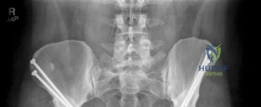
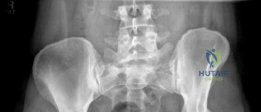
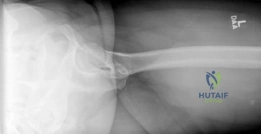
Standard radiographic evaluation includes a weight-bearing anteroposterior pelvis, a false profile view of Lequesne and de Seze, and a Dunn lateral view.
The AP pelvis is utilized to measure the Lateral Center Edge Angle of Wiberg, the Tonnis angle of acetabular inclination, and the extrusion index. It also allows for the assessment of the Shenton line, which is frequently broken in dysplastic hips.
The false profile view is critical for evaluating anterior femoral head coverage by measuring the Anterior Center Edge Angle.
The Dunn lateral view helps identify concomitant cam-type femoral morphology, which is present in a significant subset of dysplastic patients and must be addressed either concurrently via arthrotomy/arthroscopy or postoperatively to prevent secondary impingement.

High-resolution computed tomography with three-dimensional reconstruction has become the standard of care for preoperative planning. CT allows for precise evaluation of acetabular version, volumetric assessment of the anterior and posterior columns, and virtual surgical planning. Virtual planning software can simulate the osteotomies and the required multiplanar correction, providing the surgeon with expected postoperative radiographic parameters and highlighting potential areas of bony impingement.
Patient Positioning and Operating Room Setup
The patient is positioned supine on a radiolucent operating table. A bump may be placed under the ipsilateral sacrum to elevate the operative hemipelvis slightly, though true neutral positioning is often preferred to facilitate accurate intraoperative fluoroscopic assessment of the AP pelvis. The entire ipsilateral lower extremity must be prepped and draped free to allow for unrestricted manipulation of the hip during the procedure.
Fluoroscopy is positioned on the contralateral side of the table. The C-arm must be able to freely rotate to obtain standard AP pelvis, iliac oblique, and obturator oblique views without compromising the sterile field. A sterile pouch is often utilized to allow the C-arm to swing under the table seamlessly.
Detailed Surgical Approach and Technique
The periacetabular osteotomy is traditionally performed through a modified Smith-Petersen approach, which provides exceptional access to the anterior ilium, the superior pubic ramus, and the quadrilateral plate.
Superficial and Deep Dissection
The skin incision begins along the anterior iliac crest, extending distally toward the anterior superior iliac spine, and then curves distally along the interval between the tensor fasciae latae and the sartorius. The lateral femoral cutaneous nerve is identified and protected; it usually courses over the sartorius fascia but exhibits high anatomic variability.

The internervous plane between the tensor fasciae latae (superior gluteal nerve) and the sartorius (femoral nerve) is developed. The abdominal musculature and the iliacus are elevated subperiosteally from the inner table of the ilium down to the pelvic brim. The direct head of the rectus femoris is identified and typically preserved, while the reflected head may be released to expose the superior hip capsule.
The intrapelvic dissection proceeds along the pelvic brim. The iliopsoas muscle and the external iliac vessels are gently retracted medially. The corona mortis is systematically identified over the superior pubic ramus and ligated. Subperiosteal dissection continues posteriorly along the quadrilateral plate toward the ischial spine, creating a safe working space for the osteotomies.
Ischial Osteotomy Technique
The first osseous cut is the incomplete ischial osteotomy. This is the most technically demanding and hazardous cut due to the proximity of the sciatic nerve and the lack of direct visualization.

A specialized curved Ganz osteotome is introduced along the quadrilateral plate, passing inferior to the obturator nerve and vessels. The osteotome is positioned on the ischium, just inferior to the acetabulum. Fluoroscopy (often an obturator oblique or false profile view) is utilized to confirm the trajectory. The cut is made from medial to lateral, stopping short of the lateral cortex to avoid complete disruption of the ischium, which could destabilize the posterior column. The osteotome must not penetrate the posterior cortex to protect the sciatic nerve.
Pubic Osteotomy Technique
The pubic osteotomy is performed next. The superior pubic ramus is exposed subperiosteally. Retractors are placed superiorly to protect the neurovascular bundle and inferiorly to protect the obturator structures.

A straight osteotome or an oscillating saw is used to transect the superior pubic ramus. The cut is typically made slightly oblique, from proximal-medial to distal-lateral, just medial to the iliopectineal eminence. Care must be taken to ensure the cut is complete and does not inadvertently enter the anterior aspect of the acetabular joint space.
Iliac Osteotomy Technique
The iliac osteotomy is initiated on the outer table of the ilium, just inferior to the anterior superior iliac spine, preserving the sartorius origin.

Using an oscillating saw, the cut is directed posteriorly toward the pelvic brim, stopping approximately one centimeter superior to the terminal line to preserve the structural integrity of the pelvic ring. The cut is completed with a straight osteotome, ensuring both the inner and outer cortices are transected evenly.
Retroacetabular Osteotomy and Fragment Mobilization
The final cut is the retroacetabular osteotomy, which connects the posterior aspect of the iliac cut to the incomplete ischial cut. This cut is performed entirely with osteotomes under fluoroscopic guidance to prevent posterior column discontinuity.
A straight osteotome is driven distally down the quadrilateral plate, angled towards the ischial spine. The osteotome must remain anterior to the posterior border of the posterior column. Once the retroacetabular cut connects with the ischial cut, the acetabular fragment becomes mobile.
A heavy Schanz pin is inserted into the supra-acetabular region of the mobile fragment. Using this pin as a joystick, the acetabulum is mobilized. The surgeon must carefully release any remaining periosteal hinges or capsular tethers that restrict movement.
Correction and Final Fixation
The acetabular fragment is reoriented to achieve the planned correction. The primary vectors of movement are lateral rotation (to improve lateral coverage), anterior rotation (to improve anterior coverage), and medialization (to decrease joint reaction forces).
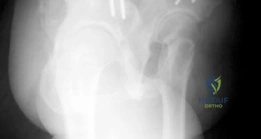
Once the desired position is achieved, it is temporarily stabilized with multiple Kirschner wires. Intraoperative fluoroscopy is rigorously utilized to confirm the correction. The surgeon evaluates the new Lateral Center Edge Angle, the Tonnis angle, the Shenton line, and the anterior/posterior wall crossover signs. The hip is taken through a full range of motion to ensure there is no anterior impingement in flexion and internal rotation.
If the correction is satisfactory, definitive fixation is achieved using three to four fully threaded cortical screws (typically 4.5mm). These screws are directed from the intact stable ilium down into the supra-acetabular bone of the mobile fragment.
Complications and Management
Despite its biomechanical advantages, the periacetabular osteotomy is a major pelvic procedure associated with a steep learning curve and a distinct complication profile. Meticulous surgical technique and strict adherence to anatomic landmarks are required to minimize morbidity.

Intraoperative and Postoperative Complications
Nerve dysfunction is the most common complication. The lateral femoral cutaneous nerve is frequently stretched or transected during the approach, leading to sensory deficits over the anterolateral thigh. Sciatic nerve palsy is a catastrophic complication usually resulting from direct trauma during the ischial or retroacetabular cuts, or from excessive traction during fragment mobilization. Femoral nerve palsy can occur due to prolonged retraction against the iliopsoas.
Vascular injuries, while rare, can be life-threatening. Failure to ligate the corona mortis or aberrant retractor placement can lead to massive intrapelvic hemorrhage.
Intra-articular fracture occurs if the osteotomies stray too close to the joint space. This requires immediate intraoperative recognition and often necessitates internal fixation of the fracture and potentially alters the postoperative weight-bearing protocol.
Overcorrection is a subtle but profound complication. Excessive anterior or lateral rotation can create iatrogenic pincer impingement, leading to restricted flexion, early labral tearing, and accelerated cartilage wear.
Complications, Incidence, and Salvage Strategies
| Complication | Estimated Incidence | Prevention and Salvage Strategy |
|---|---|---|
| Lateral Femoral Cutaneous Nerve Palsy | 15% - 30% | Prevention: Careful superficial dissection. Salvage: Usually transient; gabapentin for neuropathic pain. |
| Sciatic Nerve Injury | 1% - 2% | Prevention: Keep osteotome strictly anterior to posterior cortex; avoid over-penetration. Salvage: Immediate exploration if transected; AFO for foot drop. |
| Intra-articular Osteotomy Extension | 2% - 5% | Prevention: Precise fluoroscopic guidance; maintain 1cm margin from joint. Salvage: Screw fixation of the fragment; strictly non-weight-bearing. |
| Posterior Column Discontinuity | 1% - 3% | Prevention: Direct retroacetabular cut anteriorly; avoid complete ischial transection. Salvage: Plate fixation of the posterior column; delayed mobilization. |
| Symptomatic Overcorrection (Impingement) | 5% - 10% | Prevention: Intraoperative ROM testing; avoid CE angle > 35 degrees. Salvage: Subsequent arthroscopic osteochondroplasty / rim trimming. |
| Nonunion / Delayed Union | 1% - 2% | Prevention: Rigid screw fixation; preserve soft tissue attachments. Salvage: Revision fixation with bone grafting. |
Post Operative Rehabilitation Protocols
The postoperative rehabilitation following a periacetabular osteotomy is structured, phased, and critically dependent on radiographic evidence of osseous healing. The preservation of the posterior column allows for a more accelerated protocol compared to traditional pelvic osteotomies, but strict adherence to weight-bearing precautions remains mandatory.
Phase One: Early Protection (Weeks 0 to 6)
During the first six weeks, the primary goal is to protect the osteotomy sites and the internal fixation. Patients are restricted to toe-touch weight-bearing (approximately 20 pounds) on the operative extremity using bilateral crutches.
Range of motion exercises are initiated immediately to prevent capsular adhesions, but extreme positions must be avoided. Active hip flexion is strictly prohibited to prevent avulsion of the rectus femoris or displacement of the anterior iliac spine fragment. Patients perform passive and active-assisted flexion, avoiding extension past neutral and excessive external rotation, which place undue stress on the anterior capsular structures and the pubic osteotomy. Deep vein thrombosis prophylaxis is administered according to institutional protocols.
Phase Two: Progressive Loading (Weeks 6 to 12)
At the six-week mark, a radiographic evaluation is performed. If bridging callus is visible at the iliac and pubic osteotomy sites, the patient begins a progressive weight-bearing protocol. Weight-bearing is typically advanced by 25% of body weight per week until full weight-bearing is achieved.
Physical therapy shifts focus toward active range of motion, isometric abductor strengthening, and core stabilization. Closed kinetic chain exercises, such as mini-squats and weight-shifting, are introduced. Aquatic therapy can be highly beneficial during this transition phase to facilitate normal gait mechanics in a buoyant environment.
Phase Three: Strengthening and Function (Months 3 to 6)
Once full, pain-free weight-bearing is achieved and radiographs confirm solid union, rehabilitation progresses to advanced strengthening. The focus is on maximizing abductor strength, which is often profoundly atrophied preoperatively due to the altered biomechanics of the dysplastic hip.
Patients engage in progressive resistance training, stationary cycling, and dynamic balance exercises. The goal during this phase is to eliminate any residual Trendelenburg gait and restore functional baseline capabilities for activities of daily living.
Phase Four: Return to Sport (Months 6 and Beyond)
Return to high-impact activities and competitive sports is generally delayed until at least six to eight months postoperatively. Clearance is contingent upon symmetric lower extremity strength, full functional range of motion, and complete resolution of preoperative symptoms. Patients must pass functional movement screens and sport-specific agility tests before unrestricted clearance is granted.
Summary of Key Literature and Guidelines
The academic foundation of the periacetabular osteotomy is built upon decades of rigorous clinical follow-up and biomechanical studies. Understanding the landmark literature is essential for any orthopedic surgeon managing hip dysplasia.
The seminal paper by Ganz et al. in 1988 ("A new periacetabular osteotomy for the treatment of hip dysplasias. Technique and preliminary results") established the surgical technique, highlighting the critical advantage of posterior column preservation and the ability to achieve massive multiplanar correction through a single incision.
Long-term survivorship data has been extensively published by the Bernese group. Steppacher et al. reported a 20-year survivorship of 60% for the native hip following periacetabular osteotomy. They identified that the absence of preoperative osteoarthritis, a younger age at the time of surgery, and the restoration of a normal operative joint space were the strongest independent predictors of long-term success.
Matheney et al. analyzed the predictors of failure in a large North American cohort. Their data reinforced that preoperative Tonnis Grade 2 or higher osteoarthritis, elevated patient age (specifically over 40 years), and postoperative anterior impingement (due to overcorrection) drastically increased the risk of early conversion to total hip arthroplasty.
More recently, the Academic Network of Conservational Hip Outcomes Research (ANCHOR) group, led by Clohisy and colleagues, has published extensive multicenter prospective data. Their findings have standardized preoperative radiographic parameters, refined the indications for concomitant hip arthroscopy to address intra-articular labral pathology, and demonstrated significant improvements in patient-reported outcome measures (PROMs) across diverse demographic groups. These contemporary guidelines underscore that periacetabular osteotomy, when performed for the correct indications by experienced surgeons, remains a highly durable and joint-preserving procedure for the dysplastic hip.