Patient Presentation & History
A 48-year-old right-hand dominant male presented to clinic with a chief complaint of chronic, progressive right elbow pain. The patient is an avid recreational tennis player, participating in matches 3-4 times per week, and works as a graphic designer, spending significant hours at a computer. His symptoms began approximately 9 months prior to presentation, insidious in onset, gradually worsening over time. Initially, the pain was primarily associated with tennis backhands and heavy lifting. Over the last 3 months, the pain has become more constant, interfering with daily activities such as gripping objects, typing, and shaking hands. He describes the pain as a constant dull ache, localized to the lateral aspect of the elbow, occasionally radiating down the dorsal forearm towards the wrist. He denies any acute trauma, instability, locking, or neurological symptoms such as numbness or paresthesias.
He reports having tried a course of conservative management initiated by his primary care physician, which included activity modification, over-the-counter NSAIDs (ibuprofen 600mg TID prn), a counterforce brace, and a short course of physical therapy focusing on stretching and eccentric exercises for wrist extensors. These measures provided transient, minimal relief, but the symptoms always recurred with activity. He also received a single corticosteroid injection into the lateral epicondyle region 4 months prior, which provided symptomatic relief for about 2 weeks before the pain returned to baseline severity.
Relevant medical history includes controlled hypertension and hyperlipidemia. He is otherwise healthy, non-smoker, and reports occasional alcohol consumption. No history of prior elbow trauma or surgery. His primary goal is to return to pain-free tennis and daily activities.
Clinical Examination
A comprehensive examination of the right upper extremity was performed.
Inspection
Visual inspection revealed no overt swelling, erythema, ecchymosis, or obvious deformity of the elbow joint. There was no evidence of muscle atrophy in the forearm musculature. The skin overlying the lateral epicondyle appeared normal, with no scars or signs of injection site reaction.
Palpation
- Lateral Epicondyle: Exquisite point tenderness was elicited directly over the origin of the extensor carpi radialis brevis (ECRB) tendon, just anterior and distal to the lateral epicondyle. Pain was maximal with deep palpation.
- Other Tendons: No significant tenderness was noted over the common extensor origin, anconeus, or supinator muscle belly.
- Ligaments: The lateral ulnar collateral ligament (LUCL) and radial collateral ligament (RCL) were stable to palpation and varus stress testing.
- Olecranon & Medial Epicondyle: No tenderness.
- Radial Head: Non-tender, stable.
- Capitellum: Non-tender.
- Nerve Palpation: No tenderness or Tinel's sign elicited over the radial nerve in the antecubital fossa, or over the superficial radial nerve at the wrist. The posterior interosseous nerve (PIN) course within the supinator was non-tender to deep palpation. Ulnar nerve at the cubital tunnel was non-tender and stable.
Range of Motion (ROM)
Active and passive range of motion of the elbow joint was full and pain-free:
* Flexion: 0-145 degrees
* Extension: 0 degrees
* Supination: 85 degrees
* Pronation: 80 degrees
However, pain was reproduced with specific resistive maneuvers:
*
Resisted Wrist Extension:
Severe pain reported over the lateral epicondyle. This was most pronounced with the elbow in extension and forearm pronated, simulating a backhand stroke.
*
Resisted Middle Finger Extension:
Significant pain elicited over the lateral epicondyle, consistent with Maudsley's test, isolating the ECRB.
*
Pain with gripping:
Strong grip testing reproduced lateral elbow pain, indicative of extensor tendon strain.
Special Tests for Lateral Epicondylitis
- Cozen's Test: Positive. With the patient's elbow flexed to 90 degrees, forearm pronated, and wrist radially deviated, resisted wrist extension against examiner's resistance reproduced severe pain at the lateral epicondyle.
- Mill's Test: Positive. With the patient's elbow extended, forearm pronated, and wrist fully flexed, a passive stretch applied by the examiner (further wrist flexion) reproduced pain at the lateral epicondyle.
- Maudsley's Test (Resisted Middle Finger Extension Test): Positive. Resisted extension of the middle finger (with elbow extended and forearm pronated) reproduced lateral epicondyle pain, specifically targeting the ECRB tendon.
Neurological and Vascular Assessment
- Motor Function: Strength was 5/5 in all major muscle groups of the shoulder, elbow, wrist, and hand. No specific weakness was noted in wrist extension or forearm supination, though these movements were painful against resistance.
- Sensory Function: Intact to light touch in all dermatomes (C5-T1).
- Reflexes: Biceps (C5-C6), Brachioradialis (C5-C6), and Triceps (C7-C8) reflexes were 2+ bilaterally and symmetrical.
- Vascular: Radial and ulnar pulses were 2+ and equal bilaterally. Capillary refill was brisk in all digits.
Overall, the clinical picture strongly suggested a diagnosis of lateral epicondylitis.
Imaging & Diagnostics
Plain Radiographs
Anteroposterior (AP) and lateral views of the right elbow were obtained.
*
Findings:
Radiographs demonstrated no evidence of fracture, dislocation, osteochondral lesions, loose bodies, or significant degenerative changes within the elbow joint. Joint space was well preserved. There was no evidence of overt calcification at the common extensor origin that would suggest calcific tendinopathy, though small, subtle calcifications can sometimes be missed on plain films. The radial head and capitellum appeared normal. The ulna and humerus showed normal cortical outlines.
*
Interpretation:
Primarily performed to rule out other osseous pathologies, intra-articular causes of pain, or significant arthritic changes. In lateral epicondylitis, plain radiographs are typically normal, as observed in this case.
Ultrasound (US)
An ultrasound examination of the lateral elbow was performed to evaluate the common extensor tendon origin.
*
Findings:
* Thickening and hypoechoic changes were noted at the origin of the ECRB tendon, consistent with tendinosis.
* Focal areas of neovascularization within the tendon substance were identified on power Doppler imaging, indicating chronic degenerative changes rather than acute inflammation.
* No evidence of macroscopic tendon tear or avulsion was seen.
* The common extensor tendon appeared intact but with some disorganized fiber pattern.
* No significant joint effusion.
* Dynamic imaging revealed no subluxation of the radial head or other structural instability.
*
Interpretation:
Ultrasound findings corroborated the clinical diagnosis of lateral epicondylitis/tendinosis, demonstrating the characteristic degenerative changes within the ECRB tendon. It also effectively ruled out a gross tear.
Magnetic Resonance Imaging (MRI)
An MRI of the right elbow was obtained due to the chronicity of symptoms, failure of conservative management, and to definitively rule out other soft tissue or subtle osseous pathologies, and evaluate for radial nerve entrapment.
*
Findings:
*
Extensor Carpi Radialis Brevis (ECRB):
Diffuse signal hyperintensity on T1-weighted images and T2-weighted images with fat suppression, consistent with angiofibroblastic degeneration and edema within the ECRB tendon origin. This area measured approximately 8mm in length and 4mm in thickness.
*
Tendinosis:
Mild thickening and architectural disorganization of the ECRB origin was evident. No complete tear was identified, but microscopic fraying and partial-thickness tearing were suggested by the intratendinous signal changes.
*
Bone Marrow Edema:
Subtle increased signal on T2-weighted images within the lateral epicondyle bone marrow, adjacent to the ECRB origin, suggestive of reactive changes (enthesopathy).
*
Radial Nerve:
The radial nerve and its posterior interosseous branch appeared unremarkable in their course through the cubital tunnel and arcade of Frohse, with no evidence of compression, focal thickening, or perineural edema.
*
Other Structures:
All other elbow ligaments (MCL, LUCL, RCL) were intact. No intra-articular loose bodies, osteochondral defects of the capitellum, or significant joint effusions were identified. The brachialis, biceps, and triceps tendons were normal.
*
Image Integration:
This MRI provides excellent detail of the soft tissues.
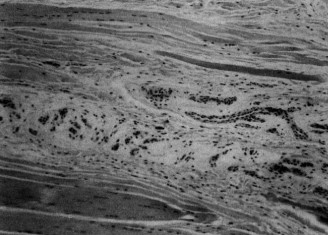
This image, perhaps an MRI axial view, would ideally demonstrate the hyperintense signal and thickening of the ECRB origin consistent with tendinosis.
*
Interpretation:
MRI findings confirmed severe tendinosis of the ECRB origin, consistent with chronic lateral epicondylitis. It provided detailed information ruling out significant radial nerve entrapment, large tendon tears, and intra-articular pathology. The bone marrow edema confirmed the chronic inflammatory/degenerative process affecting the enthesis.
Templating
No specific templating is required for lateral epicondylitis. Surgical planning focuses on the approach, extent of debridement, and any adjunctive procedures.
Differential Diagnosis
The clinical presentation of lateral elbow pain necessitates a careful differential diagnosis to ensure accurate treatment. While lateral epicondylitis is the most common cause, other conditions can mimic its symptoms.
| Feature / Condition | Lateral Epicondylitis (Tennis Elbow) | Radial Tunnel Syndrome (PIN Entrapment) | Cervical Radiculopathy (C6/C7) | Intra-articular Pathology (e.g., OCD, Synovial Plica) |
|---|---|---|---|---|
| Pathophysiology | Degeneration (angiofibroblastic hyperplasia) of ECRB origin, microtears. | Compression of posterior interosseous nerve (PIN) in radial tunnel. | Nerve root compression in cervical spine (C6/C7). | Structural damage within joint (e.g., osteochondritis dissecans of capitellum, inflamed plica). |
| Pain Location | Focal tenderness lateral epicondyle, radiating distally. | Vague pain 3-5 cm distal to lateral epicondyle, dorsal forearm. No focal epicondyle tenderness. | Neck pain radiating to lateral arm/forearm/hand (dermatomal pattern). | Diffuse elbow pain, deep, may localize with activity. |
| Pain Characteristics | Worse with resisted wrist extension, gripping, lifting. | Worse with resisted forearm supination, resisted middle finger extension (fatigue). | Radicular pain, burning, tingling, numbness. May have weakness. | Mechanical symptoms (clicking, locking, catching). Activity-related. |
| Physical Exam Findings | Positive Cozen's, Mill's, Maudsley's. Focal ECRB tenderness. | Tenderness over radial tunnel (3-5cm distal to LE). Pain with resisted supination. No focal LE tenderness. +/- weak wrist/finger extensors (late). | Positive Spurling's, neck ROM limitations. Dermatomal sensory deficits, reflex changes (Biceps, Brachioradialis, Triceps). | Mechanical pain with specific ROM. Palpable clicking/crepitus. Joint effusion. |
| Motor Weakness | Rare, only due to pain inhibition. | Weakness in wrist/finger extensors (especially MCPs) in severe cases. | Dermatomal pattern (C6: biceps, wrist extensors; C7: triceps, wrist/finger extensors). | None directly related to pathology unless chronic leads to disuse atrophy. |
| Sensory Changes | None. | None (PIN is purely motor). | Numbness/paresthesia in C6/C7 dermatome. | None. |
| Imaging | US/MRI: ECRB tendinosis, thickening, neovascularization. X-ray normal. | MRI: May show nerve compression/edema, muscle denervation edema in chronic cases. X-ray normal. | MRI C-spine: Disc herniation, foraminal stenosis. X-ray degenerative changes. | X-ray/CT: OCD, loose bodies, OA. MRI: Cartilage lesions, synovitis, plica. |
| Diagnostic Tests | Clinical exam, US, MRI. | Clinical exam, EMG/NCS (late denervation), diagnostic injection. | Clinical exam, EMG/NCS (radiculopathy), diagnostic nerve block. | Arthrocentesis (if effusion), diagnostic arthroscopy. |
| Response to Treatment | Often responds to conservative care, corticosteroid injection. | Variable response to conservative care, often requires surgical decompression. | Responds to conservative care, epidural injection, sometimes surgery. | Often requires surgical intervention (debridement, repair). |
This patient's constellation of symptoms and positive special tests, coupled with focal ECRB tenderness and normal neurological exam, strongly pointed away from radial tunnel syndrome or cervical radiculopathy. The absence of mechanical symptoms (locking, catching) and normal joint space on X-ray also made primary intra-articular pathology less likely. The imaging findings of ECRB tendinosis solidified the diagnosis.
Surgical Decision Making & Classification
Despite a prolonged and comprehensive course of conservative management over 9 months, including activity modification, physical therapy, counterforce bracing, NSAIDs, and a corticosteroid injection, the patient continued to experience significant, disabling pain that interfered with both his recreational activities and daily occupational tasks. The initial transient response to the corticosteroid injection and the recurrence of symptoms at baseline severity highlighted the chronic degenerative nature of the condition rather than acute inflammation responsive to short-term anti-inflammatory measures.
Criteria for Operative Intervention:
The decision for surgical intervention was made based on the following established criteria:
1.
Failure of Non-Operative Management:
Symptoms persisting for at least 6-12 months despite adequate, multi-modal conservative treatment. This patient exceeded 9 months.
2.
Severity of Symptoms:
Significant functional impairment affecting work and recreation.
3.
Clinical & Imaging Correlation:
Strong clinical evidence of lateral epicondylitis supported by advanced imaging (MRI) demonstrating significant ECRB tendinosis with reactive bone changes, without evidence of other confounding pathologies (e.g., radial nerve entrapment).
4.
Patient Motivation & Understanding:
The patient was well-informed about the risks, benefits, and expected recovery from surgery, and was highly motivated to return to his previous activity levels.
Classification:
While there isn't a universally adopted "classification" system for surgical decision-making in lateral epicondylitis in the same vein as fracture classifications, the understanding of the underlying pathology guides intervention. Nirschl's classification, though more descriptive of the tendinosis than a decision algorithm, is often referenced:
*
Nirschl Stage 0:
Asymptomatic.
*
Nirschl Stage 1:
Inflammatory changes (rarely seen as isolated pathology).
*
Nirschl Stage 2:
Angiofibroblastic degeneration with minimal structural changes.
*
Nirschl Stage 3:
Angiofibroblastic degeneration with structural failure (fissures, microtears).
*
Nirschl Stage 4:
Calcification, gross tearing, or rupture.
Based on the MRI findings of diffuse signal hyperintensity, thickening, and architectural disorganization with subtle partial-thickness tearing, this patient's condition could be broadly categorized as severe Nirschl Stage 3 , indicating chronic degenerative changes with structural compromise of the ECRB tendon, justifying surgical intervention. The presence of reactive bone marrow edema further supports the chronic nature and impact on the enthesis. The procedure of choice typically involves debridement of this degenerated tissue.
Surgical Technique / Intervention
The patient was positioned supine on the operating table with the affected arm on a dedicated arm table, allowing for full range of motion of the elbow and unimpeded access to the lateral aspect. A tourniquet was applied to the upper arm. Following administration of general anesthesia and appropriate antibiotic prophylaxis, the arm was prepped and draped in a sterile fashion.
Surgical Approach (Open Extensor Tendon Debridement):
1.
Incision:
A curvilinear incision, approximately 3-4 cm in length, was made directly over the lateral epicondyle, centered slightly anteriorly to target the ECRB origin. The incision was deepened through subcutaneous tissue.
2.
Identification of Anatomical Layers:
The deep fascia overlying the common extensor origin was carefully incised longitudinally. The common extensor tendon origin was identified, and its constituent parts were carefully differentiated, with particular attention to the ECRB. The anconeus muscle was retracted posteriorly.
3.
Pathologic Tissue Excision:
The ECRB tendon origin was identified at its attachment to the lateral epicondyle. Upon inspection, the characteristic gray, friable, edematous, and disorganized angiofibroblastic tissue was evident within the substance of the ECRB, extending slightly distally. A wedge-shaped excision of the diseased tissue from the anterior aspect of the ECRB origin was performed, extending proximally towards the epicondyle. This involved excising approximately 50-75% of the abnormal ECRB tendon substance, leaving the more posterior and deeper intact fibers of the common extensor origin (primarily Extensor Digitorum Communis, EDC) undisturbed. The excision continued until healthy, firm, glistening tendon tissue was encountered.
4.
Decortication and Drilling (Optional but Performed):
After debridement of the pathologic tendon, the underlying cortical bone of the lateral epicondyle at the ECRB footprint was decorticated using a burr or osteotome until punctate bleeding was observed. This promotes a healing response and neo-vascularization. In this case, 3-4 small drill holes (1.5mm K-wires) were also made into the decorticated epicondyle to further enhance local blood supply and stimulate healing, creating a raw, vascularized bed for tendon reattachment/healing.
5.
Assessment of Radial Nerve:
Throughout the procedure, care was taken to protect the radial nerve and its branches. No release of the radial tunnel was deemed necessary, as intraoperative inspection and preoperative imaging confirmed no compression.
6.
Closure:
After copious irrigation with sterile saline, the deep fascia was approximated loosely with absorbable sutures to avoid tension. The subcutaneous tissue was closed with absorbable sutures, and the skin was closed with non-absorbable sutures in a running subcuticular fashion. A sterile dressing was applied, and the elbow was placed in a soft compressive dressing with the elbow at 90 degrees of flexion and the forearm in neutral rotation. No immobilization was strictly required beyond the soft dressing for comfort.
Alternative Techniques (Brief Mention):
*
Percutaneous Release:
Involves multiple punctures through the skin into the ECRB origin. Less invasive but less direct visualization.
*
Arthroscopic Debridement:
Allows visualization of the joint and potential intra-articular pathology, combined with debridement of the ECRB from an intra-articular perspective. Offers the benefit of minimal soft tissue disruption, but requires specialized arthroscopic skills. Often performed by releasing the ECRB from its deep undersurface.
*
Extensor Carpi Radialis Longus (ECRL) Lengthening:
Rarely performed for lateral epicondylitis unless severe contracture or other specific indications exist.
The open debridement and decortication technique was chosen for this patient due to its reliability in thoroughly excising the degenerative tissue and promoting healing, especially given the chronicity and severity demonstrated on MRI.
Post-Operative Protocol & Rehabilitation
The post-operative protocol is crucial for successful outcomes and aims to balance protection of the healing tissue with progressive loading to restore function.
Phase I: Protection (Weeks 0-2)
- Immobilization: A soft compressive dressing is maintained for the first 48-72 hours. No formal cast or splint immobilization is used beyond the initial dressing for comfort.
- Pain Management: Oral analgesics (NSAIDs if not contraindicated, acetaminophen, short course of opioids as needed).
-
Early Motion:
- Day 1 Post-Op: Gentle, passive and active-assisted range of motion exercises for the elbow (flexion/extension, pronation/supination) within a pain-free range. Emphasis on full elbow extension to prevent contracture.
- Wrist and Hand: Active range of motion for wrist and hand, including gentle wrist flexion and extension without resistance.
- Activity Restrictions: No lifting, pushing, pulling, or gripping with the affected arm. Avoidance of any activities that reproduce lateral elbow pain. Keep incision clean and dry.
- Physical Therapy: Initial session focuses on patient education, gentle ROM, pain control modalities, and nerve glides.
Phase II: Gradual Strengthening & Healing (Weeks 2-6)
- Scar Management: Begin scar massage and desensitization once the incision is well-healed (typically around 2 weeks).
- Progressive ROM: Continue full, pain-free elbow, wrist, and hand range of motion.
- Isometric Exercises: Introduce gentle isometric exercises for the wrist extensors and flexors. Begin with wrist extensors in a lengthened position (wrist flexion) to avoid stress on the surgical site.
-
Light Isotonic Exercises:
- Weeks 3-4: Very light resistance exercises for forearm pronation/supination, wrist flexion.
- Weeks 4-6: Introduce very light eccentric exercises for the wrist extensors. This is critical for tendon healing and remodeling. Start with minimal weight (e.g., 0.5-1 lb dumbbell) in gravity-eliminated positions.
- Activity Restrictions: Continue to avoid heavy lifting, forceful gripping, or repetitive wrist extension/supination activities. Avoid any activities that involve impact or high-velocity movements.
Phase III: Advanced Strengthening & Functional Return (Weeks 6-12)
-
Progressive Resistance Training:
Gradually increase resistance for eccentric and concentric wrist extensor strengthening exercises.
- Focus on controlled, slow movements.
- Incorporate supination and pronation exercises with increasing resistance.
- Begin grip strengthening with soft putty or stress balls.
- Sport-Specific Training (if applicable): For tennis players, begin with shadow swings, then light volleys, gradually progressing to groundstrokes and serves. Emphasize proper technique modification (e.g., two-handed backhand, less wrist flick, more body rotation).
- Proprioceptive Exercises: Incorporate balance and coordination exercises for the upper extremity.
- Endurance Training: Low-resistance, high-repetition exercises to improve muscular endurance.
- Activity Restrictions: Patient can gradually return to light daily activities. Avoid high-impact or repetitive overhead activities until pain-free and strength is normalized.
Phase IV: Return to Full Activity (Weeks 12+)
- Full Strength & Endurance: Achieve near-normal strength, endurance, and flexibility compared to the contralateral limb.
- Return to Sport/Work: Gradual and progressive return to full sport or occupational activities. This phase can extend for several months, particularly for high-demand sports like tennis. Continued emphasis on technique, warm-up, cool-down, and progressive loading.
- Maintenance Program: Long-term maintenance of strength, flexibility, and proper biomechanics is encouraged to prevent recurrence.
Key Principles of Rehabilitation:
*
Pain-Guided Progression:
Progression through phases is symptom-dependent. Pain should not be exacerbated by exercises.
*
Eccentric Loading:
Crucial for promoting tendon remodeling and strength.
*
Biomechanical Analysis:
For athletes, assessment and modification of technique are paramount to prevent recurrence.
Pearls & Pitfalls (Crucial for FRCS/Board Exams)
Pearls for Diagnosis
- Clinical Diagnosis is Key: Lateral epicondylitis is primarily a clinical diagnosis. The history of pain with resisted wrist extension/supination and point tenderness over the ECRB origin are highly indicative.
- Rule Out Radial Tunnel Syndrome (RTS): Always differentiate from RTS. RTS typically presents with more diffuse pain 3-5 cm distal to the lateral epicondyle, often reproduced with resisted forearm supination or resisted middle finger extension without focal tenderness at the epicondyle itself. Sensory findings are absent in RTS (pure motor nerve).
- Rule Out Cervical Radiculopathy: Consider C6/C7 radiculopathy, especially if there are neck symptoms, dermatomal sensory changes, or reflex abnormalities.
- Image When Conservative Management Fails: Plain radiographs rule out bony pathology. Ultrasound or MRI are useful to confirm tendinosis, rule out significant tears, and exclude intra-articular pathology or radial nerve compression, particularly before considering surgery.
- Cortisone Injections - Diagnostic but not Curative: A transient response to a properly placed corticosteroid injection can support the diagnosis. However, repeated injections are associated with poorer outcomes and tendon weakening.
Pearls for Treatment
- Conservative Management First: 90-95% of patients improve with non-operative treatment, even if prolonged. This includes activity modification, physical therapy (eccentric exercises), counterforce bracing, NSAIDs.
- Eccentric Exercises are Paramount: Emphasize slow, controlled eccentric wrist extensor strengthening, as this is proven to promote tendon remodeling.
- Surgical Indications are Strict: Surgery is reserved for patients with severe, chronic symptoms (typically >6-12 months) who have failed comprehensive non-operative management and have clear pathological changes on imaging.
- Open Debridement Efficacy: Open debridement of the ECRB origin with decortication remains a gold standard for surgical management due to high success rates in appropriate patients.
- Arthroscopic Approach: Offers benefits of intra-articular inspection and minimal soft tissue dissection, but requires specific skills and may not always provide the same tactile feedback for complete debridement of the ECRB origin.
- Post-Op Rehab is Critical: A structured, progressive rehabilitation protocol is essential for optimizing surgical outcomes and preventing recurrence. Early pain-free motion followed by progressive strengthening and activity-specific retraining.
Pitfalls
- Over-reliance on Imaging: While imaging is helpful, a positive MRI for tendinosis in an asymptomatic patient is not an indication for intervention. Clinical correlation is vital.
- Missing a Co-existing Condition: Failure to recognize concurrent radial tunnel syndrome or cervical radiculopathy can lead to persistent symptoms post-operatively. Always perform a thorough neurological exam.
- Repeated Corticosteroid Injections: Multiple injections (more than 2-3) are generally discouraged due to potential for tendon atrophy, fat necrosis, and masking symptoms, ultimately hindering healing.
- Inadequate Conservative Trial: Operating too early before a true failure of conservative treatment has occurred. A minimum of 6 months, ideally 9-12 months, of diligent non-operative care is typically required.
- Poor Surgical Technique: Incomplete debridement of the pathological tissue, damage to the radial nerve branches, or failure to address bony spurs can lead to persistent pain.
- Aggressive Post-operative Rehabilitation: Advancing rehabilitation too quickly, especially with premature, forceful wrist extension or supination, can compromise tendon healing and lead to re-injury or delayed recovery.
- Neglecting Biomechanics: For athletes, failing to address underlying biomechanical faults (e.g., poor tennis stroke technique, incorrect grip size) often leads to recurrence despite successful surgery. This requires consultation with a sports specific physical therapist or coach.
- Patient Expectations: Unrealistic patient expectations regarding recovery time or complete symptom resolution can lead to dissatisfaction. Clear communication pre-operatively about the chronicity and potential for residual symptoms is essential.
