Oral Examination Question: Master Unicondylar UKA vs HTO
Key Takeaway
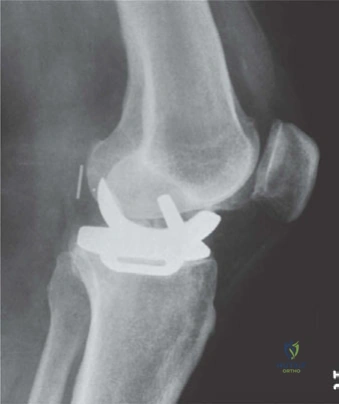
Your ultimate guide to Oral Examination Question: Master Unicondylar UKA vs HTO starts here. For an oralexamination question unicondylar knee arthroplasty (UKA), it is a partial knee replacement suited for patients with low physical demand. UKA is often preferred by women who may not tolerate high tibial osteotomy's angular deformity. However, UKA is generally not recommended for individuals with highly physically demanding jobs due to the risk of accelerated wear.
A 42-year-old active male bricklayer presents with chronic medial knee pain refractory to non-surgical management. Look at the provided radiograph. How do you describe the pathology and what is your initial management approach?
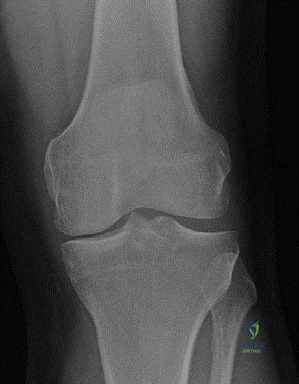
Candidate: This is a weightbearing AP radiograph showing moderate medial compartment osteoarthritis. The lateral and patellofemoral compartments appear relatively preserved. There is a varus malalignment. My approach would involve a thorough history regarding symptom duration, mechanical symptoms, and activity levels, followed by a physical exam focusing on joint line tenderness, range of motion, ligamentous stability (specifically ACL competence), and the degree of varus correctability.
Failing to mention the lateral/patellofemoral compartments, or jumping immediately to "I would offer an osteotomy" without first establishing the clinical assessment (e.g., assessing the ACL or varus stress test). Examiners look for a systematic approach.
Start with systematic radiological description: "Weightbearing AP view... moderate medial joint space narrowing... lateral and PFJ spared." Then, transition to the "Patient-Centric" assessment: confirm the "Three Pillars" (Physical exam/demographics/patient expectations). Specifically, mention confirming the ACL is intact, as its insufficiency is a classic contraindication for HTO.
The patient is keen for surgery. You have discussed High Tibial Osteotomy (HTO) and Unicondylar Knee Arthroplasty (UKA). Why might you favor HTO for this particular patient, and what are the strict prerequisites?
Candidate: Given his age (42) and high-demand occupation as a bricklayer, HTO is preferable to preserve his native joint and delay arthroplasty. Prerequisites include: Age <60, correctable varus (<15°), intact ACL, flexion >90°, and no significant patellofemoral OA.
Forgetting to mention the "Fixed Flexion Deformity" limit (typically <15°) or failing to emphasize the patient's lifestyle/demand as the rationale. Not mentioning that HTO preserves bone stock for future conversion to a TKA.
Structure by Category: 1. **Demographics/Demands:** Young, manual laborer. 2. **Clinical Criteria:** Correctable deformity, intact ligamentous stability, and adequate ROM. 3. **The 'Why':** Emphasize "Biological preservation" and "Avoidance of restricted activity associated with UKA/TKA in young, high-demand individuals."
The patient raises concerns about the conversion of an HTO to a Total Knee Arthroplasty (TKA) later in life. What are the specific technical considerations regarding patellar height and surgical difficulty in a patient who has undergone an HTO?
Candidate: Conversion can be technically demanding due to altered tibial anatomy and potential hardware interference. Regarding patellar height, lateral closing-wedge osteotomy can result in patella baja due to prolonged immobilization or distalization of the tibial tubercle/patellar tendon. Conversely, open-wedge techniques may lower the joint line. Both require careful planning of the component gaps in a future TKA.
Being vague about the mechanics. Candidates often forget to mention the impact of the *type* of osteotomy (opening vs. closing) on patellar height—which is a high-yield technical detail in the FRCS exam.
Provide a balanced technical synthesis: Acknowledge the "Previous Gold Standard" (Closing Wedge) and the risk of peroneal nerve injury/bone stock loss. Then pivot to "Current Trends" (Opening Wedge), mentioning the specific advantage of restoring limb alignment without fibular osteotomy, but warning of the "Late Collapse" and "Patellar Height" implications. Conclude by acknowledging that the literature (e.g., Van Raaij et al.) confirms no definitive superiority between the two, but emphasizes the need for surgeon expertise in the conversion phase.
