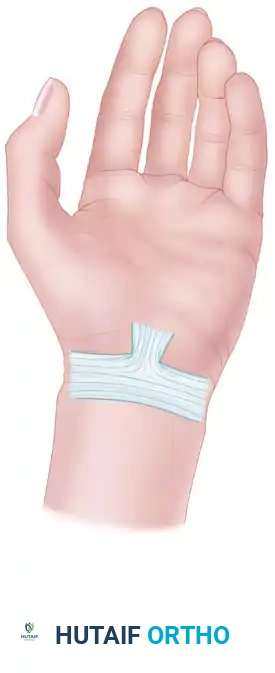
Operative Management of Median Nerve Palsy: Tendon Transfers for Thumb Opposition
Key Takeaway
Restoring thumb opposition is critical for hand function following median nerve palsy. This comprehensive guide details two foundational tendon transfers: the Groves and Goldner technique utilizing the flexor carpi ulnaris and sublimis tendon, and the Camitz procedure employing the palmaris longus. Designed for orthopedic surgeons, it provides an in-depth analysis of biomechanics, precise surgical steps, and postoperative rehabilitation protocols to optimize functional outcomes.
INTRODUCTION TO THUMB OPPOSITION TRANSFERS
Thumb opposition is a complex, multi-planar movement essential for prehension, pinch, and fine motor dexterity. It requires a synchronized combination of palmar abduction, flexion, and pronation of the first metacarpal and proximal phalanx. When the median nerve is compromised—whether through traumatic laceration, severe compressive neuropathy (such as advanced carpal tunnel syndrome), or neurodegenerative conditions—the abductor pollicis brevis (APB), opponens pollicis, and superficial head of the flexor pollicis brevis (FPB) undergo denervation and subsequent atrophy.
The loss of opposition severely debilitates hand function, rendering the patient unable to perform a functional pinch or grasp large objects. To restore this critical function, opponensplasty (tendon transfer for opposition) is indicated. The success of an opponensplasty relies on three biomechanical pillars:
1. An active, expendable donor muscle with adequate excursion and power (Medical Research Council [MRC] grade 4 or 5).
2. An appropriate directional vector, typically requiring a pulley system located near the pisiform to pull the thumb into pronation and palmar abduction.
3. A secure insertion site on the thumb that maximizes the moment arm for pronation.
This masterclass details two foundational techniques for restoring thumb function: the Groves and Goldner Transfer (utilizing the flexor carpi ulnaris combined with the flexor digitorum superficialis) and the Camitz Procedure (utilizing the palmaris longus).
PREOPERATIVE EVALUATION AND SURGICAL PLANNING
Before proceeding with any tendon transfer, the surgeon must ensure that the basic prerequisites for tendon transfer surgery are met. The hand must be supple, with full passive range of motion (ROM) in the thumb carpometacarpal (CMC), metacarpophalangeal (MCP), and interphalangeal (IP) joints. Any first web space contracture must be released prior to, or concomitantly with, the tendon transfer.
⚠️ Surgical Warning:
A tendon transfer cannot overcome a stiff joint. If a severe adduction contracture of the first web space is present, a Z-plasty of the web space or release of the adductor pollicis fascia must be performed before tensioning the transferred tendon.
Furthermore, the donor muscles must be meticulously graded. The flexor digitorum superficialis (FDS) to the ring finger and the palmaris longus (PL) must be clinically evaluated for presence, strength, and independent excursion.
THE GROVES AND GOLDNER TRANSFER: FCU COMBINED WITH THE SUBLIMIS TENDON
The Groves and Goldner technique is a robust and highly effective opponensplasty designed for patients with profound median nerve palsy. It utilizes the ring finger sublimis tendon (Flexor Digitorum Superficialis - FDS) as the motor unit, combined with the Flexor Carpi Ulnaris (FCU) to create a dynamic pulley system.
Indications and Biomechanical Rationale
This procedure is indicated in cases of isolated median nerve palsy where the ulnar nerve is intact (ensuring a functional FCU) and the FDS to the ring finger is strong.
The biomechanical genius of this transfer lies in its vector. True opposition requires the thumb to be pulled toward the ulnar aspect of the wrist. By utilizing the distal stump of the severed FCU to create a pulley around the Extensor Carpi Ulnaris (ECU), the surgeon establishes an ideal fulcrum at the ulnar border of the wrist. The FDS tendon is then routed through this pulley, providing a direct line of pull that maximizes thumb pronation and palmar abduction.
Patient Positioning and Preparation
- Positioning: Supine with the operative arm extended on a radiolucent hand table.
- Anesthesia: Regional block (supraclavicular or axillary) or general anesthesia.
- Tourniquet: A well-padded pneumatic tourniquet is applied to the proximal arm and inflated to 250 mm Hg after exsanguination with an Esmarch bandage.
Step-by-Step Surgical Technique
1. Incision and Exposure
- Make a series of strategic incisions at the wrist and hand to access the donor tendons and the insertion site.
- A transverse or zig-zag incision is made over the volar-ulnar aspect of the distal forearm to expose the FCU and the FDS tendons.
- A separate mid-lateral incision is made over the ulnar aspect of the ring finger to access the FDS insertion.
2. Harvesting the Sublimis (FDS) Tendon
- Identify the ring finger FDS tendon in the distal forearm. Confirm its identity by applying traction and observing isolated proximal interphalangeal (PIP) joint flexion of the ring finger.
- Through the mid-lateral incision on the ring finger, identify Camper's chiasm.
- Divide the ring finger sublimis tendon insertion from the middle phalanx. Care must be taken not to damage the underlying flexor digitorum profundus (FDP) tendon or the vincula.
- Withdraw the severed FDS tendon proximally into the wrist incision.
🔪 Surgical Pearl: FDS Harvest
When withdrawing the FDS tendon into the forearm, ensure that the lumbrical muscle belly is not inadvertently dragged proximally, which could lead to a lumbrical plus finger. Gently strip the muscle belly distally if necessary.
3. Creation of the FCU-ECU Pulley
- Identify the Flexor Carpi Ulnaris (FCU) tendon at the wrist.
- Sever the FCU tendon proximally, leaving a distal segment attached to the pisiform. This distal segment must be sufficiently long to loop around the Extensor Carpi Ulnaris (ECU) tendon.
- Pass the distal stump of the FCU around the ECU tendon and suture it back onto itself to create a robust, fibrous pulley at the ulnar border of the wrist.
4. Tendon Routing and Insertion
- Pass the harvested ring finger sublimis (FDS) tendon through the newly created FCU-ECU pulley.
- Create a subcutaneous tunnel from the pulley to the proximal end of the proximal phalanx of the thumb. The tunnel must be wide enough to allow smooth, unhindered gliding of the tendon.
- Pass the FDS tendon subcutaneously through this tunnel to the thumb.
- At the insertion site on the proximal phalanx, split the distal end of the FDS tendon into two slips.
- Insertion Technique: Insert one split portion of the tendon directly into the bone using a pull-out wire technique (or modern suture anchor). Suture the second split portion into the periosteum or the remnants of the APB tendon insertion by direct attachment. This dual-insertion technique provides exceptional rotational control, forcing the thumb into pronation.
5. Tensioning and Tenodesis Fixation
- The proximal functioning segment of the FCU muscle belly and its tendon must now be addressed.
- Suture the proximal FCU into the FDS tendon unit using a Pulvertaft weave or a side-to-side anastomosis.
- Setting the Tension: This is the most critical step. The tendons must be sutured under sufficient tension so that passive dorsiflexion of the wrist automatically provides full thumb opposition via the tenodesis effect. When the wrist is in neutral, the thumb should rest in maximum palmar abduction and opposition.
THE CAMITZ PROCEDURE: PALMARIS LONGUS TRANSFER
The Camitz procedure is a classic, elegant tendon transfer designed to enhance thumb opposition using the Palmaris Longus (PL) tendon. Unlike the Groves and Goldner transfer, which provides true opposition (abduction, flexion, and pronation), the Camitz procedure primarily provides palmar abduction.
Indications and Biomechanical Rationale
This procedure is highly recommended for patients suffering from severe, long-standing carpal tunnel syndrome (CTS) where the abductor pollicis brevis (APB) has weakened and atrophied due to partial or complete median nerve palsy.
The primary advantage of the Camitz operation is its anatomical proximity to the median nerve. It can be performed seamlessly through the same incision used for an open carpal tunnel release, requiring minimal additional surgical dissection.
Because the PL tendon is located in the midline of the volar forearm, its line of pull is straight down the forearm. Therefore, it does not possess the ulnar vector required to produce true pronation. Instead, it elevates the thumb away from the palm into a flexed and abducted position. This is highly functional for patients needing to grasp large objects (e.g., a glass or a doorknob) and provides a massive improvement in quality of life for patients with severe thenar atrophy.
⚠️ Surgical Warning:
The Palmaris Longus is absent in approximately 15% of the population. The presence of the PL must be confirmed preoperatively using Schaeffer’s test (opposition of the thumb and small finger with wrist flexion). If the PL is absent, an alternative transfer (such as an FDS or EIP transfer) must be planned.
Step-by-Step Surgical Technique
1. Incision and Carpal Tunnel Approach
- Make a standard curved incision parallel to the base of the thenar crease for an open carpal tunnel release.
- Extend this incision proximally approximately 4 cm up the volar aspect of the forearm, following the course of the palmaris longus tendon.
2. Isolation of the Palmaris Longus and Fascial Extension
- Identify and isolate the palmaris longus tendon in the distal forearm.
- Crucial Step: Do not detach the PL at the wrist crease. Preserve its insertion onto the deep palmar fascia (palmar aponeurosis).
- Dissect the palmar fascia fibers distally in continuity with the palmaris longus tendon. You must harvest a strip of the palmar fascia (approximately 1 to 1.5 cm wide) to obtain sufficient length to reach the distal part of the abductor pollicis brevis tendon.
🔪 Surgical Pearl: Protecting the Palmar Cutaneous Branch
During the dissection of the palmar fascia, meticulous care must be taken to identify and protect the palmar cutaneous branch of the median nerve, which lies in close proximity to the radial border of the palmaris longus tendon. Injury to this nerve will result in a painful neuroma and loss of sensation over the base of the thenar eminence.
3. Tendon Routing
- Make a small, separate longitudinal skin incision over the radial aspect of the thumb metacarpophalangeal (MCP) joint to expose the insertion of the abductor pollicis brevis (APB).
- Create a subcutaneous tunnel from the distal end of the carpal tunnel incision to the thumb MCP joint incision. The tunnel should pass superficial to the thenar musculature.
- Pass the lengthened PL tendon (with its fascial extension) through this subcutaneous tunnel.
4. Insertion and Tensioning
- Identify the tendinous insertion of the APB on the radial aspect of the proximal phalanx and the extensor hood mechanism.
- Suture the fascial strip of the PL to the tendon of the APB.
- Setting the Tension: The transfer should be sutured under appropriate tension. With the wrist in neutral, the thumb should be held in maximum palmar abduction. Use a strong, non-absorbable braided suture (e.g., 3-0 or 4-0 polyester) utilizing a mattress or figure-of-eight technique to ensure a secure repair.
- Perform the carpal tunnel release (division of the transverse carpal ligament) if not already completed during the exposure phase.
- Close the skin meticulously, avoiding any tension over the transferred tendon.
POSTOPERATIVE REHABILITATION PROTOCOL
The success of any tendon transfer is heavily dependent on a rigorous, well-structured postoperative rehabilitation program. The protocol is generally divided into three phases:
Phase 1: Immobilization (Weeks 0-3)
- Immediately postoperatively, the hand and forearm are immobilized in a custom thermoplastic splint or a bulky plaster cast.
- The wrist is positioned in 10° to 15° of flexion (to relieve tension on the transfer).
- The thumb is immobilized in maximum palmar abduction and opposition.
- The interphalangeal (IP) joint of the thumb is left free to prevent stiffness and allow for early active IP motion, which helps prevent tendon adhesions.
Phase 2: Early Active Motion (Weeks 3-6)
- The rigid cast is removed, and the patient is transitioned to a removable thumb spica splint, which holds the thumb in opposition.
- The splint is removed multiple times a day for active range of motion (AROM) exercises.
- Patients are instructed to perform active thumb opposition to the tips of the fingers.
- Place-and-Hold Exercises: The therapist passively places the thumb in opposition, and the patient actively contracts the transferred muscle to hold the position.
- Passive stretching of the transfer is strictly prohibited during this phase to prevent elongation of the repair.
Phase 3: Strengthening and Integration (Weeks 6-12)
- The splint is gradually weaned for light activities of daily living (ADLs).
- Progressive resistive exercises are initiated.
- Pinch and grip strengthening are incorporated using therapy putty and dynamometers.
- Biofeedback and mirror therapy may be utilized to help the patient cognitively integrate the new function of the transferred muscle (especially important in the Groves and Goldner FDS transfer).
- Unrestricted heavy use and manual labor are typically permitted after 12 weeks.
COMPLICATIONS AND PITFALLS
While both the Groves-Goldner and Camitz procedures are highly reliable, surgeons must be vigilant to avoid common complications:
- Under-tensioning: The most common cause of a failed tendon transfer. If the tendon is sutured too loosely, the muscle will expend its excursion simply taking up the slack, resulting in poor clinical opposition. It is generally safer to slightly over-tension a transfer, as it will naturally stretch out slightly during rehabilitation.
- Tendon Adhesions: Poor hemostasis, rough tissue handling, or delayed rehabilitation can lead to dense scar formation along the subcutaneous tunnel, tethering the tendon and limiting excursion.
- Joint Stiffness: Failure to release a pre-existing first web space contracture will result in a mechanically restricted thumb, rendering the transfer useless.
- Nerve Injury: As previously noted, the palmar cutaneous branch of the median nerve is at high risk during the Camitz fascial harvest. Similarly, the superficial sensory branch of the radial nerve (Wartenberg's nerve) must be protected during the insertion of the tendon at the thumb MCP joint.
- Swan Neck Deformity (Groves-Goldner): Harvesting the FDS can occasionally lead to a swan neck deformity in the donor ring finger, particularly in hypermobile patients. Careful preservation of the FDS slips to the Camper's chiasm can mitigate this risk.
By adhering to strict biomechanical principles, meticulous surgical technique, and supervised rehabilitation, orthopedic surgeons can reliably restore thumb opposition, profoundly impacting the patient's functional independence and quality of life.
You Might Also Like