Introduction & Epidemiology
Flexor tendon injuries of the hand represent a significant challenge in orthopedic surgery, demanding meticulous repair and a well-structured rehabilitation program for optimal functional outcomes. These injuries often result in substantial disability due to the critical role of flexor tendons in hand grip and dexterity. The intricate anatomy of the flexor sheath, particularly within Verdan's "no man's land" (Zone II), poses unique challenges to healing, often leading to adhesion formation and subsequent loss of motion. The primary goal of treatment is to restore tendon continuity, minimize adhesion formation, and achieve pain-free, functional digit motion.
Epidemiologically, flexor tendon injuries are common, with an incidence estimated to be between 3.3 to 10.7 cases per 100,000 person-years. They predominantly affect young, active males, often resulting from work-related accidents, domestic incidents (e.g., knife injuries), or sports trauma. The middle and ring fingers are most frequently involved. Understanding the epidemiology underscores the importance of effective surgical and rehabilitative strategies to minimize the socioeconomic impact of these often devastating injuries.
Surgical Anatomy & Biomechanics
A profound understanding of flexor tendon anatomy and biomechanics is paramount for successful repair and rehabilitation. The flexor system comprises the superficialis (FDS) and profundus (FDP) tendons. The FDP originates from the ulna and interosseous membrane, inserting on the distal phalanx base, responsible for DIP joint flexion and contributing to PIP and MCP flexion. The FDS originates from the medial epicondyle, coronoid process, and radius, splitting to insert on the middle phalanx, primarily flexing the PIP joint.
Crucial to flexor tendon function is the fibro-osseous pulley system, which maintains the tendons' close apposition to the phalanges, preventing bowstringing and preserving mechanical advantage. This system consists of five annular pulleys (A1-A5) and three cruciate pulleys (C1-C3).
*
A1 pulley:
Base of the proximal phalanx, at the MCP joint.
*
A2 pulley:
Proximal half of the proximal phalanx.
*
A3 pulley:
At the PIP joint.
*
A4 pulley:
Middle half of the middle phalanx.
*
A5 pulley:
At the DIP joint.
The A2 and A4 pulleys are considered biomechanically most critical for maintaining function. Disruption of these can lead to significant bowstringing.
Verdan's Zones of Flexor Tendon Injury:
*
Zone I:
Distal to the FDS insertion, involving only the FDP.
*
Zone II ("No Man's Land"):
From the A1 pulley to the FDS insertion, involving both FDS and FDP within the fibro-osseous sheath. This zone is notorious for adhesion formation due to the confined space, dual tendon involvement, and intricate pulley system.
*
Zone III:
From the distal palmar crease to the A1 pulley, involving the lumbricals and neurovascular structures.
*
Zone IV:
Within the carpal tunnel, involving multiple tendons and the median nerve.
*
Zone V:
Proximal to the carpal tunnel, in the forearm, involving muscle bellies and neurovascular structures.
Tendon Biomechanics and Healing:
Tendon healing occurs in three overlapping phases:
1.
Inflammatory Phase (Days 1-7):
Hematoma formation, inflammatory cell infiltration, growth factor release.
2.
Proliferative Phase (Days 7-21):
Collagen synthesis by tenocytes, fibroblastic activity, formation of granulation tissue.
3.
Remodeling Phase (Weeks 3-12+):
Type III collagen conversion to Type I, fiber alignment, increase in tensile strength, gradual scar maturation.
For a successful repair, the biomechanical strength of the repair construct must withstand early controlled mobilization to prevent adhesions, yet be sufficiently robust to prevent gap formation or rupture. Ideal repair characteristics include:
* High tensile strength to resist gapping during early motion.
* Low profile to minimize friction within the sheath and reduce adhesion potential.
* Smooth surface to promote gliding.
* Ease of execution and reproducibility.
* Secure knotting to prevent slippage.
The typical critical threshold for a secure repair, allowing early active mobilization protocols, is considered to be greater than 45-50 Newtons (N) of tensile strength. This is generally achieved with a four-strand core suture combined with an epitendinous repair.
Indications & Contraindications
Indications for Flexor Tendon Repair
Primary flexor tendon repair is generally indicated for most acute lacerations within 7-10 days of injury. Delayed primary repair may be feasible up to 3 weeks, especially in clean wounds without significant tissue loss. Beyond this, a staged approach or tendon reconstruction may be necessary.
| Indication Category | Operative Management | Non-Operative Management |
|---|---|---|
| Acute Lacerations | - Complete lacerations of FDP, FDS, or both | - Partial lacerations <50-60% of tendon width, stable, no triggering |
| - Partial lacerations >50-60% of tendon width, or symptomatic (e.g., triggering) | - Contaminated wounds (initial debridement, delayed repair) | |
| Delayed Presentations | - Within 3 weeks: Delayed primary repair (if wound permits) | - Chronic tears with significant retraction and fibrosis (staged reconstruction/tendon graft often preferred) |
| - Chronic tears (staged reconstruction, tendon graft, or tendon transfer if primary repair is not feasible) | ||
| Specific Conditions | - FDP avulsion injuries (Zone I): Acute reattachment | - Active infection (initial treatment, delayed repair) |
| - Open fractures with tendon injury | - Significant soft tissue loss precluding tension-free closure | |
| Patient Factors | - Patient capable and compliant with rigorous post-operative rehabilitation | - Patient unable or unwilling to comply with demanding post-operative protocols |
| - Absence of active infection in the surgical field | - Severe crush injuries or extensive multi-system trauma where hand injury is not priority |
Contraindications for Flexor Tendon Repair
Absolute contraindications for primary repair are rare and typically relate to the overall patient condition or local wound environment. Relative contraindications often lead to a delayed or staged approach.
- Active Local Infection: Repair in an infected field significantly increases the risk of complications, including rerupture and persistent infection. Initial debridement and antibiotic treatment are paramount.
- Gross Contamination/Extensive Tissue Loss: Severe crush injuries, avulsion injuries, or highly contaminated wounds may preclude primary repair due to inadequate soft tissue coverage or high infection risk. Debridement, wound care, and delayed reconstruction are often indicated.
- Patient Unsuitability/Non-Compliance: Patients with significant cognitive impairment, psychiatric illness, or those unable/unwilling to adhere to strict post-operative rehabilitation protocols are at high risk for poor outcomes, including rerupture and joint stiffness.
- Prolonged Delay: Beyond 3-4 weeks, significant tendon retraction, muscle contracture, and fibrosis can make primary repair impossible without excessive tension. Tendon grafting or two-stage reconstruction using a Hunter rod (silastic implant) may be necessary.
- Severe Local Trauma: Concomitant severe open fractures, articular damage, or neurovascular compromise that complicates tendon repair or makes the prognosis for limb salvage poor.
Pre-Operative Planning & Patient Positioning
Thorough pre-operative planning is essential to optimize outcomes in flexor tendon repair. This involves detailed assessment, patient education, and appropriate surgical setup.
Pre-operative Planning
- Timing of Repair: Ideally, acute flexor tendon lacerations should be repaired within 24-72 hours. While outcomes generally decline with increasing delay, successful repairs can still be performed up to 3 weeks post-injury in clean wounds, albeit with higher technical difficulty due to tendon retraction and fibrosis.
-
Patient Assessment:
- Detailed history of injury mechanism, hand dominance, occupation, and functional demands.
- Thorough physical examination to assess the extent of injury (which tendons are involved, presence of neurovascular deficits, associated fractures, joint injuries). Differentiating FDS and FDP involvement requires specific tests (e.g., FDP test: isolate extension of other digits, then flex DIP; FDS test: isolate flexion of involved digit at PIP while other digits are extended).
- Baseline range of motion, sensation, and strength of uninjured digits.
- Radiographs to rule out associated fractures or foreign bodies.
- Discussion of expected outcomes, potential complications (especially rerupture and stiffness), and the demanding nature of post-operative rehabilitation.
- Anesthesia: Regional anesthesia (e.g., axillary block) is often preferred as it provides excellent intra-operative analgesia and post-operative pain control. It also allows for intra-operative assessment of tendon gliding and repair integrity with patient cooperation (e.g., subtle active motion). General anesthesia is an alternative.
-
Equipment:
- Loupe magnification (2.5x to 4.5x) is critical for precise tendon identification, suture placement, and neurovascular repair.
- Microsurgical instruments (forceps, scissors, needle holders) for delicate tissue handling.
- Non-absorbable monofilament sutures (e.g., 3-0, 4-0, 5-0 Prolene or Ethibond) for core repair, and finer sutures (6-0, 7-0 Prolene) for epitendinous repair.
- Small silicone catheters or tendon retrievers for locating retracted tendons.
- Tourniquet (pneumatic upper arm or digital) for a bloodless field.
- Dorsal blocking splint materials or a pre-fabricated splint for immediate post-operative application.
Patient Positioning
- The patient is typically positioned supine on the operating table.
- The injured upper extremity is placed on a dedicated hand table, allowing for full range of motion of the wrist and digits.
- A pneumatic tourniquet is applied to the upper arm. The limb is typically exsanguinated prior to inflation.
- The arm and hand are prepped and draped to allow for wide exposure and free manipulation of the digits and wrist. The entire forearm should be prepped to facilitate tendon retrieval if significant proximal retraction has occurred.
- Adequate lighting is crucial.
Detailed Surgical Approach / Technique
The goal of flexor tendon repair is to create a strong, low-profile, smooth repair that allows for early mobilization without gapping or rupture. The specific technique varies based on the zone of injury, surgeon preference, and available resources.
Surgical Incisions and Exposure
- Skin Incisions: The most common approach is the Brunner zig-zag incision, which crosses flexion creases obliquely, thus preventing scar contracture. Mid-lateral incisions can also be used, especially in the digits. The incision must be generous enough to allow adequate exposure of the tendon ends and neurovascular structures while preserving skin flaps.
- Soft Tissue Dissection: Careful dissection is performed to elevate skin flaps and expose the underlying flexor sheath and neurovascular bundles. Meticulous hemostasis is crucial. The neurovascular bundles should be identified and protected, typically running on either side of the flexor sheath.
- Sheath Exposure: The flexor sheath is opened sufficiently to expose the proximal and distal tendon ends. Crucial pulleys, especially A2 and A4, should be preserved as much as possible to prevent bowstringing. Only necessary sections of pulleys are incised (e.g., partial A2 or A4 incision, complete A3 or A5 excision if necessary for access) and repaired if feasible.
Tendon Retrieval
Retrieving the retracted proximal tendon end can be challenging, especially in Zone II injuries where the FDP can retract into the palm or forearm, and the FDS can retract into the A1 pulley.
*
Milking Maneuver:
Gentle milking of the forearm musculature can often advance the tendon distally.
*
Proximal Incision:
If unsuccessful, a separate, more proximal incision (e.g., within the palm or forearm) may be necessary to retrieve the tendon. A small silicone catheter or a fine-tipped clamp can be passed distally within the tendon sheath to guide the retracted end.
*
Wrist Flexion:
Flexing the wrist and MCP joints helps relax the flexor tendons and facilitates retrieval.
Tendon Repair Principles
The ideal flexor tendon repair incorporates both a robust core suture and a smooth epitendinous suture.
Core Suture Techniques:
The core suture is responsible for the majority of the repair's tensile strength and resistance to gapping. Modern techniques typically involve 4- to 6-strand repairs.
*
Modified Kessler (2-strand):
Historically popular, but often insufficient for early active motion without significant gapping. Involves a locking loop within the tendon and a transverse tie.
*
Pennington (2-strand):
A cross-stitch pattern; also 2-strand and similar limitations.
*
Doble-Modified Kessler (4-strand):
Two modified Kessler sutures placed 90 degrees apart. This significantly increases strength.
*
Cruciate/Cross-Lock (4-strand):
Similar to a double-Kessler but involves two separate X-shaped sutures.
*
Lim & Tsai (6-strand):
A strong 6-strand repair often favored for its tensile strength and resistance to gapping. It involves a double-modified Kessler-like core combined with an additional peripheral locking loop.
*
Tang (6-strand):
Another strong multi-strand repair, offering excellent gap resistance.
The choice of core suture material is typically a non-absorbable monofilament (e.g., Prolene, Ethibond) of 3-0 to 5-0 size. The goal is to place the sutures strategically to maximize the grip on the tendon fibers while minimizing bulk. Loops should be designed to resist pulling out and to compress the tendon ends effectively.
Epitendinous Suture:
After the core suture, an epitendinous suture is applied circumferentially around the repair site.
*
Purpose:
* Smoothes the repair site, reducing friction and adhesion formation.
* Adds 10-50% to the tensile strength of the repair, depending on the technique.
* Closes the tendon sheath, preventing the core suture from catching on surrounding tissues.
*
Technique:
A running locking suture (e.g., modified Becker, simple running) using a fine non-absorbable monofilament (6-0 or 7-0 Prolene) is performed. The sutures should be placed only in the epitendinous layer, avoiding deep penetration into the tendon core.
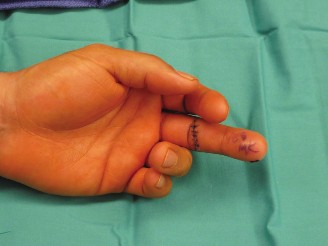
Figure: Schematic representation of a multi-strand core suture repair technique for flexor tendons, often complemented by an epitendinous suture for improved gliding surface and additional strength.
Specific Considerations by Zone
- Zone I (FDP Avulsions): Often involve a bony fragment (e.g., "jersey finger"). Repair involves reattaching the FDP to the distal phalanx (e.g., using a pull-out suture technique through the nail plate, suture anchors, or direct repair if a large bony fragment is present). Care must be taken to maintain appropriate tendon tension.
-
Zone II ("No Man's Land"):
This zone requires meticulous technique.
- Pulley Preservation: Preserve A2 and A4 pulleys. Make minimal incisions in the A1, A3, and A5 pulleys if necessary for access. Longitudinal slits rather than complete excisions are preferred if access allows.
- FDS Repair: If both FDS and FDP are lacerated, repair of both tendons is generally recommended, especially if more than 50% of the FDS slips are involved. However, if the FDS repair adds significant bulk or impedes FDP gliding, one slip of the FDS can be excised to reduce bulk, or in some cases, the FDS may be excised entirely if the FDP is fully functional and its gliding needs to be prioritized. Current evidence often favors repair of both if technically feasible without excessive bulk.
- Tendon Tension: Ensure correct tension for both FDS and FDP. The FDP should allow full passive DIP flexion and full passive extension to neutral. The FDS should allow full passive PIP flexion.
- Zone III (Lumbrical Zone): Repairs in this zone are technically easier due to the broader space. Concomitant lumbrical or nerve injuries must be addressed.
- Zone IV (Carpal Tunnel): Repair is often challenging due to multiple tendons and proximity to the median nerve. Adequate release of the transverse carpal ligament is usually necessary, followed by careful repair of each tendon. Post-operative adherence is a common issue.
- Zone V (Forearm): Tendons here are more muscle-tendinous. Repair is generally straightforward. Concomitant neurovascular injuries are common and must be addressed.
Closure
After irrigation and hemostasis, the flexor sheath is loosely approximated (if necessary, especially A1) to contain the tendon and synovial fluid, without constricting the repair. The skin is closed with fine sutures, ensuring no tension on the incision. A dorsal blocking splint is immediately applied post-operatively to protect the repair and initiate the rehabilitation protocol.
Complications & Management
Flexor tendon repairs, despite meticulous technique, carry a significant risk of complications that can impede functional recovery.
| Complication | Incidence (Approx.) | Management / Salvage Strategy |
|---|---|---|
| Tendon Adhesions/Stiffness | Most common (20-60%), leading to limited ROM | - Aggressive hand therapy (mobilization, scar massage) |
| - Tenolysis (surgical release of adhesions) if conservative measures fail after 6+ months and stable ROM achieved. | ||
| Tendon Rerupture | 3-10% (higher with early active protocols, non-compliance) | - Acute rerupture: Re-exploration and re-repair (if viable, good tissue quality). |
| - Delayed/chronic rerupture: Tendon graft or two-stage reconstruction (Hunter rod) often necessary. | ||
| Infection | <1-5% | - Superficial: Oral antibiotics, local wound care. |
| - Deep/Purulent: Surgical debridement, IV antibiotics, wound culture, possible tendon debridement/excision (leading to reconstruction). | ||
| Joint Contracture | Variable, often secondary to stiffness | - Aggressive splinting, dynamic/static progressive splints, hand therapy. |
| - Capsulectomy, tenolysis (if tendon related). | ||
| Nerve Injury | <5% (iatrogenic during surgery or original injury) | - Primary repair if identified acutely. |
| - Secondary repair/grafting for delayed presentations. | ||
| Tendon Bowstringing | Rare after primary repair if pulleys preserved | - Pulley reconstruction (e.g., using tendon graft, flexor sheath flap) if significant functional deficit. |
| Reflex Sympathetic Dystrophy (CRPS) | <5% | - Early recognition and referral for multimodal pain management, physical therapy, sympathetic blocks, medications. |
| Hardware Issues (Zone I) | 5-10% (pull-out sutures, anchors) | - Removal of symptomatic hardware. Revision surgery for repair failure. |
| Triggering/Clicking | Rare, usually due to bulky repair or pulley impingement | - Local steroid injection. Surgical release of the involved pulley or excision of scar tissue if persistent and symptomatic. |
Management Principles:
The management of complications hinges on early detection and a multidisciplinary approach involving surgeons, hand therapists, and pain specialists.
*
Adhesions:
The most common complication, directly counteracted by early, controlled motion protocols. If non-surgical management fails after 4-6 months, tenolysis may be considered, but it carries its own risks, including rerupture.
*
Rerupture:
A devastating complication requiring urgent re-evaluation. The decision to re-repair acutely versus proceed to a staged reconstruction depends on the time from rerupture, tissue quality, and patient factors.
*
Infection:
Requires aggressive debridement and appropriate antibiotic coverage. The presence of infection can jeopardize the tendon repair and necessitate removal of foreign material (suture), potentially leading to a delayed reconstruction.
*
CRPS:
Early recognition and aggressive multimodal treatment are key to preventing chronic pain and disability.
Post-Operative Rehabilitation Protocols
Post-operative rehabilitation is as critical as the surgical repair itself in optimizing outcomes for flexor tendon injuries. The central tension in rehabilitation is balancing protection of the healing tendon with mobilization to prevent adhesion formation. This has led to the evolution of various controlled motion protocols.
General Principles of Flexor Tendon Rehab:
1.
Protect the repair:
Prevent excessive force, gapping, or rupture.
2.
Minimize adhesion formation:
Encourage tendon gliding.
3.
Restore full range of motion:
Both passive and active.
4.
Gradually restore strength:
Prepare for functional activities.
5.
Educate the patient:
Ensure compliance and understanding of restrictions.
All protocols utilize a
dorsal blocking splint (DBS)
or a variation thereof.
*
Typical DBS Configuration:
Wrist in 20-30 degrees flexion, MCP joints in 30-50 degrees flexion, IP joints in full extension. This position relaxes the flexor tendons, taking tension off the repair site and protecting it. Finger cuffs or slings are often incorporated to facilitate specific exercises.
*
Patient Education:
Crucial for compliance. Patients must understand the splint's purpose, proper donning/doffing, and the importance of prescribed exercises.
Common Rehabilitation Protocols
Rehabilitation protocols can be broadly categorized into:
1.
Controlled Passive Motion (CPM):
Relies on an external force (therapist or opposite hand) to move the injured digit, allowing tendon gliding without active muscle contraction.
2.
Early Active Motion (EAM):
Involves controlled, gentle active muscle contraction, which generates higher forces across the repair but is thought to reduce adhesions more effectively.
Phase I: Protective Phase (Weeks 0-4/6)
Goal:
Protect the repair, prevent gapping, initiate tendon gliding, minimize adhesions.
Splinting:
Dorsal Blocking Splint (DBS) worn continuously.
Exercise Types:
-
Duran Protocol (Controlled Passive Motion):
- Description: Passive flexion and extension of the DIP and PIP joints within the limits of the dorsal blocking splint, typically 10 repetitions, 4-5 times per day. The patient uses the uninjured hand to passively flex and extend the injured digit's IP joints. No active muscle contraction of the repaired tendon.
- Rationale: Provides cyclical excursion of the tendon ends, promoting extrinsic healing and minimizing adhesion formation, with minimal stress on the repair.
- Progression: Gradual increase in passive motion.
- Limitations: High risk of joint stiffness if not performed diligently; slower return of active motion.
-
Kleinart Protocol (Controlled Passive Motion with Dynamic Traction):
- Description: Utilizes a dynamic traction system (rubber band attached to the fingernail and a wrist strap) to passively flex the digits into the palm. The patient actively extends the digits against the resistance of the rubber band to the limits of the dorsal blocking splint.
- Rationale: Provides continuous gentle passive flexion, and active extension promotes tendon gliding and minimizes adhesion formation. The dynamic traction helps overcome the resting tension of the extensor tendons.
- Progression: Gradual increase in active extension.
- Limitations: Potential for rubber band allergy, skin irritation, patient non-compliance, risk of joint contracture in flexion if extension is not fully achieved.
-
Early Active Motion (EAM) Protocols (e.g., Evans, Sheffield, Indianapolis, O'Connell):
-
Description:
These protocols encourage early, controlled, and protected active flexion and extension, often employing specific "place and hold" or "synergistic" exercises.
- Place and Hold: The therapist or patient passively places the digit into flexion, and the patient actively holds that position for a few seconds before passively relaxing.
- Synergistic Wrist Motion: Uses active wrist extension to facilitate passive finger flexion (tenodesis effect) and active wrist flexion to facilitate passive finger extension. For instance, with the wrist flexed, gentle active finger extension; with the wrist extended, gentle active finger flexion. This leverages the tenodesis effect, distributing tension across the entire flexor-extensor system.
- Hook Fist/Straight Fist: Gentle, controlled active movements.
- Rationale: Active muscle contraction leads to greater tendon excursion, theoretically reducing adhesions more effectively and leading to faster return of active range of motion. Requires a strong repair (e.g., 4-6 strand core suture with epitendinous repair) and a compliant patient.
- Progression: Carefully controlled increase in active ROM, gradually removing splint restrictions.
- Limitations: Higher risk of rerupture if the repair is not sufficiently strong or if the patient is non-compliant.
-
Description:
These protocols encourage early, controlled, and protected active flexion and extension, often employing specific "place and hold" or "synergistic" exercises.
Phase II: Intermediate Phase (Weeks 4/6 - 8/10)
Goal:
Gradually increase active ROM, begin light strengthening, improve tendon gliding.
Splinting:
DBS use gradually reduced (e.g., only at night or for protection during certain activities).
Exercises:
* Continue active and passive ROM exercises.
* Gentle blocking exercises (isolating motion at PIP or DIP).
* Light grip strengthening (e.g., foam ball squeezes, putty exercises).
* Scar massage and desensitization.
* Initiate light functional activities.
Phase III: Strengthening and Return to Activity (Weeks 8/10 - 12+)
Goal:
Restore full strength, endurance, and coordination for functional activities.
Splinting:
Typically discontinued.
Exercises:
* Progressive resistive exercises (theraputty, hand grippers, light weights).
* Full range of motion exercises (active and passive).
* Dexterity and coordination exercises.
* Work hardening or sport-specific training.
* Gradual return to heavy gripping and lifting activities after 12 weeks.
Optimizing Splinting and Rehab
- Custom vs. Pre-fabricated Splints: Custom thermoplastic splints offer a precise fit and better protection, often preferred. Pre-fabricated splints can be used if they achieve the required joint angles and immobilization.
- Patient Compliance: Critical. Regular therapy sessions, clear instructions, and patient education are paramount. Poor compliance significantly increases the risk of rerupture or severe stiffness.
- Communication: Close communication between the surgeon and hand therapist is essential to tailor the protocol to the individual patient's progress, repair strength, and specific needs. Modifications may be necessary based on intra-operative findings (e.g., tenuous repair, extensive contamination).
- Evidence-Based Practice: While EAM protocols generally demonstrate superior outcomes in terms of active ROM and quicker return to function compared to CPM, they require a robust repair and highly compliant patient. The choice of protocol must be individualized. Modern multi-strand repairs have largely enabled the widespread adoption of EAM.
- Adjunctive Therapies: Scar management (silicone gel sheets, massage), edema control (compression gloves, elevation), and pain management are integral components of comprehensive rehabilitation.
Summary of Key Literature / Guidelines
The landscape of flexor tendon repair and rehabilitation has evolved significantly, driven by advancements in surgical techniques, suture materials, and rehabilitation protocols. Current literature emphasizes the following key points:
- Strength of Repair: A meta-analysis by Cao et al. (2014) highlighted that multi-strand core repairs (4- to 6-strand) combined with an epitendinous repair provide superior tensile strength and gap resistance, which are prerequisites for successful early active motion protocols. These repairs typically achieve strengths of 45-70 N, well above the 10-20 N required for basic passive motion.
- Early Active Motion (EAM) Outcomes: Numerous studies, including systematic reviews by Zhao et al. (2010) and Chesney et al. (2011), have demonstrated that EAM protocols generally lead to superior total active motion and lower rates of adhesion formation compared to controlled passive motion protocols. However, these benefits are contingent upon a strong repair and strict patient compliance. While some early EAM protocols had slightly higher rerupture rates historically, modern EAM protocols, when applied to adequately strong repairs, show comparable rerupture rates to passive protocols.
- Role of Pulley Preservation: Preservation of the A2 and A4 pulleys is critical for preventing bowstringing and maintaining the mechanical advantage of the flexor tendons. Studies confirm that minimal incision of these pulleys, or repair if partially incised, is beneficial.
- Two-Tendon vs. One-Tendon Repair in Zone II: While traditionally both FDS and FDP were repaired, some debate exists regarding FDS repair when FDP is intact. However, in cases of laceration of both, current consensus leans towards repairing both FDS and FDP to optimize power and grip, provided the repair does not add significant bulk compromising FDP gliding. Selective FDS slip excision may be considered if bulk is an issue.
- Importance of Epitendinous Suture: Research consistently shows that an epitendinous repair significantly contributes to the overall strength of the repair and, more importantly, provides a smooth surface, reducing friction and extrinsic adhesion formation.
- Multidisciplinary Team Approach: The American Society for Surgery of the Hand (ASSH) and other international bodies consistently advocate for a multidisciplinary team approach involving the orthopedic surgeon, hand therapist, and patient. This collaborative model is considered the gold standard for achieving optimal functional outcomes.
- Future Directions: Research continues to explore novel suture materials, biological augmentation (e.g., growth factors, mesenchymal stem cells), and advanced imaging techniques to further optimize tendon healing and reduce adhesions. The development of personalized rehabilitation protocols based on individual repair strength and patient factors is also an ongoing area of investigation.
In conclusion, optimizing flexor tendon repair necessitates a robust surgical technique that prioritizes repair strength and minimizes friction, coupled with a carefully implemented, patient-specific post-operative rehabilitation protocol. The integration of advanced surgical methods with early, controlled active motion principles, guided by a skilled hand therapy team, represents the pinnacle of current practice.
