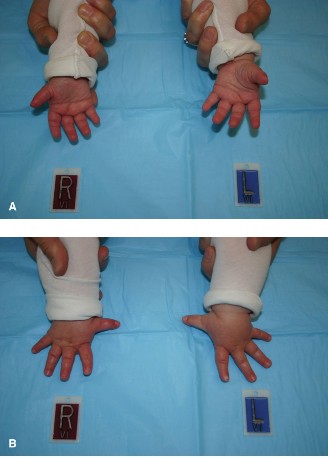
Introduction & Epidemiology
Hypoplastic thumb, also known as congenital thumb hypoplasia, represents a spectrum of deformities ranging from mild shortening with minimal functional impairment to complete aplasia. This congenital anomaly significantly impacts the critical function of the first digit, compromising pinch, grasp, and overall hand dexterity. The effective rebuilding of the first web space is paramount for restoring lasting function.
The incidence of thumb hypoplasia is estimated to be approximately 1 in 10,000 live births. It can occur as an isolated anomaly or, more commonly, in association with other syndromes and conditions, including VACTERL association (vertebral defects, anal atresia, cardiac defects, tracheoesophageal fistula, renal anomalies, limb defects) or VARCATL syndrome (vertebral anomalies, radial ray defects, cardiac defects, upper limb and tracheal-esophageal anomalies). Other associated conditions include Fanconi's anemia, Holt-Oram syndrome, and thrombocytopenia-absent radius (TAR) syndrome. A thorough diagnostic workup is essential to identify these systemic associations.
Classification of thumb hypoplasia is critical for guiding management. The most widely accepted system is the Blauth classification , which categorizes the deformity based on severity:
- Blauth Type I: Mild hypoplasia, characterized by slight shortening and narrowing of the thumb with intact intrinsic and extrinsic musculature, normal skeletal components, and a stable carpometacarpal (CMC) joint. The first web space is typically adequate.
- Blauth Type II: Moderate hypoplasia with a narrow first web space, mild intrinsic muscle deficiency (often the abductor pollicis brevis, APB), and usually a stable CMC joint. The extrinsic muscles are generally present.
- Blauth Type IIIA: Severe hypoplasia characterized by a significant narrow first web space, severe intrinsic muscle deficiency, and an unstable or hypoplastic CMC joint. Extrinsic muscles may be present but often hypoplastic. The thumb metacarpal and phalanges are present but diminished.
- Blauth Type IIIB: A "floating thumb" where the thumb is rudimentary and connected to the hand only by a neurovascular pedicle, with complete absence of intrinsic musculature and a non-articulating metacarpal. This is essentially a severe form of Type III.
- Blauth Type IV: Aplastic thumb, or pouce flottant , characterized by complete absence of the thumb, often with a small, rudimentary digit attached by a skin stalk. Functionally non-existent.
- Blauth Type V: Complete absence of the thumb (thumb aplasia).
The primary goals of surgical reconstruction are to:
1. Deepen and stabilize the first web space to allow for effective abduction and opposition.
2. Stabilize the CMC joint if unstable or hypoplastic.
3. Restore active thumb opposition and pinch strength.
4. Improve thumb length and overall cosmesis, where appropriate, without compromising function.
Surgical Anatomy & Biomechanics
A comprehensive understanding of the first web space and thumb anatomy is fundamental to effective reconstruction. The first web space is defined by the interval between the first and second metacarpals, playing a crucial role in thumb abduction and opposition.
Skeletal Anatomy:
*
Trapezium:
Articulates with the first metacarpal, forming the CMC joint, which is a saddle joint allowing for a wide range of motion crucial for circumduction, abduction, adduction, flexion, and extension. Its stability is paramount for effective pinch.
*
First Metacarpal:
Shorter and broader than other metacarpals, providing the base for the thumb.
*
Proximal and Distal Phalanges:
Provide length and points of insertion for extrinsic tendons.
Musculature:
*
Thenar Muscles (Median Nerve):
Abductor Pollicis Brevis (APB), Flexor Pollicis Brevis (FPB - superficial head), Opponens Pollicis (OP). These are critical for thumb opposition and abduction. In hypoplasia, they are often underdeveloped or absent, particularly the APB and OP.
*
Deep Thenar Muscles (Ulnar Nerve):
Flexor Pollicis Brevis (FPB - deep head), Adductor Pollicis (AP). The AP is a powerful adductor, and its contracture is a primary driver of first web space narrowing in hypoplasia.
*
First Dorsal Interosseous (Ulnar Nerve):
Contributes to abduction and flexion of the first metacarpophalangeal (MCP) joint.
*
Extrinsic Muscles:
*
Extensor Pollicis Longus (EPL), Extensor Pollicis Brevis (EPB), Abductor Pollicis Longus (APL):
Radial nerve innervation, responsible for extension and radial abduction.
*
Flexor Pollicis Longus (FPL):
Median nerve (A-I nerve) innervation, responsible for IP joint flexion.
Ligamentous Structures:
*
CMC Joint Ligaments:
The anterior oblique (beak) ligament is the primary stabilizer against dorsoradial subluxation of the first metacarpal. Other important ligaments include the posterior oblique, intermetacarpal, and ulnar/radial collateral ligaments. These are often hypoplastic or lax in Blauth Type IIIA thumbs.
*
MCP Joint Ligaments:
Radial and ulnar collateral ligaments, volar plate.
*
Deep Transverse Metacarpal Ligament:
Connects the metacarpal heads, though its direct involvement in first web space pathology is less than the muscular components.
Neurovascular Structures:
*
Radial Artery:
Enters the hand dorsally, courses through the snuffbox, then palmarly between the heads of the first dorsal interosseous muscle to form the deep palmar arch. Provides blood supply to the thumb via the princeps pollicis artery.
*
Median and Ulnar Nerves:
Provide sensory and motor innervation. Digital nerves to the thumb must be protected during web space reconstruction.
Biomechanics:
Thumb opposition is a complex motion involving a combination of abduction, flexion, and pronation of the first metacarpal. It allows the thumb pad to meet the pads of the other digits, enabling fine motor control and strong pinch. A narrow first web space restricts abduction and opposition, while an unstable CMC joint compromises the stability required for effective pinch. The balance between adduction (Adductor Pollicis) and abduction/opposition (APB, OP, extrinsic abductors) is critical. In hypoplastic thumbs, an imbalance often exists with weak or absent abductors/opposers and a relatively strong or contracted adductor.
Indications & Contraindications
The decision for surgical intervention in hypoplastic thumb hinges on the degree of functional impairment, the specific Blauth classification, and the potential for a functional outcome that justifies the morbidity of surgery.
Indications for Surgical Intervention:
-
Blauth Type II:
- Narrow first web space limiting abduction and opposition.
- Mild intrinsic muscle deficiency.
- Stable CMC joint.
- Management: First web space deepening (Z-plasty, dorsal rotation flap), often combined with an opposition tendon transfer if APB is functionally deficient.
-
Blauth Type IIIA:
- Significant adduction contracture with a profoundly narrow first web space.
- Unstable or hypoplastic CMC joint requiring stabilization.
- Severe intrinsic muscle deficiency requiring tendon transfer.
- Presence of sufficient skeletal elements (metacarpal, phalanges) to create a functional thumb.
- Management: CMC stabilization (capsulodesis, ligament reconstruction), first web space deepening, and opposition tendon transfer.
-
Severe Blauth Type IIIA (near floating thumb) and Type IIIB (floating thumb):
- While reconstruction is technically possible, pollicization (transferring another digit, usually the index finger, to the thumb position) is often the preferred option due to superior long-term functional and aesthetic outcomes for these severe deficiencies. The decision between reconstruction and pollicization is complex and depends on residual structures and expected function. For the scope of "rebuilding the first web space," we focus on scenarios where the existing thumb is salvageable.
- Associated adduction contracture: Even in mild hypoplasia (e.g., Type I, if functional limitation exists), a tight adductor pollicis or contracted web space skin can necessitate intervention.
- Functional impairment: Documented difficulty with pinch, grasp, or activities of daily living that significantly impacts the patient's independence.
Contraindications for Surgical Intervention (Web Space Reconstruction):
- Blauth Type IV and V: Complete absence or a rudimentary "floating" thumb without sufficient skeletal or neurovascular structures to reconstruct a functional digit. Pollicization is the definitive management.
- Severely deficient skeletal elements (e.g., very short or unstable metacarpal) where a functional thumb cannot be reliably created by reconstruction. In these cases, pollicization offers a more predictable and functional outcome.
- Insufficient vascularity or innervation to the existing thumb, rendering it unsuitable for complex reconstruction.
- Severe associated comorbidities that preclude major reconstructive surgery.
- Unrealistic patient/family expectations regarding the functional or cosmetic outcome.
- Lack of patient/parent compliance with prolonged rehabilitation protocols.
Table 1: Operative vs. Non-Operative Indications for Hypoplastic Thumb
| Category | Operative Indications | Non-Operative Indications |
|---|---|---|
| Blauth Type |
Type II: Narrow web space, mild intrinsic deficiency.
Type IIIA: Significant adduction contracture, unstable CMC, severe intrinsic deficiency, but sufficient skeletal elements present for reconstruction. |
Type I: Mild hypoplasia with minimal functional deficit (observation, occupational therapy).
Type IIIA (severe), Type IIIB, IV, V: Pollicization often preferred over reconstruction due to projected poor functional outcome with reconstruction alone. Aplastic thumb (Type V) or Floating thumb (Type IV) - Requires pollicization. |
| Functional Deficit | Documented impairment in pinch, grasp, and activities of daily living due to restricted thumb motion (abduction, opposition) and/or instability. | Minimal to no functional impairment. Acceptable compensatory strategies. |
| Anatomical Findings |
Adduction contracture of the first web space.
CMC joint instability or hypoplasia. Hypoplastic or absent thenar musculature (especially APB, Opponens). Adequate remaining thumb skeletal components (metacarpal, phalanges) for reconstruction. |
Normal or near-normal web space.
Stable CMC joint. Intact thenar musculature. Severely deficient or absent thumb structures (rendering reconstruction infeasible). |
| Patient Factors |
Adequate patient/family understanding and compliance with prolonged rehabilitation.
Absence of severe comorbidities precluding surgery. |
Unwillingness to undergo surgery or non-compliance with post-operative care.
Severe co-existing medical conditions that contraindicate surgery. |
| Specific Goals | To achieve improved first web space depth, CMC joint stability, active thumb opposition, functional pinch, and acceptable cosmesis, while retaining the existing thumb. | When the goal is to create a new functional thumb (pollicization) rather than reconstruct an existing severely deficient one. |
Pre-Operative Planning & Patient Positioning
Meticulous pre-operative planning is critical for optimizing outcomes in hypoplastic thumb reconstruction.
Clinical Assessment:
*
Detailed History:
Identify associated syndromes (VACTERL, TAR, Fanconi's), previous surgeries, developmental milestones.
*
Physical Examination:
*
Range of Motion (ROM):
Assess active and passive ROM of the thumb CMC, MCP, and IP joints. Quantify the degree of adduction contracture.
*
First Web Space Depth:
Measure the distance from the proximal border of the thumb metacarpal to the radial border of the index metacarpal at the web apex, both with the thumb maximally abducted and adducted.
*
Muscle Assessment:
Palpate and attempt to elicit function from the thenar muscles (APB, FPB, OP). Assess extrinsic muscle function (FPL, EPL, EPB, APL).
*
Sensibility:
Two-point discrimination, light touch, pain. Hypoplastic thumbs often have diminished sensation, but it must be sufficient for a functional digit.
*
Stability:
Assess CMC joint stability through stress testing (axial compression, distraction, radial/ulnar stress).
*
Vascularity:
Capillary refill, pulse assessment.
*
Skin Quality:
Assess skin integrity, elasticity, and scarring in the first web space.
*
Other Digits:
Evaluate potential donor sites for tendon transfers (e.g., FDS of ring or middle finger, EIP).
Imaging Studies:
*
Radiographs:
* Standard AP, lateral, and oblique views of the hand and wrist.
* Specifically assess the trapezium, first metacarpal, and phalanges for size, shape, and articulation.
* Stress views of the CMC joint may be useful to confirm instability.
* Carpal bone ossification centers can aid in estimating skeletal maturity.
*
Ultrasound/MRI:
May be considered in complex cases to evaluate muscle bulk, tendon integrity, and vascular anomalies, though not routinely required.
*
Arteriogram:
Rarely needed, but can be useful if significant vascular anomalies are suspected, particularly when planning vascularized flaps or pollicization.
Surgical Goals and Strategy:
Based on the Blauth classification and clinical assessment, define the surgical goals:
*
Web space deepening:
Z-plasty, dorsal rotation flap, or skin grafting.
*
CMC joint stabilization:
Capsulodesis, ligament reconstruction (e.g., FCR slip), or arthrodesis (rarely primary).
*
Tendon transfer for opposition:
Most commonly FDS of ring finger, EIP, or a combination.
*
Lengthening (if necessary):
Distraction osteogenesis or intercalary bone graft (less common for primary hypoplasia reconstruction, more for post-traumatic or severe deficiencies).
Patient and Family Counseling:
Thorough discussion regarding the realistic functional and cosmetic outcomes, potential complications, the need for multiple stages, and the extensive post-operative rehabilitation.
Pre-Operative Preparation:
* NPO guidelines.
* Baseline laboratory tests as per anesthesia protocol.
* Pre-operative photographs.
* Consider pre-operative occupational therapy to establish rapport and baseline function.
Patient Positioning:
*
Anesthesia:
General anesthesia is typically used, especially in pediatric patients. Regional block (e.g., brachial plexus block) can be combined for post-operative analgesia.
*
Position:
Supine on the operating table.
*
Arm Positioning:
The affected arm is abducted on a specialized hand table, allowing full access to the volar and dorsal aspects of the hand and forearm. The shoulder and elbow should be padded.
*
Tourniquet:
A pneumatic tourniquet is applied to the upper arm to provide a bloodless field, typically inflated to 250-300 mmHg.
*
Sterile Field:
The entire hand, wrist, and forearm are prepped and draped to allow for wide exposure and potential tendon harvest from the forearm or adjacent digits.
Detailed Surgical Approach / Technique
The surgical approach is tailored to the specific deformities identified, primarily focusing on web space deepening, CMC stabilization, and opposition reconstruction.
I. First Web Space Deepening
The goal is to increase the width and depth of the first web space to allow for full abduction of the thumb away from the palm. Adduction contracture often involves both skin and deeper soft tissues (Adductor Pollicis muscle, fascia).
A. Skin Reconstruction:
- Release Incision: A curvilinear or straight incision is made along the radial border of the second metacarpal, extending from the level of the metacarpal head proximally across the web space to the base of the thumb metacarpal on the palmar side.
-
Z-plasty (Four-Flap, Five-Flap, or Seven-Flap):
- Design: The central limb of the Z-plasty follows the apex of the web contracture. The lateral limbs are designed to transpose skin flaps into the lengthened web space. A four-flap Z-plasty involves two dorsal and two volar flaps. A five-flap or seven-flap Z-plasty offers greater lengthening potential by incorporating additional smaller flaps, often used for severe contractures.
- Elevation: Skin flaps are carefully elevated, ensuring subcutaneous tissue is carried with the flaps to preserve vascularity.
- Transposition: The flaps are transposed, interdigitating them to lengthen and deepen the web space. The volar flap is rotated dorsally, and the dorsal flap is rotated volarly.
- Closure: Flaps are meticulously secured with fine interrupted sutures (e.g., 5-0 or 6-0 absorbable for children, non-absorbable for adults).
-
Dorsal Rotation Flap (e.g., Littler-Burger Flap):
- Design: A large, dorsally based triangular flap is outlined on the dorsum of the hand, encompassing skin and subcutaneous tissue between the first and second metacarpals. The apex of the flap is typically oriented distally or slightly radially.
- Elevation: The flap is carefully elevated subfascialy, preserving its vascular pedicle (often based on perforators from the radial artery or dorsal metacarpal arteries).
- Rotation: The flap is rotated into the raw defect created by the web space release, providing robust, sensate skin coverage.
- Donor Site Closure: The donor site on the dorsum of the hand is closed primarily or with a split-thickness skin graft if tension is excessive.
-
Full-Thickness Skin Graft:
- Often used when a large skin defect remains after radical soft tissue release, or if local flaps are insufficient or contraindicated.
- Release: The adduction contracture is fully released, creating a defect.
- Graft Harvest: A full-thickness skin graft is harvested from a distant, non-hair-bearing site (e.g., groin, hypothenar eminence, antecubital fossa).
- Insetting: The graft is meticulously sutured into the defect, ensuring even tension and maximal contact with the recipient bed. A bolster dressing is applied to maintain pressure and promote graft take.
B. Deep Soft Tissue Release:
Regardless of the skin technique, the deep adduction contracture must be thoroughly released.
*
Adductor Pollicis Release:
The Adductor Pollicis muscle is identified. Its oblique and transverse heads are released from their origins on the third metacarpal and capitate, and from the base of the proximal phalanx, respectively. This can be performed from a dorsal approach (between the first dorsal interosseous and adductor pollicis) or a volar approach. Care must be taken to protect the deep palmar arch and the ulnar nerve motor branch.
*
First Dorsal Interosseous Release:
In severe cases, the fascia of the first dorsal interosseous may also contribute to the contracture and may require partial release.
*
Capsular Release:
If the CMC joint capsule is contracted, a capsulotomy may be necessary to fully open the web space.
II. Carpometacarpal (CMC) Joint Stabilization
CMC joint instability is common in Blauth Type IIIA hypoplasia and must be addressed to provide a stable base for the thumb.
A. Capsulodesis:
*
Technique:
The joint capsule is identified and tightened. This can involve imbrication of the volar-radial capsule, or advancement of a portion of the thenar fascia/tendon (e.g., a slip of FCR or APL tendon) to reinforce the anterior oblique ligament.
*
Fixation:
The transferred tendon or imbricated capsule is secured to the base of the first metacarpal with sutures or suture anchors.
*
K-wire Stabilization:
Often, temporary percutaneous K-wire fixation across the CMC joint (and sometimes the MCP joint) is used for 4-6 weeks to protect the capsulodesis and maintain the first metacarpal in a position of abduction and slight pronation.
B. Ligament Reconstruction (e.g., using FCR Tendon Slip):
*
Indication:
For more significant instability where capsulodesis alone is insufficient.
*
Technique:
A slip of the Flexor Carpi Radialis (FCR) tendon is harvested proximally, leaving its insertion intact. A drill hole is made through the base of the first metacarpal. The FCR slip is passed through the drill hole, looped around the original ligamentous attachment points (e.g., base of the second metacarpal or trapezium), and then secured back to itself or to the first metacarpal under appropriate tension to recreate the anterior oblique ligament.
*
K-wire Stabilization:
Essential to protect the reconstruction.
C. Arthrodesis:
*
Indication:
Reserved for severe, intractable CMC instability in older patients, failed previous reconstructions, or arthritic changes. Not typically a primary procedure in children due to concerns about growth and joint mobility.
*
Technique:
The articular cartilage is removed from the trapezium and first metacarpal base. The joint is fused in a position of 30-40 degrees abduction, 10-20 degrees flexion, and 10-15 degrees pronation, providing a stable platform for pinch. Internal fixation with K-wires, screws, or plates is used.
III. Opposition Reconstruction (Tendon Transfer)
When intrinsic thenar muscles (APB, Opponens Pollicis) are absent or non-functional, a tendon transfer is required to restore active thumb opposition.
A. Donor Tendons:
- Flexor Digitorum Superficialis (FDS) of the Ring Finger: This is the most common and versatile donor. The FDS tendon provides excellent strength and excursion, and its harvest typically results in minimal functional deficit to the ring finger.
- Extensor Indicis Proprius (EIP): A good alternative if FDS is unavailable or for specific anatomical considerations. It provides adequate excursion but is generally weaker than FDS.
- Extensor Digiti Minimi (EDM): Less commonly used.
- Palmaris Longus (PL): If present and strong, it can be used, often augmented by another tendon, as its excursion and strength can be limited.
B. FDS Ring Finger Transfer (e.g., Brand Transfer, Bunnell Modification):
-
Harvest:
- A small incision is made over the A2 pulley of the ring finger (volar aspect of the proximal phalanx).
- The FDS tendon is identified and one slip is sharply divided distally (Bunnell modification) or the entire tendon is divided distally (Brand).
- The FDS tendon is then delivered into the palm via a more proximal volar incision, often at the level of the distal palm or carpal tunnel.
- Care is taken to ensure the remaining FDS slip and FDP tendon of the ring finger are not damaged. The A2 pulley is often preserved.
-
Routing:
- Subcutaneous Route (most common): A subcutaneous tunnel is created across the palm, from the point of FDS delivery to the ulnar side of the thumb metacarpal. This route minimizes scar tissue adherence to deep structures.
- Through Carpal Tunnel: The FDS can be routed through the carpal tunnel, then brought out radially. This requires carpal tunnel release.
- Through Interosseous Membrane (dorsal routing): Rarely used for opposition, more for extrinsic extensor transfers.
-
Insertion:
- The transferred FDS tendon is brought to the radial-volar aspect of the thumb metacarpal.
- Target: The most common insertion is into the Abductor Pollicis Brevis (APB) tendon or its distal insertion on the proximal phalanx of the thumb. If the APB tendon is rudimentary, the insertion can be directly into the periosteum at the base of the proximal phalanx or the neck of the first metacarpal, slightly on its radial-volar aspect.
- Pronation: To achieve the pronation component of opposition, the tendon is often directed more towards the ulnar aspect of the thumb metacarpal or the insertion site on the APB tendon is created more ulnarly.
-
Fixation:
The tendon is secured under appropriate tension using a Pulvertaft weave or a direct tendon-to-bone suture technique (e.g., using a suture anchor or transosseous sutures through a drill hole in the metacarpal or phalanx). The thumb should be positioned in full abduction, full flexion, and full pronation during tensioning. This is
a critical step in restoring thumb function.
C. EIP Transfer:
- Harvest: The EIP tendon is identified and divided proximally in the forearm, often through a dorsal wrist incision.
- Routing: The tendon can be routed either volarly around the radial aspect of the wrist (preserving the radial artery) or dorsally across the wrist and then subcutaneously to the thumb. The volar route is often preferred to mimic the path of the thenar muscles.
- Insertion: Similar to FDS, into the APB tendon or base of the proximal phalanx.
IV. Combined Procedures
Most hypoplastic thumb reconstructions involve a combination of these techniques. For example, a Blauth Type IIIA thumb might undergo a comprehensive procedure including:
* Radical adductor pollicis release.
* Seven-flap Z-plasty for web space deepening.
* CMC ligament reconstruction using an FCR slip with K-wire stabilization.
* FDS ring finger tendon transfer for opposition, inserted into the APB tendon.
The order of procedures typically starts with the deepest layer (adductor release, CMC stabilization), followed by tendon transfers, and finally skin closure. Careful hemostasis and protection of neurovascular structures are paramount throughout the entire procedure.
Complications & Management
Despite meticulous surgical technique, complications can arise following reconstruction for hypoplastic thumb. Proactive identification and appropriate management are crucial for salvage and optimizing long-term outcomes.
Table 2: Common Complications, Incidence, and Salvage Strategies
| Complication | Incidence (Approximate) | Salvage Strategy |
|---|---|---|
| Recurrent Adduction Contracture | 10-30% | Aggressive post-operative splinting/therapy. Serial casting. If established, revision web space deepening (repeat Z-plasty, dorsal rotation flap), full-thickness skin grafting, or release of deeper structures (adductor pollicis tenotomy/myotomy). |
| CMC Joint Instability/Subluxation | 5-15% (after stabilization) | More prolonged K-wire fixation. Revision capsulodesis or ligament reconstruction. In refractory cases or older patients, CMC arthrodesis may be required to provide a stable base for pinch. |
| Tendon Transfer Failure | ||
| * Insufficient Excursion/Weakness* | 5-10% | Intensive post-operative therapy for re-education and strengthening. Dynamic splinting. If function remains poor, revision of transfer (re-tensioning, re-routing), or re-do with a different donor tendon. |
| * Adhesions/Scarring* | 5-10% | Tenolysis (surgical release of adhesions) combined with aggressive therapy. |
| * Rupture* | <5% | Re-exploration and repair if early. If chronic, re-do transfer with a different donor tendon. |
| Skin Flap/Graft Necrosis | 5-10% | Debridement of necrotic tissue. Local wound care. If defect is significant, repeat skin grafting or local flap coverage. Revision surgery may be delayed until wound is healed. |
| Infection | <5% | Superficial: Oral antibiotics, local wound care. Deep: Surgical debridement, intravenous antibiotics. K-wire removal if associated with pin tract infection. |
| Neurovascular Injury | <1% | Careful anatomical dissection usually prevents this. If recognized intra-operatively, immediate microsurgical repair. Post-operative: Splinting, nerve protection. Symptomatic management for paresthesias. Surgical neurolysis or repair if severe and persistent deficit. |
| Stiffness of adjacent joints | Variable | Early and supervised rehabilitation. Dynamic splinting. Serial manipulation. In severe cases, tenolysis or capsulotomy. |
| Growth Disturbances | Rare | Monitoring with serial radiographs. If severe, may require future osteotomies or lengthening procedures, but typically avoided in primary reconstruction to prevent physeal injury. |
| Cosmetic Dissatisfaction | Variable | Open discussion pre-operatively about realistic expectations. Revision surgery for scar revision or contouring may be considered, but functionality remains the primary goal. |
| Hypersensitivity of Scar | Common | Desensitization exercises with occupational therapy. Silicone sheeting. Topical agents. |
General Management Principles:
*
Early Recognition:
Vigilant post-operative monitoring for signs of complications (infection, vascular compromise, delayed healing, loss of motion).
*
Aggressive Rehabilitation:
Many complications, particularly stiffness and recurrent contracture, are minimized by consistent, supervised post-operative therapy.
*
Patient/Parent Education:
Clear understanding of potential complications and the importance of adherence to rehabilitation protocols.
*
Staged Revisions:
Complex reconstructions may require multiple surgical stages to address specific issues, optimize function, and correct unforeseen complications. Patience and a long-term perspective are essential.
Post-Operative Rehabilitation Protocols
Post-operative rehabilitation is as critical as the surgical procedure itself in achieving optimal functional outcomes after hypoplastic thumb reconstruction. The protocols are individualized based on the specific procedures performed (web space deepening, CMC stabilization, tendon transfer) and are typically managed by a specialized occupational or physical therapist (CHT).
I. Immediate Post-Operative Phase (Days 0-7)
-
Immobilization:
- A bulky compression dressing is applied immediately post-operatively, followed by a long arm thumb spica cast or splint .
- Position of Immobilization: The wrist is typically held in 20-30 degrees of extension, the thumb is maximally abducted, the CMC joint is stabilized in abduction and slight pronation (often with K-wires), the MCP joint is in 15-20 degrees of flexion, and the IP joint is in slight flexion or neutral. This position protects the web space, CMC stabilization, and tendon transfer.
- If a skin graft was used, a bolster dressing is maintained over the graft site for 5-7 days to ensure graft adherence.
- Pain Management: Opioids, NSAIDs, and regional nerve blocks (if performed) for adequate pain control.
- Elevation: Keep the hand elevated above heart level to minimize swelling.
- Neurovascular Monitoring: Regular checks for capillary refill, sensation, and digital pulses.
- Wound Care: Initial dressing changes by the surgical team. Keep dressings clean and dry.
II. Early Mobilization Phase (Weeks 1-4)
-
Cast/Splint Adjustments:
- K-wires (if used for CMC stabilization) are typically maintained for 4-6 weeks.
- At 1-2 weeks, the initial bulky dressing and cast are removed. The wound is inspected.
- A custom-molded static thumb spica splint is fabricated, maintaining the thumb in maximal abduction and opposition, and worn continuously (except for hygiene and gentle exercises if allowed).
-
Gentle Passive Range of Motion (PROM):
- If CMC stability is robust and tendon transfer is protected, very gentle PROM of the thumb IP and MCP joints may begin at 2-3 weeks, avoiding any adduction or excessive stress on the reconstruction .
- Gentle PROM of unaffected digits and the wrist is encouraged.
- Edema Control: Continued elevation, gentle massage, light compression garments (if appropriate).
- Scar Management: Begin gentle scar massage around 3 weeks post-op, once incisions are well-healed. Consider silicone sheeting.
III. Intermediate Rehabilitation Phase (Weeks 4-8)
- K-wire Removal: K-wires for CMC stabilization are typically removed at 4-6 weeks post-op.
-
Active Range of Motion (AROM):
- Begin active assisted ROM (AAROM) and then active ROM (AROM) exercises for the thumb.
- Focus on isolated thumb abduction and opposition. Encourage gentle flexion and extension of the MCP and IP joints.
- Tendon Re-education: If a tendon transfer was performed, focus on educating the patient (and parents) to actively use the transferred muscle. Use biofeedback, mirror therapy, and gentle resistance exercises.
- Avoid overstretching the web space: Continue to protect the web space from adduction forces.
-
Splinting:
- Transition to a dynamic thumb abduction/opposition splint during the day to encourage active motion while maintaining web space and protecting the transfer.
- Continue a static thumb spica splint at night to prevent adduction contracture.
- Light Functional Activities: Begin very light, non-resistive functional activities, emphasizing proper thumb mechanics.
IV. Advanced Rehabilitation Phase (Weeks 8-12+)
-
Strengthening:
- Progressive resistive exercises for thumb abduction, opposition, and pinch strength. Use therapy putty, small weights, and resistance bands.
- Focus on improving dexterity and fine motor control.
-
Functional Integration:
- Integrate the thumb into increasingly complex activities of daily living (ADLs), self-care, and play.
- Encourage bilateral hand use.
-
Splinting Weaning:
- Gradually decrease splint wear time during the day, maintaining night splinting for several months or longer (up to 1 year) to prevent recurrence of adduction contracture.
- Close monitoring for any signs of contracture recurrence.
- Sport-Specific Training: If applicable, introduce exercises tailored to the patient's desired sports or recreational activities.
- Long-Term Follow-up: Regular follow-up with the surgeon and therapist to monitor progress, address any emerging issues, and ensure long-term functional stability.
Key Principles of Rehabilitation:
*
Protection:
Safeguard the surgical repairs from excessive stress, especially during the initial phases.
*
Prevention of Contracture:
Consistent splinting and stretching are critical to prevent recurrence of the adduction contracture and maintain the deepened web space.
*
Muscle Re-education:
For tendon transfers, intensive re-education is necessary to optimize the function of the transferred muscle.
*
Gradual Progression:
Introduce exercises and activities progressively to avoid overloading healing tissues.
*
Patient/Parent Compliance:
Education and motivation of the patient and family are paramount for successful adherence to the often-long and demanding rehabilitation protocol.
Summary of Key Literature / Guidelines
The surgical management of hypoplastic thumb and the rebuilding of the first web space have evolved significantly over the past century, guided by landmark contributions and ongoing clinical research.
Blauth's Classification (1967): This seminal work established the most widely accepted classification system, providing a framework for diagnosis, prognosis, and treatment planning. It emphasizes the need for tailored surgical approaches based on the severity of skeletal and soft tissue deficiencies.
Manske's Functional Classification (1992): Manske and McCarroll provided a functional classification focusing on the integrity of the CMC joint and musculature, which also informs surgical decision-making, particularly regarding pollicization versus reconstruction. They highlighted that a non-functional thumb with significant deficits (equivalent to Blauth Type IIIB/IV) is often best treated with pollicization.
Web Space Deepening Techniques:
*
Z-plasty:
A foundational technique, with various modifications (four-flap, five-flap, seven-flap) described by White, Woolf, and others, offering graded degrees of lengthening. The choice depends on the severity of the contracture and skin laxity.
*
Dorsal Rotation Flaps:
Littler's original description of a neurovascular island flap from the ring finger (1953) paved the way for various dorsal rotation flaps for web space reconstruction, often providing robust and sensate skin. Burger et al. (1994) described a modified dorsal rotation flap that is commonly employed. These flaps are particularly useful for severe adduction contractures.
*
Full-Thickness Skin Grafts:
Long-standing technique used when local tissue is insufficient, often from the groin or hypothenar area, as described by Brand and Hollister (1999).
CMC Joint Stabilization:
* The primary challenge in Blauth Type IIIA thumbs is CMC instability. Techniques range from simple capsular reefing (capsulodesis) to more robust ligament reconstructions.
* Reconstruction of the anterior oblique ligament using a slip of the Flexor Carpi Radialis (FCR) tendon, first described by Eaton and Littler (1973) for CMC arthritis, has been adapted for congenital instability, often augmented with K-wire fixation.
* Arthrodesis, while effective for stability, is generally reserved for older patients or failed reconstructions due to the loss of motion and potential impact on growth in children.
Opposition Reconstruction (Tendon Transfers):
*
Bunnell (1938) and Brand (1961):
Pioneered the use of the Flexor Digitorum Superficialis (FDS) of the ring finger for thumb opposition, routing it subcutaneously across the palm and inserting it into the APB tendon. This remains the gold standard due to the FDS's strength, excursion, and minimal donor morbidity.
*
Riordan and colleagues:
Emphasized the importance of precisely tensioning the transfer with the thumb in full abduction, full flexion, and full pronation to achieve true opposition.
*
Extensor Indicis Proprius (EIP) Transfer:
First described by Thompson (1942), is another reliable option, particularly when FDS is unavailable or for specific surgical preferences. Its routing and insertion principles are similar to FDS transfers.
*
Manske and Goldfarb (2007):
Provided comprehensive guidelines on the indications and techniques for tendon transfers in various forms of congenital thumb deficiencies.
Long-Term Outcomes:
* Multiple studies have demonstrated that appropriately selected and executed reconstructions can provide durable, functional thumbs, significantly improving pinch strength, grip, and overall hand function.
* However, long-term follow-up often reveals a propensity for recurrent adduction contracture, emphasizing the critical role of prolonged post-operative splinting and therapy.
* Functional results are generally superior for Blauth Type II thumbs compared to Type IIIA, where residual stiffness, weakness, and instability can be more pronounced.
* Patient satisfaction, while subjective, is generally high when realistic expectations are set and functional gains are significant.
Current Trends and Future Directions:
* The shift towards early surgical intervention (around 12-18 months of age) is favored to capitalize on neural plasticity and integrate the reconstructed thumb into developmental motor patterns.
* Continued refinement of surgical techniques, particularly in microvascular reconstruction and growth-sparing bone grafting, aims to improve outcomes for more complex deficiencies.
* Advancements in tissue engineering and biomechanical modeling may offer future solutions for muscle and ligament regeneration.
* A multidisciplinary approach involving pediatric orthopedic surgeons, hand therapists, and geneticists is considered best practice for comprehensive patient care.
In summary, the surgical reconstruction of the hypoplastic thumb's first web space is a sophisticated procedure requiring a deep understanding of anatomy, biomechanics, and reconstructive principles. Adherence to established guidelines, meticulous surgical technique, and dedicated post-operative rehabilitation are all essential to achieve lasting functional improvement for these patients.
