Introduction and Epidemiology
Pes cavus, frequently presenting as a cavovarus deformity, represents a complex three-dimensional structural anomaly of the foot and ankle characterized by an abnormally elevated medial longitudinal arch, plantarflexion of the first ray, forefoot pronation, and hindfoot varus. For the orthopedic surgeon, understanding the intricate relationship between a pes cavus deformity and chronic ankle pain is paramount. The rigid, malaligned architecture of the cavovarus foot directly alters the biomechanical axis of the lower extremity, leading to a predictable cascade of lateral column overload, recurrent ankle instability, peroneal tendinopathy, and ultimately, asymmetric varus ankle osteoarthritis.
Epidemiologically, pes cavus is heavily associated with underlying neuromuscular pathology. Current orthopedic literature suggests that up to two-thirds of bilateral cavovarus deformities possess an identifiable neurologic etiology. Charcot-Marie-Tooth disease, a hereditary motor and sensory neuropathy, is the most common culprit. Other significant neurological etiologies include Friedreich ataxia, spinal dysraphism, tethered cord syndrome, poliomyelitis, cerebral palsy, and syringomyelia. Unilateral cavovarus deformities may raise suspicion for localized trauma, such as a malunited talar neck fracture, sequelae of deep posterior compartment syndrome, or a localized peripheral nerve injury (e.g., sciatic or common peroneal nerve palsy). Idiopathic pes cavus does exist, often termed "subtle cavus," and is a frequent, frequently underdiagnosed cause of chronic lateral ankle pain and recurrent sprains in athletic populations.

The clinical presentation of ankle pain in these patients is multifaceted. Patients rarely complain of the arch height itself; rather, they present with sequelae of the deformity. Chronic lateral ankle instability is ubiquitous, driven by the rigid hindfoot varus which places the anterior talofibular ligament and calcaneofibular ligament under continuous pathologic tension. Furthermore, the laterally shifted center of pressure increases the mechanical demand on the peroneal tendons, leading to tenosynovitis, tendinosis, or longitudinal tears. Over time, the chronic varus tilt of the talus within the ankle mortise leads to focal articular cartilage degeneration on the medial talar dome and tibial plafond, culminating in end-stage varus ankle arthrosis.
Surgical Anatomy and Biomechanics
A profound comprehension of foot and ankle biomechanics is required to successfully manage the cavovarus foot. The deformity is fundamentally driven by specific muscle imbalances that distort the normal osseous architecture. The classic "Charcot-Marie-Tooth paradigm" of muscle imbalance dictates that the deformity arises from the overpowering of weak muscles by their stronger antagonists.
First, the peroneus longus (a plantarflexor of the first ray) remains strong, while its antagonist, the tibialis anterior (a dorsiflexor of the first ray), weakens. This unopposed pull of the peroneus longus drives the first metatarsal into rigid plantarflexion. Second, the tibialis posterior (a hindfoot invertor) retains its strength, while the peroneus brevis (a hindfoot evertor) becomes paretic. This imbalance pulls the hindfoot into varus. Finally, the intrinsic muscles of the foot (lumbricals and interossei) weaken, while the extrinsic toe flexors and extensors remain relatively spared. The loss of intrinsic stabilization at the metatarsophalangeal joints leads to hyperextension at the metatarsophalangeal joints and flexion at the interphalangeal joints, creating classic claw toe deformities.
Biomechanically, the plantarflexed first ray acts as a rigid kickstand. During the stance phase of gait, as the plantarflexed first metatarsal strikes the ground, it forces the entire forefoot into pronation. Because the midfoot and hindfoot are mechanically linked via the transverse tarsal joints, forefoot pronation forces the hindfoot into a compensatory varus alignment to maintain a plantigrade foot. This is known as the "tripod effect." Initially, this hindfoot varus is flexible and solely driven by the forefoot deformity. However, over time, contractures of the plantar fascia, spring ligament, and medial capsule of the subtalar joint render the hindfoot varus rigid.

The implications for the ankle joint are severe. The rigid hindfoot varus locks the transverse tarsal joint (talonavicular and calcaneocuboid joints), eliminating the normal shock-absorbing capacity of the foot during heel strike. The ground reaction forces are transmitted directly up the lateral column and into the ankle mortise. The center of pressure shifts laterally, dramatically increasing the sheer forces across the lateral collateral ligaments of the ankle. This lateral overload is the primary generator of ankle pain, predisposing the patient to recurrent inversion injuries, fifth metatarsal base stress fractures, and accelerated articular wear of the medial ankle joint.
Indications and Contraindications
The decision-making process for surgical intervention in pes cavus relies heavily on differentiating a flexible from a rigid deformity, identifying the primary apex of the deformity, and determining the presence of degenerative joint disease. The Coleman block test is the cornerstone of this evaluation, determining whether the hindfoot varus is flexible and driven by the plantarflexed first ray, or if it has become a fixed, rigid deformity.
| Management Strategy | Primary Indications | Key Clinical and Radiographic Findings |
|---|---|---|
| Non Operative Management | Mild, non-progressive deformity; subtle cavus; high surgical risk patients; asymptomatic incidental findings. | Flexible hindfoot on Coleman block test; absence of severe lateral ankle instability; no degenerative joint changes; pain manageable with orthotics. |
| Soft Tissue Reconstruction Only | Early progressive deformity; flexible hindfoot; primary complaint is clawing or mild forefoot pain. | Coleman block test demonstrates complete correction of hindfoot varus; minimal fixed bony deformity on weight-bearing radiographs. |
| Joint Sparing Bony Reconstruction | Progressive deformity with rigid components; chronic lateral ankle pain and instability; preserved articular cartilage. | Rigid hindfoot varus on Coleman block test; fixed plantarflexed first ray; intact subtalar and transverse tarsal joint cartilage on imaging. |
| Joint Sacrificing Arthrodesis | End-stage rigid deformity; severe degenerative joint disease; failed prior joint-sparing reconstructions; severe neuromuscular spasticity. | Subtalar or transverse tarsal arthritis; fixed, uncorrectable deformity; severe varus ankle arthrosis requiring concomitant ankle fusion or replacement. |
Absolute contraindications to complex cavovarus reconstruction include active local or systemic infection, severe peripheral arterial disease compromising soft tissue healing, and medically unstable patients unable to tolerate prolonged anesthesia. Relative contraindications include poorly controlled diabetes mellitus, severe osteopenia that may compromise hardware fixation, and profound sensory neuropathy (e.g., advanced Charcot neuroarthropathy), which significantly increases the risk of postoperative complications, nonunion, and hardware failure.
Pre Operative Planning and Patient Positioning
Comprehensive preoperative planning begins with a meticulous physical examination. The spine must be examined for signs of dysraphism (hairy patches, dimples). A detailed neurological exam assessing motor strength, sensory deficits, and deep tendon reflexes is mandatory. The Silfverskiöld test is performed to assess for gastrocnemius contracture, which is frequently present and exacerbates forefoot overload.
The Coleman block test is executed by placing the patient's lateral foot (heel and lateral border) on a 1-inch wooden block, allowing the first, second, and third metatarsals to hang off the medial edge. If the hindfoot varus corrects to neutral or valgus, the hindfoot is flexible, and the deformity is primarily driven by the forefoot (plantarflexed first ray). If the hindfoot remains in varus, the subtalar joint has developed a fixed contracture, necessitating hindfoot osteotomies or arthrodesis.
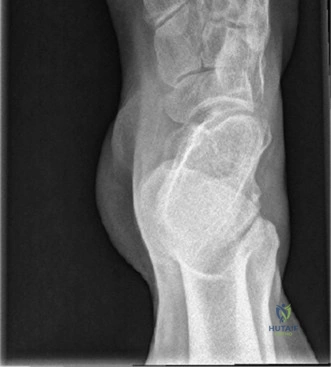
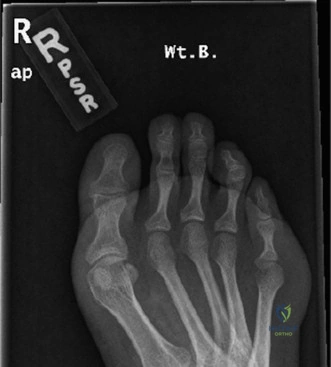
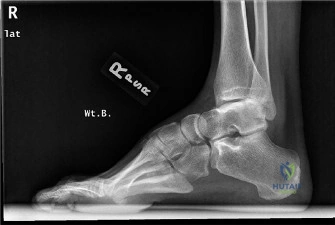
Standard weight-bearing radiographs of the foot and ankle (anteroposterior, lateral, and mortise views) are essential. A Harris heel view is critical for quantifying the degree of hindfoot varus.
Key radiographic parameters to evaluate include:
* Meary's Angle: The angle between the longitudinal axis of the talus and the first metatarsal on the lateral view. Normal is 0 degrees. In pes cavus, the angle is convex upward (frequently > 4 degrees).
* Calcaneal Pitch: The angle between the inferior border of the calcaneus and the plantar supporting surface. Normal is 18 to 20 degrees. In cavus feet, this is typically elevated above 30 degrees.
* Hibbs Angle: The angle between the longitudinal axis of the calcaneus and the first metatarsal. It quantifies the degree of cavus independent of the midfoot joints.
* Anteroposterior Talocalcaneal Angle (Kite's Angle): Often decreased in cavovarus feet, reflecting the parallel alignment of the talus and calcaneus due to hindfoot varus.
Advanced imaging, such as weight-bearing computed tomography (WBCT), is increasingly utilized to provide a three-dimensional assessment of the deformity, mapping the exact location of joint subluxations and identifying occult degenerative changes within the subtalar or transverse tarsal joints. Magnetic resonance imaging (MRI) of the ankle is indicated to evaluate the integrity of the lateral ligamentous complex, assess for peroneal tendon pathology, and identify osteochondral lesions of the talus resulting from chronic instability.

For patient positioning, a comprehensive cavovarus reconstruction is typically performed with the patient in a supine position with an ipsilateral hip bump to internally rotate the leg, providing excellent access to the lateral column, hindfoot, and lateral ankle. A sterile thigh tourniquet is applied. The limb must be draped free to allow intraoperative assessment of foot alignment and ankle range of motion. For isolated calcaneal osteotomies or extensive lateral column work, a lateral decubitus position may be considered, though it limits access to the medial column.
Detailed Surgical Approach and Technique
Surgical reconstruction of the cavovarus foot is inherently "a la carte," requiring a customized combination of soft tissue releases, osteotomies, and tendon transfers based on the specific anatomical apex of the deformity. The overarching goal is to create a plantigrade, stable foot with balanced muscle forces, thereby relieving the lateral overload and ankle pain. The sequence of reconstruction is critical and typically proceeds from soft tissue releases to forefoot/midfoot bony correction, followed by hindfoot bony correction, tendon transfers, and finally, ankle stabilization.
Soft Tissue Releases
The reconstruction frequently begins with a radical release of the plantar fascia, known as Steindler stripping. A medial incision is made over the calcaneal tuberosity. The deep fascia is incised, and the plantar fascia is released from its origin on the medial process of the calcaneal tuberosity. The origins of the abductor hallucis, flexor digitorum brevis, and abductor digiti minimi are subperiosteally elevated and released. This addresses the longitudinal contracture of the arch. If a gastrocnemius contracture was identified preoperatively via the Silfverskiöld test, a gastrocnemius recession (Strayer or Baumann procedure) or a percutaneous Achilles tendon lengthening is performed to restore ankle dorsiflexion.
Forefoot and Midfoot Osteotomies
Addressing the plantarflexed first ray is the most critical step in correcting the forefoot-driven component of the cavus deformity. A first metatarsal dorsiflexion osteotomy is performed via a dorsal longitudinal incision over the proximal first metatarsal. The extensor hallucis longus tendon is protected. A closing wedge osteotomy is created at the base of the first metatarsal, with the base of the wedge oriented dorsally. The plantar cortex is preserved as a hinge if possible. The osteotomy is closed, elevating the metatarsal head, and secured with a dorsal locking plate or rigid compression staples.
In severe cases where the apex of the cavus is located more proximally, midfoot osteotomies may be required. A Cole osteotomy (a dorsal closing wedge osteotomy through the naviculocuneiform and cuboid joints) or a Japas osteotomy (a V-shaped osteotomy through the midfoot) can globally reduce the arch height, though these are technically demanding and carry higher risks of nonunion.
Hindfoot Reconstruction
If the Coleman block test demonstrated a rigid hindfoot varus, a calcaneal osteotomy is mandatory. The goal is to translate the mechanical axis of the hindfoot laterally, thereby unloading the lateral ankle and restoring the eversion moment arm of the Achilles tendon.
An oblique lateral incision is made posterior to the peroneal tendons and sural nerve. The lateral wall of the calcaneus is exposed. A lateralizing calcaneal osteotomy (LCO) is performed using an oscillating saw, creating an oblique cut from posterior-dorsal to anterior-plantar, exiting just posterior to the posterior facet of the subtalar joint. The posterior tuberosity is then translated laterally by 10 to 15 millimeters. If severe intrinsic varus of the calcaneus is present, a Dwyer closing wedge osteotomy (removing a laterally based wedge of bone) may be combined with the lateral translation. The osteotomy is provisionally fixed with Kirschner wires, alignment is checked fluoroscopically and clinically, and definitive fixation is achieved with two large-fragment (6.5 mm or 7.3 mm) cannulated headless compression screws placed from the heel pad into the anterior calcaneus.

Tendon Transfers and Balancing
Rebalancing the dynamic forces across the foot and ankle is essential to prevent recurrence of the deformity. The most critical transfer in the cavovarus foot is the peroneus longus to peroneus brevis tenodesis. This procedure eliminates the deforming plantarflexion force on the first ray (by detaching the peroneus longus) and augments the weak eversion power of the hindfoot (by attaching it to the peroneus brevis). Through a lateral incision, both tendons are identified. The peroneus longus is transected distally and sutured side-to-side into the peroneus brevis under physiologic tension with the foot held in eversion.
To address clawing of the hallux and further elevate the first ray, a Jones procedure is often performed. The extensor hallucis longus (EHL) is detached from the distal phalanx, routed through a drill hole in the first metatarsal neck, and sutured back onto itself. Because this eliminates active interphalangeal joint extension, an arthrodesis of the hallux interphalangeal joint is performed concurrently.
For lesser toe clawing, a Hibbs tenosynovectomy or transfer of the extensor digitorum longus (EDL) tendons to the lateral cuneiform can be utilized to remove the hyperextension force at the metatarsophalangeal joints, often combined with proximal interphalangeal joint resections or fusions.
Lateral Ankle Stabilization
Following correction of the osseous architecture and muscle balancing, the chronic lateral ankle instability must be addressed. A modified Broström-Gould procedure is the standard of care. The anterior talofibular ligament (ATFL) and calcaneofibular ligament (CFL) are imbricated and repaired directly to the fibula using suture anchors. The inferior extensor retinaculum is then mobilized and sutured over the repair to augment stability and limit inversion. In cases of severe, long-standing instability with attenuated native tissues, an allograft reconstruction or internal brace augmentation may be necessary to provide sufficient mechanical restraint.
Complications and Management
Surgical reconstruction of the cavovarus foot is fraught with potential complications due to the complexity of the deformity, the number of simultaneous procedures performed, and the frequently underlying compromised neurological status of the patient. Meticulous surgical technique and vigilant postoperative care are required to mitigate these risks.
| Complication | Incidence / Risk Factors | Prevention and Salvage Strategies |
|---|---|---|
| Undercorrection / Recurrent Deformity | High in progressive neuromuscular diseases (e.g., CMT). Often due to failure to recognize a rigid forefoot driving the hindfoot. | Ensure aggressive 1st MT dorsiflexion osteotomy. Perform robust tendon transfers (PL to PB). Salvage: Revision osteotomies or triple arthrodesis. |
| Overcorrection (Planovalgus Deformity) | Less common. Due to excessive lateral translation of the calcaneus or over-lengthening of the Achilles tendon. | Precise intraoperative fluoroscopic and clinical assessment. Avoid excessive medial soft tissue release. Salvage: Medializing calcaneal osteotomy, FDL transfer. |
| Nonunion / Delayed Union | 5-10%. Highest risk at the 1st metatarsal base or midfoot osteotomy sites. Smoking and diabetes are major risk factors. | Use rigid internal fixation (locking plates, compression staples). Consider bone grafting in high-risk patients. Salvage: Revision open reduction internal fixation with autogenous bone graft. |
| Sural Nerve Injury | 2-15%. At risk during the lateral approach to the calcaneus and peroneal tendons. | Meticulous blunt dissection in the subcutaneous tissues. Identify and protect the nerve early. Salvage: Gabapentinoids, diagnostic blocks, surgical excision and burying of neuroma into muscle or bone. |
| Wound Healing Complications | 5-20%. The lateral incision is under significant tension once the varus deformity is corrected into valgus. | Handle soft tissues delicately. Ensure subperiosteal dissection. Close the lateral wound prior to fully tensioning the medial structures. Salvage: Local wound care, negative pressure wound therapy, rarely skin grafting. |
One of the most challenging complications is persistent or recurrent lateral ankle pain despite a technically successful realignment. This often indicates unrecognized or progressive intra-articular pathology, such as osteochondral lesions of the talus or advancing varus ankle osteoarthritis. In these scenarios, if conservative measures fail, salvage procedures such as an ankle arthrodesis or a total ankle arthroplasty (in appropriately selected patients with a now-plantigrade, stable foot) must be considered.

Post Operative Rehabilitation Protocols
Rehabilitation following a comprehensive cavovarus reconstruction is prolonged and requires strict adherence to biomechanical healing constraints. The protocol must protect both the osseous healing of the osteotomies and the soft tissue healing of the tendon transfers and ligament reconstructions.
Phase I: Immediate Postoperative Period (Weeks 0-2)
The patient is placed in a well-padded, short-leg bulky splint in a neutral position in the operating room. The patient is strictly non-weight-bearing (NWB) on the operative extremity. Elevation is critical to manage edema, which can be severe following extensive midfoot and hindfoot surgery. Deep vein thrombosis (DVT) prophylaxis is initiated based on patient risk factors.
Phase II: Protection and Early Healing (Weeks 2-6)
At the first postoperative visit (10-14 days), sutures are removed. The patient is transitioned to a short-leg fiberglass cast or a rigid controlled ankle motion (CAM) boot. The patient remains strictly NWB. If a CAM boot is utilized, gentle active range of motion of the toes may be initiated, but ankle motion is restricted to protect the lateral ligament repair and tendon transfers.
Phase III: Progressive Weight-Bearing (Weeks 6-10)
At 6 weeks, weight-bearing radiographs are obtained to assess the healing of the first metatarsal and calcaneal osteotomies. If radiographic consolidation is evident, the patient begins progressive partial weight-bearing (PWB) in the CAM boot, advancing to full weight-bearing (FWB) over a 4-week period. Formal physical therapy is initiated. Early therapy focuses on active and active-assisted range of motion of the ankle and subtalar joints, scar mobilization, and intrinsic foot muscle strengthening. Isotonic strengthening of the transferred tendons (e.g., peroneus brevis) is introduced carefully.
Phase IV: Functional Restoration (Weeks 10-16+)
The patient is transitioned from the CAM boot to a supportive athletic shoe, often utilizing a custom orthotic to support the newly reconstructed arch and accommodate any residual deformity. Physical therapy intensifies, focusing on proprioceptive training, single-leg balance, and closed-kinetic-chain strengthening. Return to high-impact activities or sports is typically delayed until 6 to 9 months postoperatively, contingent upon full radiographic union, restoration of dynamic muscle balance, and absence of pain.
Summary of Key Literature and Guidelines
The evolution of cavovarus foot management is deeply rooted in several seminal orthopedic works that have defined our current biomechanical understanding and surgical approaches.
- Coleman and Chestnut (1977): Introduced the Coleman block test, fundamentally changing the diagnostic algorithm for pes cavus. This paper established the critical distinction between forefoot-driven flexible hindfoot varus and rigid subtalar contracture, dictating the necessity of hindfoot osteotomies.
- Dwyer (1959): Described the lateral closing wedge osteotomy of the calcaneus for the treatment of pes cavus. While the lateralizing calcaneal osteotomy (LCO) has largely superseded the Dwyer osteotomy for pure translation, Dwyer's principles of altering the mechanical axis of the hindfoot remain foundational.
- Paulos et al. (1980): Provided a comprehensive biomechanical analysis of the cavus foot, detailing the "tripod effect" and the specific muscle imbalances (the Charcot-Marie-Tooth paradigm) that drive the progressive deformity.
- Myerson and Jeng (2000): Published extensive outcome data on the surgical correction of the cavovarus foot, emphasizing the necessity of the "a la carte" approach. Their work highlighted that failure to address the plantarflexed first ray is the primary cause of recurrent deformity and continued lateral ankle overload.
- Ward et al. (2008): Explored the long-term outcomes of tendon transfers in neuromuscular cavovarus deformities, specifically validating the efficacy of the peroneus longus to peroneus brevis transfer in rebalancing the foot and protecting the lateral ankle ligaments from chronic attenuation.
Current academic guidelines advocate for a joint-sparing approach whenever feasible, reserving arthrodesis (such as triple arthrodesis) for rigid, end-stage deformities with established osteoarthritis. The overarching consensus in modern orthopedic literature dictates that treating lateral ankle pain and instability in the presence of a cavovarus foot requires addressing the underlying bony architecture; isolated lateral ligament reconstruction without correcting the varus malalignment is destined for mechanical failure. Optimal outcomes rely on meticulous preoperative planning, a comprehensive understanding of foot biomechanics, and precise surgical execution.