

Buprenorphine Transdermal Patch (Butrans): An Expert Medical SEO Guide for Chronic Pain Management
Welcome to this exhaustive medical SEO guide on the Buprenorphine Transdermal Patch, commonly known by its brand name, Butrans. As an expert medical SEO copywriter specializing in orthopedics, I understand the critical need for accurate, detailed, and accessible information regarding pain management solutions. Butrans represents a significant therapeutic option for individuals suffering from chronic, severe pain that requires continuous, around-the-clock opioid analgesia. This guide aims to provide a comprehensive overview, delving into its intricate mechanisms, clinical applications, safety profile, and essential considerations for both healthcare professionals and patients.
Comprehensive Introduction & Overview of Butrans
Butrans is a transdermal system designed to deliver buprenorphine, a potent opioid analgesic, continuously over a seven-day period. It is a Schedule III controlled substance, indicating its potential for abuse and dependence, but less so than Schedule II opioids. Unlike many traditional opioids, buprenorphine acts as a partial agonist at the mu-opioid receptor, which confers a unique pharmacological profile, including a "ceiling effect" for respiratory depression, potentially making it safer in terms of overdose compared to full opioid agonists.
The transdermal patch offers several advantages, including sustained drug delivery, improved patient adherence due to weekly application, and avoidance of first-pass metabolism, which can lead to more consistent plasma concentrations and potentially fewer gastrointestinal side effects. It is specifically indicated for chronic pain and is not suitable for acute pain, as-needed (PRN) use, or mild pain. Understanding its precise role in pain management is crucial for optimizing patient outcomes and minimizing risks.
Deep-Dive into Technical Specifications & Mechanisms
Mechanism of Action
Buprenorphine's analgesic effects are primarily mediated through its high affinity binding as a partial agonist at the mu-opioid receptor and as an antagonist at the kappa-opioid receptor.
- Partial Mu-Agonism: Buprenorphine binds strongly to mu-opioid receptors in the central nervous system. As a partial agonist, it produces a less intense maximal effect compared to full agonists like morphine, even at full receptor occupancy. This unique property contributes to its "ceiling effect" on respiratory depression, meaning that beyond a certain dose, further increases in buprenorphine concentration do not significantly increase the degree of respiratory depression. This also means that in patients tolerant to full agonists, buprenorphine may precipitate withdrawal if introduced too rapidly or at too high a dose, as it can displace full agonists from the receptors without fully activating them.
- Kappa-Antagonism: Its antagonist activity at the kappa-opioid receptor may contribute to its analgesic profile and potentially modulate some of the dysphoric effects associated with kappa-receptor activation by other opioids.
- Other Mechanisms: Buprenorphine also has a high affinity for the opioid receptor-like 1 (ORL-1) receptor, though the clinical significance of this interaction for analgesia is still under investigation.
Pharmacokinetics
The transdermal delivery system of Butrans provides a unique pharmacokinetic profile:
- Absorption: After application, buprenorphine is absorbed slowly and continuously through the skin into the systemic circulation. Plasma concentrations gradually increase, reaching steady-state within 36-72 hours after the first patch application.
- Distribution: Buprenorphine is highly lipophilic and widely distributed throughout body tissues. It is approximately 96% protein-bound, primarily to alpha- and beta-globulins.
- Metabolism: Buprenorphine undergoes extensive hepatic metabolism primarily via N-dealkylation by the CYP3A4 enzyme to norbuprenorphine. Both buprenorphine and norbuprenorphine are further conjugated with glucuronic acid. Norbuprenorphine is also pharmacologically active but contributes less to the overall analgesic effect due to its lower potency and poorer penetration across the blood-brain barrier.
- Elimination: The elimination half-life of buprenorphine after patch removal ranges from approximately 26 to 36 hours, reflecting the slow release from the skin depot and the drug's intrinsic half-life. This prolonged half-life allows for once-weekly dosing. Excretion occurs predominantly through feces (about 70%) and urine (about 30%), primarily as metabolites.
Extensive Clinical Indications & Usage
Butrans is a powerful tool in the appropriate clinical setting, but its indications are specific and must be strictly adhered to.
Detailed Indications
Butrans is indicated for the management of chronic, severe pain in patients who require a continuous, around-the-clock opioid analgesic for an extended period, and for whom alternative treatment options (e.g., non-opioid analgesics or immediate-release opioids) are inadequate or not tolerated.
- Chronic Pain Management: This includes various types of chronic non-cancer pain, such as chronic back pain, neuropathic pain, or osteoarthritis, when other less potent analgesics have failed.
- Not for Acute Pain: Due to its slow onset of action and prolonged duration, Butrans is not suitable for the management of acute pain, post-operative pain, or pain on an as-needed basis.
- Not for Opioid Naive Patients: While the lowest dose (5 mcg/hour) may be considered in opioid-naive patients, it is generally preferred for patients who have demonstrated tolerance to other opioids. Careful titration is paramount.
- REMS Program: As with many potent opioids, Butrans is subject to the Opioid Analgesic Risk Evaluation and Mitigation Strategy (REMS) program, which aims to reduce serious adverse outcomes related to opioid use, including addiction, overdose, and death.
Dosage Guidelines
Proper dosing and administration are critical for efficacy and safety.
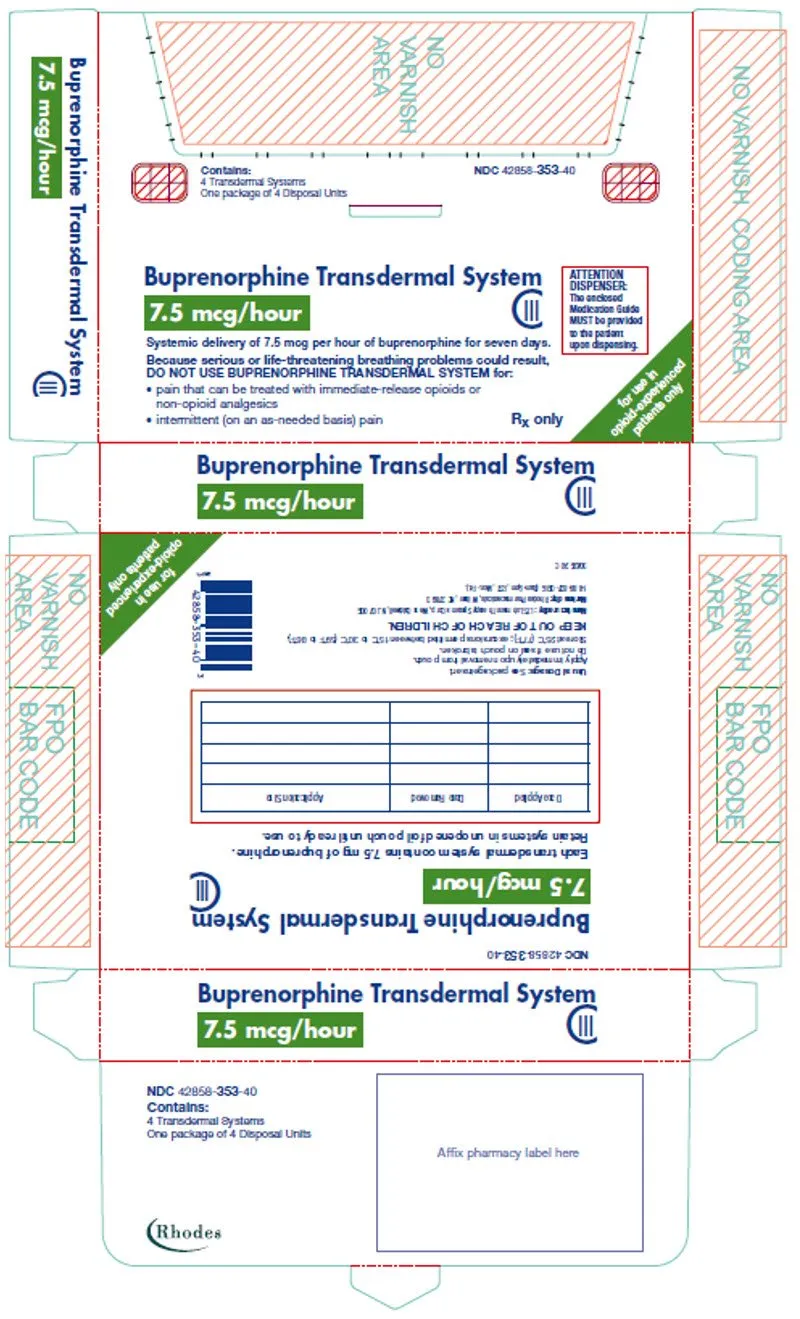
- Available Strengths: Butrans patches are available in various strengths, delivering buprenorphine at a rate of 5, 7.5, 10, 15, and 20 mcg/hour.
- Initial Dosing:
- Opioid-Naive Patients: Initiate with the lowest dose, 5 mcg/hour, applied once every 7 days.
- Patients Currently Receiving Opioids: The starting dose should be based on the patient's current daily opioid intake, using an equianalgesic conversion table. It is crucial to start with a conservative dose to avoid over-sedation or precipitating withdrawal.
- Titration:
- Doses should be titrated gradually, usually no more frequently than every 7 days, to the lowest effective dose that provides adequate analgesia with acceptable side effects.
- Increments should be made by 5 mcg/hour or 7.5 mcg/hour, depending on the patient's response and previous dose.
- The maximum recommended dose is 20 mcg/hour. Doses higher than 20 mcg/hour have not been shown to provide additional benefit and may increase the risk of adverse events.
- Application:
- Apply the patch to a clean, dry, non-hairy area of skin on the upper outer arm, upper chest, upper back, or side of the chest.
- Rotate application sites to prevent skin irritation. Do not apply to the same site for at least 21 days.
- Wear the patch continuously for 7 days.
- Discontinuation:
- When discontinuing Butrans, gradually taper the dose to prevent opioid withdrawal symptoms. This should be done under medical supervision.
- Due to the long elimination half-life, withdrawal symptoms may not appear for some time after patch removal.
Risks, Side Effects, and Contraindications
Contraindications
Butrans is contraindicated in patients with:
- Significant Respiratory Depression: Acute or severe bronchial asthma or hypercarbia in an unmonitored setting or in the absence of resuscitative equipment.
- Acute or Severe Bronchial Asthma: In an unmonitored setting or in the absence of resuscitative equipment.
- Known or Suspected Paralytic Ileus or Gastrointestinal Obstruction: Opioids can exacerbate these conditions.
- Hypersensitivity: Known hypersensitivity to buprenorphine or any components of the patch.
Warnings and Precautions
- Addiction, Abuse, and Misuse: Butrans carries a significant risk of addiction, abuse, and misuse, which can lead to overdose and death.
- Respiratory Depression: Serious, life-threatening, or fatal respiratory depression may occur. The ceiling effect on respiratory depression is not absolute, and high doses or co-administration with other CNS depressants can still be dangerous.
- Neonatal Opioid Withdrawal Syndrome (NOWS): Prolonged use during pregnancy can result in NOWS, which may be life-threatening if not recognized and treated.
- Adrenal Insufficiency: Opioids can cause adrenal insufficiency.
- Androgen Deficiency: Long-term opioid use may be associated with decreased sex hormone levels and symptoms like low libido, impotence, or infertility.
- Serotonin Syndrome: Concomitant use with serotonergic drugs can result in serotonin syndrome.
- QT Prolongation: Buprenorphine has been shown to prolong the QT interval in some studies, though the clinical significance is debated. Caution is advised in patients with pre-existing QT prolongation or those taking other QT-prolonging drugs.
- CNS Depression: Concomitant use with other CNS depressants (e.g., benzodiazepines, alcohol) can increase the risk of profound sedation, respiratory depression, coma, and death.
- Application Site Reactions: Erythema, pruritus, rash, or irritation at the application site are common.
Common Side Effects
The most frequently reported adverse reactions (≥5%) in clinical trials include:
- Nausea
- Constipation
- Headache
- Dizziness
- Somnolence
- Vomiting
- Dry mouth
- Application site pruritus (itching)
- Application site erythema (redness)
- Peripheral edema
Drug Interactions
Buprenorphine is metabolized primarily by CYP3A4, making it susceptible to interactions with drugs affecting this enzyme.
- CYP3A4 Inhibitors: Co-administration with strong CYP3A4 inhibitors (e.g., ketoconazole, erythromycin, ritonavir) can increase buprenorphine plasma concentrations, potentially leading to increased opioid effects and respiratory depression. A dose reduction of Butrans may be necessary.
- CYP3A4 Inducers: Co-administration with strong CYP3A4 inducers (e.g., rifampin, carbamazepine, phenytoin, St. John's Wort) can decrease buprenorphine plasma concentrations, potentially leading to reduced efficacy or opioid withdrawal symptoms. A dose increase of Butrans may be necessary, or an alternative analgesic considered.
- CNS Depressants: The concomitant use of Butrans with benzodiazepines or other central nervous system (CNS) depressants (e.g., alcohol, sedatives, hypnotics, other opioids, tranquilizers, muscle relaxants, general anesthetics) can result in profound sedation, respiratory depression, coma, and death. Concomitant prescribing should be avoided or reserved for patients for whom alternative treatment options are inadequate.
- Serotonergic Drugs: Co-administration with serotonergic drugs (e.g., SSRIs, SNRIs, TCAs, triptans, tramadol, MAOIs) can increase the risk of serotonin syndrome, a potentially life-threatening condition.
- Anticholinergic Drugs: Opioids may cause urinary retention and constipation. Concomitant use with anticholinergic drugs may increase these risks.
- Mixed Agonist/Antagonist Opioid Analgesics: Patients who have received Butrans may experience withdrawal symptoms if given opioid agonist/antagonist analgesics (e.g., pentazocine, nalbuphine, butorphanol) or partial agonist analgesics (e.g., buprenorphine in other forms) due to buprenorphine's high receptor affinity.
Pregnancy & Lactation Warnings
Pregnancy (Category C)
- Risk Summary: Prolonged use of opioid analgesics during pregnancy can result in neonatal opioid withdrawal syndrome (NOWS), which is life-threatening if not recognized and treated. There are no adequate and well-controlled studies of Butrans in pregnant women. Animal reproduction studies have shown adverse effects on development at doses greater than clinical exposure.
- Clinical Considerations: Advise pregnant women of the risk of NOWS. Monitor neonates exposed to opioids during pregnancy for signs of withdrawal.
- Labor or Delivery: Opioids cross the placenta and can cause respiratory depression and psycho-physiologic effects in neonates. Butrans is not recommended for use in pregnant women during or immediately prior to labor when other analgesic techniques are more appropriate.
Lactation
- Risk Summary: Buprenorphine and its metabolites are present in human milk. There are no data on the effects of buprenorphine on the breastfed infant or on milk production.
- Clinical Considerations: Monitor infants exposed to Butrans through breast milk for signs of excess sedation and respiratory depression. Withdrawal symptoms can occur in breastfed infants when maternal administration of an opioid analgesic is stopped, or when breast-feeding is stopped.
Overdose Management
An overdose of Butrans can be life-threatening, primarily due to respiratory depression.
- Symptoms of Overdose: Characterized by respiratory depression (decreased respiratory rate and/or tidal volume, Cheyne-Stokes respiration, cyanosis), somnolence progressing to stupor or coma, constricted pupils, flaccid skeletal muscle, cold and clammy skin, and sometimes bradycardia and hypotension. Severe overdose can lead to apnea, circulatory collapse, cardiac arrest, and death.
- Immediate Actions:
- Remove the Butrans patch immediately.
- Ensure a patent airway and provide assisted or controlled ventilation as needed.
- Administer naloxone, an opioid antagonist, if respiratory depression is severe. Since buprenorphine has a high receptor affinity and long duration of action, large doses of naloxone and/or repeated doses may be required.
- Provide supportive care, including maintaining body temperature and fluid balance.
- Monitor the patient closely for an extended period due to the prolonged effects of buprenorphine.
Massive FAQ Section
Q1: What is Butrans used for?
A1: Butrans (buprenorphine transdermal patch) is prescribed for the management of chronic, severe pain that requires continuous, around-the-clock opioid analgesia for an extended period, and for whom alternative treatment options are inadequate. It is not for acute pain or as-needed use.
Q2: How often do I apply a Butrans patch?
A2: You apply a new Butrans patch once every seven days. It should be worn continuously for the entire seven-day period. Always remove the old patch before applying a new one.
Q3: Where should I apply the Butrans patch?
A3: Apply the patch to a clean, dry, non-hairy area of skin on the upper outer arm, upper chest, upper back, or side of the chest. It's important to rotate application sites and not apply to the same site for at least 21 days to prevent skin irritation.
Q4: What are the common side effects of Butrans?
A4: Common side effects include nausea, constipation, headache, dizziness, somnolence, vomiting, dry mouth, and skin reactions at the application site (itching, redness). If you experience severe side effects, contact your doctor immediately.
Q5: Can I shower or swim with the Butrans patch on?
A5: Yes, the Butrans patch is designed to stay on during showering, bathing, and swimming. However, avoid prolonged exposure to very hot water (e.g., hot tubs, saunas) as this can increase the absorption of buprenorphine and potentially lead to overdose.
Q6: What should I do if a patch falls off?
A6: If a Butrans patch falls off before the 7-day period is complete, apply a new patch immediately to a different skin site. Continue to wear this new patch for the remainder of the 7-day period from the original application date, then apply a fresh patch as usual.
Q7: Is Butrans addictive?
A7: Yes, Butrans contains buprenorphine, an opioid, and carries a risk of addiction, abuse, and misuse. It is a Schedule III controlled substance. It should be used exactly as prescribed by your doctor to minimize these risks.
Q8: What if I miss a dose or forget to change my patch?
A8: If you forget to change your patch on the scheduled day, change it as soon as you remember. Then, apply your next patch based on this new schedule. Do not apply two patches at once to make up for a missed dose.
Q9: Can I drink alcohol while using Butrans?
A9: No, you should avoid consuming alcohol while using Butrans. Alcohol can increase the central nervous system depressant effects of buprenorphine, leading to severe drowsiness, respiratory depression, coma, or even death.
Q10: How long does it take for Butrans to start working?
A10: Due to its transdermal delivery, Butrans has a slow onset of action. It may take 12 to 24 hours after the first patch application for significant pain relief to begin, and steady-state drug levels are typically reached within 36-72 hours. This is why it is not suitable for acute pain.
Q11: What are the signs of an overdose and what should I do?
A11: Signs of an overdose include severe drowsiness, slowed or shallow breathing, pinpoint pupils, cold and clammy skin, and loss of consciousness. If you suspect an overdose, remove the patch immediately, call emergency services (911 in the US) right away, and administer naloxone if available and you are trained to do so.
Q12: Can Butrans cause withdrawal symptoms?
A12: Yes, if Butrans is stopped abruptly, especially after prolonged use, you may experience opioid withdrawal symptoms. These can include restlessness, irritability, anxiety, body aches, sweating, chills, nausea, vomiting, and diarrhea. Always consult your doctor for a gradual tapering plan when discontinuing Butrans.