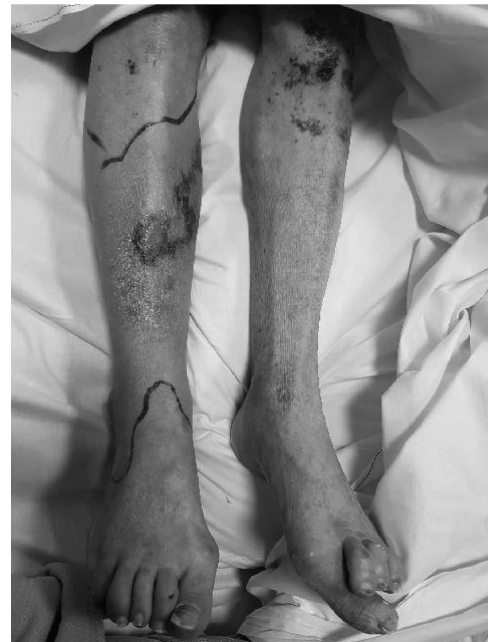
Patient Presentation & History
Our case today involves a 48-year-old male, a long-haul truck driver, who presented to the emergency department following a high-energy motor vehicle collision. He was unrestrained, resulting in significant axial loading and rotational forces to his left ankle. His medical history is significant for well-controlled Type 2 Diabetes Mellitus on oral hypoglycemics, morbid obesity (BMI 38 kg/m²), and active tobacco use (20 pack-years). He denied any prior trauma or surgical history to the affected limb.
Initial assessment revealed an open (Gustilo-Anderson Type II) left ankle fracture-dislocation. The mechanism involved a direct impact to the dashboard, leading to a comminuted distal tibia fracture extending into the ankle joint (pilon component) with an associated fibula fracture and syndesmotic disruption. Due to the open nature and significant soft tissue compromise, emergent debridement and external fixation were performed within six hours of injury. The wound was copiously irrigated with 9 liters of normal saline, debrided of all non-viable tissue, and cultures were taken. Broad-spectrum intravenous antibiotics (cefazolin and gentamicin) were initiated.
Definitive open reduction and internal fixation (ORIF) was performed 8 days later, following resolution of significant soft tissue swelling and a clean wound check. Intraoperatively, the joint was articular, congruent, and stable. A standard approach was utilized for staged fixation of the fibula with a 1/3 tubular plate and lag screws, followed by a medial approach for reduction and fixation of the medial malleolus, and an anterolateral approach for buttressing of the anterior pilon fragment and anti-glide plating of the anterolateral plafond. Post-operative radiographs confirmed satisfactory reduction and stable fixation. The patient was discharged home on post-operative day 3 with a non-weight-bearing protocol, a back slab, and a 5-day course of oral cephalexin.
Approximately six weeks post-ORIF, the patient presented with increasing pain, localized erythema, swelling, and purulent discharge from the medial incision site. He also reported intermittent fevers and chills over the preceding 72 hours, significantly impacting his sleep and overall well-being.
Clinical Examination
Upon re-presentation, the patient was afebrile but appeared unwell.
General Inspection:
The left ankle was notably edematous, erythematous, and warm to palpation, particularly around the medial malleolar incision. There was an obvious fluctuant area with purulent discharge emanating from a dehiscence of approximately 1 cm along the medial incision. No obvious signs of systemic sepsis (e.g., confusion, tachycardia, hypotension) were noted at this time, but the patient reported feeling fatigued.
Palpation:
Significant tenderness was elicited upon palpation around the medial malleolus and the anterior aspect of the ankle. The skin temperature was increased regionally. No crepitus was appreciated. Examination of the remainder of the limb was unremarkable.
Range of Motion (ROM):
Active and passive dorsiflexion and plantarflexion were severely restricted due to pain and swelling, estimated at 0-10 degrees for dorsiflexion and 0-20 degrees for plantarflexion. Subtalar motion was also significantly limited.
Neurological Assessment:
Sensation was intact to light touch in all dermatomes of the foot (superficial peroneal, deep peroneal, sural, saphenous, tibial nerves). Motor function was intact distally, albeit limited by pain.
Vascular Assessment:
Distal pulses (dorsalis pedis and posterior tibial) were palpable and strong bilaterally. Capillary refill was brisk in all digits. No signs of venous congestion or DVT were evident.
Laboratory investigations were ordered immediately:
*
Complete Blood Count (CBC):
White Blood Cell count 14.5 x 10^9/L (neutrophil predominance).
*
Erythrocyte Sedimentation Rate (ESR):
78 mm/hr (elevated).
*
C-Reactive Protein (CRP):
125 mg/L (markedly elevated).
*
Procalcitonin:
0.8 ng/mL (suggestive of bacterial infection).
*
Blood Cultures:
Sent, pending results.
These findings strongly indicated a deep surgical site infection with potential osteomyelitis.
Imaging & Diagnostics
Initial Post-ORIF Radiographs:
Standard anteroposterior, lateral, and mortise views of the left ankle confirmed adequate reduction of the distal tibia and fibula fractures with stable internal fixation. Joint congruity was maintained, and no obvious signs of hardware loosening or breakage were observed at that early stage.
Re-evaluation Radiographs (6 weeks post-ORIF):
Repeat X-rays were obtained at presentation with signs of infection. These showed no overt signs of hardware loosening, frank osteolysis, or periosteal reaction; however, subtle lucencies might be obscured by the hardware. The fracture lines remained visible, but the bone graft integration (if used, although not detailed in initial notes) could not be definitively assessed. The primary utility of these radiographs was to rule out gross hardware failure or significant dislocation.
Magnetic Resonance Imaging (MRI) with Gadolinium:
Given the strong clinical suspicion of deep infection and potential osteomyelitis, an MRI was ordered.
*
Findings:
The MRI revealed extensive soft tissue edema and inflammatory changes surrounding the medial malleolus and extending into the deep tissues adjacent to the hardware. There was evidence of fluid collection tracking along the medial plate, consistent with an abscess. Marrow edema was noted in the distal tibia and medial malleolus, with areas of cortical irregularity and contrast enhancement suggestive of osteomyelitis. No definitive sinus tract extending to the joint was identified, but significant peri-implant fluid was present. The syndesmotic screw appeared stable, and there were no clear signs of septic arthritis, although inflammatory changes were noted within the joint capsule.

(Illustrative image depicting MRI findings of peri-implant fluid and marrow edema consistent with infection.)
Cultures:
Prior to re-operation, two sets of fluid and tissue cultures were obtained from the discharging wound, as well as repeat blood cultures. This was critical for guiding antibiotic therapy.
Differential Diagnosis
The presentation of localized pain, swelling, erythema, and purulent discharge following ORIF for an ankle fracture necessitates a careful differential diagnosis to distinguish between various post-operative complications.
| Feature | Deep Surgical Site Infection / Acute Osteomyelitis | Aseptic Hardware Loosening / Non-union | Complex Regional Pain Syndrome (CRPS) Type I | Superficial Surgical Site Infection |
|---|---|---|---|---|
| Onset | Typically days to weeks post-op (acute phase) | Gradual onset, weeks to months post-op | Can occur weeks to months post-op | Early onset, days post-op |
| Pain Character | Constant, throbbing, worsens with weight-bearing | Mechanical pain, worsening with activity/weight-bearing | Burning, disproportionate to injury, allodynia, hyperalgesia | Localized, throbbing, less severe than deep infection |
| Systemic Symptoms | Fever, chills, malaise (common) | Generally absent | Absent | Generally absent, unless spreading |
| Local Signs | Erythema, warmth, swelling, purulent discharge, wound dehiscence, fluctuance | Localized tenderness, palpable instability (late) | Edema, skin color/temperature changes, trophic changes (skin, hair, nails) | Erythema, warmth, mild swelling, discharge (seropurulent) |
| Laboratory Markers | Elevated ESR, CRP, Procalcitonin, Leukocytosis | Usually normal | Usually normal (mild elevations possible) | Mildly elevated ESR/CRP possible, often normal CBC |
| Radiographic Findings | Lucency around hardware, periosteal reaction, sequestrum (late), bone destruction | Lucency around hardware, hardware migration/breakage, fracture gap | Patchy osteopenia, normal early X-rays | Normal bone, soft tissue swelling |
| MRI Findings | Peri-implant fluid, marrow edema, abscess, sinus tracts, soft tissue enhancement | Fluid at bone-implant interface, no marrow edema (unless associated infection) | Diffuse soft tissue edema, synovial hypertrophy, no infection signs | Subcutaneous edema, no deep marrow involvement |
| Treatment | Surgical debridement, targeted antibiotics, hardware management | Revision surgery, hardware removal/exchange, bone grafting | Multidisciplinary pain management, physical therapy | Local wound care, oral antibiotics |
Our patient's presentation, with purulent discharge, elevated inflammatory markers, and MRI findings of peri-implant fluid and marrow edema, strongly points towards a deep surgical site infection progressing to acute osteomyelitis involving the distal tibia and medial malleolus.
Surgical Decision Making & Classification
The presence of purulent discharge, wound dehiscence, significant inflammatory markers, and MRI evidence of peri-implant fluid and marrow edema warranted urgent surgical intervention. The primary goal was to eradicate the infection, preserve limb function, and ideally salvage the internal fixation if possible.
Decision for Operative Management:
Non-operative management with antibiotics alone is rarely successful for deep surgical site infections involving hardware and bone. The presence of biofilm on implants significantly reduces antibiotic efficacy. Therefore, operative debridement was paramount.
Classification of Infection:
*
Surgical Site Infection (SSI):
Deep SSI, given the involvement of muscle/fascia and evidence of bone infection.
*
Osteomyelitis:
Cierny-Mader Classification for chronic osteomyelitis is often applied after initial stages. In this acute post-traumatic setting, it's considered
Stage I (medullary) or Stage II (superficial) localized osteomyelitis with Type A host
(healthy, intact immune system, good blood supply), but with the critical complicating factor of
retained hardware and biofilm
. The open fracture at initial presentation also puts the patient at higher risk for infection, aligning with a potential
Gustilo-Anderson Type II open fracture
setting. The current infection is likely a direct consequence of this initial injury and subsequent surgery.
Hardware Management Decision:
This is a critical decision point. Factors influencing hardware retention versus removal include:
1.
Stability of Fracture Fixation:
If the fracture is stable and well-united, hardware removal is preferred. If the fracture is still unstable or non-united, hardware retention (if possible) with aggressive debridement and antibiotic coverage is considered to allow for bone healing.
2.
Location and Extent of Infection:
Diffuse osteomyelitis around the plate often necessitates removal. Localized infection away from the plate may allow retention.
3.
Pathogen Virulence:
Highly virulent organisms (e.g.,
Pseudomonas
, MRSA) may necessitate removal earlier.
4.
Duration of Infection:
Early infections (first 2-4 weeks) might respond better to debridement and retention. Longer-standing infections increase biofilm maturity, making eradication with hardware
in situ
less likely.
In this case, given the 6-week post-ORIF presentation and likely incomplete fracture union at the pilon component, a staged approach was chosen:
*
Stage 1:
Aggressive surgical debridement, irrigation, cultures, and placement of antibiotic-impregnated beads/spacer, with a decision on hardware retention/removal made intraoperatively based on bone stability and extent of infection.
*
Stage 2 (planned):
Depending on infection control, potential definitive reconstruction or hardware removal if bone healing progressed.
For this particular case, considering the ankle fracture was still in its consolidation phase and the fibula was well-fixed, the plan was to remove the medial malleolar plate (which was the site of the most extensive infection and discharge) and potentially retain the fibular and pilon plates if deemed stable and not involved in frank osteomyelitis. The syndesmotic screw was also considered for removal as a foreign body.
Surgical Technique / Intervention
The patient was taken to the operating theater for urgent surgical debridement.
Patient Positioning:
The patient was positioned supine on the operating table. A high thigh tourniquet was applied to the affected limb, but not inflated until skin incision to allow for initial assessment of viability and blood flow. The limb was prepped and draped in a sterile fashion, allowing for visualization from the mid-thigh to the toes.
Approach and Initial Debridement:
The existing medial incision, which showed signs of dehiscence and purulent discharge, was primarily utilized. The incision was extended proximally and distally to fully expose the underlying hardware and infected tissues. Subcutaneous tissue and fascia were sharply debrided back to healthy, bleeding tissue. Purulent material was copious and tracked along the medial plate. All visible necrotic tissue, including areas of unhealthy skin edges, subcutaneous tissue, and muscle, were excised. Multiple tissue samples were sent for aerobic, anaerobic, fungal, and acid-fast bacilli cultures, as well as histopathology.
Hardware Management:
Upon exposure, the medial malleolar plate was found to be surrounded by purulent exudate. The underlying bone of the medial malleolus showed early signs of osteolysis and friability. Given the extent of infection around this plate and the potential compromise to the medial column stability, the decision was made to
remove the medial malleolar plate and screws.
The screws were carefully extracted, and the screw holes were curetted.
The anterolateral pilon plate and fibular plate were meticulously inspected. There were no obvious signs of infection tracking around these plates, and the fracture fragments appeared relatively stable. The fibular fracture was uniting well. The syndesmotic screw, however, was also removed, as it represented another foreign body that could harbor bacteria, and its role in stability was diminished at 6 weeks post-ORIF.
Debridement of Bone:
With the medial hardware removed, aggressive debridement of the medial malleolus and distal tibial metaphysis was performed. A high-speed burr was used to remove all visible necrotic or sclerotic bone until punctate bleeding was observed from the healthy bone (Paprika sign). This included careful curettage of the fracture site and medullary canal. Copious pulsatile lavage with 6-8 liters of sterile saline solution was performed.
Antibiotic Delivery System:
Following thorough debridement, antibiotic-impregnated polymethylmethacrylate (PMMA) beads were fashioned intraoperatively. Vancomycin (2g per 40g cement) and Gentamicin (240mg per 40g cement) were mixed into the PMMA cement. These beads were placed strategically into the dead space created by the debridement, particularly around the medial malleolus and distal tibia, to provide a high local concentration of antibiotics. A drain was placed adjacent to the beads and the wound was loosely closed.
Wound Closure:
The wound was initially left open with an antibiotic-impregnated gauze packing to allow for further drainage and facilitate a planned second-look surgery in 48-72 hours. This open-wound approach facilitated assessment of infection control and allowed for potential further debridement.
Second-Look Surgery (48 hours later):
The patient returned to the operating room. The wound appeared significantly cleaner. Cultures taken during the initial debridement identified Methicillin-Sensitive
Staphylococcus aureus
(MSSA). The antibiotic regimen was tailored to Cefazolin intravenously based on sensitivities. Further debridement was performed, albeit less extensive. The wound was then primarily closed over a single negative pressure wound therapy (NPWT) dressing system, as the soft tissue envelope was adequate following initial debridement. NPWT was applied to the wound to manage exudate, promote granulation tissue formation, and potentially reduce bacterial load.
Post-Operative Protocol & Rehabilitation
Antibiotic Regimen:
Based on intraoperative cultures identifying MSSA, the patient was maintained on intravenous Cefazolin (2g IV every 8 hours) for a planned duration of 2 weeks. This was followed by a switch to oral Cephalexin (500mg PO four times daily) for an additional 4 weeks, completing a total of 6 weeks of targeted antibiotic therapy. Inflammatory markers (ESR, CRP) were monitored weekly to track the response to treatment.
Wound Care:
The NPWT system was managed by a dedicated wound care team. Dressing changes were performed every 2-3 days. After removal of the NPWT at 7 days, the wound was managed with daily sterile dressing changes, focusing on keeping it clean and dry. The patient was educated on signs of recurrent infection.
Immobilization and Weight-Bearing:
Post-debridement, the ankle was immobilized in a removable CAM walker boot. Given the removal of the medial malleolar plate and the residual stability of the fibular and pilon plates, the patient was kept strictly non-weight-bearing (NWB) for 6 weeks on the affected limb. This was crucial to allow for bone healing without the medial support and to prevent stress on the healing soft tissues.
*
Weeks 0-6:
NWB in CAM walker. Active ROM of the knee, hip, and toes encouraged.
*
Weeks 6-12:
Gradual progression to partial weight-bearing (PWB) in the CAM walker, starting with 25% body weight, advancing as tolerated. Emphasis on ankle ROM exercises, gentle strengthening.
*
Weeks 12+:
Transition to full weight-bearing (FWB) as tolerated, with continued physical therapy focusing on strengthening, balance, and proprioception. The CAM walker was eventually weaned.
Rehabilitation Program:
*
Early Phase (Weeks 0-6):
Focus on edema control, pain management, maintaining joint mobility of adjacent joints, and isometric strengthening of the ankle within the boot. Patient education on NWB precautions.
*
Mid Phase (Weeks 6-12):
Commencement of gentle passive and active ankle range of motion exercises out of the boot. Progression to resistive exercises using bands, proprioceptive training, and gait training with PWB.
*
Late Phase (Weeks 12+):
Aggressive strengthening of all ankle musculature, advanced balance exercises, return to functional activities, and sport-specific training as appropriate.
Long-Term Follow-up:
Regular follow-up appointments were scheduled at 2 weeks, 6 weeks, 3 months, 6 months, and 1 year post-debridement. Radiographs were taken at each visit to assess fracture healing and monitor for signs of recurrent osteomyelitis. Inflammatory markers (ESR, CRP) were continued to be monitored until normalized. The patient was counseled on the increased risk of recurrent infection and the importance of smoking cessation and strict glycemic control.
Pearls & Pitfalls (Crucial for FRCS/Board Exams)
Pearls
- High Index of Suspicion: Any post-operative pain, swelling, erythema, or discharge, especially beyond the immediate post-operative period, demands thorough investigation for infection. Don't dismiss symptoms.
- Early Diagnosis is Key: Prompt clinical assessment, laboratory inflammatory markers (ESR, CRP, Procalcitonin), and appropriate imaging (MRI is often superior to X-ray for early soft tissue and marrow involvement) are critical.
- Multidisciplinary Approach: Successful management of post-ORIF infections requires collaboration with infectious disease specialists, microbiologists, plastic surgeons (for complex soft tissue defects), and rehabilitation therapists.
- Aggressive Surgical Debridement: This is the cornerstone of treatment. Remove all necrotic soft tissue and bone until punctate bleeding (Paprika sign). Don't be timid.
- Targeted Antibiotic Therapy: Obtain multiple intraoperative cultures (aerobic, anaerobic, fungal, AFB) from different sites before administering empiric antibiotics. Tailor antibiotic regimen (IV then oral) based on sensitivities for an adequate duration (typically 4-6 weeks for bone infections).
- Hardware Management: The decision to retain or remove hardware is complex. If the fracture is stable and healed, remove the hardware. If unstable, consider staged approach: debridement with retention (if infection controllable), antibiotic spacers, and definitive fixation later, or exchange nailing/external fixation. In ankle fractures, stability is paramount.
- Dead Space Management: Utilize antibiotic-impregnated PMMA beads/spacers to deliver high local concentrations of antibiotics and fill dead space, preventing hematoma formation and bacterial proliferation.
- Soft Tissue Coverage: Ensure adequate soft tissue coverage. Negative pressure wound therapy (NPWT) can be beneficial. In complex cases, plastic surgery consultation for local or free flap coverage may be necessary to achieve a closed, healthy wound.
- Host Optimization: Address modifiable risk factors such as diabetes control (HbA1c <7%), smoking cessation, and nutritional status (pre-albumin, albumin). These significantly impact healing and infection eradication.
- Documentation: Meticulous documentation of intraoperative findings, debridement extent, hardware management, and cultures is essential for continuity of care and medicolegal purposes.
Pitfalls
- Underestimating Severity: Treating a deep SSI as a superficial infection can lead to delayed diagnosis and progression to chronic osteomyelitis.
- Inadequate Debridement: Hesitancy to remove necrotic tissue or infected bone leads to recurrence. "You can't sterilize a foreign body in pus."
- Blind Antibiotic Use: Starting antibiotics without obtaining cultures can mask the causative organism and lead to resistant infections.
- Premature Hardware Removal: Removing hardware too early in an unstable fracture can lead to non-union or loss of reduction, creating a more challenging reconstructive scenario. Conversely, retaining hardware in a grossly infected, unstable fracture is equally detrimental.
- Poor Soft Tissue Management: Tensioned closures, inadequate debridement of skin edges, or failure to address soft tissue defects can lead to wound breakdown and persistent infection.
- Insufficient Antibiotic Duration: Short courses of antibiotics are associated with high recurrence rates for bone infections.
- Ignoring Host Factors: Failure to optimize patient comorbidities (e.g., uncontrolled diabetes, smoking, malnutrition) significantly increases the risk of treatment failure.
- Lack of Follow-up: Inadequate monitoring of inflammatory markers, radiographs, and clinical status can miss early signs of recurrence.
- Biofilm Neglect: Understanding that bacteria on implants form biofilms which are highly resistant to antibiotics and host defenses is crucial. This necessitates surgical removal of the biofilm-laden implant if eradication is the goal.
- Misinterpreting Radiographs: Early X-rays may be normal in acute osteomyelitis; rely on clinical signs and advanced imaging like MRI. Later, lucencies around implants may indicate either infection or aseptic loosening, requiring further differentiation with labs/aspiration.
