Orthopedic Prometric MCQs - Chapter 3 Part 23
Orthopedic Prometric MCQs - Chapter 3 Part 23
Comprehensive 100-Question Exam
00:00
Start Quiz
Question 1
A 28-year-old woman complains of pain and numbness in her lower legs bilaterally for approximately 2 months following strenuous moving of furniture. She now states that she has not voided in the past 48 hours and that her abdomen area is markedly distended. What diagnostic test must be performed in order to support the suspected diagnosis:
Explanation
Question 2
On physical examination, the umbilicus is a superficial landmark for the bifurcation of the aorta into the common iliac arteries and overlies this disk space:
Explanation
Question 3
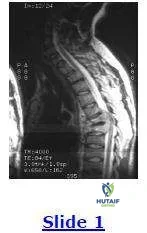
A 35-year-old woman has been complaining of severe unrelenting mid to low back pain for the past 5 months. Conservative management, consisting of bed rest and nonsteroidal anti-inflammatory drugs (NSAIDs), has not decreased the intensity of her symptoms. She immigrated to the United States from Vietnam 6 months ago. Based on the sagittal magnetic resonance image below, the next step in her management is:
Explanation
Question 4
What is the most common sequence of steps performed during a midline open disectomy in the treatment and excision of a herniated posterolateral lumbar disk:
Explanation
Question 5
On physical examination, a patient with a weak extensor hallucis longus muscle might be expected to have a far-lateral disk herniation at what level in the spine:
Explanation
Question 6
One traditional surgery performed for the treatment of a symptomatic posterolateral lumbar disk herniation is a partial laminectomy and lumbar disk excision by means of a midline incision. What is the long-term (>2 years) success rate for relief of both leg and low back pain, respectively:
Explanation
Question 7
A 38-year-old man injured his neck and spinal cord 6 months ago as a result of a motorcycle accident. He is now a C 6 quadriplegic. He wants to know how his sexual function will be affected by his condition. The patient should be informed that:
Explanation
Question 8
When testing the range of motion in the lumbar spine, which maneuver involves stretching of the interspinous and supraspinous ligaments, ligamentum flavum, and posterior longitudinal ligament while relaxing the anterior longitudinal ligament:
Explanation
Question 9
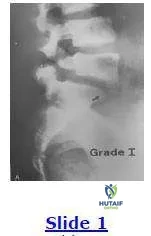
A 22-year-old woman sustained an injury to her low back 1 year ago while playing rugby. She now complains of excruciating low back pain with numbness and tingling into her left buttock. This pain is affecting her daily living activities. The patient underwent 6 months of conservative management consisting of restriction of activities, physical therapy, and anti- inflammatory medication with little relief. Based on the image below, the next appropriate step in the management of this patient is:
Explanation
Question 10
When performing a neurological examination, if a surgeon has a patient resist thigh adduction against resistance, the surgeon is testing which nerve(s):
Explanation
Question 11
A 72-year-old man comes to the office complaining of low back and thigh pain that has been progressively getting worse over the years. The pain now bothers him during weather changes. The patient tells you that his pain is worse with standing and walking for long periods. However, leaning forward and sitting alleviates his discomfort. The patient denies any bladder or bowel complaints. This patient most likely has:
Explanation
Question 12
A positive straight-leg raise sign:
Explanation
Question 13
What physical examination maneuvers listed below check the status of the L4 neurologic level:
Explanation
Question 14
In describing idiopathic scoliosis, there are several terms given to curve patterns on radiographs to describe the specific type of spinal deformity present. Which term best describes an area of the spine with a lateral curve that lacks normal flexibility noted radiographically by its failure to demonstrate segmental mobility or correction on supine side-bending radiographs:
Explanation
Question 15
When performing a physical examination, if running the pointed edge of a reflex hammer along the crest of a patient's tibia causes extension of the great toe while the remaining toes splay or plantarflex, this finding would indicate:
Explanation
Question 16
When trying to distinguish hamstring tightness/discomfort from sciatic pain/radiculopathy, surgeons can perform a straight-leg raise test on the affected side until the point at which the patient develops discomfort. This is followed by slightly lowering the affected extremity. While holding the patient's leg in this position, what maneuver could be performed in order to help reproduce true sciatic pain:
Explanation
Question 17
Beevor sign is a physical examination maneuver that tests the integrity of the rectus abdominus muscles that are segmentally innervated by the anterior primary divisions of the T5-T12/L1 nerve roots. When performing this test, the patient is asked to perform a partial sit-up. A positive Beevor sign is indicated by:
Explanation
Question 18
Which anatomic structure(s) may be the cause of referred pain to the lumbar spine region:
Explanation
Question 19
The following nonoperative treatments have not been proven effective in the early acute stage (2 weeks to 3 months) of low back pain:
Explanation
Question 20
A 32-year-old woman is diagnosed on magnetic resonance imaging with a far-lateral disk herniation at the L3/L4 level causing radiating right lower extremity discomfort across the anterior aspect of her knee with no motor or reflex abnormalities. Which of the following nerve roots is most likely affected:
Explanation
Question 21
A 45-year-old man presents with sharp pain radiating down his right posterior thigh and calf to the plantar surface of his foot. On physical examination, he demonstrates a weakened Achilles tendon reflex and decreased sensation over the lateral aspect of his foot. Which nerve root is most likely compressed?
Explanation
Question 22
A 72-year-old man with a known history of severe cervical spondylosis falls forward and strikes his chin. He is brought to the emergency department presenting with severe weakness in his upper extremities, particularly the hands, but retains the ability to move his legs against gravity. Which spinal cord syndrome does this presentation most likely represent?
Explanation
Question 23
A 55-year-old diabetic patient presents with a 2-week history of progressively worsening mid-back pain, low-grade fever, and a recent onset of bilateral lower extremity weakness. What is the most common causative organism for the suspected diagnosis?
Explanation
Question 24
A 40-year-old man with a 15-year history of ankylosing spondylitis presents to the emergency department after a minor trip and fall at home. He complains of new-onset neck pain but has no neurologic deficits. Plain radiographs of the cervical spine are heavily obscured by his shoulders. What is the next best step in management?
Explanation
Question 25
A 25-year-old man dives into a shallow pool and sustains a Jefferson burst fracture of the atlas (C1). According to the rule of Spence, what is the threshold of total combined overhang of the C1 lateral masses on an open-mouth odontoid radiograph that suggests a rupture of the transverse atlantal ligament?
Explanation
Question 26
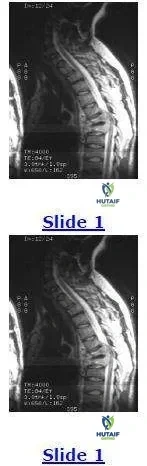
A 65-year-old male presents with bilateral leg pain that worsens with walking and improves when leaning forward on a shopping cart. Based on the likely diagnosis shown in the representative MRI, what is the most appropriate surgical intervention if prolonged conservative management fails?
Explanation
Question 27
A 12-year-old premenarchal girl is diagnosed with adolescent idiopathic scoliosis. Her physical examination reveals a right thoracic prominence. Radiographs show a right thoracic curve with a Cobb angle of 34 degrees and a Risser stage of 1. What is the most appropriate management?
Explanation
Question 28
A 19-year-old female is involved in a high-speed motor vehicle collision while wearing only a lap belt. She sustains a Chance fracture of L2. Which of the following associated injuries must be highly suspected and ruled out?
Explanation
Question 29
A 32-year-old male presents after a motor vehicle accident with neck pain. Neurological examination is intact. Based on the lateral cervical spine radiograph below, what is the most appropriate initial management for a Type II traumatic spondylolisthesis of the axis?
Explanation
Question 30
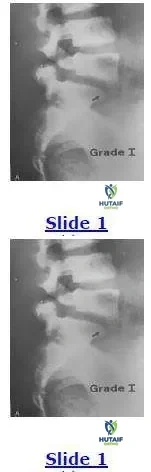
A 54-year-old diabetic male presents with 3 weeks of worsening back pain, fever, and elevated ESR. Sagittal MRI is provided below. Blood cultures are pending. Neurologically he is intact. What is the most appropriate next step in management?
Explanation
Question 31
A 45-year-old male presents with severe neck pain radiating down his left arm. Physical exam reveals weakness in wrist flexion and finger extension, with diminished triceps reflex. Sensation is decreased in the middle finger. Which nerve root is most likely compressed?
Explanation
Question 32
A 68-year-old female complains of bilateral leg pain and heaviness that worsens after walking two blocks. The pain is relieved when she sits or leans forward over a shopping cart. What is the most likely anatomic cause of her symptoms?
Explanation
Question 33
A 25-year-old male sustains a severe hyperflexion injury to his thoracic spine. On examination, he has no motor function below the umbilicus and no sensation except for intact perianal sensation (S4-S5). There is no voluntary anal sphincter contraction. What ASIA impairment scale grade does this represent?
Explanation
Question 34
A 19-year-old female is involved in a high-speed frontal motor vehicle collision while wearing a lap belt. Radiographs show a flexion-distraction injury (Chance fracture) of L2. Which of the following associated injuries is most critical to rule out?
Explanation
Question 35
In a patient with long-standing rheumatoid arthritis undergoing pre-operative evaluation for a total hip arthroplasty, flexion-extension cervical radiographs are obtained. Which finding would most strongly indicate the need for prophylactic cervical spine stabilization?
Explanation
Question 36
A 75-year-old male with known cervical spondylosis falls forward, striking his chin. He presents with severe bilateral upper extremity weakness, particularly in the hands, but retains near-normal strength in his lower extremities. Pain and temperature sensation are diminished in a cape-like distribution. What is the most likely diagnosis?
Explanation
Question 37
A 22-year-old male suffers a stab wound to the right side of his back at the T8 level. Examination reveals loss of ipsilateral motor function and proprioception below the lesion, along with contralateral loss of pain and temperature sensation. Which spinal cord tract is responsible for the patient's loss of pain and temperature sensation?
Explanation
Question 38
A 60-year-old female presents with insidious onset of persistent mid-thoracic back pain, worsened by recumbency. Laboratory results show hypercalcemia and elevated total protein. Radiographs reveal a lytic lesion in the T7 vertebral body. Which of the following is the most likely diagnosis?
Explanation
Question 39
According to the Denis three-column theory of the spine, which of the following structures is considered part of the middle column?
Explanation
Question 40
A 35-year-old construction worker falls from a height and sustains a burst fracture of L1. Neurological examination is completely normal. Which of the following radiographic findings would be an absolute indication for surgical stabilization rather than conservative management?
Explanation
Question 41
A 28-year-old male presents with chronic lower back pain and morning stiffness lasting longer than an hour. Radiographs show squaring of the lumbar vertebrae and syndesmophyte formation. He is at increased risk for which of the following cervical spine complications even with minor trauma?
Explanation
Question 42
A 45-year-old man presents with neck pain radiating down his right arm. Examination reveals weakness in right wrist extension and a diminished brachioradialis reflex. Which cervical nerve root is most likely compressed?
Explanation
Question 43
A 32-year-old weightlifter presents with acute lower back pain radiating to the dorsum of his left foot. He exhibits weakness in great toe extension but normal ankle plantar flexion and knee extension. A paracentral disc herniation at which level is most likely responsible?
Explanation
Question 44
A 68-year-old man complains of deteriorating handwriting and a feeling of imbalance when walking. Physical examination reveals a positive Hoffmann sign bilaterally and hyperreflexia in the lower extremities. What is the most appropriate initial diagnostic modality?
Explanation
Question 45
A 22-year-old woman is brought to the trauma bay after a high-speed motor vehicle collision where she was wearing a lap belt. She has severe localized back pain and an ecchymotic band across her abdomen.
What is the primary mechanism of injury for the suspected spinal fracture?
Explanation
Question 46
When placing a halo vest in a patient with an unstable cervical fracture, the anterior pins must be placed within a specific 'safe zone' to avoid nerve injury. Which nerve is most at risk if the anterior pins are placed too medially over the forehead?
Explanation
Question 47
A 15-year-old female gymnast complains of persistent mechanical lower back pain. Lateral radiographs show a grade 1 anterolisthesis of L5 on S1. Oblique views demonstrate a 'Scotty dog with a collar' appearance. What is the initial treatment of choice?
Explanation
Question 48
A 55-year-old man with long-standing ankylosing spondylitis experiences a mechanical fall from a standing height. He complains of new-onset severe lower neck pain but has no neurological deficits. Radiographs are obscured by his severe kyphotic deformity. What is the most appropriate next step?
Explanation
Question 49
A 72-year-old woman complains of bilateral leg cramping and heaviness after walking 2 blocks. The pain is rapidly relieved when she sits down or leans forward over a shopping cart, but it persists if she stands upright while stationary. Her pedal pulses are palpable. What is the most likely diagnosis?
Explanation
Question 50
Which of the following parameters indicates the highest risk for curve progression in a 12-year-old female with adolescent idiopathic scoliosis?
Explanation
Question 51
A 48-year-old intravenous drug user presents with a 1-week history of severe mid-back pain, fever, and progressive bilateral leg weakness. Examination reveals an elevated ESR and CRP. What is the most sensitive and specific imaging modality for the suspected diagnosis?
Explanation
Question 52
A 75-year-old man sustains a Type II odontoid fracture following a fall. Which of the following factors most significantly increases his risk of fracture nonunion if managed conservatively?
Explanation
Question 53
A 16-year-old boy presents with painful scoliosis and night pain in his mid-back that is completely relieved by ibuprofen. Radiographs show a mild structural curve but no obvious destructive lesions. What is the most likely location of the suspected pathology?
Explanation
Question 54
A 29-year-old man is stabbed in the back at the T8 level. Neurological examination reveals loss of motor function and proprioception in his right leg, and loss of pain and temperature sensation in his left leg. What spinal cord syndrome does this represent?
Explanation
Question 55
A 65-year-old man presents with bilateral leg pain and cramping that worsens with walking and prolonged standing. The pain is relieved by sitting or leaning forward over a shopping cart. Physical examination is unremarkable at rest. Which of the following is the most likely diagnosis?
Explanation
Question 56
A 45-year-old man presents with acute onset of right-sided sciatica and weakness in his right foot. Examination reveals 3/5 strength in the extensor hallucis longus and decreased sensation over the dorsal aspect of the right foot. Which intervertebral disc level is most likely herniated?
Explanation
Question 57
A 72-year-old woman with pre-existing cervical spondylosis falls forward and strikes her chin on a table, causing sudden hyperextension of her neck. She presents with bilateral upper extremity weakness, greater in the hands than the shoulders, and relatively preserved lower extremity function. What is the most likely diagnosis?
Explanation
Question 58
A 30-year-old immigrant presents with back pain, low-grade fever, and night sweats for 3 months. Imaging shows destruction of the anterior vertebral bodies of T10 and T11 with a paravertebral mass.
What is the primary route of dissemination for this pathogen to the spine?
Explanation
Question 59
A 50-year-old man with a long history of ankylosing spondylitis presents to the emergency department after a minor fall. He complains of severe lower cervical neck pain but has no neurological deficits. Initial plain radiographs of the cervical spine are read as normal. What is the most appropriate next step in management?
Explanation
Question 60
An 18-year-old gymnast complains of chronic lower back pain that is exacerbated by spinal extension. Oblique lumbar radiographs demonstrate a "Scotty dog with a collar" sign. At which vertebral level does this pathology most commonly occur?
Explanation
Question 61
A 68-year-old woman presents with severe low back pain and neurogenic claudication. Plain radiographs reveal a grade 1 spondylolisthesis at L4-L5. Which of the following best describes the pathogenesis of this specific condition?
Explanation
Question 62
A 25-year-old man is involved in a high-speed motor vehicle collision while wearing only a lap belt. Radiographs show a transverse fracture through the vertebral body, pedicles, and spinous process of L1. What associated injury must be actively ruled out?
Explanation
Question 63
A patient sustains a penetrating knife wound to the right side of his thoracic spine. Neurological examination reveals loss of motor function and proprioception in his right leg, and loss of pain and temperature sensation in his left leg. What is the name of this spinal cord syndrome?
Explanation
Question 64
A 45-year-old woman presents with neck pain radiating down her arm. She has weakness with wrist extension and a diminished brachioradialis reflex. She reports numbness over her thumb and index finger. Which cervical nerve root is most likely affected?
Explanation
Question 65
A 70-year-old man is evaluated for progressive dysphagia and mild neck stiffness. Lateral cervical spine radiographs show flowing ossification along the anterolateral aspect of four contiguous vertebral bodies with preserved disc heights.
What is the most likely diagnosis?
Explanation
Question 66
A 60-year-old man with diabetes presents with severe, progressive back pain, a low-grade fever, and bilateral lower extremity weakness that began 24 hours ago. His ESR and CRP are markedly elevated. Which of the following is the most appropriate definitive treatment?
Explanation
Question 67
A 75-year-old man sustains a Type II odontoid fracture after a fall. Which of the following factors is most predictive of nonunion if treated conservatively with a halo vest?
Explanation
Question 68
When placing a pedicle screw in the lumbar spine, which anatomical landmarks are primarily used to identify the optimal starting point?
Explanation
Question 69
Among the incomplete spinal cord injury syndromes, which one classically carries the worst prognosis for functional motor recovery?
Explanation
None
