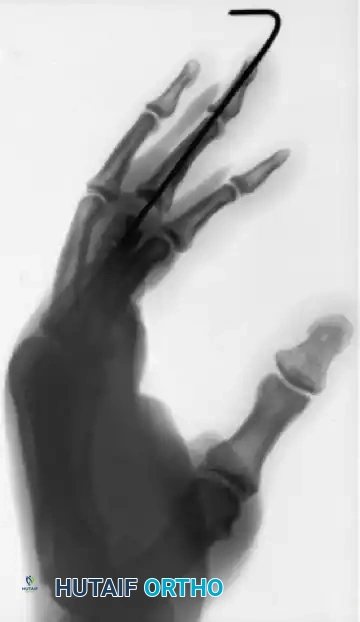
Open Reduction and Plate Fixation of Metacarpal Fractures: A Comprehensive Surgical Guide
Key Takeaway
Open reduction and internal fixation (ORIF) with plating is a definitive management strategy for complex, unstable, or multiple metacarpal fractures. This technique restores anatomical alignment, provides rigid stabilization, and allows early mobilization. Successful outcomes depend on meticulous soft tissue handling, precise restoration of the palmar cortical buttress, and adherence to tension band biomechanical principles to neutralize rotational and bending forces across the metacarpal shaft.
Introduction to Metacarpal Plate Fixation
Metacarpal fractures represent a significant proportion of skeletal trauma to the hand. While many isolated, closed metacarpal fractures can be managed non-operatively or with closed reduction and percutaneous pinning (CRPP), high-energy trauma often results in complex fracture patterns that demand rigid internal fixation. Open reduction and plate fixation (ORIF) provides superior biomechanical stability, allowing for the anatomical restoration of length, alignment, and rotation, while facilitating early active mobilization to prevent extensor tendon adhesions and joint stiffness.
The decision to proceed with plate fixation must be weighed against the risks of extensive soft tissue dissection, periosteal stripping, and hardware prominence. Mastery of metacarpal plating requires a profound understanding of hand biomechanics, precise implant selection, and meticulous surgical execution.
Indications for Plate Fixation
The indications for plate fixation of the metacarpals are strictly defined to optimize functional outcomes in scenarios where less invasive methods would fail to provide adequate stability. Primary indications include:
- Multiple Metacarpal Fractures: Fractures involving two or more metacarpals with gross displacement or associated severe soft tissue injury. The loss of the adjacent intact metacarpal's "splinting effect" necessitates rigid internal fixation to restore the architectural arch of the hand.
- Displaced Diaphyseal Fractures: Transverse, short oblique, or short spiral fractures of the diaphysis that cannot be reduced or maintained by closed means.
- Intraarticular and Periarticular Fractures: Comminuted fractures involving the metacarpophalangeal (MCP) or carpometacarpal (CMC) joints, requiring precise anatomical reconstruction of the articular surface.
- Fractures with Severe Deformity: Comminuted fractures exhibiting significant shortening, angular deformity, or malrotation that compromises the functional cascade of the digits.
- Bone Loss and Segmental Defects: Fractures with substance loss requiring maintenance of length (bridge plating) and subsequent or concurrent structural bone grafting.
💡 Clinical Pearl: Assessing Malrotation
Rotational deformity is the least tolerated malalignment in metacarpal fractures. A mere 5 degrees of malrotation at the metacarpal base can translate to 1.5 cm of digital overlap at the fingertips during flexion. Always assess the digital cascade intraoperatively by passively flexing the wrist to induce the tenodesis effect.
Surgical Anatomy and Biomechanics
The Tension Band Principle
The metacarpal shaft is subjected to complex forces during normal hand function. The powerful flexor tendons exert a strong bending moment, creating tensile forces on the dorsal cortex and compressive forces on the palmar (volar) cortex.
To counteract these forces, a plate applied to the dorsal surface functions as a tension band. For this principle to succeed, the palmar cortical buttress must be anatomically restored.
- Intact Palmar Buttress: When the palmar cortex is intact or anatomically reduced, the dorsal plate is subjected primarily to tensile stress, while the bone absorbs the compressive loads.
- Deficient Palmar Buttress: Without anterior buttressing (due to comminution or poor reduction), the plate is subjected to cyclical bending stresses, inevitably leading to implant fatigue and failure.
Plate Contouring
To maximize the tension band effect, the plate must be contoured exactly to, or slightly beyond, the natural dorsal metacarpal bow. Pre-bending the plate ensures that as the screws are tightened, the fracture site is compressed uniformly across both the dorsal and palmar cortices, preventing palmar gapping.
Preoperative Planning and Implant Selection
Careful preoperative templating using high-quality orthogonal radiographs (posteroanterior, true lateral, and oblique views) is mandatory.
- 2.7-mm Dynamic Compression Plate (DCP): Utilized for robust fixation across transverse diaphyseal fractures in larger patients.
- 1/4 Tubular Plates: Less bulky and ideal for stable fractures. Eccentric placement of screws allows for dynamic compression.
- 1/3 Tubular Plates: Used as strut or bridge plates in cases of segmental bone loss, though they require protection from loading and early bone grafting.
- T-Plates and L-Plates: Specifically designed for periarticular and metaphyseal fractures where multiple points of fixation are required in a short bone segment.
- 2.0-mm Condylar Plates: Essential for distal metaphyseal fractures to avoid extensor mechanism interference.
Surgical Approaches
Patient Positioning
The patient is positioned supine with the operative arm extended on a radiolucent hand table. A well-padded pneumatic tourniquet is applied to the upper arm. Prophylactic intravenous antibiotics are administered prior to tourniquet inflation.
The Dorsal Approach
- Incision: A longitudinal dorsal incision is made. For isolated fractures, the incision is centered directly over the affected metacarpal. For adjacent multiple metacarpal fractures (e.g., 3rd and 4th), a single longitudinal incision placed in the intermetacarpal space can provide access to both bones, minimizing soft tissue trauma.
- Superficial Dissection: The subcutaneous tissues are bluntly dissected. Extreme care must be taken to identify and retract the dorsal sensory branches of the radial and ulnar nerves, as well as the dorsal venous network.
- Extensor Mechanism Management: The extensor tendon is identified. Depending on the fracture location, the tendon can be retracted laterally (usually radially) or split longitudinally (less preferred due to adhesion risk) to expose the dorsal periosteum.
- Periosteal Stripping: Expose the fracture surfaces sufficiently to allow anatomical reduction. However, periosteal stripping must be strictly minimized to preserve the periosteal blood supply, which is critical for fracture healing.
⚠️ Surgical Warning: Soft Tissue Handling
Aggressive periosteal stripping and excessive retraction of the extensor mechanism are the primary culprits for postoperative tendon adhesions and joint stiffness. Expose only what is absolutely necessary for plate application.
Step-by-Step Surgical Technique
1. Fracture Reduction and Provisional Fixation
Anatomical reduction is the prerequisite for successful plating. Clear the fracture site of hematoma and interposed soft tissue.
Provisional fixation with reduction forceps is generally more difficult in the central metacarpals (long and ring) due to the tight intermetacarpal spaces and adjacent intact bones. The border metacarpals (index and small) are more accessible.
Because standard reduction forceps are often inadequate for clamping the plate to the bone proximally and distally, it is highly recommended to have an assistant manually hold the reduction and the contoured plate against the metacarpal dorsum while the initial drilling is performed. Alternatively, provisional 0.045-inch Kirschner wires can be used to hold the reduction.
2. Plating Transverse Diaphyseal Fractures
For transverse fractures where an adequate palmar cortical buttress can be restored:
1. Select a 2.7-mm DCP or a 1/4 tubular plate.
2. Contour the plate to match the dorsal bow of the metacarpal.
3. Apply the plate dorsally to act as a tension band.
4. In stable fractures using a 1/4 tubular plate, utilize eccentric screw placement to achieve dynamic compression across the fracture site.
5. Screw Tightening: Tighten all screws terminally using the force of only three digits on the screwdriver. The diaphyseal cortex of the metacarpal is relatively thin; over-tightening with a full-hand grip can easily strip the thread purchase.
6. Ensure screw purchase in at least four cortices (two bicortical screws) distal and proximal to the fracture.
3. Plating Short Oblique and Spiral Fractures
Short oblique and spiral fractures are inherently unstable and prone to shortening and malrotation.
1. Interfragmentary Lag Screw: First, achieve anatomical reduction and place a 2.0-mm or 2.4-mm interfragmentary lag screw perpendicular to the fracture plane to provide absolute stability and interfragmentary compression.
2. Neutralization Plate: Apply a dorsal plate (e.g., 1/4 tubular or 2.7-mm DCP) to neutralize rotational, bending, and shearing stresses that would otherwise cause the lag screw to fail.
4. Plating Intraarticular and Periarticular Fractures
Metaphyseal and intraarticular fractures require specialized implants like T-shaped or oblique L-plates.
1. Articular Reconstruction: For intraarticular fractures, anatomically reduce the articular fragments. Lag the two articular fragments together using a screw placed perpendicular to the fracture site. This screw can be placed independently of the plate.
2. Alternative Articular Compression: Alternatively, eccentrically place two screws in the transverse (T or L) portion of the plate, directing them away from the fracture line to compress the articular fragments upon terminal tightening.
3. Plate Application Sequence: When using a T-plate or L-plate, always apply the side arm(s) to the metaphyseal fragment first. If the diaphyseal shaft is secured first, driving screws into the side arms can draw the underlying metaphyseal bone fragment up to the plate asymmetrically, inducing an iatrogenic rotational deformity.
🔪 Surgical Pitfall: Distal Metaphyseal Plating
With distal metaphyseal metacarpal fractures, standard dorsal plating frequently interferes with the gliding of the central slip of the extensor mechanism, leading to severe extension lag or tendon rupture.
Solution: Use a 2.0-mm condylar plate. Apply it dorsoradially or dorsoulnarly, securing the blade/screws through the dorsal tubercle—the anatomical origin of the collateral ligament. This avoids the central extensor apparatus entirely.
5. Managing Bone Loss and Segmental Defects
Fractures with significant substance loss require bridge plating to maintain digital length and alignment.
1. Use a robust plate (e.g., 2.7-mm DCP or a 1/3 tubular plate acting as a strut).
2. Secure the plate proximally and distally, bypassing the zone of comminution.
3. Because the plate is subjected to high bending loads without a palmar buttress, it requires protection from heavy loading.
4. Early Bone Grafting: Cancellous autograft (typically harvested from the distal radius or iliac crest) should be packed into the defect either acutely or in a staged procedure to promote rapid consolidation and prevent hardware fatigue failure.
Closure and Postoperative Protocol
Wound Closure
Following thorough irrigation and hemostasis, the tourniquet is deflated to confirm vascularity. The extensor mechanism is allowed to fall back into its anatomical position; it rarely requires suturing unless longitudinally split. The skin is closed with non-absorbable monofilament sutures. A sterile, non-adherent dressing is applied.
Splinting and Immobilization
The hand is placed in a bulky soft dressing and supported by a volar plaster splint in the "intrinsic-plus" (Edinburgh) position:
* Wrist extended 20 to 30 degrees.
* MCP joints flexed 70 to 90 degrees (to maintain collateral ligament length and prevent extension contractures).
* Interphalangeal (IP) joints fully extended.
Rehabilitation Phase
The primary advantage of rigid plate fixation is the ability to initiate early motion.
* Days 3-5: The bulky dressing is removed, and a custom thermoplastic splint is fabricated. Active range of motion (AROM) of the digits is initiated under the guidance of a certified hand therapist. Early gliding of the extensor tendons over the dorsal plate is critical to prevent adhesions.
* Weeks 2-4: Sutures are removed at 10-14 days. Passive range of motion (PROM) and gentle dynamic splinting may be introduced if joint stiffness is noted.
* Weeks 6-8: Radiographic evaluation is performed to assess callus formation and fracture consolidation. Once clinical and radiographic union is evident, progressive strengthening exercises are commenced. Return to heavy manual labor or contact sports is typically restricted until 10-12 weeks postoperatively.
Complications and Management
Despite meticulous technique, complications can arise:
1. Extensor Tendon Adhesions: The most common complication of dorsal plating. Managed with aggressive hand therapy, tenolysis is occasionally required after fracture consolidation (usually >6 months post-op).
2. Hardware Prominence: Due to the thin dorsal soft tissue envelope, plates may become symptomatic, necessitating hardware removal once the fracture is fully healed.
3. Malunion (Malrotation): Results from failure to assess the digital cascade intraoperatively. Requires corrective osteotomy if functionally limiting.
4. Nonunion and Hardware Failure: Typically occurs due to failure to restore the palmar cortical buttress, leading to cyclical bending and plate breakage. Managed with revision ORIF and bone grafting.
5. Infection: Superficial infections are managed with oral antibiotics; deep infections require surgical debridement, hardware retention (if stable) or removal (if loose), and targeted intravenous antibiotic therapy.
By adhering strictly to the biomechanical principles of tension band fixation, respecting the delicate soft tissue envelope of the hand, and instituting early, supervised rehabilitation, orthopedic surgeons can achieve excellent functional outcomes in the management of complex metacarpal fractures.
You Might Also Like