Biomechanics of Implant Design and Fracture Fixation
Key Takeaway
Understanding the biomechanics of implant design and fracture fixation is paramount for orthopedic surgeons. Bone, an anisotropic material, exhibits distinct stress-strain behaviors under varying loads. This guide explores the structural properties of cortical and cancellous bone, mechanisms of fracture, and the load-deformation characteristics of implants. By mastering these principles, surgeons can optimize fixation constructs, prevent implant fatigue failure, and facilitate ideal environments for both direct and indirect bone regeneration.
Comprehensive Introduction and Patho-Epidemiology
The foundation of operative orthopedics rests upon a profound, uncompromising understanding of biomechanics. The clinical success of any fracture fixation construct is entirely dependent on the surgeon’s ability to balance the mechanical environment with the biological capacity of the host tissue. The factors universally cited in evaluating the failure of bone—and the subsequent design of implants to stabilize it—include the type, magnitude, and rate of load, alongside the intrinsic material and structural properties of the bone itself. Orthopedic surgeons do not merely treat fractures; they engineer mechanical environments that dictate specific biological healing responses.
Bone is a highly complex, viscoelastic, and anisotropic material. Anisotropy dictates that bone exhibits vastly different stress-strain relationships depending on the direction and vector of the applied stress. For instance, cortical bone is significantly stronger in compression than it is in tension or shear. Viscoelasticity implies that the biomechanical response of bone is entirely dependent on the rate of loading. Under rapid loading conditions (high-energy trauma), bone becomes stiffer and sustains higher loads before failure, but it absorbs vastly more energy, which is subsequently released into the surrounding soft tissue envelope upon fracture. Conversely, under slow loading rates (low-energy trauma), the bone fails at lower loads, resulting in simpler fracture patterns with minimal soft tissue destruction.
The epidemiology of implant failure is intrinsically linked to a failure to respect these biomechanical principles. Devices used to stabilize the skeleton—whether intramedullary nails, plates, screws, or external fixators—are subjected to continuous, cyclical loading and deforming forces. Unlike the native bone during the initial trauma, these implants rarely fail due to an acute, single-event load-to-failure. Instead, implant failure is almost exclusively due to fatigue. The race in fracture fixation is always between bone healing and implant fatigue. If the bone does not regenerate rapidly enough to share and eventually assume the physiological load, the implant will inevitably sustain millions of cycles in its elastic phase or be pushed into its plastic phase, culminating in catastrophic hardware failure.
Modern implant design has evolved significantly to address these patho-epidemiological realities. The transition from rigid, absolute stability constructs (which often led to stress shielding and refracture) to biologically friendly, relative stability constructs reflects a paradigm shift in our understanding of mechanobiology. Materials such as Titanium alloy (Ti-6Al-4V) have largely supplanted 316L Stainless Steel in many applications due to a modulus of elasticity that more closely approximates that of cortical bone, thereby reducing the stress-shielding effect and promoting robust secondary callus formation.
Detailed Surgical Anatomy and Biomechanics
The structural behavior of bone varies significantly between its cortical (compact) and cancellous (trabecular) components, primarily due to differences in porosity, density, and the diameter of their respective cross-sections. Cortical bone is dense, with a porosity of less than 15%, making it highly suited to resist bending and torsional forces in the diaphysis of long bones. Cancellous bone, found predominantly in the metaphysis and epiphysis, is highly porous (up to 90%) and consists of a three-dimensional lattice of trabeculae optimized to absorb and distribute compressive loads across articular surfaces.
In vitro biomechanical testing demonstrates that cortical bone is relatively brittle, fracturing when strain exceeds merely 2% of its original length. Conversely, cancellous bone is highly compliant and does not fail until strain exceeds 7%. This fundamental difference dictates why metaphyseal (cancellous) fractures often impact and compress, whereas diaphyseal (cortical) fractures shatter or splinter. In analyzing fracture patterns, the mode of loading offers critical insight into the mechanism of injury, the energy dissipated, the state of the soft tissue hinge, and the inherent stability of the resulting fracture.
Loads applied to the musculoskeletal system are typically described as tension, compression, bending, shear, torsion, or a complex combination of these forces. The specific mode of bone failure allows the astute orthopedic surgeon to predict the extent of the surrounding soft tissue injury, which is paramount for preoperative planning and selecting the appropriate surgical approach. Understanding the load-deflection curve is critical here: the elastic phase represents temporary deformation, the yield point marks the transition to permanent deformity, and the plastic phase culminates in ultimate load and failure.
Transverse and Spiral Fracture Biomechanics
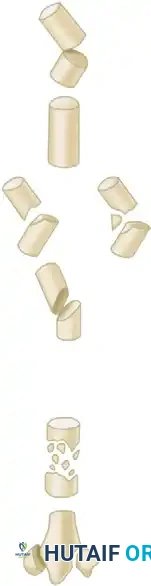
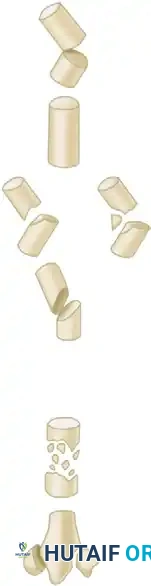
Transverse fractures are primarily the result of pure bending forces. The failure initiates on the tension side of the bone—because bone is weaker in tension than in compression—and propagates transversely across the cortex. The soft tissue hinge typically remains intact on the concavity of the bending force. These are generally low-energy injuries, but because the fracture line is perfectly perpendicular to the long axis, they offer minimal resistance to rotational forces and require constructs that neutralize torsion.
Spiral fractures occur under pure torsion (rotational) loading. The fracture line spirals along the longitudinal axis of the bone at approximately a 45-degree angle to the axis of applied torque, often creating a long, sharp fragment. The soft tissue hinge is typically a vertical segment connecting the proximal and distal fragments. Because the fracture area is large, these injuries often heal rapidly if excessive shear strain is neutralized.
Oblique and Butterfly Fracture Biomechanics
When a bone is subjected to a combination of compression and bending, a butterfly fragment (oblique-transverse) is often produced. The bending creates tension on one side (causing the transverse component) and compression on the other, shearing off a triangular wedge. The soft tissue hinge is usually located on the concavity or the side of the butterfly fragment. These represent moderate-energy injuries where the surgeon must carefully assess whether the butterfly fragment can be anatomically reduced to restore the medial cortical buttress.
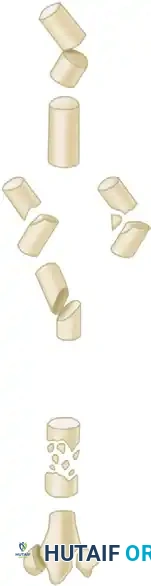
Short oblique fractures are typically generated by a combination of compression and bending forces, often with a prominent shear component. The soft tissue hinge is located on the concavity but is frequently destroyed depending on the degree of initial displacement. These fractures are notoriously unstable under axial load, as the fragments tend to slide along the oblique plane, necessitating fixation techniques that specifically neutralize shear, such as lag screws combined with a neutralization plate.
Comminution and Metaphyseal Compression
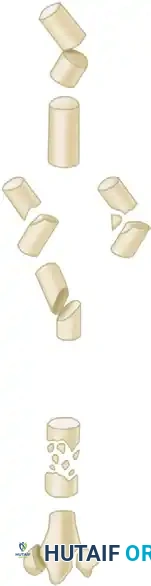
Comminution implies a high-energy transfer to the bone, resulting in multiple fragments. The loading mode is often a complex, variable combination of torsion, bending, and axial loading. In these scenarios, the soft tissue hinge is entirely destroyed, and the periosteal blood supply is severely compromised. Biomechanically, these fractures cannot share load with the implant; therefore, the implant must function as a load-bearing device (e.g., a bridge plate or locked intramedullary nail) rather than a load-sharing device.
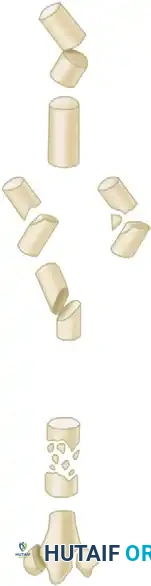
Metaphyseal compression fractures occur in the highly porous cancellous bone of the metaphysis (e.g., tibial plateau, distal radius). These fractures are driven by pure axial compression, leading to trabecular impaction. Because cancellous bone does not spontaneously decompress or "spring back," these fractures leave a structural void once the articular surface is elevated. Biomechanically, this void must be filled with bone graft or a substitute to provide a mechanical buttress against the subchondral bone, preventing late subsidence.
Exhaustive Indications and Contraindications
The selection of a specific biomechanical construct is dictated by the anatomical location of the fracture, the fracture pattern, the quality of the host bone, and the physiological demands of the patient. The overarching decision rests on whether the surgeon aims for direct (primary) bone healing or indirect (secondary) bone healing. Direct bone healing requires absolute stability (zero interfragmentary strain) and is indicated for intra-articular fractures and simple diaphyseal fractures where anatomical reduction is paramount. Indirect bone healing requires relative stability (controlled micromotion to stimulate callus) and is indicated for comminuted diaphyseal and extra-articular metaphyseal fractures.
Kirschner wires (K-wires) and Steinmann pins are ubiquitous in orthopedic surgery, frequently utilized for both provisional and definitive fracture fixation. Because their cross-sectional diameter is small, their area moment of inertia is exceptionally low. The area moment of inertia dictates resistance to bending and is proportional to the radius to the fourth power ($r^4$). Consequently, their resistance to bending loads is exceptionally poor. If used as a standalone definitive fixation device, they must be supplemented by external support, such as bracing or casting, to neutralize bending forces.
Pin or wire fixation is highly effective for small fragments in metaphyseal and epiphyseal regions where compressive forces can be utilized and bending forces are minimal. Common indications include distal radius fractures, displaced metacarpal and phalangeal fractures, fractures of the distal foot, and tension band constructs for the patella or olecranon. However, they are strictly contraindicated as standalone definitive fixation in the diaphysis of long bones, in non-compliant patients who cannot adhere to cast immobilization, or in scenarios with massive soft tissue loss where external splinting is impossible.
| Biomechanical Construct | Primary Indications | Absolute Contraindications | Expected Healing Mode |
|---|---|---|---|
| K-Wires / Steinmann Pins | Pediatric fractures, phalangeal/metacarpal fractures, provisional articular reduction, tension band wiring. | Diaphyseal long bone fractures, standalone fixation in osteoporotic bone without external support. | Secondary (Callus) unless used in a tension band construct. |
| Lag Screw & Neutralization Plate | Simple oblique or spiral diaphyseal fractures, articular shear fractures. | Highly comminuted fractures, severe osteopenia where screws lack purchase. | Primary (Direct) Bone Healing. |
| Bridge Plating | Comminuted diaphyseal/metaphyseal fractures, periarticular fractures with poor soft tissue envelopes. | Simple transverse fractures where absolute stability is required to prevent nonunion. | Secondary (Callus) Bone Healing. |
| Intramedullary Nailing | Diaphyseal fractures of the femur, tibia, and humerus; impending pathologic fractures. | Active intramedullary infection, open physes in pediatric patients (standard nails). | Secondary (Callus) Bone Healing. |
Pre-Operative Planning, Templating, and Patient Positioning
Pre-operative planning is the phase where biomechanical theory is translated into surgical strategy. The surgeon must evaluate the "personality" of the fracture—a concept encompassing the fracture geometry, the degree of soft tissue injury, the patient's bone quality, and their functional demands. The goal is to select an implant that possesses the appropriate material properties (stress-strain characteristics) and structural properties (load-deflection characteristics) to withstand the anticipated deforming forces until union occurs.
Templating is a non-negotiable aspect of this process. Utilizing calibrated orthogonal radiographs, the surgeon calculates the required area moment of inertia for the implant. For intramedullary nails, a small increase in the diameter exponentially increases its bending stiffness due to the $r^4$ rule. A 10mm solid nail is vastly stiffer than an 8mm nail. Furthermore, the working length of the implant must be planned. The working length is the distance between the two closest points of fixation spanning the fracture. A longer working length decreases the stiffness of the construct, which increases interfragmentary strain—a desirable trait for bridge plating comminuted fractures, but detrimental if absolute stability is required.
Patient positioning is engineered to utilize gravity and muscle tension to aid in fracture reduction, thereby minimizing the force the surgeon must apply and reducing iatrogenic soft tissue trauma. For example, positioning a patient on a fracture table for a femoral shaft fracture utilizes longitudinal traction to overcome the deforming forces of the robust thigh musculature. The positioning must also allow unimpeded access for the image intensifier (fluoroscopy) to confirm that the mechanical axis, length, and rotation have been restored prior to the application of the implant.
During the planning phase, the surgeon must also anticipate the deforming forces that will act on the fracture post-operatively. A fracture of the proximal third of the femur will invariably be subjected to flexion, abduction, and external rotation due to the pull of the iliopsoas, gluteus medius, and short external rotators. The chosen implant and its trajectory must specifically neutralize these vectors. Failure to account for these muscular forces during templating guarantees loss of reduction and subsequent biomechanical failure of the construct.
Step-by-Step Surgical Approach and Fixation Technique
The surgical approach must respect the biological envelope, as the preservation of periosteal and endosteal blood supply is the biological equivalent of mechanical stability. Stripping the periosteum to achieve a perfect radiographic reduction destroys the vascularity required for callus formation, leading to a mechanically sound but biologically dead construct that will inevitably succumb to fatigue failure. Minimally invasive percutaneous osteosynthesis (MIPO) techniques have been developed specifically to address this biomechanical-biological balance.
Wire and Pin Insertion Principles
When used as definitive fixation, K-wires are usually inserted percutaneously or via a limited open approach. The fracture must be anatomically reduced and held securely prior to pin insertion. The surgeon plans the pin trajectory to cross the fracture site at an optimal angle—often perpendicular to the fracture line to maximize compression, or in a crossed configuration to provide rotational stability.
The insertion technique is critical to prevent biological failure. The surgeon must insert the wire slowly and with frequent stops. Continuous, high-speed drilling generates excessive friction, leading to thermal osteonecrosis. Dead bone around the pin tract leads to premature pin loosening, loss of structural integrity, and exponentially increases the risk of pin tract infection. Furthermore, surgeons must be acutely aware of the "Windlass Effect." When inserting a K-wire percutaneously, the spinning wire can catch a tendon, fascia, or nerve, winding it around the shaft and causing devastating iatrogenic injury. Always incise the skin with a scalpel and spread the soft tissues down to the bone with a hemostat before applying power.
Smooth vs. Threaded Wires
Surgeons must choose between smooth and threaded wires based on the biomechanical demands of the clinical scenario. Smooth wires are preferred for definitive fixation where the pins will be removed in the clinic after fracture healing. They are easier to extract and cause less pain upon removal. However, they offer zero resistance to axial pull-out. Threaded wires provide superior grip and hold fractures in place better, making them ideal for temporary fixation or situations where pin migration is a high risk. However, a threaded wire will not compress a fracture; if a gap exists, the threads will hold the fracture in distraction, leading to nonunion.
Applying Absolute and Relative Stability
For absolute stability constructs, the technique involves the precise application of lag screws to generate interfragmentary compression, followed by a neutralization plate to protect the lag screw from bending and torsional forces. The plate must be perfectly contoured to the bone to prevent displacing the fracture when the plate is tightened. For relative stability constructs, such as bridge plating or intramedullary nailing, the technique focuses on restoring length, alignment, and rotation without disturbing the fracture hematoma. The implant acts as an internal splint, allowing the micro-motion necessary to stimulate the chondrocytes and osteoblasts to form a robust bridging callus.
Complications, Incidence Rates, and Salvage Management
Complications in orthopedic trauma surgery are frequently the direct result of a biomechanical mismatch between the chosen implant, the fracture pattern, and the patient's biological healing capacity. Implant fatigue failure is the most catastrophic of these complications. If a construct is too rigid in a comminuted fracture, it prevents the micro-motion required for callus formation (nonunion), forcing the implant to bear the entire physiological load until it inevitably snaps. Conversely, if a construct is too flexible in a simple fracture, the excessive strain tears the delicate granulation tissue, preventing osteogenesis and leading to hypertrophic nonunion and eventual hardware failure.
When manipulating wires—such as bending the ends outside the skin to prevent migration—the surgeon must avoid notching the wire with pliers or wire benders. A notch acts as a stress riser, drastically reducing the area moment of inertia at that specific point. This exponentially shortens the fatigue life of the implant, making it highly susceptible to breakage under cyclical loading before the fracture has healed. Retained, broken hardware in the medullary canal or intra-articular space often requires complex, morbid salvage operations.
Thermal osteonecrosis during drilling or pin insertion remains a highly prevalent, yet entirely preventable, complication. It presents clinically as early pin loosening, localized erythema, and purulent discharge. The necrotic bone acts as a nidus for bacteria, leading to deep osteomyelitis. Salvage management requires immediate removal of the offending hardware, aggressive surgical debridement of the necrotic bone, and conversion to an alternative form of fixation, typically a spanning external fixator, until the infection is eradicated.
| Complication | Estimated Incidence | Biomechanical Etiology | Salvage Management |
|---|---|---|---|
| Implant Fatigue Failure (Breakage) | 2% - 5% | Prolonged cyclical loading due to nonunion; working length too short; stress risers (notching). | Implant removal, re-drilling of canal, exchange nailing with a larger diameter implant, or revision plating with bone grafting. |
| Hypertrophic Nonunion | 5% - 10% | Construct lacks sufficient stiffness; excessive interfragmentary strain (>10%) prevents osteoblast bridging. | Improve mechanical stability. Exchange to a stiffer construct (larger nail or compression plating). Biology is already present. |
| Atrophic Nonunion | 3% - 7% | Biological failure (avascularity) often exacerbated by absolute stability constructs in comminuted fractures (stress shielding). | Decortication, autologous bone grafting (iliac crest), and revision fixation to provide a biologically favorable environment. |
| Thermal Osteonecrosis / Pin Loosening | 10% - 15% (K-wires) | High-speed drilling without cooling; excessive friction leading to bone death at the pin-bone interface. | Pin removal, curettage of the pin tract, oral or IV antibiotics, and conversion to cast or external fixation. |
Phased Post-Operative Rehabilitation Protocols
The post-operative rehabilitation program is not a generic template; it is a meticulously calculated extension of the biomechanical environment created in the operating room. The chosen implant's fatigue life, load-deflection curve, and the intended mode of bone healing directly dictate the permissible forces during recovery. The surgeon must communicate the precise mechanical limits of the construct to the physical therapy team to prevent iatrogenic failure while maximizing functional recovery.
For absolute stability constructs (e.g., lag screws, compression plates) designed for direct bone healing, the construct cannot tolerate cyclical loading. Because there is no callus formation to gradually share the load, the implant bears the entire stress of weight-bearing. Rehabilitation must focus on early, active range of motion to prevent joint stiffness and tendon adhesions, but strictly limit weight-bearing. Patients are typically restricted to touch-down or non-weight-bearing status until there is definitive radiographic evidence of the obliteration of the fracture line, which often takes 8 to 12 weeks.
For relative stability constructs (e.g., intramedullary nails, bridge plates, K-wires with casts) designed for indirect bone healing via callus formation, the paradigm is entirely different. These constructs tolerate—and in fact, require—controlled micromotion. Cyclical axial loading stimulates the mechanoreceptors in the fracture gap, promoting robust chondrogenesis and subsequent endochondral ossification. Rehabilitation often allows for earlier, progressive weight-bearing. For example, a statically locked intramedullary nail in a length-stable tibial shaft fracture can often tolerate immediate weight-bearing as tolerated, as the load is effectively shared between the nail and the surrounding soft tissue envelope.
Throughout the rehabilitation phases, the surgeon must monitor the patient radiographically to assess the progression of union and the integrity of the hardware. Signs of impending biomechanical failure include widening of the fracture gap, progressive loss of alignment, or lucent lines appearing around screws or pins (the "windshield wiper" effect). If these signs are observed, the rehabilitation protocol must be immediately halted, weight-bearing restricted, and surgical intervention considered before catastrophic implant breakage occurs.
Summary of Landmark Literature and Clinical Guidelines
The evolution of orthopedic biomechanics is deeply rooted in landmark literature and the establishment of rigorous clinical guidelines, most notably those propagated by the AO Foundation (Arbeitsgemeinschaft für Osteosynthesefragen). The original AO principles emphasized anatomical reduction, rigid internal fixation, preservation of blood supply, and early active mobilization. While these principles remain foundational, our understanding of the interplay between mechanics and biology has significantly matured over the past several decades.
Perhaps the most critical theoretical framework in fracture biomechanics is Stephan Perren’s Strain Theory. Perren mathematically defined interfragmentary strain as the change in the fracture gap divided by the original fracture gap ($/Delta L / L$). His landmark work demonstrated that different tissues can only tolerate specific amounts of strain before failing: granulation tissue tolerates 100% strain, cartilage tolerates 10%, and solid bone tolerates merely 2%. This theory elegantly explains why highly comminuted fractures (which have a large cumulative gap length, thereby reducing overall strain) heal well with flexible constructs like bridge plates, whereas simple transverse fractures (small gap, high strain) require absolute stability to prevent the rupture of delicate vascular buds.
The clinical guidelines surrounding implant design have also shifted dramatically based on biomechanical research. The development of locking plate technology revolutionized the treatment of osteoporotic fractures. Unlike conventional plates, which rely on friction between the plate and the bone generated by screw torque, locking plates function as fixed-angle constructs. The screws lock directly into the plate, transferring the load through the hardware rather than relying on bone-plate friction. This biomechanical innovation prevents the periosteal stripping associated with conventional plating and provides superior pull-out strength in poor-quality bone.
Looking forward, clinical guidelines are increasingly incorporating the concepts of mechanobiology and smart implants. The future of implant design lies in materials that can dynamically alter their structural properties as the bone heals, such as biodegradable magnesium alloys that provide initial rigidity but gradually dissolve, transferring the physiological load back to the native bone and eliminating the risk of late stress shielding. Mastery of these biomechanical principles is not merely an academic exercise; it is the absolute prerequisite for achieving consistent, successful outcomes in orthopedic trauma surgery.
