AAOS & ABOS Spine Surgery MCQs (Set 4): Spinal Trauma, Cervical Myelopathy & Adult Scoliosis
Key Takeaway
This high-yield question set (Set 4) for AAOS/ABOS spine surgery exams focuses on advanced topics. It covers classification and management of vertebral fractures, evaluation and treatment strategies for cervical myelopathy/radiculopathy, and surgical considerations for adult spinal deformity. Ideal for comprehensive board preparation.
AAOS & ABOS Spine Surgery MCQs (Set 4): Spinal Trauma, Cervical Myelopathy & Adult Scoliosis
Comprehensive 100-Question Exam
00:00
Start Quiz
Question 1
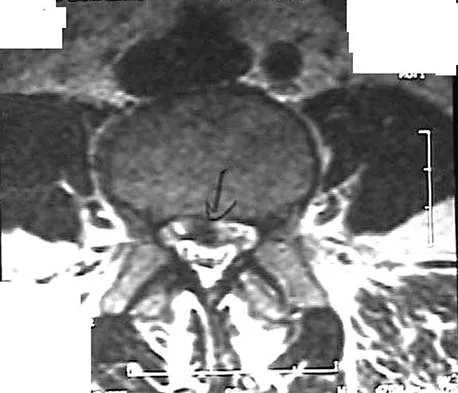
Figures 25a and 25b show the radiograph and MRI scan of a 48-year-old man who reports increasing unsteadiness in his gait and hand clumsiness. Examination reveals a positive Hoffmann's reflex bilaterally, positive clonus, and a spastic gait. Management should consist of
Explanation
Question 2
Lumbar disk replacement has been shown to offer which of the following results?
Explanation
Question 3
When performing the exposure for an anterior approach to the cervical spine, the surgical dissection should not enter the plane between the trachea and the esophagus and excessive retraction should be avoided to prevent injury to the
Explanation
Question 4
A 39-year-old man reports low back pain, lower extremity numbness, and urinary retention after being injured in a motor vehicle accident 1 day ago. He is able to walk but is in pain. A straight leg raise results in increased back pain, and examination reveals that perianal sensation is decreased. Placement of a urinary catheter results in 500 mL of urine. What is the next most appropriate step in management?
Explanation
Question 5
Figures 26a and 26b show the radiograph and MRI scan of an 18-year-old man who fell from a trampoline. Examination reveals exquisite local tenderness at the thoracolumbar junction, but he is neurologically intact. Management should consist of
Explanation
Question 6
A 17-year-old high school football player is seen for follow-up after sustaining an injury 3 days ago. He reports that he tackled a player, felt numbness throughout his body, and could not move for approximately 15 seconds. A spinal cord injury protocol was initiated on the field. Evaluation in the emergency department revealed a normal neurologic examination and full painless neck motion. He states that he has no history of a similar injury. An MRI scan of the cervical spine is normal. During counseling, the patient and his family should be informed that he has sustained
Explanation
Question 7
Which of the following is considered a contraindication to cement injection techniques, such as kyphoplasty or vertebroplasty, in the treatment of osteoporotic compression fractures?
Explanation
Question 8
Chronic anterior donor site pain following the harvest of autologous iliac crest bone graft for use during anterior cervical diskectomy and fusion is reported by approximately what percent of patients?
Explanation
Question 9
When treating osteoporosis with alendronate, what is the most common side effect?
Explanation
Question 10
Figures 27a and 27b show the radiographs of a 32-year-old woman who was involved in a high-speed motor vehicle accident. She is neurologically intact. After stabilization and assessment, treatment should consist of
Explanation
Question 11
Figures 28a through 28c show the MRI scans of a 30-year-old woman who weighs 290 lb and has low back and left leg pain. She also reports frequent urinary dribbling, which her gynecologist has advised her may be related to obesity. Examination will most likely reveal
Explanation
Question 12
Which of the following statements regarding conus medullaris syndrome is most accurate?
Explanation
Question 13
Which of the following factors has the greatest effect on the pull-out strength of a lumbar pedicle screw?
Explanation
Question 14
An inverted radial reflex is associated with
Explanation
Question 15
Figures 29a and 29b show the radiograph and CT scan of a 48-year-old man who has diffuse spinal pain. What is the most likely diagnosis?
Explanation
Question 16
The cervical disk herniation shown in the MRI scans in Figures 30a and 30b will most likely create which of the following constellations of symptoms?
Explanation
Question 17
A 21-year-old man has had posterior neck discomfort for the past 6 months. A whole-body bone scan and a cervical single-photon emission CT reveal increased activity at the C7 spinous process. MRI reveals multifocal involvement of the spinous process lamina and facet of C7. A CT-directed needle biopsy reveals osteoblastoma. What is the best course of action?
Explanation
Question 18
What is the most likely consequence of a vertebral compression fracture associated with osteoporosis?
Explanation
Question 19
What is the most appropriate treatment for a chordoma involving the sacrum?
Explanation
Question 20
A 62-year-old woman has back pain and right L2 radicular pain. MRI scans suggest a neoplastic lesion at L2, and a bone scan is negative except at L2. History reveals that she was treated for breast cancer without known metastatic disease 12 years ago and is thought to be free of disease. What is the next most appropriate step in management?
Explanation
Question 21
A 60-year-old woman with rheumatoid arthritis has atlanto-axial instability and basilar invagination. What MRI findings would suggest the need for cervical fusion?
Explanation
Question 22
Which of the following statements is most accurate regarding undetected intraoperative surgical glove perforation?
Explanation
Question 23
Which of the following is NOT considered a risk factor for nonunion of a type II odontoid fracture?
Explanation
Question 24
A 27-year-old woman has a bilateral C5-C6 facet dislocation and quadriparesis after being involved in a motor vehicle accident. Initial management consisted of reduction with traction, but she remains a Frankel A quadriplegic. To facilitate rehabilitation, surgical stabilization and fusion is planned. From a biomechanical point of view, which of the following techniques is the LEAST stable method of fixation?
Explanation
Question 25
Which of the following findings is considered a poor prognostic factor for postoperative neurologic recovery in patients with rheumatoid arthritis?
Explanation
Question 26
A 65-year-old man presents with progressive hand clumsiness and gait instability. MRI reveals 4-level cervical stenosis with a fixed kyphotic deformity of 15 degrees. What is the most appropriate surgical approach?
Explanation
Question 27
When evaluating an adult patient for a long-segment spinal fusion for degenerative scoliosis, which of the following spino-pelvic parameters correlates most strongly with postoperative health-related quality of life (HRQOL)?
Explanation
Question 28
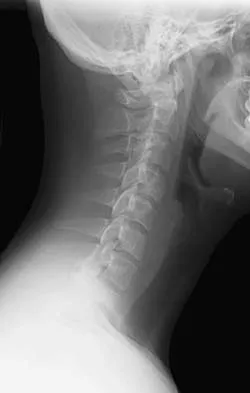
A 24-year-old man is brought to the ED after an MVA. He is awake, alert, and complains of severe neck pain with weakness in his right biceps. CT scan shows a right-sided C5-C6 unilateral facet dislocation. What is the most appropriate next step in management?
Explanation
Question 29
During the physical examination of a 55-year-old woman with suspected cervical spondylotic myelopathy, tapping the brachioradialis tendon results in spontaneous flexion of the digits without flexion of the elbow. This finding indicates compression at which of the following spinal levels?
Explanation
Question 30
Which of the following is considered a significant risk factor for the development of proximal junctional kyphosis (PJK) following long-segment instrumented fusion for adult spinal deformity?
Explanation
Question 31
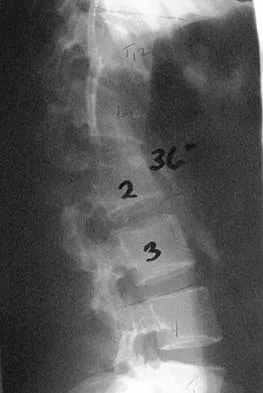
A 30-year-old woman sustains an L1 burst fracture after a fall. She is neurologically intact. MRI demonstrates an intact posterior ligamentous complex. According to the Thoracolumbar Injury Classification and Severity (TLICS) score, what is her total score and the recommended treatment?
Explanation
Question 32
A 72-year-old man falls forward, striking his chin. He presents with profound weakness in his hands and arms, but is able to ambulate with assistance. Perianal sensation is intact. What is the most likely pathophysiological mechanism of his injury?
Explanation
Question 33
A 40-year-old driver involved in a high-speed collision sustains a traumatic spondylolisthesis of C2 (Hangman's fracture). Imaging shows greater than 3 mm of displacement and severe angulation of C2 on C3. What is the mechanism of this specific injury pattern (Levine-Edwards Type IIA), and what is a contraindication in its management?
Explanation
Question 34
In long-segment fusions extending to the pelvis for adult degenerative scoliosis, Sacral-2 Alar-Iliac (S2AI) screws are often utilized instead of traditional iliac screws. Which of the following is an advantage of S2AI screws?
Explanation
Question 35
A 25-year-old man sustains a C6 spinal cord injury. He has no motor function below the level of injury but has preserved pinprick sensation in the perianal area and voluntary anal contraction. How is his injury classified according to the ASIA Impairment Scale (AIS)?
Explanation
Question 36
A 65-year-old woman presents with worsening back pain and an inability to stand up straight. Radiographs show adult degenerative scoliosis. Her pelvic incidence (PI) is 55 degrees, pelvic tilt (PT) is 30 degrees, and sacral slope (SS) is 25 degrees. To achieve optimal sagittal balance postoperatively, her lumbar lordosis (LL) should be reconstructed to approximately:
Explanation
Question 37
A 65-year-old man undergoes a C3-C6 laminectomy and posterior spinal fusion for severe cervical myelopathy. On postoperative day 2, he develops profound new-onset weakness of right shoulder abduction and elbow flexion, but sensory examination remains normal. What is the most likely etiology of this deficit?
Explanation
Question 38
A 55-year-old Asian male presents with progressive hand clumsiness and an unsteady gait. Imaging demonstrates multi-level ossification of the posterior longitudinal ligament (OPLL) causing severe cervical canal stenosis. Which of the following preoperative findings is an absolute contraindication to a posterior laminoplasty?
Explanation
Question 39
A 72-year-old man with known cervical spondylosis falls forward, striking his forehead. He presents with severe weakness in his hands and arms (1/5 strength) but is able to move his legs against gravity (3/5 strength). What is the classic pathophysiologic mechanism for this specific pattern of neurologic deficit?
Explanation
Question 40
In adult spinal deformity surgery, achieving optimal sagittal balance is critical to improving health-related quality of life outcomes. Which of the following sets of spinopelvic parameters represents the universally accepted SRS-Schwab postoperative target?
Explanation
Question 41
A 24-year-old man sustains a traumatic spondylolisthesis of the axis (Hangman's fracture) following a motor vehicle collision. Imaging shows severe angulation and distraction of the C2-C3 intervertebral space with minimal translation, and the facet joints are intact. Which of the following management steps is strictly contraindicated for this fracture pattern?
Explanation
Question 42
A neurologically intact 34-year-old male presents after a motor vehicle collision with a bilateral C5-C6 facet dislocation. An urgent MRI reveals a massive, extruded herniated disc behind the C5 vertebral body. What is the most appropriate next step in management?
Explanation
Question 43
When planning corrective surgery for adult degenerative scoliosis, restoring optimal sagittal balance is highly correlated with improved clinical outcomes. To achieve this, the lumbar lordosis (LL) should be corrected to closely match which pelvic parameter?
Explanation
Question 44
A 62-year-old man undergoes a C3-C6 posterior laminectomy and fusion for cervical spondylotic myelopathy. On postoperative day 2, he develops isolated profound weakness in his bilateral deltoid and biceps muscles, with no worsening of his long-tract signs. What is the most likely etiology of this complication?
Explanation
Question 45
According to the Thoracolumbar Injury Classification and Severity (TLICS) score, which of the following findings is the strongest determinant indicating the need for operative stabilization of a thoracolumbar burst fracture?
Explanation
Question 46
A 68-year-old woman presents with progressive clumsiness in her hands and frequent tripping. During her physical examination, you note an inability to actively maintain extension and adduction of her small and ring fingers. This clinical sign is known as:
Explanation
Question 47
A 70-year-old female undergoes a T10 to Pelvis posterior instrumented fusion for adult spinal deformity. Six months later, she presents with severe back pain and progressive kyphosis centered at T9. Which of the following intraoperative factors is most strongly associated with the development of this specific complication?
Explanation
Question 48
A 55-year-old man with a long history of severe ankylosing spondylitis falls from standing height. He presents to the emergency department with new, severe lower cervical neck pain but no neurologic deficits. Plain radiographs of the cervical spine show typical syndesmophytes but no apparent fracture. What is the most appropriate next step in management?
Explanation
Question 49
A 60-year-old Asian male presents with severe progressive cervical myelopathy. CT scan demonstrates a continuous mass of ossification of the posterior longitudinal ligament (OPLL) from C3 to C6. Sagittal alignment is evaluated and determined to be "K-line negative" (fixed cervical kyphosis). What is the optimal surgical approach?
Explanation
Question 50
When performing a long posterior instrumented fusion extending to the sacrum for adult degenerative scoliosis, which of the following is the strongest indication to extend fixation distally into the pelvis (e.g., iliac or S2AI screws)?
Explanation
Question 51
A 75-year-old man trips and falls forward, striking his chin. He develops acute weakness in his upper extremities (hands worse than shoulders) but maintains functional strength in his lower extremities. The pathophysiology of his neurologic deficit involves injury to which specific region of the spinal cord?
Explanation
Question 52
A 60-year-old man presents with progressive hand clumsiness, positive Hoffmann reflexes bilaterally, and a spastic gait. Radiographs demonstrate advanced multi-level spondylosis with a fixed cervical kyphosis of 15 degrees. What is the primary biomechanical reason an anterior surgical approach is favored over a posterior laminoplasty in this patient?
Explanation
Question 53
An 82-year-old male with severe COPD, chronic kidney disease, and congestive heart failure sustains a Type II odontoid fracture with 2 mm of posterior displacement after a ground-level fall. He is neurologically intact. What is the most appropriate management strategy for this frail patient?
Explanation
Question 54
In evaluating a patient with adult spinal deformity and "flatback" syndrome (loss of lumbar lordosis), the body attempts to compensate to maintain an upright posture. Which radiographic finding represents a primary pelvic compensatory mechanism for positive sagittal malalignment?
Explanation
Question 55
A 25-year-old male is involved in a high-speed motor vehicle collision while wearing only a lap seatbelt. He is diagnosed with a flexion-distraction (Chance) fracture of L2. Which of the following associated injuries must be most carefully evaluated and ruled out?
Explanation
Question 56
A 64-year-old man presents with progressive numbness in his hands and hyperreflexia in all four extremities. He reports mild gait unsteadiness but is able to walk independently without assistance and continues to work full-time as an accountant. According to the Nurick classification for cervical myelopathy, what grade is this patient?
Explanation
Question 57
A 65-year-old man presents with progressive hand clumsiness, gait instability, and hyperreflexia. MRI shows multi-level cervical stenosis from C3-C6 with preserved cervical lordosis. He undergoes a C3-C6 laminoplasty. Which of the following is the most common postoperative neurological complication specific to this procedure?
Explanation
Question 58
An obtunded 35-year-old polytrauma patient is in the ICU following a high-speed collision. A high-quality fine-cut CT of the cervical spine with sagittal and coronal reconstructions is interpreted as completely normal by a senior radiologist. What is the most appropriate next step regarding cervical spine precautions according to current EAST guidelines?
Explanation
Question 59
In a 68-year-old female presenting with adult degenerative scoliosis and severe sagittal imbalance, the goal of surgical reconstruction is to achieve a mismatch between Pelvic Incidence (PI) and Lumbar Lordosis (LL) of less than what value to optimize clinical outcomes?
Explanation
Question 60
A 55-year-old man of East Asian descent presents with signs of severe cervical myelopathy. Radiographs and CT reveal continuous ossification of the posterior longitudinal ligament (OPLL) from C3 to C6 with a K-line negative alignment (kyphotic alignment). What is the most appropriate surgical approach?
Explanation
Question 61
A 25-year-old man sustains a severe fracture-dislocation at T10 following a motor vehicle collision. On examination in the trauma bay, he has no motor or sensory function below the umbilicus, absent rectal tone, and an absent bulbocavernosus reflex. What is the clinical significance of the absent bulbocavernosus reflex?
Explanation
Question 62
A 72-year-old female with a 45-degree adult degenerative lumbar scoliosis complains primarily of severe, neurogenic claudication in both legs after walking one block. She denies significant mechanical back pain. MRI shows severe L3-L4 and L4-L5 central and lateral recess stenosis. What is the most appropriate initial surgical management?
Explanation
Question 63
During the evaluation of a 60-year-old patient with suspected cervical myelopathy, you perform the Hoffmann test. A positive response consists of reflex flexion of the interphalangeal joint of the thumb and distal interphalangeal joint of the index finger. This reflex arc is primarily mediated by which spinal cord level?
Explanation
Question 64
A 68-year-old man with known cervical spondylosis falls forward and strikes his chin. He develops bilateral upper extremity weakness (hands significantly worse than shoulders) with relatively preserved lower extremity motor function. Which of the following best explains the pathophysiologic mechanism of this specific syndrome?
Explanation
Question 65
A 28-year-old male sustains a hyperflexion-rotation injury to his neck. Radiographs show less than 25% anterior subluxation of C5 on C6. He is awake and cooperative, exhibiting a right-sided C6 radiculopathy but no signs of myelopathy. What is the most appropriate initial management step?
Explanation
Question 66
A 62-year-old male with severe fixed global sagittal malalignment (SVA = +15 cm) undergoes spinal reconstructive surgery. The surgeon plans a Pedicle Subtraction Osteotomy (PSO) at L3. Approximately how many degrees of lordosis can be expected from a single-level lumbar PSO?
Explanation
Question 67
A 45-year-old woman presents with progressive weakness and muscle wasting in both hands, accompanied by fasciculations. She also reports difficulty walking. Examination shows hyperreflexia in the lower extremities but absent reflexes in the upper extremities. Sensation is completely intact throughout. What is the most likely diagnosis?
Explanation
Question 68
A 65-year-old female presents with severe back pain and an inability to stand up straight. Which of the following radiographic parameters correlates most strongly with poor health-related quality of life (HRQOL) scores in adult spinal deformity?
Explanation
Question 69
A 55-year-old male presents with progressive cervical myelopathy secondary to ossification of the posterior longitudinal ligament (OPLL). On a lateral neutral cervical radiograph, the OPLL mass crosses the K-line. What is the most appropriate surgical approach?
Explanation
Question 70
A 35-year-old male sustains a fall. CT shows a burst fracture of L1 with 40% canal compromise. He is neurologically intact, and MRI confirms the posterior ligamentous complex (PLC) is intact. What is his Thoracolumbar Injury Classification and Severity (TLICS) score and recommended management?
Explanation
Question 71
A 68-year-old man with underlying cervical spondylosis sustains a hyperextension injury. He presents with profound upper extremity weakness, relatively preserved lower extremity strength, and intact perianal sensation. This syndrome is most accurately characterized by injury to which portion of the spinal cord?
Explanation
Question 72
In preoperative planning for a 60-year-old patient with flatback syndrome and adult degenerative scoliosis, the surgeon aims to restore ideal sagittal balance. To achieve optimal postoperative alignment, the lumbar lordosis (LL) should be within how many degrees of the pelvic incidence (PI)?
Explanation
Question 73
A 50-year-old male presents with painless, progressive weakness and muscle atrophy of his bilateral upper extremities. He has hyperreflexia in the lower extremities but intact sensation throughout. EMG reveals widespread fasciculations and denervation in multiple myotomes. What is the most likely diagnosis?
Explanation
Question 74
A 25-year-old male is involved in a high-speed MVA. He is awake, cooperative, but has complete paralysis below C6. Radiographs show a C5-C6 bilateral facet dislocation. What is the most appropriate next step in management?
Explanation
Question 75
A 16-year-old female wearing a lap belt is involved in a head-on collision. Radiographs demonstrate a horizontal fracture through the spinous process, pedicles, and vertebral body of L2. Which of the following associated injuries must be aggressively ruled out?
Explanation
Question 76
Proximal junctional kyphosis (PJK) is a recognized complication following long segment fusions for adult spinal deformity. Which of the following factors most significantly increases the risk of developing PJK?
Explanation
Question 77
A 30-year-old male presents after an MVA. CT shows a bilateral pars interarticularis fracture of C2 with 4 mm of anterior displacement and 15 degrees of angulation. According to the Levine and Edwards classification, what type of fracture is this, and what is the primary mechanism of injury?
Explanation
Question 78
During the physical examination of a 62-year-old male with progressive gait difficulty, the examiner quickly flicks the nail of the patient's middle finger downward, resulting in reflexive flexion of the thumb and index finger. This clinical sign is indicative of:
Explanation
Question 79
The recurrent laryngeal nerve is at greatest risk during an anterior approach to the lower cervical spine on the right side due to its unique anatomic course. Where does the right recurrent laryngeal nerve loop before ascending into the neck?
Explanation
Question 80
A 68-year-old woman with adult degenerative scoliosis presents with severe back pain and a forward stooped posture. Standing full-length radiographs reveal a sagittal vertical axis (SVA) of +12 cm. To achieve optimal sagittal balance postoperatively, surgical correction should aim for a relationship between Pelvic Incidence (PI) and Lumbar Lordosis (LL) of:
Explanation
Question 81
A 30-year-old construction worker falls from a scaffolding, sustaining an L1 burst fracture. He is neurologically intact. MRI demonstrates an intact posterior ligamentous complex (PLC). According to the Thoracolumbar Injury Classification and Severity (TLICS) system, what is his total score and the recommended management?
Explanation
Question 82
A 72-year-old man with a history of severe cervical spondylosis falls forward, striking his chin. He presents with profound weakness in his bilateral hands and arms, but retains functional motor strength in his legs. Perianal sensation and sphincter tone are intact. Which of the following best describes the anatomical basis for his neurological deficit?
Explanation
None
