Surgical Management of Lumbar Spine Pathologies: Indications, Anatomy, and Outcomes
Key Takeaway
Surgical intervention for chronic low back pain is typically indicated when comprehensive non-operative management fails. Primary reasons include progressive neurological deficits (e.g., cauda equina syndrome, motor weakness), documented spinal instability (e.g., spondylolisthesis), or intractable pain from specific pathologies unresponsive to exhaustive conservative care.
Introduction & Epidemiology
Chronic low back pain (CLBP) represents a significant global healthcare burden, affecting an estimated 8% of the adult population and standing as a leading cause of disability worldwide. Its etiology is multifactorial, encompassing degenerative processes, inflammatory conditions, traumatic injuries, neoplastic pathologies, and functional derangements. While the vast majority of acute low back pain episodes resolve spontaneously with conservative management, a subset progresses to chronic pain states, often refractory to non-operative interventions, necessitating consideration of surgical intervention.
The spectrum of non-operative management for CLBP is broad, ranging from pharmacological interventions and physical therapy to epidural injections and complementary therapies. Structured exercise programs, particularly those emphasizing mechanical diagnosis and therapy (MDT) such as the McKenzie Method, play a crucial role in the initial assessment and treatment paradigm for many patients. These approaches aim to identify directional preferences and restore spinal mechanics, thereby centralizing symptoms and empowering patients with self-management strategies. However, for specific spinal pathologies characterized by intractable pain, progressive neurological deficit, or spinal instability that fail to respond to exhaustive conservative care, surgical intervention becomes a necessary consideration. This document aims to provide an academic overview of the surgical management of common lumbar spine pathologies causing back pain, contextualizing non-operative strategies within the comprehensive treatment algorithm.
Surgical Anatomy & Biomechanics
A thorough understanding of lumbar spinal anatomy and biomechanics is paramount for any surgeon operating on the spine. The lumbar spine typically consists of five vertebrae (L1-L5), characterized by large, kidney-shaped vertebral bodies designed to bear axial loads. These are separated by intervertebral discs, critical viscoelastic structures composed of an outer annulus fibrosus and an inner nucleus pulposus, providing flexibility, shock absorption, and maintaining intervertebral height. Degeneration of these discs is a common source of axial back pain and can lead to instability, stenosis, or herniation.
Posteriorly, paired facet joints (zygapophyseal joints) articulate between adjacent vertebrae, guiding spinal motion and limiting excessive rotation and shear. These synovial joints are prone to arthritic changes, which can cause localized pain and contribute to spinal stenosis. The complex musculature surrounding the lumbar spine—including the erector spinae group, multifidus, quadratus lumborum, psoas, and abdominal muscles—provides dynamic stability and facilitates movement. The deep paraspinal muscles, particularly the multifidus, are crucial for segmental stability, and atrophy of these muscles is often observed in chronic low back pain.
The vertebral canal houses the cauda equina, a bundle of nerve roots extending from the conus medullaris. These nerve roots exit through the intervertebral foramina, which can be compromised by disc herniation, osteophyte formation from facet arthropathy, or ligamentous hypertrophy (e.g., ligamentum flavum). Understanding the specific nerve root anatomy (e.g., L4 nerve root exiting below L4 pedicle in the lumbar spine, unlike the cervical spine) is critical for targeted decompression.
From a biomechanical perspective, the lumbar spine forms a natural lordotic curve, essential for distributing compressive forces evenly. Alterations in this sagittal balance due to disc degeneration, spondylolisthesis, or iatrogenic causes can significantly increase stress on adjacent segments and contribute to pain. Spinal stability is maintained by three subsystems: the passive subsystem (vertebrae, discs, ligaments), the active subsystem (muscles and tendons), and the neural control subsystem. Failure in any of these components can lead to symptomatic instability, prompting surgical consideration for stabilization. Internervous planes, such as the interval between the rectus abdominis and obliques for an anterior approach, or the subperiosteal dissection of paraspinal muscles for a posterior approach, are key surgical landmarks that minimize muscle damage and optimize recovery.
Indications & Contraindications
The decision to proceed with surgical intervention for back pain is complex, requiring careful patient selection, correlation of clinical symptoms with imaging findings, and a documented failure of comprehensive non-operative management.
Operative Indications
Surgical indications for back pain generally fall into categories addressing neurological compromise, spinal instability, or intractable pain from clearly defined anatomical pathologies:
-
Progressive Neurological Deficit:
- Cauda equina syndrome (CES) with new-onset bowel/bladder dysfunction, saddle anesthesia, or rapidly progressive motor weakness (surgical emergency).
- Progressive motor weakness (Grade 3/5 or less) corresponding to a specific nerve root or roots.
- Severe, debilitating radiculopathy or myelopathy refractory to non-operative treatment, with MRI correlation.
-
Spinal Instability:
- Radiographically proven degenerative spondylolisthesis (especially > Grade 1 or progressive slip) with correlating symptoms.
- Isthmic spondylolisthesis (pars fracture) with instability or severe pain refractory to conservative care.
- Post-traumatic instability (e.g., burst fractures with neurological compromise or significant kyphosis).
- Iatrogenic instability (e.g., extensive laminectomy without fusion).
-
Intractable Pain Refractory to Non-Operative Management:
- Severe axial low back pain, radicular pain, or neurogenic claudication that has failed an adequate trial (typically 6-12 weeks) of structured non-operative therapies, including physical therapy, medications, and injections, with clear anatomical correlation on advanced imaging (MRI, CT).
- Severe discogenic pain confirmed by provocative discography (though its role remains debated) with corresponding imaging changes.
- Severe spinal stenosis causing significant functional limitation from neurogenic claudication or radiculopathy.
-
Spinal Deformity:
- Adult degenerative scoliosis or kyphosis causing progressive neurological symptoms or intractable mechanical pain and functional decline.
-
Spinal Tumors or Infections:
- Requiring decompression, stabilization, or tumor resection/debridement.
Non-Operative Indications
The vast majority of patients with low back pain are managed non-operatively. These include:
- Acute low back pain without red flags (fever, weight loss, history of cancer, neurological deficit).
- Radicular pain without progressive neurological deficit or cauda equina symptoms.
- Axial back pain without significant instability or deformity, especially when symptoms are intermittent or respond to conservative measures.
- Mild to moderate spinal stenosis or spondylolisthesis that is stable and well-tolerated functionally.
A cornerstone of non-operative management involves structured exercise programs aimed at restoring mobility, strength, and postural control. The McKenzie Method (Mechanical Diagnosis and Therapy - MDT) is a well-established system used both diagnostically and therapeutically. It emphasizes patient education and empowerment through self-treatment strategies, primarily involving repetitive movements to identify a "directional preference" that centralizes symptoms.
McKenzie Exercises (Mechanical Diagnosis and Therapy)
These exercises are integral to the non-operative management of acute and chronic low back pain, and can also be utilized in post-operative rehabilitation, depending on the surgical procedure and surgeon's protocol. The primary goal is to centralize pain (move pain from periphery to spine) and restore full range of motion.
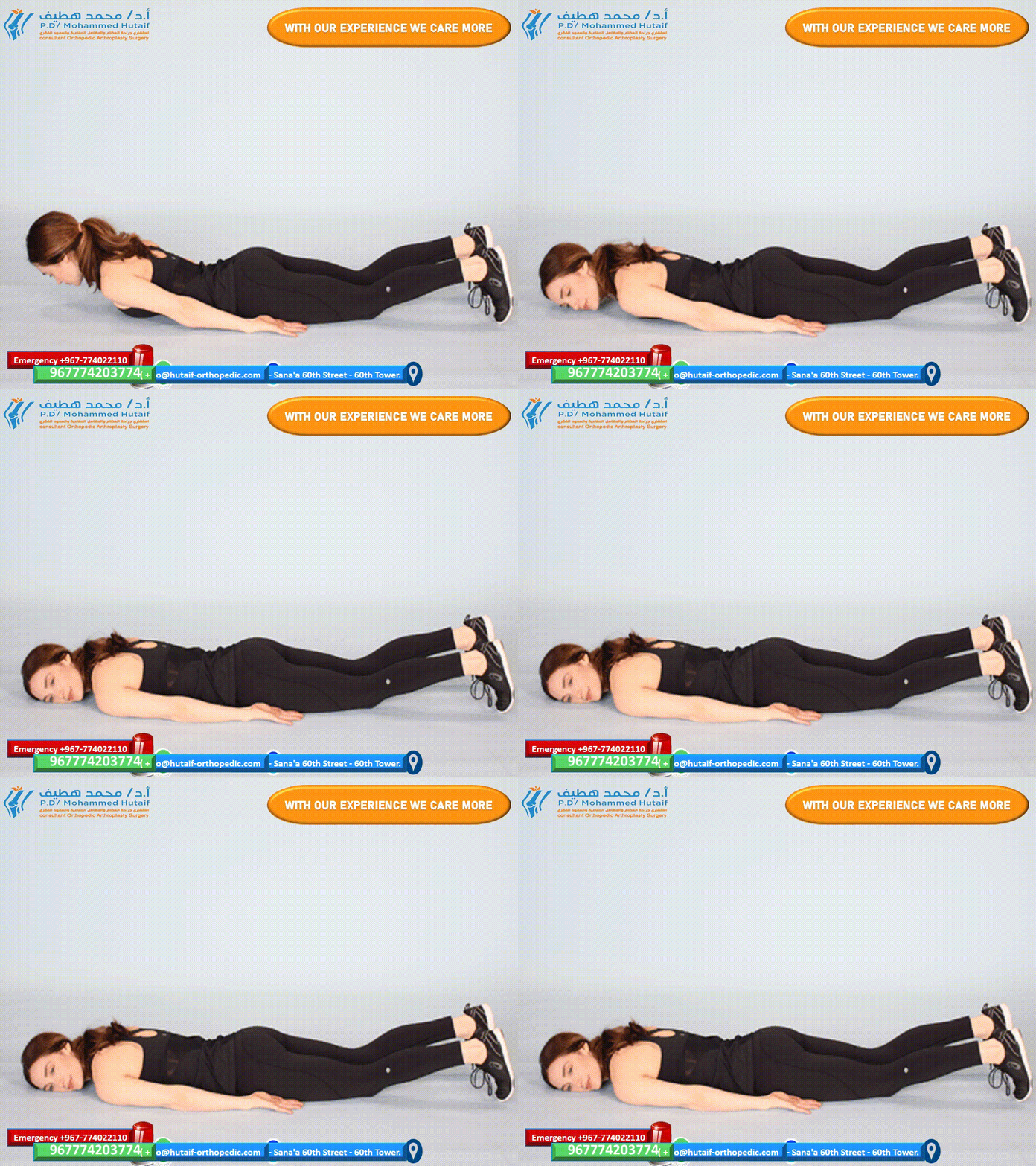
1. Lying on your stomach (Prone Lying)
*
Mechanism:
This foundational move reduces pain by unloading pressure on the lower back and promoting a gentle extension bias, which can be beneficial for certain disc derangements. It encourages spinal alignment by allowing gravity to gently decompress the lumbar segments.
*
Technique:
1. Lie down on your stomach. Place your arms at your sides, relaxed.
2. Turn your head to the side or face down, maintaining a neutral cervical spine.
3. Hold for 2 to 3 minutes, focusing on relaxation and symptom response. Repeat up to eight times a day, particularly when pain is acute or symptoms are peripheralized.
*

2. Lying on a pillow (Prone Lying with Abdominal Support)
*
Mechanism:
To support your lower back and increase comfort, a pillow under the abdomen can modify the degree of lumbar extension. This is particularly useful for patients who find full prone lying uncomfortable or who require a gentler unloading of disc pressure.
*
Technique:
1. Lie facedown and place a pillow (or two, depending on comfort and desired extension) under your stomach and pelvis. Place your arms at your sides.
2. Turn your head to the side or face down.
3. Hold for 2 to 3 minutes. Repeat up to eight times a day, observing for symptom centralization or reduction.
*

3. Prone on your elbows (Sphinx Position)
*
Mechanism:
This exercise introduces a progressive increase in lumbar extension, helping to restore the natural lordotic curve. It is a progression from simple prone lying and often used when initial prone lying provides relief but full resolution is not achieved. It's also known as lying face down in extension.
*
Technique:
1. Lie down on your stomach. Prop yourself up on your forearms with your shoulders directly above your elbows. Keep your hips relaxed on the floor.
2. Hold for 2 to 3 minutes, allowing the lower back to extend naturally.
3. Lower your upper body back to prone. Repeat up to eight times a day.
*

4. Prone press-ups (Extension in Lying)
*
Mechanism:
This is the most aggressive extension maneuver in the prone series, designed to achieve maximal lumbar extension. Prone press-ups also help to restore your lower back’s natural curve and are often highly effective in centralizing symptoms related to posterior disc displacement.
*
Technique:
1. Lie down on your stomach. Place your hands under your shoulders, as if preparing for a push-up.
2. Slowly straighten your elbows, pressing your upper body up while keeping your pelvis and hips on the floor. Maintain a relaxed abdominal musculature.
3. Hold the extended position for a few seconds at the end-range of motion, then slowly lower your upper body. Repeat 10-15 repetitions, working up to 2-3 sets, up to eight times a day.
*

5. Standing Lumbar Extension
*
Mechanism:
This exercise applies the principle of extension in a weight-bearing, functional position. It’s particularly useful for maintaining symptom centralization and correcting postural deviations throughout the day, especially for those whose jobs involve prolonged sitting or bending.
*
Technique:
1. Stand upright with feet shoulder-width apart. Place your hands on your lower back for support, fingers pointing downwards.
2. Gently bend backward at the waist, extending your lumbar spine as far as comfortable. Do not overextend into pain.
3. Hold briefly (1-2 seconds) at the end-range, then return to a neutral standing position. Repeat 10-15 times as needed throughout the day, especially if symptoms begin to peripheralize.
*

6. Prone Lying with Advanced Hand Support (Sustained Extension Progression)
*
Mechanism:
This is often a further progression from standard prone press-ups, allowing for a more sustained or a higher degree of lumbar extension. It is used when symptoms are resolving with the standard extension exercises, but full resolution of range of motion or complete centralization requires a more prolonged stretch.
*
Technique:
1. Lie prone on your stomach.
2. Place hands slightly forward and wider than the shoulders, or in a position that allows for maximal, comfortable lumbar extension.
3. Press up, allowing the lower back to extend significantly, aiming for an even greater arch than standard press-ups. The key is to achieve a sustained hold in the maximally tolerated extension.
4. Hold this extended position for 10-30 seconds, maintaining relaxation in the lumbar musculature. Repeat 3-5 times.
*

7. Lumbar Flexion in Lying (Knees-to-Chest)
*
Mechanism:
While McKenzie often emphasizes extension, flexion exercises are also part of the MDT assessment and treatment paradigm, indicated for specific derangements where flexion provides symptomatic relief or centralization. They can also be used to regain lost flexion mobility once extension biases have stabilized the spine.
*
Technique:
1. Lie on your back with knees bent and feet flat on the floor.
2. Bring one knee towards your chest, grasping it with both hands. Gently pull it closer to the chest, feeling a stretch in the lower back and gluteal region.
3. Hold briefly (5-10 seconds), then lower the leg. Repeat with the other leg.
4. Progress to bringing both knees to the chest simultaneously for a more pronounced lumbar flexion stretch. Perform 10-15 repetitions, or hold for 20-30 seconds, 2-3 times.
*

8. Side Glide (Correction of Lateral Shift)
*
Mechanism:
This exercise is specifically indicated for patients presenting with a lateral shift of the trunk, often seen with an acute disc herniation, where the patient leans away from the painful side. The goal is to correct this coronal plane deformity and centralize symptoms.
*
Technique:
1. Stand with feet shoulder-width apart, approximately 6-12 inches from a wall.
2. Lean your shoulder on the side
away
from your perceived lateral shift against the wall.
3. Place the hand on the opposite hip.
4. Gently push your hips towards the wall, creating a lateral bend in the lumbar spine, aiming to correct the shift. The trunk should move
into
the shift.
5. Hold for a few seconds, then return to neutral. Repeat 10-15 times, observing for centralization of symptoms or reduction of the shift.
*

Contraindications for Surgery
- Uncontrolled Medical Comorbidities: Poorly managed diabetes, severe cardiac or pulmonary disease, coagulopathy, or active infection that significantly increase operative risk.
- Active Spinal Infection: Unless surgery is indicated for debridement and stabilization, or source control.
- Psychosocial Factors: Unaddressed depression, anxiety, somatization, drug-seeking behavior, or significant litigation that can adversely impact surgical outcomes.
- Lack of Clear Anatomical Correlation: When imaging findings do not align with clinical symptoms, suggesting alternative pain generators or diffuse non-specific back pain.
- Patient Non-Compliance: Unwillingness or inability to adhere to pre- and post-operative instructions, including rehabilitation protocols.
- Diffuse Myofascial Pain: Without focal pathology amenable to surgical correction.
TABLE: Operative vs. Non-Operative Indications for Back Pain Management
| Feature | Non-Operative Management | Operative Management |
|---|---|---|
| Pain Duration | Acute (< 6 weeks), Subacute (6-12 weeks), Chronic (variable) | Chronic (> 3-6 months) refractory to non-op care |
| Neurological Deficit | Mild/stable radiculopathy, no progressive motor weakness | Progressive motor weakness, Cauda Equina Syndrome (CES), Myelopathy |
| Spinal Stability | Stable spine, no significant spondylolisthesis or deformity | Radiographic instability, progressive spondylolisthesis, significant deformity |
| Imaging Correlation | Disc bulge, mild stenosis, degenerative changes without severe compression | Severe disc herniation with compression, severe stenosis, segmental instability, significant deformity |
| Response to Treatment | Responds to PT, medications, injections, McKenzie exercises | Failure of exhaustive non-operative management |
| Red Flags | Absent (e.g., fever, weight loss, history of cancer, severe trauma) | Present for specific pathologies (e.g., tumor, infection, CES) |
| Patient Factors | Good general health, compliant, realistic expectations | Good general health, optimized comorbidities, compliant, realistic expectations |
Pre-Operative Planning & Patient Positioning
Meticulous pre-operative planning is crucial to optimize surgical outcomes and minimize complications. This involves a comprehensive review of the patient's medical history, physical examination, and advanced imaging.
Pre-Operative Planning
- Diagnosis Confirmation: Correlation of patient symptoms and neurological findings with imaging (MRI, CT, dynamic flexion/extension radiographs). For complex deformities, standing EOS imaging or full-length radiographs are essential for sagittal balance assessment.
- Surgical Goals: Clearly define goals – decompression (e.g., for stenosis or herniation), stabilization (e.g., for instability or deformity), correction of deformity (e.g., scoliosis).
- Approach Selection: Determine the optimal surgical approach (posterior, anterior, lateral, or combined) based on pathology, anatomy, and patient factors. Considerations include disc pathology location, degree of stenosis, need for interbody support, and surgeon expertise.
- Instrumentation: Pre-select pedicle screw sizes, cage dimensions, rod types, and bone graft material (autograft, allograft, synthetic, biologics like BMP). Templates and measurements from CT scans are valuable.
- Risk Assessment: Identify and mitigate surgical risks. This includes cardiac risk stratification (e.g., stress testing), pulmonary function testing, nutritional assessment, and glycemic control. Pre-operative antibiotics and DVT prophylaxis protocols are standardized.
- Patient Education: Discuss the surgical plan, expected outcomes, potential complications, and post-operative rehabilitation expectations with the patient and family. Informed consent is paramount.
Patient Positioning
Proper patient positioning is critical for surgical access, anatomical exposure, preventing iatrogenic injury, and optimizing hemostasis.
-
Prone Position (for Posterior Approaches: PLIF, TLIF, Decompression):
- Goal: Maximize lumbar lordosis, minimize intra-abdominal pressure to reduce epidural venous bleeding, and protect neural and vascular structures.
- Technique: Patient is carefully log-rolled onto a specialized frame (e.g., Jackson table, Andrews frame) or chest rolls, ensuring the abdomen hangs free. Padding is placed under the chest, iliac crests, and ankles. The head is maintained in a neutral position with adequate padding. Arms are typically tucked or abducted on arm boards. Careful attention to pressure points (eyes, ears, ulnar nerve, peroneal nerve, genitalia) is essential. Fluoroscopy is used to confirm the correct spinal level.
-
Supine Position (for Anterior Approaches: ALIF):
- Goal: Provide access to the anterior lumbar spine via a retroperitoneal approach.
- Technique: Patient is supine on the operating table, often with a slight Trendelenburg tilt. Arms are abducted on arm boards. A roll may be placed under the lumbar spine to enhance lordosis if desired. The skin is prepared from nipple line to mid-thigh.
-
Lateral Decubitus Position (for Lateral Approaches: LLIF/XLIF/DLIF):
- Goal: Access the lateral aspect of the lumbar intervertebral disc space, typically for interbody fusion.
- Technique: Patient is placed in a true lateral decubitus position, usually with the left side up for a right-sided approach (to avoid the aorta). The ipsilateral arm is often supported on an arm board. A kidney rest or break in the table may be used to elevate the ipsilateral flank, opening the space between the iliac crest and the rib cage. Careful padding of dependent extremities and neural structures (brachial plexus, peroneal nerve) is mandatory. Intraoperative neuromonitoring (EMG) is standard for transpsoas approaches to prevent injury to the lumbar plexus.
Detailed Surgical Approach / Technique
The choice of surgical approach depends on the pathology, desired extent of decompression, need for fusion, and sagittal balance goals. Here, we outline common techniques for lumbar spinal surgery.
1. Posterior Lumbar Decompression and Fusion (PLIF/TLIF)
Posterior approaches are versatile, allowing for direct decompression of neural elements and simultaneous stabilization.
- Incision and Exposure: A midline posterior incision is made, typically centered over the operative levels. The thoracolumbar fascia is incised, and subperiosteal dissection elevates the paraspinal muscles (erector spinae) from the spinous processes, laminae, and facet joints bilaterally, exposing the posterior elements. Care is taken to maintain the integrity of muscle attachments for later repair.
-
Pedicle Screw Placement:
- Fluoroscopy or navigation is used to identify the target vertebral levels and guide pedicle screw insertion.
- A starting point is chosen on the junction of the transverse process, superior articular process, and pars interarticularis.
- A pedicle probe is used to create a pilot hole, palpating pedicle walls to ensure containment.
- A tap is used, followed by placement of appropriately sized pedicle screws. Pull-out strength testing may be performed.
-
Decompression (Laminectomy/Foraminotomy):
- Laminectomy: Partial or complete removal of the lamina to relieve central canal stenosis.
- Facetectomy: Partial removal of the medial facet joint to decompress the lateral recess and nerve root.
- Foraminotomy: Enlargement of the intervertebral foramen to relieve nerve root compression, often achieved by removing osteophytes and disc material.
- The ligamentum flavum is meticulously removed to expose the dura and nerve roots. Care is taken to avoid dural tears and neural injury.
-
Interbody Fusion (PLIF - Posterior Lumbar Interbody Fusion):
- After neural decompression, the nerve root is gently retracted medially, and a posterior annulotomy is performed.
- The disc material is meticulously removed (discectomy) using rongeurs and curettes.
- Endplate preparation is crucial to ensure a bleeding bone bed for fusion. Decortication of endplates with curettes and rasps is performed without violating the subchondral bone.
- Two interbody cages (e.g., PEEK, titanium) packed with bone graft (autograft, allograft, DBM, BMP) are inserted into the disc space, providing anterior column support and restoring disc height and lordosis.
-
Interbody Fusion (TLIF - Transforaminal Lumbar Interbody Fusion):
- Involves a unilateral approach, preserving more posterior elements. A unilateral facetectomy and partial laminectomy allow access to the disc space through the neuroforamen.
- The nerve root is retracted laterally rather than medially.
- A single, often banana-shaped, interbody cage is inserted obliquely into the disc space. This technique offers less disruption to the midline structures and potentially less nerve root manipulation compared to PLIF.
-
Rod Placement and Compression/Distraction:
- Contoured rods are placed into the heads of the pedicle screws.
- Compression or distraction maneuvers are applied to achieve desired lordosis, reduce spondylolisthesis, and enhance stability.
- Set screws are tightened.
-
Posterolateral Fusion:
- Decortication of the transverse processes and lateral aspect of the lamina is performed.
- Bone graft is placed posterolaterally over the decorticated surfaces, augmenting the interbody fusion.
- Closure: Meticulous hemostasis. Fascial closure, followed by subcutaneous tissue and skin closure.
2. Anterior Lumbar Interbody Fusion (ALIF)
ALIF provides a direct anterior approach to the disc space, allowing for large cage insertion and excellent sagittal balance restoration, avoiding posterior musculature disruption.
- Incision and Retroperitoneal Dissection: A transverse or paramedian infraumbilical incision is made. The rectus abdominis is retracted or incised.
- Vascular Mobilization: The retroperitoneal space is entered. The peritoneum is swept anteriorly. The major vessels (aorta, vena cava, common iliac vessels) overlying the anterior spine are identified and mobilized by a vascular surgeon (often with an orthopedic spine surgeon assisting). Sympathetic nerve plexuses (presacral plexus) must be protected to prevent retrograde ejaculation in males.
- Disc Space Preparation: The anterior annulus is incised, and a complete discectomy is performed. Endplates are meticulously prepared, often with rotating reamers, to create a flat, bleeding bed.
- Cage Insertion: A large, lordotic interbody cage (e.g., PEEK, titanium, allograft) packed with bone graft is inserted into the prepared disc space. The large footprint of ALIF cages provides substantial structural support and high fusion rates.
- Anterior Plating (Optional): An anterior plate may be applied for additional stability, particularly in multi-level fusions or where additional rotational stability is desired.
- Closure: The vascular structures are allowed to return to their anatomical position. The abdominal musculature and skin are closed in layers.
3. Lateral Lumbar Interbody Fusion (LLIF/XLIF/DLIF)
Lateral approaches (Extreme Lateral Interbody Fusion - XLIF, Direct Lateral Interbody Fusion - DLIF) provide a minimally invasive corridor to the disc space, preserving posterior muscles and potentially reducing blood loss.
- Patient Positioning: Lateral decubitus position is crucial.
- Approach: A small skin incision is made over the flank. A muscle-splitting transpsoas approach is utilized, often guided by electromyography (EMG) neuromonitoring to map and protect the lumbar plexus nerve roots running through the psoas muscle.
- Disc Space Preparation: A dilator and working sheath are docked at the anterior annulus. Complete discectomy and endplate preparation are performed.
- Cage Insertion: A very large, often rectangular, interbody cage packed with bone graft is inserted directly into the disc space, providing robust anterior column support, significant disc height restoration, and correction of coronal deformity.
- Closure: The working sheath is removed, and the muscle layers and skin are closed.
- Supplementary Fixation: Often, lateral interbody fusion is supplemented with posterior percutaneous pedicle screw fixation (PPS) in a second stage or ipsilateral percutaneous lateral plate/screw fixation to provide rotational stability.
Complications & Management
Spinal surgery, while often highly effective, carries inherent risks. A comprehensive understanding of potential complications and their management is essential for spinal surgeons.
Intra-operative Complications
-
Dural Tear (Incidence: 1-10%):
- Management: Primary repair with fine non-absorbable sutures (e.g., 6-0 Prolene), augmented with dural sealant (e.g., DuraSeal) or autologous fat graft. Bed rest in Trendelenburg position for 24-48 hours post-op. CSF leak symptoms (headache, wound leakage) require vigilance.
-
Nerve Root Injury (Incidence: 0.2-2%):
- Management: Immediate identification and decompression. If transected, microsurgical repair may be attempted. Post-op neurological assessment and EMG/NCS may be warranted.
-
Vascular Injury (Incidence: < 1%):
- Management: Acute hemorrhage requires immediate pressure and vascular surgeon consultation for repair. Anterior approaches carry higher risk (aorta, vena cava, iliac vessels).
-
Wrong Level Surgery (Incidence: < 0.1%):
- Management: Prevention is key: multiple verification steps including pre-op marking, intra-op fluoroscopy/navigation, and counting from identifiable landmarks (e.g., sacrum, 12th rib). If discovered intra-op, correct level is identified and surgery performed. If discovered post-op, re-operation at correct level may be necessary depending on symptoms.
-
Hardware Malposition (Incidence: 1-5%):
- Management: Intra-op fluoroscopy/navigation verification. If discovered post-op and asymptomatic, observation. If symptomatic (e.g., nerve root impingement), revision surgery.
Early Post-operative Complications
-
Infection (SSI) (Incidence: 0.5-5%):
- Management: Superficial infections: wound care, oral antibiotics. Deep infections: surgical debridement, washout, IV antibiotics tailored to culture results. Hardware removal may be necessary if persistent.
-
Hematoma (Epidural/Subfascial) (Incidence: 1-3%):
- Management: Small, stable hematomas can be observed. Expanding hematoma causing neurological compromise requires urgent surgical evacuation.
-
New Neurological Deficit (Incidence: 1-3%):
- Management: Immediate imaging (MRI) to rule out hematoma, retained fragment, or implant impingement. Revision surgery if identifiable cause.
-
Deep Vein Thrombosis (DVT) / Pulmonary Embolism (PE) (Incidence: 0.5-2%):
- Management: Prophylaxis (mechanical/chemical). Diagnosis with duplex ultrasound/CT angiography. Treatment with anticoagulation.
-
Ileus (Incidence: 5-10% for anterior approaches):
- Management: NPO, nasogastric tube decompression, prokinetics.
Late Post-operative Complications
-
Non-union / Pseudoarthrosis (Incidence: 5-30% depending on technique/factors):
- Management: Observation if asymptomatic. If symptomatic (persistent mechanical back pain), consider revision surgery with additional bone graft, potentially biologics (BMP), and alternative fixation methods.
-
Adjacent Segment Disease (ASD) (Incidence: 2-3% per year):
- Management: Non-operative treatment initially. If symptomatic with neurological compromise or instability, decompression and/or fusion of the adjacent segment may be required.
-
Hardware Failure (Incidence: 1-5%):
- Management: If symptomatic, revision surgery to replace or augment hardware, address non-union.
-
Persistent Pain (Failed Back Surgery Syndrome - FBSS) (Incidence: 10-40%):
- Management: A multidisciplinary approach involving pain management, physical therapy, psychological counseling, and potentially revision surgery if a correctable anatomical cause is identified. Diagnostic injections may be useful.
-
Retrograde Ejaculation (Incidence: 1-2% for ALIF in males):
- Management: Counseling prior to surgery. Often permanent, related to sympathetic plexus injury during anterior dissection.
TABLE: Common Surgical Complications, Incidence, and Salvage Strategies
| Complication | Incidence (Approx.) | Salvage Strategy |
|---|---|---|
| Dural Tear | 1-10% | Primary repair (sutures, sealant), fat graft, limited activity, Trendelenburg positioning. |
| Nerve Root Injury | 0.2-2% | Immediate decompression, microsurgical repair (if transected), post-op neurological evaluation, rehab. |
| Vascular Injury | < 1% | Immediate pressure, vascular surgeon consultation, primary repair, ligation (if minor and non-critical). |
| Surgical Site Infection | 0.5-5% | Oral/IV antibiotics, surgical debridement & washout for deep infections, hardware retention/removal considerations. |
| Hematoma | 1-3% | Observation for small, stable. Urgent surgical evacuation for expanding or neurologically compromising hematoma. |
| Hardware Malposition/Failure | 1-5% | Observation if asymptomatic. Revision surgery (reposition, removal, augmentation) if symptomatic or contributing to non-union. |
| Non-union/Pseudoarthrosis | 5-30% | Observation if asymptomatic. Revision surgery with improved technique, additional bone graft/biologics, or different fixation if symptomatic. |
| Adjacent Segment Disease | 2-3% per year | Non-operative treatment initially. Decompression/fusion of adjacent segment if symptomatic. |
| Persistent Pain (FBSS) | 10-40% | Multidisciplinary pain management, physical therapy, psychological support, diagnostic injections, targeted revision if clear pathology. |
| Retrograde Ejaculation | 1-2% (ALIF) | Pre-operative counseling. Irreversible, sympathetic nerve injury. |
Post-Operative Rehabilitation Protocols
Post-operative rehabilitation is critical for optimizing recovery, achieving fusion, restoring function, and preventing recurrence. Protocols are typically phased and individualized based on the surgical procedure (decompression vs. fusion), patient comorbidities, and surgeon preference.
1. Immediate Post-Operative Phase (Days 0-6 Weeks)
- Goals: Pain control, wound healing, early mobilization, protection of surgical site.
-
Activity:
- Early Ambulation: Patients are encouraged to ambulate within 24 hours post-surgery, often with assistance.
- Log Rolling: Emphasized for bed mobility (getting in/out of bed) to prevent spinal twisting.
- Limited Activities: Avoidance of bending, lifting (typically >5-10 lbs), and twisting (BLT precautions) for fusion patients. Decompression-only patients may have fewer restrictions but still avoid vigorous activities.
- Pain Management: Multimodal analgesia (opioids, NSAIDs, acetaminophen, muscle relaxants).
- Wound Care: Daily inspection, dressing changes as per protocol.
- Bracing: May be prescribed for fusion patients (TLSO or LSO) to provide external support and limit motion, although evidence for routine bracing is mixed.
- Physical Therapy: Gentle exercises focusing on posture, gait training, and basic transfers. Isometric core activation (e.g., transverse abdominis bracing) without spinal movement.
2. Intermediate Rehabilitation Phase (6-12 Weeks Post-Op)
- Goals: Progressive strengthening, improved flexibility, normalization of gait, enhanced endurance.
-
Activity:
- Increased Activity Tolerance: Gradual increase in walking duration and intensity.
- Core Strengthening: Progressive exercises targeting deep core stabilizers (multifidus, transverse abdominis) and global stabilizers (obliques, rectus abdominis), avoiding spinal flexion or twisting depending on surgical type.
- Hip and Gluteal Strengthening: Critical for supporting the lumbar spine (e.g., glute bridges, clam shells).
- Postural Re-education: Emphasis on maintaining neutral spine posture during activities of daily living.
- Low-Impact Aerobics: Stationary cycling, elliptical, swimming (once wound healed) for cardiovascular fitness.
- McKenzie Principles Integration: For patients post-decompression or in fusion patients with stable constructs, carefully tailored McKenzie-style postural awareness and gentle extension/flexion exercises may be gradually introduced by a skilled therapist, only if cleared by the surgeon and if appropriate for the specific surgical construct . This is particularly useful for addressing residual stiffness or managing minor mechanical symptoms once the fusion is sufficiently stable. The goal is to restore normal spinal mechanics and empower patient self-management, using the directional preference concept.
3. Advanced Rehabilitation Phase (3-6 Months and Beyond)
- Goals: Return to full functional activities, work, sports; long-term self-management.
-
Activity:
- Progressive Resistance Training: Advanced strengthening of all major muscle groups, with continued emphasis on core and back extensors.
- Sport-Specific Training: Gradual return to recreational sports or demanding occupational activities.
- Balance and Proprioception: Exercises to enhance neuromuscular control (e.g., single-leg stance, unstable surfaces).
- Endurance Training: Further progression of cardiovascular activities.
- Ergonomic Training: Review of workplace and home ergonomics to prevent recurrence.
- Long-Term Maintenance: Patients are encouraged to maintain a regular exercise regimen. Continued application of McKenzie principles for self-management of recurrent or residual pain can be a valuable tool, fostering patient independence and understanding of their spinal mechanics. This involves recognizing symptom patterns and utilizing specific movements (often extension-based) to alleviate discomfort, as depicted in the earlier exercises.
Summary of Key Literature / Guidelines
The management of low back pain, particularly chronic conditions necessitating surgical intervention, is guided by robust literature and clinical guidelines from reputable organizations.
- Evidence-Based Guidelines: Organizations such as the North American Spine Society (NASS), the American Academy of Orthopaedic Surgeons (AAOS), and the National Institute for Health and Care Excellence (NICE) publish comprehensive guidelines. These documents consolidate evidence for diagnostic criteria, non-operative treatments, and surgical indications/techniques. For instance, NASS guidelines provide graded recommendations for spinal stenosis, disc herniation, and spondylolisthesis, emphasizing shared decision-making and patient selection.
- Fusion vs. Decompression: Literature consistently demonstrates that for symptomatic lumbar spinal stenosis without instability, decompression alone (e.g., laminectomy or microdecompression) provides effective relief of neurogenic claudication and radicular pain. However, for conditions with pre-existing instability (e.g., degenerative spondylolisthesis) or iatrogenic instability created by extensive decompression, fusion concurrently with decompression yields superior long-term outcomes and reduces reoperation rates for instability.
- Fusion Techniques: Comparative studies (e.g., SPORT trial sub-analyses) have shown comparable outcomes between various fusion techniques (PLIF, TLIF, ALIF), with selection often guided by surgeon preference, specific pathology, and sagittal balance goals. Lateral approaches (LLIF) have gained popularity due to their minimally invasive nature, large cage footprint for indirect decompression, and ability to restore disc height and lordosis, though long-term comparative data with traditional open fusions are still evolving.
- Non-Operative Treatments & McKenzie MDT: Numerous randomized controlled trials and systematic reviews support the efficacy of structured exercise programs, including McKenzie MDT, for subacute and chronic low back pain. Studies have shown its effectiveness in pain reduction, functional improvement, and reduced recurrence rates, especially when patients demonstrate a clear directional preference. The McKenzie system's ability to empower patients with self-management strategies is a key benefit, often making it a preferred initial physical therapy approach before considering more invasive options.
- Outcomes: Fusion rates vary depending on patient factors, technique, and bone graft material, typically ranging from 80-95% for single-level fusions. Adjacent segment disease remains a concern, with incidence rates increasing over time post-fusion.
- Future Directions: Advances in spinal surgery continue, including improved navigation systems, robotic-assisted surgery, new generations of biologics for fusion enhancement, and motion-preserving technologies (e.g., total disc replacement), although the role of the latter remains largely limited to specific indications in the lumbar spine. Emphasis on personalized medicine, data analytics, and value-based care is shaping the future landscape of spinal surgery.
