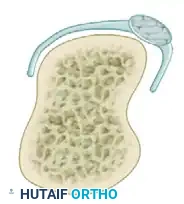
Centralization of the Hand: The Buck-Gramcko Technique for Radial Longitudinal Deficiency
Key Takeaway
The Buck-Gramcko centralization of the hand is a foundational surgical technique for correcting radial longitudinal deficiency. This procedure realigns the carpus over the distal ulna, balances deforming soft-tissue forces, and establishes a stable wrist. Key steps include extensive soft-tissue release, excision of the radial anlage, ulnar osteotomy for severe bowing, and precise tendon transfers to prevent recurrent radial deviation.
INTRODUCTION TO RADIAL LONGITUDINAL DEFICIENCY
Radial longitudinal deficiency (RLD), historically referred to as radial dysplasia or radial clubhand, represents a complex spectrum of congenital upper extremity anomalies. The condition is characterized by hypoplasia or complete absence of the radius and its associated preaxial soft-tissue structures, including the thumb, radial carpal bones, and radial musculature. The resulting pathoanatomy produces a severe radial and volar deviation of the hand, a shortened forearm, and a bowed ulna.
The primary goals of surgical intervention are to correct the severe radial deviation, balance the deforming muscular forces, stabilize the carpus on the distal ulna, and maximize the functional length of the upper extremity. The Buck-Gramcko Centralization technique remains a cornerstone in the operative management of Bayne and Klug Type III (partial absence of the radius) and Type IV (total absence of the radius) deficiencies. By centralizing the carpus directly over the distal ulnar epiphysis and meticulously transferring anomalous radial musculature to the ulnar aspect of the wrist, the surgeon can establish a stable fulcrum for digital flexion and extension while mitigating the high risk of recurrent deformity.
💡 Clinical Pearl: The Philosophy of Centralization
Centralization is not merely a skeletal realignment; it is a comprehensive soft-tissue reconstruction. The skeletal repositioning will inevitably fail if the volar-radial soft-tissue tether is not completely released and the deforming radial muscles are not transposed to act as ulnar stabilizers.
PREOPERATIVE EVALUATION AND INDICATIONS
Indications for Centralization
Surgical centralization is typically indicated for patients with Bayne and Klug Type III and IV RLD. The optimal timing for this procedure is between 6 and 12 months of age. Intervening during this window allows for the correction of the deformity before the soft-tissue contractures become rigidly fixed and before the ulnar bow becomes excessively pronounced. Furthermore, early centralization establishes a stable wrist foundation, which is a prerequisite for subsequent index finger pollicization (typically performed at 12 to 18 months of age).
Absolute Contraindications
Not all patients with RLD are candidates for centralization. The most critical contraindication is a severe elbow extension contracture.
🚨 Surgical Warning: The "Hand-to-Mouth" Rule
In patients with RLD, the severe radial deviation of the wrist often compensates for a stiff, extended elbow, allowing the child to reach their mouth for feeding. If the elbow lacks adequate passive and active flexion, centralizing the wrist will permanently deprive the patient of hand-to-mouth function. In such cases, centralization is strictly contraindicated.
Other contraindications include:
* Mild deformities (Bayne and Klug Types I and II), which may be managed with soft-tissue balancing or distraction osteogenesis.
* Older patients who have developed highly functional, adapted movement patterns that would be disrupted by altering their wrist mechanics.
* Patients with severe, life-limiting syndromic associations (e.g., severe manifestations of TAR, VACTERL, or Holt-Oram syndromes) where prolonged surgical interventions pose unacceptable anesthetic risks.
SURGICAL ANATOMY AND BIOMECHANICS
Operating on a radial clubhand requires a profound understanding of anomalous anatomy. The standard anatomical landmarks are highly unreliable in these patients.
- Neurovascular Anomalies: The radial artery is frequently absent or highly hypoplastic. The hand is typically perfused by the anterior and posterior interosseous arteries, and occasionally by a dominant ulnar artery. The median nerve is the most critical anomalous structure. It is often enlarged, superficial, and displaced radially, lying directly in the subcutaneous tissue where the radial nerve would typically be expected. It frequently provides the primary sensory innervation to the radial aspect of the hand.
- Musculotendinous Anomalies: The radial wrist extensors (Extensor Carpi Radialis Longus and Brevis) and flexors (Flexor Carpi Radialis) are often fused into a single, fibrotic muscle mass with poorly differentiated tendons. These structures act as a powerful deforming tether, pulling the hand into radial deviation.
- The Radial Anlage: In Type III and some Type IV deficiencies, a dense, fibrocartilaginous band—the radial anlage—extends from the proximal radius or lateral humerus down to the radial carpus. This anlage does not grow at the same rate as the ulna, acting as a rigid bowstring that causes the characteristic bowing of the ulna and progressive radial deviation of the hand.
THE BUCK-GRAMCKO SURGICAL TECHNIQUE: STEP-BY-STEP
1. Patient Positioning and Preparation
The procedure is performed under general anesthesia. The patient is positioned supine with the affected upper extremity extended on a radiolucent hand table. A well-padded pneumatic tourniquet is applied to the proximal arm. Prophylactic intravenous antibiotics are administered prior to tourniquet inflation. The entire upper extremity is prepped and draped in a standard sterile fashion, ensuring the iliac crest is also prepped in the rare event that bone grafting is required.
2. Incision and Superficial Dissection
- The S-Shaped Incision: Make a generous S-shaped or lazy-Z incision starting from the dorsum of the hand, crossing the wrist joint, and extending to the proximal third of the forearm. This extensile approach allows for complete visualization of the anomalous radial structures and the bowed ulna.
- Neurovascular Preservation: Proceed with extreme caution during the superficial dissection. Carefully identify and preserve the superficial vessels and nerves.
- The Median Nerve Hazard: Pay meticulous attention to identifying the most radial branch of the median nerve and its accompanying artery. Because it lies superficially on the radial border of the forearm, it is highly susceptible to iatrogenic transection during the initial skin incision.
3. Retinaculum and Tendon Management
- Extensor Retinaculum: Incise the extensor retinaculum from the radial side, reflecting it in an ulnar direction. This flap will be preserved and later utilized as an interpositional layer to prevent tendon adhesions.
- Tendon Identification: Identify and carefully mobilize the extensor tendons.
- Radial Muscle Detachment: Isolate the radial extensor and flexor muscles. In RLD, these muscles generally present as a common, fibrotic muscle mass with almost no distinct tendinous insertions. Detach this mass from the radial carpal bones. Occasionally, they may present with separate masses and true tendons; in such cases, detach them directly from their metacarpal insertions. These muscles will be transposed later to balance the wrist.
4. Capsular Release and Excision of the Radial Anlage
- Capsulotomy: Incise the dorsal and palmar joint capsules transversely. Carefully prepare one or two robust capsular flaps. These flaps are critical for constructing the new radiocarpal (now ulnocarpal) joint capsule.
- Ulnar Collateral Ligament: Identify and meticulously save the well-developed ulnar collateral ligament, which will be essential for stabilizing the centralized carpus.
- Soft-Tissue Excision: Excise the majority of the fibrosed, contracted tissue and anomalous muscle fasciae on the radial and volar aspects of the wrist. Failure to aggressively resect this tissue will prevent the extensive mobilization required to centralize the hand without placing undue tension on the neurovascular bundles.
- Excision of the Anlage: If a fibrocartilaginous anlage of the distal radius is present, it must be completely excised. Leaving the anlage intact will act as a persistent tether, preventing the distal and ulnar translation of the hand and guaranteeing recurrent deformity.
5. Preparation of the Distal Ulna and Osteotomy
- Ulnar Epiphyseal Preservation: Free the distal end of the ulna from its surrounding soft-tissue attachments.
- Vascular Care: It is of paramount importance to carefully preserve the cartilaginous ulnar head and all the small epiphyseal and metaphyseal arteries supplying it. Iatrogenic injury to the ulnar physis will result in premature growth arrest, severely compromising the final length of an already shortened forearm.
- Ulnar Osteotomy: Evaluate the curvature of the ulna. If marked volar or radial bowing is present (which is common due to the tethering effect of the anlage), a corrective osteotomy is mandatory. Perform a closing wedge osteotomy in the middle third of the ulna. This corrects the bow and allows for straight intramedullary wire fixation.
🔪 Surgical Pitfall: Ignoring the Ulnar Bow
Attempting to centralize a hand on a severely bowed ulna will result in immediate mechanical failure. The carpus will slide down the slope of the bowed ulna, leading to rapid recurrence of the radial clubhand deformity. Always perform a corrective ulnar osteotomy if the bow exceeds 30 degrees.
6. Carpal Positioning and Skeletal Fixation
- Reduction: Manually reduce the hand, positioning the radial carpal bones directly over the head of the ulna. The hand should be positioned in neutral extension and slight ulnar deviation (approximately 10 to 15 degrees) to overcorrect the deformity slightly.
- Kirschner Wire Fixation: Insert a stout Kirschner wire (typically 1.6 mm or 2.0 mm, depending on the child's size) in a retrograde fashion through the full length of the ulna. If an osteotomy was performed, the wire acts as the intramedullary fixation device for the osteotomy site.
- Distal Passage: Under fluoroscopic image control, advance the K-wire distally through the center of the ulnar epiphysis, through the radial carpal bones, and obliquely into the shaft of the second or third metacarpal. Ensure the wire does not penetrate the metacarpophalangeal joint.
7. Soft Tissue Reconstruction and Tendon Transfers
Skeletal fixation alone is insufficient; dynamic soft-tissue balancing is required to prevent recurrence.
* Capsuloligamentous Reconstruction: Suture the preserved ulnar ligaments and the capsular flaps to the periosteum of the distal ulna to create a new, robust collateral ligament complex. This provides static resistance against radial deviation.
* Tendon Transfers: Reinforce the ulnar side of the wrist by transposing the previously detached radial muscles (including the anomalous extensor carpi radialis and flexor carpi radialis masses).
* Routing and Fixation: Pass these transposed muscles between the ulna and the extensor tendons to the ulnar side of the wrist. Suture them end-to-side into the extensor carpi ulnaris (ECU) tendon.
* ECU Reefing: The ECU tendon itself is often redundant and stretched. It must be shortened by reefing (plication) to provide immediate resting tension that holds the hand in slight ulnar deviation.
8. Closure and Skin Management
- Retinaculum Interposition: Bring the previously reflected extensor retinaculum back over the radial carpal bones. Place it strategically between the newly reconstructed joint capsule and the overlying extensor tendons to provide a smooth gliding surface and prevent restrictive adhesions.
- Hemostasis and Skin Excision: Deflate the tourniquet and achieve meticulous hemostasis. Due to the realignment of the hand, there will be redundant, excess skin on the ulnar side of the wrist. Excise this excess skin carefully in an elliptical fashion.
- Nerve Protection: During skin excision, strictly preserve the dorsal sensory branch of the ulnar nerve.
- Wound Closure: Close the subcutaneous tissues with absorbable sutures and the skin with fine, interrupted absorbable sutures to avoid the need for suture removal in a pediatric patient.
POSTOPERATIVE CARE AND REHABILITATION
The success of the Buck-Gramcko centralization relies heavily on strict adherence to postoperative immobilization protocols.
- Immediate Postoperative Phase: Apply a well-padded, long-arm plaster splint or bivalved cast in the operating room. The elbow is immobilized in 90 degrees of flexion, and the forearm is maintained in neutral rotation with the wrist supported in the centralized position.
- Cast Duration: The initial cast is worn continuously for 3 to 4 weeks to allow for primary soft-tissue healing and consolidation of the ulnar osteotomy (if performed).
- Kirschner Wire Management: The intramedullary K-wire is typically left in place for a minimum of 4 to 6 weeks. In many institutional protocols, the wire is removed concurrently with the second stage of reconstruction—the pollicization of the second metacarpal—which is usually scheduled several months after the initial centralization.
- Long-Term Splinting: Following the removal of the K-wire and cast, the patient must be transitioned to a custom-molded thermoplastic night splint. Because the deforming forces of RLD are relentless during skeletal growth, night splinting is mandatory for several months, and often years, to prevent recurrent radial deviation.
COMPLICATIONS AND AVOIDANCE STRATEGIES
- Recurrent Radial Deviation: This is the most common complication, occurring in up to 50% of patients over their growth period. It is mitigated by aggressive initial soft-tissue release, complete excision of the radial anlage, adequate ulnar osteotomy, and meticulous tendon transfers. Prolonged night splinting is essential.
- Physeal Arrest of the Distal Ulna: Iatrogenic injury to the distal ulnar physis during dissection or K-wire placement can lead to premature growth arrest. The K-wire should be smooth, centrally placed, and passed through the physis as few times as possible.
- Neurovascular Injury: The anomalous superficial radial-median nerve is at high risk. A thorough understanding of RLD pathoanatomy and careful superficial dissection are required to prevent devastating sensory and motor deficits.
- Wrist Stiffness: While some loss of wrist motion is expected and even desired to achieve stability, severe stiffness can impair function. The interposition of the extensor retinaculum helps maintain tendon glide and optimize postoperative digital kinematics.
===END===
You Might Also Like