Advanced Bilateral Simultaneous THA: Uncemented Monobloc Case Title
Key Takeaway
Discover the latest medical recommendations for Advanced Bilateral Simultaneous THA: Uncemented Monobloc Case Title. A **case title bilateral** hip arthroplasty addresses severe conditions like advanced bilateral osteoarthritis, osteonecrosis, or rheumatoid arthritis. This often involves simultaneous total hip arthroplasty using components such as monobloc acetabular all poly or cemented implants. The goal is to restore function, alleviate pain from joint obliteration, and facilitate early rehabilitation and long-term prosthesis survival.
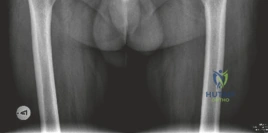
A 62-year-old male presents with chronic, bilateral groin pain and a 5-year history of worsening mobility. He has failed all conservative measures, including physical therapy and multiple injections. His Harris Hip Score is <50 bilaterally. Look at these radiographs. What is your diagnosis and primary management plan?
Candidate: The patient has end-stage primary osteoarthritis of both hips. I would recommend bilateral total hip arthroplasty given the severity of his pain and failure of non-operative treatment.
Failure to classify the disease (e.g., Tönnis grade), missing the "bilateral simultaneous vs. staged" debate, and omitting a structured justification for surgery. A candidate who doesn't mention the patient's fitness for a simultaneous procedure misses the key surgical decision-making aspect.
Identify bilateral Tönnis grade 3 osteoarthritis. Structure your answer by: 1. Diagnosis (Primary OA). 2. Indication for surgery (Failed conservative management + severe functional deficit). 3. Surgical decision (Propose simultaneous bilateral THA, provided he meets ASA II criteria, BMI <30, and lacks cardiac contraindications). 4. Briefly mention preoperative templating to ensure restoration of the center of rotation.
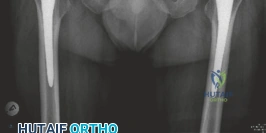
You have decided to proceed with an uncemented monobloc titanium stem. What are the biomechanical implications of choosing a monobloc stem versus a modular-neck design, and how does this affect your intraoperative workflow?
Candidate: Monobloc stems avoid modular junctions, which reduces the risk of fretting, corrosion, and trunnionosis. However, you can't adjust the neck length or offset after seating it, so you have to get the templating and bone cuts exactly right.
Failing to mention the specific anatomical requirements for a monobloc stem (e.g., reliance on Dorr Type A/B bone for press-fit) or neglecting to mention the importance of the initial femoral neck cut as a fixed reference point.
State clearly that monobloc designs eliminate the risk of Mechanically Assisted Crevice Corrosion (MACC) and trunnion fracture. Explain the trade-off: intraoperative inflexibility. Emphasize that because you cannot independently adjust version or offset post-seating, the surgeon must be precise with the initial femoral neck cut (measured from the lesser trochanter) and the rotational orientation during broaching.
The surgery is done. You are in the recovery room. What are your specific concerns regarding the "simultaneous" nature of this bilateral procedure, and what protocols must be in place to manage these?
Candidate: I'm worried about blood loss, DVT, and fat embolism. I would use TXA and aspirin for prophylaxis.
Incomplete list of risks. A failing candidate mentions blood loss but forgets to discuss the physiological stress of prolonged intramedullary reaming (fat embolism) or the importance of sterile field integrity (re-scrubbing and new instruments between sides).
Structure the response: 1. Hemodynamic/Systemic: Higher risk of blood loss (mitigated by IV Tranexamic Acid and spinal anesthesia) and Fat Embolism Syndrome (avoided by careful venting of the femoral canal). 2. Infection: Mandatory change of gowns, gloves, and instrument trays between sides. 3. VTE: Aggressive prophylaxis (Aspirin + SCDs). 4. Monitoring: Keep a low threshold for hemodynamic instability in the PACU.
