Diagnosis and Measurement of Forearm and Hand Compartment Syndrome
Key Takeaway
Forearm compartment syndrome is a surgical emergency requiring high clinical suspicion and prompt diagnosis. Early recognition relies on identifying pain out of proportion to the injury, exacerbated by passive muscle stretching. When clinical findings are equivocal, particularly in obtunded or pediatric patients, accurate intracompartmental pressure measurement using a handheld manometer or arterial line system is essential to prevent irreversible ischemic necrosis and Volkmann contracture.
INTRODUCTION TO UPPER EXTREMITY COMPARTMENT SYNDROME
Acute compartment syndrome (ACS) of the upper extremity is a devastating orthopaedic emergency characterized by elevated pressure within a closed osteofascial space. This elevated pressure compromises the arteriovenous gradient, leading to diminished capillary perfusion, subsequent tissue hypoxia, and ultimately, irreversible myoneural necrosis. A crush injury or fracture of the forearm or elbow—most notably supracondylar fractures of the humerus in pediatric populations and both-bone forearm fractures in adults—should immediately raise the clinician's index of suspicion for the development of a forearm compartment syndrome.
Early diagnosis of impending ischemia is absolutely essential. The window for intervention is narrow; irreversible muscle and nerve damage can occur within 4 to 6 hours of the onset of ischemia. Failure to recognize and promptly treat this condition results in Volkmann ischemic contracture, a debilitating condition characterized by fibrotic muscle replacement, severe joint contractures, and profound neurologic deficits.
🚨 SURGICAL WARNING: The "Classic" Signs are Late Signs
Relying on the classic "5 Ps" (Pain, Pallor, Pulselessness, Paresthesia, Paralysis) is a dangerous clinical pitfall. Pulselessness and paralysis are late, often irreversible signs of profound ischemia. The presence of a palpable radial or ulnar pulse does not rule out a compartment syndrome, as intracompartmental pressures rarely exceed systolic arterial pressure unless there is a concomitant direct arterial injury.
PATHOPHYSIOLOGY: THE TRAUMATIC ISCHEMIA-EDEMA CYCLE
Understanding the pathophysiology of compartment syndrome is critical for early diagnosis. The cascade of events leading to Volkmann contracture is best described as a self-perpetuating traumatic ischemia-edema cycle.
The cycle initiates with an inciting trauma (e.g., crush injury, fracture, or tight cast), which leads to primary arterial occlusion or arterial spasm. This results in immediate muscle ischemia. The hypoxic environment triggers a profound inflammatory cascade:
* Histamine Release: Ischemic tissues release histamine and other vasoactive mediators.
* Capillary Permeability: These mediators drastically increase capillary endothelial permeability.
* Intramuscular Edema: Plasma leaks into the interstitial space, creating significant intramuscular edema.
* Intramuscular Pressure Elevation: Because the fascial boundaries of the forearm and hand are relatively inelastic, the accumulating edema causes a rapid rise in intracompartmental pressure.
* Venous Obstruction: As tissue pressure surpasses venous pressure (typically around 8-10 mm Hg), venous and lymphatic outflow is compressed and obstructed, further exacerbating the edema.
* Vasospastic Antidromic Reflex: The escalating pressure and ischemia trigger a vasospastic antidromic reflex, further reducing arterial inflow and completing the vicious cycle.
If this cycle is not interrupted by surgical fasciotomy, the end result is complete myoneural necrosis.
CLINICAL EVALUATION AND DIAGNOSIS
The diagnosis of compartment syndrome is primarily clinical, demanding serial examinations by an experienced clinician.
Early Clinical Indicators
- Pain Out of Proportion: Increasing pain out of proportion to the primary injury is the most sensitive and reliable early indicator of an impending compartment syndrome. The pain is typically described as deep, unremitting, and poorly localized.
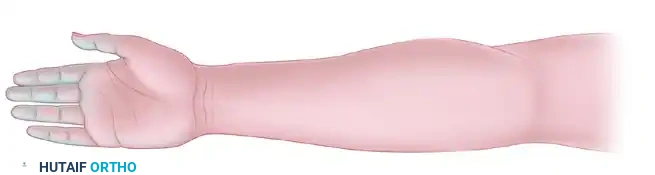
- Pain with Passive Stretch: Exacerbation of pain with passive stretching of the muscles traversing the involved compartment is a hallmark sign. For example, passive extension of the fingers and wrist will stretch the ischemic flexor digitorum profundus and superficialis, eliciting severe pain in a volar forearm compartment syndrome.
- Palpable Tension: The volar and/or dorsal forearm will feel exquisitely tender, tense, and "wood-like" upon palpation.
Neurologic Assessment
Sensibility of the fingertips may be diminished early in the ischemic process due to nerve compression and hypoxia.
* Two-Point Discrimination: Normal static two-point discrimination is typically less than 5 mm. An increase in this distance suggests nerve ischemia.
* Vibratory Testing: Utilizing a 256-Hz tuning fork for vibratory testing can be highly sensitive for detecting early nerve ischemia, often preceding changes in two-point discrimination or light touch.
Diagnosing Hand Compartment Syndrome
The diagnosis of a compartment syndrome within the individual interosseous muscles of the hand can be particularly challenging. The hand contains 10 distinct compartments: four dorsal interossei, three volar interossei, the thenar compartment, the hypothenar compartment, and the adductor pollicis compartment.
* Clinical Presentation: The hand appears massively swollen and tense. The fingers are typically held almost rigid in a partially flexed position (intrinsic minus position) with the wrist in neutral.
* Provocative Testing: Any passive movement of the fingers that causes metacarpophalangeal (MCP) joint extension stretches the intrinsic muscles and usually causes considerable, agonizing pain.
* Adductor Pollicis Evaluation: The adductor compartment of the thumb can be tested by pulling the thumb into maximal palmar abduction, thereby stretching the adductor muscle belly.
* Thenar/Hypothenar Involvement: While possible, the thenar and hypothenar muscles are rarely involved in isolation and are usually part of a massive crush injury to the entire hand.
Special Populations: Pediatric and Obtunded Patients
Diagnosis in obtunded, intubated, or pediatric patients is exceedingly difficult due to the inability to obtain a reliable pain assessment.
* Pediatric Considerations: In children, increasing anxiety, agitation, and an escalating requirement for analgesics (the "3 As") should be treated as compartment syndrome until proven otherwise.
* Neonatal Presentation: Compartment syndrome in a neonate is rare but may manifest uniquely as a sentinel bullous or ulcerative skin lesion, usually located over the dorsum of the forearm, wrist, or hand. This is a pathognomonic sign of severe underlying tissue ischemia and impending necrosis.
OBJECTIVE DIAGNOSIS: INTRACOMPARTMENTAL PRESSURE (ICP) MONITORING
When a compartment syndrome is clinically suspected but the examination is equivocal—or when dealing with an obtunded, polytraumatized, or pediatric patient—intracompartmental pressures (ICP) must be obtained to confirm the diagnosis.
Diagnostic Thresholds
All involved compartments should be measured, and the results must be interpreted strictly within the context of the overall clinical picture.
* Absolute Pressure: Historically, an absolute compartment pressure greater than 30 mm Hg has been used as an indicator for fasciotomy.
* Delta Pressure (ΔP): Modern orthopaedic practice heavily favors the "Delta Pressure" concept, which accounts for the patient's systemic perfusion pressure. The Delta Pressure is calculated as the Diastolic Blood Pressure minus the Compartment Pressure (ΔP = DBP - ICP). A Delta Pressure of less than 20 to 30 mm Hg is highly indicative of compartment syndrome and is an absolute indication for emergent fasciotomy.
💡 CLINICAL PEARL: The Importance of Delta Pressure
A hypotensive trauma patient with a diastolic blood pressure of 50 mm Hg and a compartment pressure of 25 mm Hg has a Delta P of 25 mm Hg, placing them at severe risk for ischemic necrosis despite the absolute pressure being under 30 mm Hg. Conversely, a hypertensive patient with a diastolic of 100 mm Hg and a compartment pressure of 40 mm Hg (Delta P = 60 mm Hg) may be adequately perfusing the limb. Always calculate the Delta P.
Measurement Modalities and Equipment
Several techniques have been developed to measure ICP.
* The Whitesides Technique (1975): Described by Whitesides et al., this classic technique utilizes an 18-gauge needle, a saline-filled syringe, a three-way stopcock, and a mercury manometer. While historically significant, it is cumbersome and largely obsolete in modern trauma bays.
* Arterial Line Monitoring System: This system utilizes a standard arterial line transducer connected to a monitor. Boody et al. compared various systems and found that an arterial line manometer paired with a slit catheter was the most accurate technique. The slit catheter prevents soft tissue from occluding the tip, a common problem with straight needles. This system is highly useful if continuous monitoring of a high-risk compartment is desired in the intensive care unit.
* Handheld Pressure Monitoring Device (e.g., Stryker): This is currently the preferred and most commonly utilized method for rapid, single-point intracompartmental pressure determination. It is highly accurate, portable, and user-friendly. Studies have shown that while side-port needles and slit catheters are the most accurate, straight needles tend to slightly overestimate the pressure, which is an acceptable safety margin in suspected ACS.
SURGICAL TECHNIQUE: MEASURING FOREARM AND HAND COMPARTMENT PRESSURES
The following protocol details the precise methodology for utilizing a handheld pressure monitoring device (Stryker) to measure upper extremity compartments, adapted and expanded from the techniques of Lipschitz and Lifchez.
Equipment Preparation and Calibration
- Assembly: Place the specialized needle firmly onto the chamber stem of the handheld device. Insert the prefilled saline syringe into the remaining chamber stem. Firmly seat the entire chamber into the device housing.
- Purging: Hold the needle at a 45-degree angle from the horizontal plane. Gently depress the syringe plunger to purge the system of all excess air. Air bubbles in the fluid column will dampen the pressure wave and yield falsely low readings.
- Calibration: Turn the unit on; the initial reading should display between 0 and 9 mm Hg. Press the "ZERO" button to calibrate the system. The display must read "00" before proceeding.
Step-by-Step Measurement Protocol
General Principles:
* Positioning: Place the compartment to be measured exactly at the level of the patient's heart to negate hydrostatic pressure artifacts.
* Local Anesthesia: Use adequate local analgesia (e.g., 1% Lidocaine without epinephrine). Crucial Step: Infiltrate the local anesthetic into the skin only. Strictly avoid injecting into the underlying fascia or muscle, as adding volume to the closed space will cause iatrogenic pressure spikes and false-positive readings.
* Injection Volume: Once the needle is inserted into the desired compartment, inject no more than 0.3 mL of saline to clear the needle tip and create a fluid continuum. Injecting larger volumes will artificially elevate the compartment pressure.
1. Measuring the Volar Compartment (Superficial and Deep)
* Anatomy: The volar forearm contains the superficial flexors (FCR, FCU, PL, FDS) and the deep flexors (FDP, FPL, PQ). The deep compartment is most frequently involved and sustains the most severe ischemic damage.
* Technique: Insert the needle just ulnar to the palmaris longus tendon at the junction of the proximal and middle thirds of the forearm. Advance to a depth of 1 to 2 cm to access the superficial compartment, and 3 to 4 cm to access the deep compartment.
* Confirmation: Confirm proper needle depth and placement by observing a transient rise in pressure on the monitor during manual external compression of the volar forearm or during passive extension of the patient's fingers.
2. Measuring the Dorsal Compartment
* Anatomy: Contains the extensor digitorum communis, extensor digiti minimi, extensor carpi ulnaris, and the deep outcropping muscles.
* Technique: Insert the needle just radial to the palpable subcutaneous border of the ulna, approximately 4 to 5 cm distal to the olecranon. Advance to a depth of 1 to 2 cm.
* Confirmation: Verify placement by passively flexing the wrist and fingers, noting a pressure spike on the monitor.
3. Measuring the Mobile Wad
* Anatomy: Contains the brachioradialis, extensor carpi radialis longus, and extensor carpi radialis brevis.
* Technique: Insert the needle directly into the palpable muscle mass of the mobile wad, approximately 2 cm distal to the lateral epicondyle of the humerus.
4. Measuring Hand Compartments
* Note: Digital pressures are not routinely obtained, as the fingers do not contain true closed muscle compartments in the same anatomical sense, though they can suffer from tight fascial bands.
* Interosseous Compartments: Insert the needle dorsally between the metacarpals. Advance carefully through the dorsal fascia into the interosseous muscle belly.
* Thenar Compartment: Insert the needle into the glabrous skin of the thenar eminence, directing it toward the center of the muscle mass.
* Hypothenar Compartment: Insert the needle into the hypothenar eminence, avoiding the ulnar neurovascular bundle in Guyon's canal.
* Adductor Pollicis: Insert the needle into the first web space, directing it proximally and ulnarly into the adductor muscle belly.
POST-MEASUREMENT PROTOCOL AND DECISION MAKING
Once all relevant compartments have been measured, the data must be synthesized immediately.
1. Document All Values: Record the absolute pressure of each compartment, the patient's current diastolic blood pressure, and the calculated Delta Pressure.
2. Equivocal Results: If the clinical picture is highly suspicious but the initial pressures are borderline (e.g., Delta P of 35 mm Hg), leave an arterial line slit catheter in place for continuous monitoring, or repeat the handheld measurements every 1 to 2 hours.
3. Definitive Diagnosis: If the Delta Pressure falls below 30 mm Hg, or if absolute pressures exceed 30 mm Hg in a normotensive patient with corroborating clinical signs, the diagnosis of acute compartment syndrome is confirmed.
4. Surgical Intervention: The patient must be transported immediately to the operating room for emergent decompressive fasciotomies. In the forearm, this typically requires an extensive volar approach (e.g., Henry or ulnar approach extending across the carpal tunnel) and a separate dorsal approach to ensure all fascial envelopes, including the mobile wad, are completely released.
Delaying surgical intervention while waiting for "classic" signs to appear or for pressures to rise further is a catastrophic error that will inevitably lead to irreversible myoneural necrosis and severe functional impairment of the upper extremity.
You Might Also Like