Decoding Pilon Fractures: Anterolateral and Medial Fragments Revealed
Key Takeaway
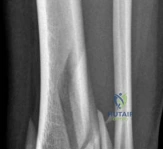
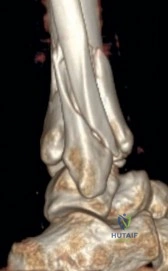
Your ultimate guide to Decoding Pilon Fractures: Anterolateral and Medial Fragments Revealed starts here. A metaphyseal fracture with joint involvement is a displaced, multifragmentary distal tibia fracture with articular involvement, often seen with an associated fibular fracture and tibiotalar joint dislocation. Imaging reveals displaced posterior, anterolateral, and medial fragments, causing intraarticular step-off and gap, which compromises the tibiotalar joint.
Comprehensive Introduction and Patho-Epidemiology
The management of severe fractures of the distal tibial plafond, commonly referred to as pilon fractures, remains one of the most formidable challenges in orthopedic trauma surgery. These injuries are characterized by disruption of the weight-bearing articular surface of the distal tibia, typically accompanied by varying degrees of metaphyseal comminution and severe soft tissue compromise. The term "pilon," derived from the French word for pestle, accurately captures the pathomechanics of this injury, wherein the talus acts as a high-energy pestle driving into the distal tibial metaphysis. Understanding the nuances of these fractures is paramount for the orthopedic surgeon, as the margin for error is exceptionally narrow, and the consequences of mismanagement are frequently devastating, leading to rapid post-traumatic osteoarthritis, deep infection, and occasionally, amputation.
Epidemiologically, pilon fractures account for approximately 1% to 10% of all lower extremity fractures and represent a bimodal distribution in the general population. High-energy mechanisms, such as motor vehicle collisions or falls from significant heights, predominantly affect younger patients, often males in their third or fourth decades of life. These high-energy injuries are frequently associated with polytrauma and present with severe articular impaction, multi-fragmentary metaphyseal patterns, and profound soft tissue injury, including fracture blisters, acute compartment syndrome, or open wounds. Conversely, low-energy rotational mechanisms, such as slipping on ice or minor falls, tend to affect older, often osteoporotic females. These low-energy injuries typically result in spiral fracture patterns with less severe articular comminution and a more forgiving soft tissue envelope.


The Illustrative Clinical Case
To contextualize the complexity of these injuries, consider the quintessential presentation of a 38-year-old female who sustained a high-energy trauma following a motor vehicle accident. The patient presented to the emergency department with immediate, excruciating pain and a grossly deformed left lower extremity. Initial radiographic evaluation revealed a highly displaced metaphyseal fracture of the distal tibia with severe articular involvement, classified as an AO/OTA 43C3.3(5b) injury. This specific classification denotes a complete articular, multifragmentary metaphyseal fracture, representing the most severe end of the pilon spectrum. Furthermore, the injury was complicated by a concomitant long oblique fibular fracture (AO/OTA 4F3B) and a posterior dislocation of the tibiotalar joint.
Despite the fracture being closed, the severe displacement and posterior dislocation placed immense tension on the already traumatized anterior soft tissue envelope. In such high-energy scenarios, immediate definitive internal fixation is contraindicated due to the unacceptably high risk of catastrophic soft tissue failure. Instead, the patient underwent emergent closed reduction and application of a temporary ankle-spanning external fixator. This intervention successfully stabilized the fracture, restored limb length, and neutralized the deforming forces on the soft tissues, allowing the critical swelling to subside. Post-fixation radiographs demonstrated significantly improved alignment, setting the stage for the crucial next step: high-resolution computed tomography (CT) scanning to decode the complex fracture morphology.


Detailed Surgical Anatomy and Biomechanics
A profound mastery of the surgical anatomy and biomechanics of the distal tibia and surrounding structures is non-negotiable for the orthopedic surgeon attempting to reconstruct a pilon fracture. The distal tibia flares out to form the plafond, a highly congruent and specialized articular surface that interfaces with the talar dome. Unlike the knee or hip, the ankle joint possesses relatively thin articular cartilage (approximately 1 to 1.5 mm thick). This thin cartilage is highly sensitive to incongruity; biomechanical studies have demonstrated that even a 1 mm articular step-off can decrease the contact area of the tibiotalar joint by up to 42%, leading to exponential increases in peak contact stresses and rapid cartilage degradation.
The structural integrity of the distal tibia is classically conceptualized as a three-column or three-fragment model: the medial malleolus, the anterolateral (Chaput) fragment, and the posterolateral (Volkmann) fragment. The medial column provides crucial varus stability and is anchored by the robust deltoid ligament complex. The anterolateral fragment serves as the attachment site for the anterior inferior tibiofibular ligament (AITFL), while the posterolateral fragment is tethered by the posterior inferior tibiofibular ligament (PITFL). In high-energy pilon fractures, the talus frequently cleaves the plafond into these three primary fragments, often with a central area of severe impaction (the "die-punch" fragment) that is devoid of soft tissue attachments and driven deep into the metaphysis.


Soft Tissue Envelope and Angiosomes
Equally critical to the osseous anatomy is the tenuous soft tissue envelope surrounding the distal tibia. The distal third of the tibia is notoriously devoid of robust muscular coverage, lying directly subcutaneous anteriorly and medially. The vascular supply to this region is highly compartmentalized into distinct angiosomes fed by the anterior tibial, posterior tibial, and peroneal arteries. The anterior tibial artery supplies the anterolateral skin, the posterior tibial artery supplies the posteromedial skin, and the peroneal artery supplies the posterolateral skin.
Surgical approaches must be meticulously planned to respect these angiosomes and their choke vessels. Incisions placed directly over the anterior crest of the tibia or too close to one another can devascularize large segments of skin, leading to full-thickness necrosis. A fundamental rule in pilon surgery is to maintain a minimum skin bridge of 7 centimeters between parallel incisions. Furthermore, the timing of surgical intervention is entirely dictated by the physiological state of this soft tissue envelope. Operating through edematous, blistered skin drastically increases the rate of deep infection. Surgeons must patiently wait for the resolution of edema, clinically indicated by the appearance of skin wrinkles (the "wrinkle sign") and the re-epithelialization of fracture blisters, which typically takes 10 to 21 days post-injury.


Exhaustive Indications and Contraindications
The decision-making process regarding the surgical management of pilon fractures is complex and must be highly individualized, weighing the necessity of anatomic articular restoration against the risks of surgical morbidity. The primary goal of intervention is to restore the mechanical axis of the lower extremity, achieve a stable and congruent tibiotalar joint, and allow for early range of motion, all while minimizing soft tissue complications. While the vast majority of displaced pilon fractures warrant surgical stabilization, the timing, approach, and specific implants utilized vary drastically based on patient and injury factors.
Indications for operative management generally include any displaced articular fracture with a step-off or gap exceeding 2 millimeters, unacceptable axial alignment (varus/valgus deformity > 5 degrees, anterior/posterior angulation > 10 degrees), open fractures, and fractures associated with compartment syndrome or vascular injury. In high-energy patterns, such as the AO/OTA 43C3.3 injury described in our illustrative case, non-operative management is universally associated with catastrophic outcomes, including severe deformity, stiffness, and debilitating pain. The staged "span, scan, and plan" protocol is now the unequivocal gold standard for these high-energy injuries, significantly reducing the historical complication rates associated with acute, immediate internal fixation.


Decision Making in Acute Trauma
Contraindications to definitive internal fixation must be rigorously respected to avoid limb-threatening complications. Absolute contraindications include active deep infection, a critically ischemic limb that cannot be revascularized, and a medically unstable polytrauma patient who cannot tolerate prolonged anesthesia (damage control orthopedics applies here). Relative contraindications are more nuanced and often dictate a shift from internal to external fixation strategies. These include severe peripheral neuropathy (e.g., Charcot arthropathy), profound peripheral vascular disease, uncontrolled diabetes mellitus, and severe patient non-compliance. In patients with exceptionally poor soft tissue envelopes or those who are non-ambulatory at baseline, primary arthrodesis or definitive management in a fine-wire circular external fixator (e.g., Ilizarov or Taylor Spatial Frame) may be the most prudent course of action.
| Category | Indications for Surgical Intervention | Contraindications to Internal Fixation |
|---|---|---|
| Absolute | Open fractures, Vascular compromise, Compartment syndrome | Active infection, Non-reconstructable vascular injury, Medically unstable patient |
| Radiographic | Articular step-off > 2mm, Varus/Valgus > 5°, Malrotation | Non-displaced fractures (rare in high energy), Pre-existing severe osteoarthritis |
| Patient Factors | High functional demand, Polytrauma requiring early mobilization | Severe peripheral neuropathy, Uncontrolled diabetes, Non-ambulatory baseline |
| Soft Tissue | Resolved edema ("wrinkle sign" present), Healed blisters | Acute swelling, Unresolved fracture blisters, Active skin necrosis |


Pre-Operative Planning, Templating, and Patient Positioning
The success of pilon fracture surgery is largely determined before the first incision is ever made. Meticulous pre-operative planning is the cornerstone of the staged protocol. The initial phase, as demonstrated in our 38-year-old female patient, involves the urgent application of an ankle-spanning external fixator. This delta frame or transarticular construct must be applied with care to ensure the pins are placed outside the zone of future surgical incisions. Typically, centrally threaded half-pins are placed in the tibial diaphysis and a transfixion pin is placed through the calcaneal tuberosity. Once length and alignment are provisionally restored, the limb is elevated, and the waiting period begins.
During this waiting period, advanced imaging is obtained. While plain radiographs (AP, lateral, and mortise views) provide a general overview of the fracture pattern, a fine-cut CT scan with 2D multiplanar reconstructions (axial, coronal, sagittal) and 3D surface rendering is absolutely mandatory. The CT scan allows the surgeon to "decode" the fracture. The surgeon must identify the primary fracture lines, the location and size of the anterolateral (Chaput), medial, and posterior (Volkmann) fragments, and locate the central impacted die-punch fragments. In our illustrative case, the CT revealed severe intraarticular step-off, a wide gap, and a multifragmentary metaphyseal void that would require bone grafting.


Patient Positioning and Operating Room Setup
Based on the CT findings, the surgeon templates the fracture reduction sequence and selects the appropriate implants. Modern anatomically contoured locking plates have revolutionized pilon fixation, offering specific designs for the anterolateral, medial, and posterior columns. Templating involves drawing the fracture fragments on digital software, planning the trajectory of lag screws to avoid intersection, and choosing plates that will adequately bridge the metaphyseal comminution without causing soft tissue prominence.
Patient positioning is dictated by the planned surgical approaches, which are in turn dictated by the location of the major articular fracture lines and the necessity for posterior column fixation. If a posterolateral or posteromedial approach is required to address a displaced Volkmann fragment, the patient is typically positioned prone. Once the posterior column is stabilized, the patient may be flipped supine for the anterior approaches. Alternatively, a floppy lateral position can allow access to both the posterolateral and anterolateral aspects of the ankle without repositioning. A radiolucent table is mandatory, and the fluoroscopy unit (C-arm) must be positioned to allow unhindered AP, lateral, and mortise imaging throughout the procedure. A sterile tourniquet is applied to the proximal thigh, though its use should be minimized to reduce ischemic time to the already traumatized soft tissues.


Step-by-Step Surgical Approach and Fixation Technique
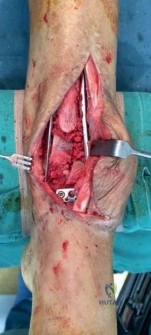
The surgical execution of pilon fracture reconstruction requires a highly methodical, step-by-step approach. The choice of incision is paramount. The anterolateral approach is the workhorse for pilon fractures, providing excellent exposure of the Chaput fragment, the central articular surface, and the distal fibula. The incision is made in line with the fourth ray, lateral to the peroneus tertius tendon, taking care to identify and protect the superficial peroneal nerve. The anteromedial approach is utilized for medial column injuries, placed just lateral to the tibial crest to avoid the saphenous nerve and vein. When both approaches are necessary, the strict 7 cm skin bridge rule must be enforced.
The sequence of fixation typically begins with the fibula, though this is a subject of ongoing debate. Historically, rigid fixation of the fibula was advocated to restore the lateral column length and correct valgus deformity. However, in cases of severe medial comminution, fixing the fibula first can inadvertently lock the tibia in varus or prevent adequate visualization of the lateral tibial articular surface. In our illustrative case, the patient had a long oblique fibular fracture (4F3B). If the fibula is addressed, it is often fixed with a bridging plate to preserve the soft tissue envelope around the fracture site. Once lateral length is established, attention turns to the tibial plafond.


Articular Reconstruction and Metaphyseal Fixation
The reconstruction of the articular surface is the most technically demanding portion of the procedure. The joint is opened, and the fracture hematoma is evacuated. A femoral distractor or external fixator can be utilized to maintain joint distraction, providing a clear view of the articular surface. The reduction proceeds from posterior to anterior or lateral to medial, depending on the intact reference fragment. The central die-punch fragments are elevated using a bone tamp, and the resulting metaphyseal void is filled with autograft, allograft, or synthetic bone substitutes to prevent delayed subsidence. The Chaput fragment is then reduced to the Volkmann and medial fragments, and the articular block is provisionally held with multiple smooth Kirschner wires.
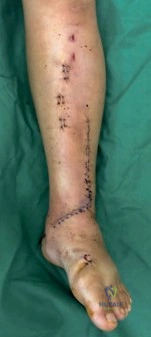
Once the articular block is reconstructed and anatomically verified via direct visualization and multi-planar fluoroscopy, it must be rigidly attached to the tibial diaphysis. This is typically achieved using anatomically contoured locking plates. The plates are applied in a bridging fashion over the zone of metaphyseal comminution to preserve the fracture hematoma and periosteal blood supply. Screws in the articular block must be placed carefully to support the subchondral bone without penetrating the joint space. Soft tissue handling throughout the procedure must adhere to strict "no-touch" techniques; retractors should be placed subperiosteally, and skin edges must never be crushed with forceps. Closure is performed in layers over a suction drain, and a well-padded splint is applied.


Complications, Incidence Rates, and Salvage Management
Despite meticulous surgical technique and adherence to staged protocols, the complication rates for high-energy pilon fractures remain dauntingly high. The most devastating acute complications are related to the soft tissue envelope. Wound dehiscence, marginal skin necrosis, and deep surgical site infections occur in approximately 10% to 15% of cases, even with delayed fixation. When deep infection occurs, it often involves the hardware and the devascularized metaphyseal bone, leading to infected nonunions. Management requires aggressive serial debridements, hardware removal (once the fracture is sticky or via conversion to a circular external fixator), targeted intravenous antibiotic therapy, and frequently, soft tissue coverage with local rotational flaps or free tissue transfer (e.g., anterolateral thigh or latissimus dorsi flaps).
Post-traumatic osteoarthritis (PTOA) is the most common long-term complication, developing in up to 50% to 70% of high-energy pilon fractures within two to five years post-injury. This occurs despite anatomically perfect radiographic reductions, as the initial impact causes irreversible chondrocyte apoptosis and mechanical damage to the extracellular matrix of the cartilage. Patients present with progressive pain, stiffness, and radiographic evidence of joint space narrowing, subchondral sclerosis, and osteophyte formation. Nonunion and malunion are also significant concerns, particularly in the metaphyseal region where comminution is severe and blood supply is tenuous.


Soft Tissue and Infectious Complications
When joint preservation fails due to severe PTOA or intractable pain, salvage procedures must be employed. The gold standard salvage operation for end-stage pilon-induced arthritis is a tibiotalar arthrodesis (ankle fusion). If the subtalar joint is also involved or if there is significant bone loss requiring a structural graft, a tibiotalocalcaneal (TTC) arthrodesis utilizing an intramedullary retrograde nail may be necessary. In highly selected, older patients with low physical demands and well-aligned joints, total ankle arthroplasty (TAA) is emerging as a potential salvage option, though its use in post-pilon anatomy remains highly controversial due to the altered biomechanics, compromised soft tissues, and high risk of failure. In cases of recalcitrant infection, massive bone loss, or chronic debilitating pain that fails multiple reconstructive attempts, a below-knee amputation (BKA) may ultimately be required to restore the patient's functional independence.
| Complication | Estimated Incidence | Primary Management / Salvage Strategy |
|---|---|---|
| Wound Dehiscence / Necrosis | 10% - 15% | Local wound care, VAC therapy, Rotational/Free flap coverage |
| Deep Infection | 5% - 10% | Serial debridement, Hardware removal, Ex-fix conversion, IV antibiotics |
| Post-Traumatic Osteoarthritis | 50% - 70% | NSAIDs, Bracing, Injections -> Tibiotalar or TTC Arthrodesis |
| Nonunion / Malunion | 5% - 15% | Revision ORIF, Bone grafting, Osteotomy for realignment |
| Amputation (End-stage) | 1% - 3% | Below-Knee Amputation (BKA) with customized prosthetic fitting |


Phased Post-Operative Rehabilitation Protocols
The surgical fixation of a pilon fracture is merely the first step in a prolonged and arduous journey toward functional recovery. Post-operative rehabilitation must be meticulously phased, balancing the biomechanical need to protect the tenuous osseous fixation with the biological imperative to mobilize the joint and nourish the articular cartilage. The rehabilitation protocol is generally divided into four distinct phases, though progression must be tailored to the individual patient's fracture pattern, bone quality, and radiographic evidence of healing.
Phase 1 encompasses the acute post-operative period (0 to 2 weeks). Immediately following surgery, the limb is immobilized in a bulky, well-padded posterior splint with the ankle in neutral dorsiflexion to prevent equinus contracture. Strict elevation above the level of the heart is mandatory to combat edema, and the patient is maintained on a strict non-weight-bearing (NWB) status. Pain management, deep vein thrombosis (DVT) prophylaxis, and monitoring of the soft tissue envelope are the primary clinical focuses during this initial phase.


Weight-Bearing Progression and Long-Term Conditioning
Phase 2 begins at the first post-operative visit (typically 2 weeks), coinciding with suture removal. If the incisions are fully healed, the patient is transitioned to a removable controlled ankle motion (CAM) boot. The critical shift in this phase is the initiation of early, active range of motion (ROM) exercises out of the boot multiple times a day. This early motion is vital for preventing arthrofibrosis and promoting synovial fluid circulation, which is the sole source of nutrition for the healing articular cartilage. However, strict NWB status is maintained.
Phase 3 (6 to 12 weeks) marks the transition to weight-bearing, contingent upon radiographic evidence of bridging callus at the metaphyseal fracture sites. Weight-bearing is progressed slowly, typically starting at 20% of body weight and increasing by 20% each week, utilizing a scale for patient feedback. Physical therapy intensifies, focusing on aggressive active and passive ROM, intrinsic foot muscle strengthening, and early proprioceptive training. Phase 4 (3 to 6 months and beyond) involves the transition to full weight-bearing in regular footwear, advanced gait training, and the gradual return to occupational and recreational activities. Patients must be counseled that maximal medical improvement frequently takes 12 to 18 months, and some
Clinical & Radiographic Imaging Archive