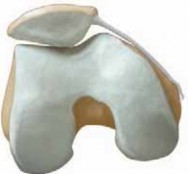
Proximal Patellar Realignment: Stop Instability, Regain Knee Function
Key Takeaway
Learn more about Proximal Patellar Realignment: Stop Instability, Regain Knee Function and how to manage it. **Proximal patellar realignment** is a surgical procedure addressing patellofemoral joint instability, a primary cause of pain and dysfunction in children and young adults. It targets recurrent dislocations or persistent instability feelings, often stemming from injuries like medial patellofemoral ligament disruption. The surgery is indicated for confirmed instability through examination, rather than solely for pain.
Introduction and Epidemiology
Patellofemoral instability represents a significant and challenging clinical entity, predominantly affecting pediatric, adolescent, and young adult populations. It is a major cause of anterior knee pain, mechanical dysfunction, and long term articular cartilage degradation. The spectrum of patellofemoral instability ranges from recurrent micro-subluxations to acute, traumatic lateral patellar dislocations. Proximal patellar realignment, primarily through the reconstruction or repair of the medial patellofemoral ligament, has emerged as the cornerstone of surgical management for patients failing conservative therapy or those presenting with distinct surgical indications following an acute dislocation.
Instability or dislocations may occur in individuals with generalized ligamentous laxity (such as those with Ehlers-Danlos or Marfan syndrome) or in highly athletic, non-lax individuals. Epidemiological data suggests that patients without generalized ligamentous laxity are significantly more likely to sustain structural damage to the medial capsuloligamentous complex and surrounding chondral surfaces during a dislocation event. Injuries sustained to the medial aspect of the patellofemoral joint typically result in the disruption of the medial patellofemoral ligament, with or without concomitant stretching or tearing of the medial retinaculum. Left untreated, this structural incompetence may lead to persistent pain, recurrent instability, and eventual patellofemoral osteoarthritis.

Pathogenesis of Patellar Instability
The onset of patellofemoral instability can be classified as either traumatic or atraumatic. In the young athletic population, traumatic dislocations frequently occur during a valgus twisting maneuver, such as swinging a baseball bat while pivoting, or cutting maneuvers in football and soccer. It may also precipitate from a direct blow to the medial aspect of the patella while the knee is in a flexed, valgus position. Similar to acute anterior cruciate ligament ruptures, patients frequently report an audible or palpable “pop” at the time of injury. If the patella completely dislocates and remains laterally translated, the patient will present with an obvious clinical deformity and an inability to actively extend the knee joint.
Natural History and Recurrence Rates
The natural history of patellofemoral instability is heavily influenced by the initial mechanism of injury and the patient's underlying anatomy. Patients presenting with an atraumatic onset of instability generally exhibit a higher likelihood of recurrent episodes, despite aggressive physical therapy and functional bracing. Conversely, patients with a traumatic onset may sustain osteochondral fractures or generate intra-articular loose bodies during the subluxation or relocation phase. The presence of an intra-articular loose body is an absolute indication for acute surgical intervention. The management of first-time traumatic dislocators without loose bodies or massive osteochondral defects remains a subject of debate, though current consensus heavily weighs patient-specific anatomical risk factors when considering early proximal realignment.
Surgical Anatomy and Biomechanics
A profound understanding of the medial and lateral restraints of the patellofemoral joint is mandatory for successful proximal realignment. The patellofemoral joint relies on a complex interplay of static (ligamentous and bony) and dynamic (musculotendinous) stabilizers.
Medial Patellofemoral Ligament Anatomy
The medial restraints are predominantly composed of the medial retinaculum and the medial patellofemoral ligament. Biomechanical studies demonstrate that the medial patellofemoral ligament provides 40% to 60% of the total resistance to lateral patellar translation, particularly in the first 0 to 30 degrees of knee flexion before the patella fully engages the trochlear groove.

The medial patellofemoral ligament is a distinct fascial band, approximately 15 mm in width. It originates from the medial epicondylar region of the femur, specifically located in a saddle area between the adductor tubercle and the medial epicondyle, just proximal to the origin of the superficial medial collateral ligament. This femoral footprint is located distal to the vastus medialis obliquus insertion into the quadriceps tendon and anterior to the medial intermuscular septum. Distally, the ligament fans out to insert onto the proximal half of the medial patellar border, extending approximately 10 to 15 mm distal to the superior pole of the patella, near its widest portion.
Bony Morphology and Lower Extremity Alignment
The bony anatomy and global alignment of the lower extremities must be critically evaluated. The quadriceps angle (Q-angle) represents the force vector of the extensor mechanism; an abnormally elevated Q-angle increases the lateral translational force vector acting on the patella. Furthermore, the clinician must evaluate for the presence of "miserable malalignment syndrome," a complex rotational deformity characterized by excessive femoral anteversion coupled with compensatory external tibial torsion and varus alignment of the knees.

Trochlear dysplasia is another critical bony factor. A deficient lateral femoral slope of the trochlear groove significantly decreases the threshold force required to laterally translate or dislocate the patella. The Dejour classification is utilized to quantify the severity of trochlear dysplasia, ranging from a shallow groove (Type A) to a convex trochlea with a supratrochlear spur (Type D).
Biomechanics of Patellofemoral Tracking
In early flexion (0 to 20 degrees), the patella is largely dependent on the soft tissue restraints, primarily the medial patellofemoral ligament, as it has not yet engaged the bony stability of the trochlea. As flexion increases beyond 30 degrees, the patella enters the trochlear groove, and bony architecture becomes the primary stabilizer. Therefore, medial patellofemoral ligament insufficiency is most clinically evident in early flexion, leading to the classic "J-sign" where the patella subluxates laterally as the knee approaches full extension. The lateral retinaculum may also exhibit pathological tightness, characterized by less than 12 mm of medial translation on physical examination, which can exacerbate lateral tilt and tracking abnormalities.
Indications and Contraindications
The fundamental tenet of proximal patellar realignment is that surgical intervention must be directed at addressing mechanical instability, not isolated anterior knee pain. Care must be taken to avoid realignment surgery for pain only, as this frequently leads to poor functional outcomes and exacerbation of symptoms. The key to successful treatment is a persistent patient complaint of instability, corroborated by a physical examination consistent with lateral hypermobility, apprehension, and functional impairment.
Clinical Evaluation and Differential Diagnosis
The clinical evaluation must systematically rule out confounding injuries. Acute patellofemoral dislocations often present with significant hemarthrosis, making it difficult to distinguish from an acute anterior cruciate ligament tear, a medial collateral ligament rupture, or a peripheral meniscal tear. A thorough physical examination should include the patellar apprehension test, assessment of medial and lateral patellar glide, evaluation of patellar tilt, and measurement of the Q-angle.

Operative Versus Non Operative Management
| Clinical Scenario | Recommended Management Strategy | Rationale and Considerations |
|---|---|---|
| First-Time Dislocator (No OCD) | Non-Operative | Physical therapy focusing on VMO strengthening, core stability, and short-term bracing. High success rate in patients without severe anatomic risk factors. |
| First-Time Dislocator (with OCD) | Operative | Acute surgical intervention required for loose body removal or osteochondral fixation, often combined with concurrent MPFL repair or reconstruction. |
| Recurrent Instability | Operative | Proximal realignment (MPFL reconstruction) indicated due to failure of conservative management and progressive attenuation of medial restraints. |
| Habitual Dislocation in Flexion | Operative | Often requires extensive realignment, including quadriceps lengthening or distal realignment, depending on skeletal maturity and underlying pathology. |
| Isolated Anterior Knee Pain | Non-Operative | Absolute contraindication for isolated proximal realignment. Surgery will likely exacerbate pain and stiffness. |
| Severe Bony Malalignment | Combined Operative | Proximal realignment alone will fail. Requires concurrent distal realignment (e.g., Tibial Tubercle Osteotomy) or rotational osteotomies. |
Pre Operative Planning and Patient Positioning
Thorough preoperative planning relies heavily on advanced imaging to quantify the patient's specific pathoanatomy.
Imaging Modalities
Standard radiographic evaluation must include weight-bearing anteroposterior, true lateral, and axial (Merchant or Sunrise) views. The lateral radiograph is critical for assessing patellar height (utilizing the Caton-Deschamps or Insall-Salvati ratios) and identifying trochlear dysplasia (crossing sign, supratrochlear spur, double contour sign).
Magnetic Resonance Imaging (MRI) is the gold standard for evaluating the soft tissue envelope following an acute dislocation. MRI allows the surgeon to localize the exact site of the medial patellofemoral ligament tear (femoral origin, mid-substance, or patellar insertion), assess the integrity of the medial retinaculum, and identify occult osteochondral lesions or bone bruising patterns typical of lateral dislocation (classic kissing contusions on the medial patellar facet and lateral femoral condyle). Computed Tomography (CT) is utilized to measure the tibial tubercle-trochlear groove (TT-TG) distance; a TT-TG distance exceeding 20 mm is generally considered an indication for concurrent distal realignment (tibial tubercle transfer).

Operating Room Setup and Positioning
The patient is positioned supine on the operating table. A pneumatic tourniquet is applied to the proximal thigh. The operative extremity is prepped and draped in a standard sterile fashion. A lateral post or a leg holder is utilized to allow for stable positioning of the knee during arthroscopy, while also permitting free range of motion to assess patellar tracking dynamically throughout the procedure. Fluoroscopy must be available and positioned on the contralateral side of the table to ensure unobstructed access for obtaining true lateral imaging of the distal femur.
Detailed Surgical Approach and Technique
Proximal patellar realignment via medial patellofemoral ligament reconstruction has largely superseded primary repair, non-anatomic tenodesis, and isolated lateral release due to superior biomechanical outcomes and lower recurrence rates.
Diagnostic Arthroscopy and Loose Body Removal
The procedure commences with a standard diagnostic arthroscopy utilizing anterolateral and anteromedial portals. The articular surfaces of the patella and the trochlea are meticulously inspected for chondral damage. Any loose bodies generated from previous dislocation events are extracted. Dynamic assessment of patellofemoral tracking is performed by taking the knee through a full range of motion while visualizing the joint from the anterolateral portal.

Medial Patellofemoral Ligament Reconstruction Technique
Following arthroscopy, attention is turned to the proximal realignment.
Graft Selection and Preparation
Graft selection is surgeon-dependent, with common choices including autologous gracilis or semitendinosus tendons, or allograft tissue. The graft is harvested, cleared of muscular tissue, and tubularized. If a double-bundle technique is utilized, the ends of the graft are whipstitched with high-strength non-absorbable suture.
Femoral and Patellar Fixation
Accurate localization of the femoral footprint is the most critical step in medial patellofemoral ligament reconstruction. Non-anatomic femoral placement is the leading cause of graft failure, resulting in either over-constraint in flexion or residual laxity in extension.
The anatomic femoral origin (Schöttle's point) is identified utilizing strictly true lateral fluoroscopy. The landmarks include:
1. A line extending the posterior femoral cortex distally.
2. A perpendicular line intersecting the posterior aspect of the medial femoral condyle.
3. Blumensaat's line.
The optimal point is located 1 mm anterior to the posterior cortical line, 2.5 mm distal to the posterior origin of the medial femoral condyle, and proximal to Blumensaat's line. A guide pin is placed at this location, and its position is verified fluoroscopically.

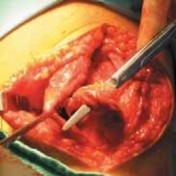
For the patellar insertion, a small longitudinal incision is made over the medial border of the patella. The medial border is exposed, and two docking sites are created in the proximal half of the patella, corresponding to the native footprint. Fixation at the patella can be achieved via suture anchors, transosseous tunnels, or interference screws. Care must be taken to avoid violating the anterior cortex or the articular surface of the patella during drilling.
The graft is then passed through a soft tissue tunnel created in Layer 2 of the medial knee, between the capsule and the vastus medialis obliquus. The graft is shuttled from the patella to the femoral guide pin.
Graft Tensioning and Fixation
Tensioning of the graft must be performed with meticulous care. The medial patellofemoral ligament is a check-rein, not a primary load-bearing structure. The knee is placed in 30 degrees of flexion. The graft is tensioned to eliminate lateral laxity while ensuring that the patella can still be translated laterally by 1 to 2 quadrants. Over-tensioning will lead to medial patellofemoral subluxation, severe pain, and rapid onset of iatrogenic osteoarthritis. Once appropriate tension is confirmed, the graft is secured in the femoral tunnel using an interference screw.

Lateral Retinacular Release Considerations
Historically, isolated lateral retinacular release was overutilized for patellar instability. Current biomechanical and clinical evidence dictates that a lateral release should only be performed if there is objective structural tightness of the lateral retinaculum (demonstrated by a negative patellar tilt test and less than 12 mm of medial glide) that prevents reduction of the patella into the trochlear groove after medial reconstruction. Routine lateral release is contraindicated as it may destabilize the patella and lead to iatrogenic medial subluxation.
Complications and Management
Despite high success rates when indications are strictly followed, proximal patellar realignment carries specific risks.
Intraoperative and Postoperative Complications
| Complication | Incidence | Etiology and Risk Factors | Salvage Strategy and Management |
|---|---|---|---|
| Over-constraint / Medial Subluxation | 3 - 5% | Graft placed too tightly or non-anatomic femoral tunnel placement (too proximal/anterior). | Revision surgery. Graft release or revision reconstruction with anatomic tunnel placement. |
| Patellar Fracture | 1 - 3% | Transosseous tunnels too large, placed too close together, or violation of anterior cortex. | Open reduction and internal fixation (ORIF). Modification of fixation strategy to suture anchors. |
| Recurrent Lateral Instability | 5 - 10% | Failure to address underlying bony malalignment (elevated TT-TG, severe dysplasia) or graft attenuation. | Comprehensive re-evaluation. Often requires addition of distal realignment (TTO) or rotational osteotomy. |
| Arthrofibrosis / Loss of Flexion | 4 - 8% | Over-tensioning of the graft, prolonged immobilization, or inadequate postoperative rehabilitation. | Aggressive physical therapy. Arthroscopic lysis of adhesions and manipulation under anesthesia (MUA) if refractory. |
| Hardware Irritation | 5 - 15% | Prominent interference screws or suture knots at the medial epicondyle or patella. | Hardware removal after graft incorporation (typically >6-12 months postoperatively). |

The most devastating complication specific to this procedure is an iatrogenic patellar fracture, which can occur intraoperatively during drilling or postoperatively due to stress risers created by the tunnels. Utilizing fluoroscopy during patellar preparation and maintaining adequate bone bridges between fixation points mitigates this risk.
Post Operative Rehabilitation Protocols
The postoperative rehabilitation protocol is designed to protect the healing graft while restoring early range of motion and preventing arthrofibrosis.
Immediate Postoperative Phase
During the first 0 to 4 weeks, the primary goals are to control effusion, reactivate the quadriceps musculature, and protect the reconstruction. The patient is typically placed in a hinged knee brace locked in full extension for ambulation. Weight-bearing status varies based on concomitant procedures (e.g., cartilage restoration), but isolated medial patellofemoral ligament reconstructions may be allowed weight-bearing as tolerated in the locked brace. Range of motion exercises are initiated immediately, typically restricted from 0 to 90 degrees of flexion to prevent excessive strain on the graft during the early healing phase.
Intermediate Phase and Return to Play
From weeks 4 to 8, the brace is gradually unlocked as quadriceps control improves. Range of motion is progressed to full, symmetric flexion. Strengthening focuses on closed kinetic chain exercises to minimize patellofemoral joint reaction forces.
Return to sport is generally anticipated between 5 to 7 months postoperatively. Progression to agility, plyometrics, and sport-specific activities is contingent upon achieving full, painless range of motion, resolution of joint effusion, and isokinetic quadriceps strength reaching at least 85% to 90% of the contralateral, uninjured extremity.
Summary of Key Literature and Guidelines
The evolution of proximal patellar realignment has been heavily guided by rigorous biomechanical and clinical research over the past two decades.
Evidence Based Treatment Algorithms
The consensus in the orthopedic literature emphasizes the medial patellofemoral ligament as the primary restraint to lateral patellar translation. Classic anatomical studies by Warren and Marshall delineated the layers of the medial knee, properly situating the medial patellofemoral ligament in Layer 2. Subsequent biomechanical work defined the force contributions of the medial structures, solidifying the rationale for anatomic reconstruction over non-anatomic repairs.
The identification of Schöttle's point revolutionized the reproducibility of femoral tunnel placement, drastically reducing the incidence of graft anisometry and subsequent over-constraint or failure. Furthermore, the integration of the Dejour classification for trochlear dysplasia and the strict measurement of the TT-TG distance have provided surgeons with an algorithm to determine when proximal realignment alone is sufficient, and when it must be augmented with distal realignment procedures.
Current guidelines advocate for a highly individualized approach. While non-operative management remains the first line of treatment for atraumatic or primary traumatic dislocators without structural damage, the threshold for surgical intervention via medial patellofemoral ligament reconstruction is lowering for young, high-demand athletes due to the unacceptably high rates of recurrent instability and subsequent chondral degradation observed in longitudinal cohort studies. Strict adherence to anatomic principles, meticulous surgical technique, and targeted postoperative rehabilitation remain the pillars of successful outcomes in proximal patellar realignment.
Clinical & Radiographic Imaging
You Might Also Like