Digital Neurovascular Bundles: Surgical Anatomy, Injuries, and Clinical Relevance
Key Takeaway
Digital neurovascular bundles, comprising nerves and arteries, are critical for hand function, providing sensation and blood supply to the digits. Injuries, common in hand trauma, can lead to severe long-term sequelae including permanent sensory deficits, chronic pain, cold intolerance, and even digital ischemia, profoundly impacting quality of life and vocational capabilities. Meticulous surgical repair is paramount.
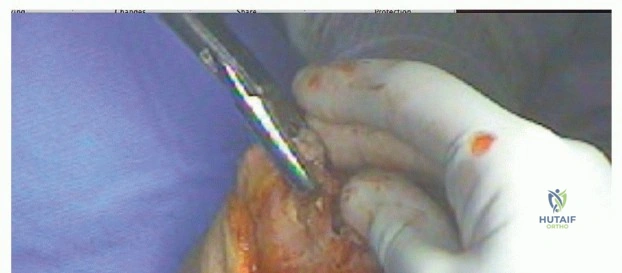
A 28-year-old carpenter presents to your emergency department after a circular saw injury to the volar aspect of his long finger. He has a 3cm transverse laceration. On examination, he has absent sensation to light touch on the radial aspect of the digit and poor capillary refill compared to the adjacent fingers.
Candidate: I would examine the wound for depth and extent, perform a neurovascular exam including 2-point discrimination, and check for digital perfusion. I’d then book him for theater to repair the digital nerve and artery under magnification.
Candidates often jump straight to "repairing the nerve and artery" without assessing if the digit is salvageable, failing to mention the priority of vascularity over nerve repair, or neglecting to discuss systemic factors like smoking or tetanus prophylaxis.
I would perform a systematic assessment: 1. Vascularity: Confirm critical ischemia via capillary refill, digital temperature, and Doppler signal. 2. Neuro: Confirm sensory deficit using 2-point discrimination. 3. Surgical Priority: If ischemic, revascularization takes precedence over nerve repair. 4. Planning: Use an axillary block for sympathectomy effect. I would plan for exploration under loupes or microscope (for the artery), extend the wound using a Bruner approach to find healthy vessel/nerve ends, and emphasize a tension-free, end-to-end microsurgical anastomosis for the artery (9-0/10-0 nylon) followed by epineurial nerve repair. I would also address the tetanus status and smoking counseling.
During the exploration, you find that there is a 1.5cm gap in the digital nerve due to the nature of the saw injury. What are your options for reconstruction, and how do you decide between them?
Candidate: For a 1.5cm gap, I could either use a nerve graft, such as from the sural or medial antebrachial cutaneous nerve, or use a nerve conduit if I wanted to avoid donor site morbidity.
Failing to emphasize that direct repair is always superior to conduits or grafts if tension-free, or failing to acknowledge that outcomes for grafts remain the gold standard for gaps >1cm compared to conduits.
I would first mobilize the proximal and distal nerve ends to see if a tension-free direct repair is possible; this is always preferred. If a 1.5cm gap persists, an autologous nerve graft (e.g., medial antebrachial cutaneous nerve) is the gold standard due to superior axonal regeneration potential. While synthetic conduits are an option for small gaps, they are less robust in clinical outcomes for defects approaching 2cm. I would counsel the patient on donor site morbidity (numbness) if an autograft is used.
Six months post-operatively, the patient returns. His sensation is improving, but he complains of significant cold intolerance. How do you manage this?
Candidate: I would explain that cold intolerance is a very common sequela of digital neurovascular injury, occurring in up to 70% of cases. I would recommend conservative management, such as wearing thermal gloves and avoiding cold exposure.
Suggesting invasive procedures like sympathectomy or revision surgery as a first-line treatment for cold intolerance, or failing to validate the patient's concern as a expected (though difficult) outcome.
I would acknowledge that this is a well-recognized long-term sequela. My management is centered on education, reassurance, and conservative measures: 1. Protective gear (thermal gloves/liners). 2. Smoking cessation if applicable. 3. Desensitization therapy with a hand therapist. I would emphasize that while it is often permanent, it typically improves slightly over 12-24 months. Surgical sympathectomy is generally reserved only for the most severe, refractory cases and is rarely indicated.
