INTRODUCTION TO ACUTE HAND TRAUMA EVALUATION
The management of acute hand trauma demands a rigorous, systematic approach to preserve function, restore anatomy, and prevent debilitating sequelae. The initial evaluation of the traumatized hand is not a singular event but a continuous, two-stage process: the First Examination (preoperative assessment in the emergency or trauma bay) and the Second Examination (intraoperative interrogation under optimal anesthesia and illumination).
Errors in the initial assessment frequently lead to underestimated tissue damage, inappropriate surgical planning, and compromised functional outcomes. Therefore, the examining orthopedic surgeon must adopt an orderly, anatomically based algorithm, treating every deep structure as damaged until definitively proven otherwise.
THE FIRST EXAMINATION: PREOPERATIVE ASSESSMENT
The primary objective of the first examination is to estimate the magnitude of the wound, determine the extent of integumentary loss, and identify injuries to deep neurovascular and musculotendinous structures. This examination must be conducted with the patient supine, utilizing strict sterile technique to prevent secondary nosocomial contamination.
Principles of the Initial Encounter
Pain and patient anxiety inherently limit the depth of the preoperative physical examination. Consequently, the surgeon must rely on visual inspection, gentle palpation, and specific provocative tests that do not exacerbate tissue damage.
Surgical Warning: Blind probing of an acute hand wound in the emergency department is strictly contraindicated. It provides negligible diagnostic value, provokes severe pain, risks iatrogenic injury to intact neurovascular bundles, and introduces superficial contaminants deep into the wound bed.
The assessment must proceed in a strict, hierarchical order to prevent diagnostic omissions:
1. Circulation and Skin Viability
2. Skeletal Integrity (Bones and Joints)
3. Musculotendinous Function
4. Neurological Status
The Büchler and Hastings Classification
To standardize the description and prognostic implications of acute hand trauma, the classification system advocated by Büchler and Hastings should be employed. This system categorizes initial injuries based on anatomical involvement:
- Isolated Injuries: Trauma confined to a single structural system within the hand (e.g., an isolated flexor tendon laceration or a simple phalangeal fracture).
- Combined Injuries: Trauma involving more than one critical hand structure (e.g., a fracture-dislocation with concomitant tendon avulsion and digital nerve transection).
Combined injuries are further subclassified based on the mechanism and vector of trauma:
1. Crush Injuries: Characterized by diffuse zone of injury, extensive microvascular thrombosis, and high risk of compartment syndrome.
2. Palmar Combined Injuries: Typically involving flexor tendons, palmar neurovascular bundles, and volar capsular structures.
3. Dorsal Combined Injuries: Frequently involving extensor mechanisms, dorsal skin avulsions, and underlying metacarpal/phalangeal fractures.
4. Palmar and Dorsal Combined Injuries: Severe, trans-axial trauma (e.g., gunshot wounds, severe industrial press injuries) often requiring complex, multi-stage reconstruction or amputation.
Vascular and Integumentary Evaluation
The viability and vascularity of the skin must be assessed continuously. The surgeon must make a preliminary, timely decision regarding the method of wound closure: primary direct suture, healing by secondary intention, or the necessity for skin grafts and local/distant flaps.
Gross positional deformities (e.g., rotational malalignment of digits, cascading errors) are noted, as they provide immediate clues to underlying skeletal or tendinous disruptions.
Radiographic Evaluation
Standard orthogonal radiographs (posteroanterior, lateral, and oblique views) of the injured hand are mandatory. These imaging modalities reveal fractures, joint subluxations/dislocations, and radiopaque foreign bodies.
Clinical Pearl: If the patient’s pain tolerance and general medical condition permit, judicious stress views or fluoroscopic examination may be obtained to assess ligamentous integrity and dynamic joint stability, particularly in suspected collateral ligament ruptures of the metacarpophalangeal (MCP) or interphalangeal (IP) joints.
Preoperative Optimization and Informed Consent
Following the first examination, the surgeon synthesizes the findings to estimate wound size, depth, location, the "zone of injury," and the degree of contamination. A preliminary surgical plan is formulated, but the final decision is strictly delayed until the second examination in the operating theater.
Concurrently, the patient’s general medical condition is optimized:
* Pharmacotherapy: Broad-spectrum intravenous antibiotics are initiated immediately. Tetanus prophylaxis is administered based on immunization history and wound characteristics.
* Informed Consent: Before the administration of sedatives or narcotics, the surgeon must have a frank discussion with the patient. The extent of the injuries, the general treatment plan, and the prognosis must be clearly communicated.
* Managing Expectations: It is imperative to forewarn the patient about the potential need for amputation, skin grafting, or distant flap coverage. Setting realistic expectations preoperatively mitigates postoperative psychological distress and medicolegal risk.
ANESTHETIC CONSIDERATIONS
The choice of anesthesia is dictated by the patient’s age, medical comorbidities, NPO (nil per os) status, the severity of the injury, and the anticipated duration of the reconstruction.
- Regional Anesthesia: Brachial plexus blocks (axillary, supraclavicular, or infraclavicular) are highly preferred for hand trauma. They provide excellent intraoperative anesthesia, profound muscle relaxation, and extended postoperative analgesia. Furthermore, regional blocks induce a sympathectomy effect, causing vasodilation that is highly beneficial for assessing tissue perfusion and supporting microvascular repairs.
- General Anesthesia: Indicated for pediatric patients, uncooperative adults, polytrauma patients, or when distant tissue harvesting (e.g., groin flap, lower extremity nerve graft) is anticipated.
TOURNIQUET MANAGEMENT IN ACUTE TRAUMA
A pneumatic tourniquet is indispensable for providing a bloodless field during wound cleansing, deep structure inspection, and microsurgical repair. However, its use in acute trauma requires nuanced judgment.
Biomechanics and Exsanguination Techniques
Standard exsanguination utilizing an Esmarch (Martin) bandage involves wrapping the limb tightly from distal to proximal before tourniquet inflation. While effective for elective cases, this technique is highly dangerous in specific trauma scenarios.
Surgical Warning: In the presence of large open wounds, severe crush injuries, or comminuted fractures, wrapping the limb with an Esmarch bandage can cause catastrophic displacement of fracture fragments, extrusion of bone marrow (risking fat embolism), and further crushing of already compromised soft tissues.
Alternative Exsanguination: For severe trauma, the limb should be elevated at 60 degrees for a minimum of 2 to 3 minutes to allow gravity-assisted venous drainage prior to tourniquet inflation.
Ischemia Time and Tissue Viability
When the viability of a skin flap or digit is questionable due to a crushing or avulsing mechanism, tourniquet time must be minimized. Prolonged ischemia exacerbates cellular hypoxia in tissues already suffering from traumatic microvascular disruption. The tourniquet should be used as briefly as possible, and the surgeon must be prepared to deflate it periodically to assess perfusion.
SURGICAL PREPARATION: CLEANSING AND DRAPING
The transition from the emergency department to the surgical suite marks the beginning of definitive care. The primary goal of this phase is to convert a contaminated traumatic wound into a surgically clean wound.
The Cleansing Protocol
Once anesthesia is established and the tourniquet is applied, the first-aid dressings are carefully removed. A sterile pad is placed directly over the major wound to protect it while the surrounding uninvolved skin is prepared.
- Peripheral Preparation: The surrounding skin is shaved (if necessary, though clipping is preferred to avoid micro-abrasions). The hand and forearm are held over a drain basin and scrubbed with an antiseptic soap (e.g., chlorhexidine gluconate or povidone-iodine) up to the elbow.
- Nail Care: The subungual spaces are notorious reservoirs for bacteria. Nails and nail beds are meticulously cleansed, and the nails are trimmed short.
- Wound Irrigation: The sterile pad is removed, exposing the wound. The wound is copiously irrigated with normal saline solution. This can be achieved via gravity pouring or a pulsating lavage apparatus. The mechanical force of the stream is critical for dislodging small foreign particles, diluting bacterial load, and evacuating large hematomas.
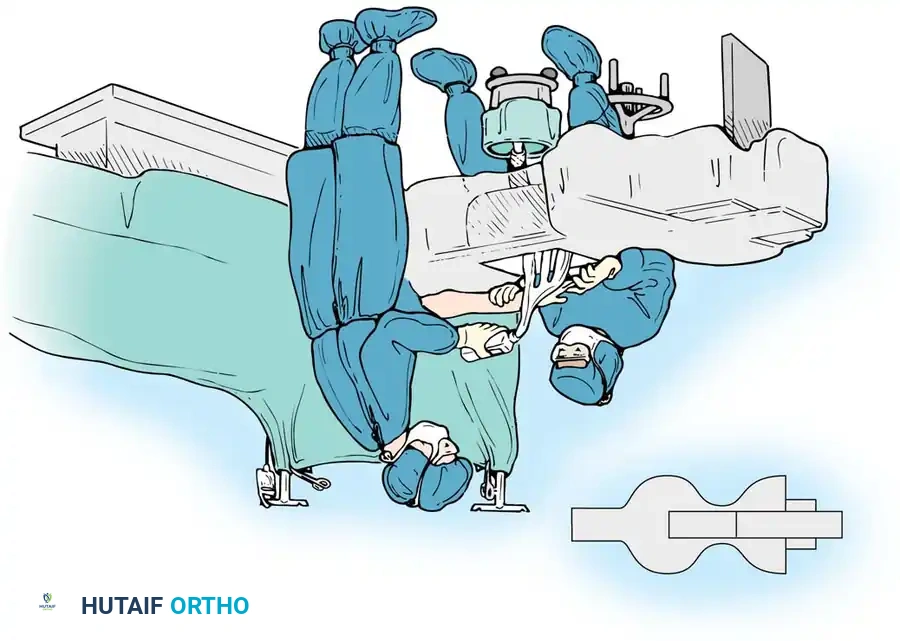
Clinical Pearl: Antiseptic solutions (such as Betadine or Chlorhexidine) should never be poured directly into the depths of an open wound. These agents exhibit profound tissue toxicity, impairing fibroblast proliferation, damaging exposed articular cartilage, and inducing necrosis in delicate epineurial and paratenon tissues. Normal saline is the gold standard for deep wound irrigation.
Debridement Techniques
Debridement must be meticulous but tissue-sparing.
* A gloved finger may be gently introduced into the wound to loosen organized hematomas or palpate fracture lines.
* Never scrub the depths of the wound with a sponge or bristle brush, as this destroys delicate microvascular networks and shreds synovial sheaths.
* Small bleeding vessels, often visualized more clearly under the saline wash, are clamped with mosquito hemostats and precisely cauterized using bipolar electrocautery to prevent collateral thermal damage to adjacent nerves.
* Small, devitalized tags of fat and fascia floating in the irrigation fluid are excised at their bases.
* Crucial Exception: Severed nerve ends are never debrided during the initial cleansing phase. They must be preserved meticulously for later microscopic evaluation and preparation prior to neurorrhaphy.
Cleaning should never be hurried; it frequently consumes up to half of the total operating time. Primary healing without infection is the absolute prerequisite for limiting scar formation and enabling early rehabilitation or secondary reconstruction. Once cleansing is complete, all instruments, gloves, and drapes used during this contaminated phase are discarded, and the surgical team re-gowns and re-drapes the patient for the reconstructive phase.
THE SECOND EXAMINATION: INTRAOPERATIVE ASSESSMENT
With the wound now surgically clean and the patient under optimal anesthesia, the second examination commences. This is the definitive diagnostic phase where final decisions regarding primary repair versus delayed reconstruction are made.
Re-evaluating Tissue Viability: The Tourniquet Test
Evaluating skin damage is paramount, as the feasibility of primary wound closure depends entirely on skin viability. The true extent of tissue necrosis is often masked by vasospasm and the tourniquet.
To accurately assess perfusion, the tourniquet must frequently be released. The surgeon observes for the "pink blush" sign—a prompt return of capillary refill (typically within 6 seconds) after tourniquet deflation.
Additional indicators of viability include:
* Bright red bleeding from the dermal edges upon needle or scalpel puncture.
* The color of the skin immediately after digital compression.
* The use of a sterile handheld Doppler probe to confirm flow in the proper palmar digital arteries and larger vessels of the hand.
Pitfall: Surgeons frequently overestimate skin loss. Often, skin appears to be missing when it has merely retracted due to its inherent elasticity. This is especially common in L-shaped or stellate lacerations on the dorsum of the hand. Conversely, when skin is subjected to severe crush or avulsion (e.g., roller injuries), the possibility of delayed necrosis must be seriously considered, even if the skin appears intact initially. Retaining flaps of doubtful viability inevitably leads to necrosis, deep infection, and catastrophic scarring.
Deep Structure Interrogation
The tissues in the depths of the wound are assessed in a strict, orderly, anatomical manner.
1. Skeletal Assessment (Bones and Joints):
Bones and joints are inspected directly to quantify bone loss, evaluate the extent of periosteal stripping, and determine fracture geometry. This evaluation dictates the choice of internal fixation (e.g., K-wires, mini-fragment plates, or external fixation). The surgeon must achieve sufficient fracture stability to permit early active joint motion, which is critical for preventing tendon adhesions.
2. Tendinous Assessment:
Suspected tendon injuries noted during the first examination are now confirmed by direct visualization.
* Passive Tenodesis: Passive flexion and extension of the wrist and digits often deliver the retracted ends of severed tendons directly into the wound window.
* Synovial Clues: The presence of small, localized hematomas within the flexor tendon synovial sheaths is a highly sensitive indicator of an underlying partial or complete tendon laceration, mandating surgical exploration of the sheath.
3. Neurological Assessment:
Digital and mixed nerves are inspected under loupe magnification. The extent of the zone of injury (contusion, stretch, or sharp transection) is evaluated to determine if primary end-to-end neurorrhaphy is possible without tension, or if a nerve graft will be required.
4. Foreign Body Interrogation:
As the deeper planes are exposed, a diligent search for foreign materials is conducted. This is particularly critical if the mechanism of injury suggests retained broken glass, wood splinters, industrial debris, or in the context of gunshot wounds.
POSTOPERATIVE PROTOCOLS AND REHABILITATION PRINCIPLES
The success of the surgical intervention relies heavily on the postoperative management.
- Immobilization: The hand is typically immobilized in a bulky, non-compressive dressing with a plaster or fiberglass splint. Unless contraindicated by specific tendon repairs, the hand is placed in the "Intrinsic Plus" (James) position: wrist extended 20-30 degrees, MCP joints flexed 70-90 degrees, and IP joints fully extended. This position maintains the collateral ligaments of the MCP joints at their maximal length, preventing debilitating extension contractures.
- Elevation: Strict elevation of the hand above the level of the heart is mandatory for the first 48-72 hours to minimize interstitial edema, reduce pain, and prevent secondary microvascular compromise.
- Rehabilitation: Depending on the stability of the fracture fixation and the nature of the soft tissue repairs, early protected mobilization protocols (e.g., early active motion for flexor tendons) are initiated under the strict guidance of a certified hand therapist.
