

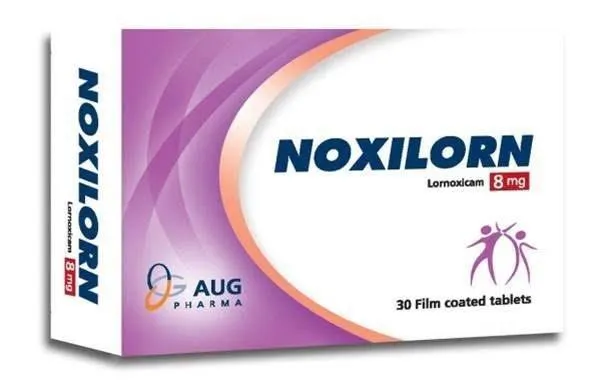
🇬🇧 Overview & Clinical Usage
Noxilorn (Lornoxicam) belongs to the oxicam class of non-steroidal anti-inflammatory drugs (NSAIDs). It works by inhibiting the enzymes cyclooxygenase-1 (COX-1) and cyclooxygenase-2 (COX-2), which leads to a significant reduction in the synthesis of prostaglandins—the chemical mediators responsible for pain, inflammation, and fever. Due to its potent analgesic efficacy, it is commonly prescribed for the management of postoperative pain, lumbago, sciatica, and chronic inflammatory conditions such as rheumatoid arthritis and osteoarthritis.
While highly effective, clinicians must exercise caution due to the standard side-effect profile of NSAIDs. Common adverse effects include gastrointestinal disturbances such as dyspepsia, nausea, and abdominal pain. Because of the risk of gastrointestinal ulceration or bleeding, it is often recommended to administer the drug with food or in combination with a proton pump inhibitor for patients at high risk. It should be used with extreme caution in patients with renal impairment, cardiovascular disease, or those with a history of peptic ulcer disease.
🇸🇦 نظرة عامة والاستخدام السريري
ينتمي "نوكسيلورن" (لورنوكسيكام) إلى فئة "أوكسيكام" من مضادات الالتهاب غير الستيرويدية (NSAIDs). يعمل الدواء عن طريق تثبيط إنزيمات الأكسدة الحلقية (COX-1 و COX-2)، مما يؤدي إلى انخفاض كبير في تخليق البروستاجلاندين، وهي الوسائط الكيميائية المسؤولة عن الألم والالتهاب والحمى. نظرًا لفعاليته المسكنة القوية، فإنه يُوصف بشكل شائع لتسكين آلام ما بعد الجراحة، وآلام أسفل الظهر، وعرق النسا، وحالات الالتهاب المزمنة مثل التهاب المفاصل الروماتويدي والتهاب المفاصل العظمي.
على الرغم من فعاليته العالية، يجب على الأطباء توخي الحذر نظراً للآثار الجانبية المرتبطة بمضادات الالتهاب غير الستيرويدية. تشمل الآثار الجانبية الشائعة اضطرابات الجهاز الهضمي مثل عسر الهضم، والغثيان، وآلام البطن. ونظراً لخطر حدوث قرحة في الجهاز الهضمي أو نزيف، يُنصح غالباً بتناول الدواء مع الطعام أو بالتزامن مع مثبطات مضخة البروتون للمرضى الأكثر عرضة للمخاطر. يجب استخدامه بحذر شديد لدى المرضى الذين يعانون من قصور كلوي، أو أمراض القلب والأوعية الدموية، أو أولئك الذين لديهم تاريخ مرضي للإصابة بالقرحة الهضمية.