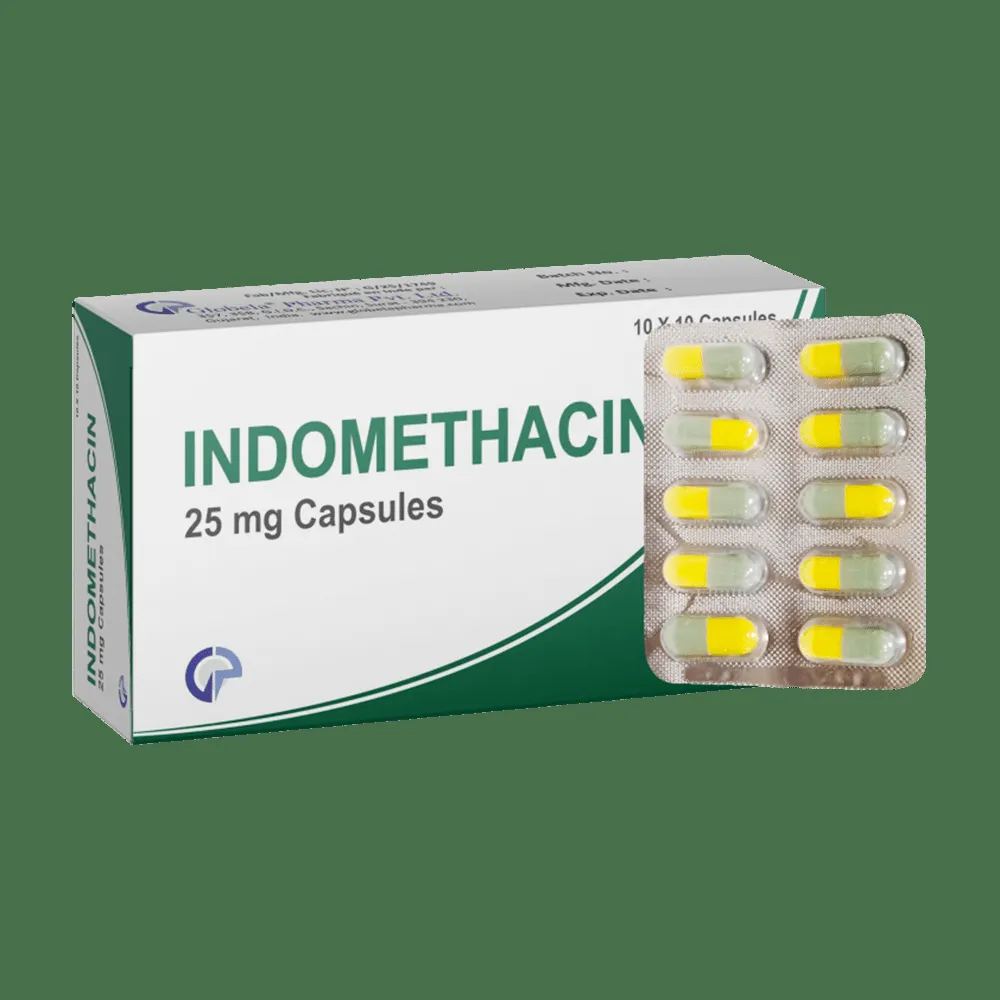


🇬🇧 Overview & Clinical Usage
Indomethacin is a highly effective non-steroidal anti-inflammatory drug (NSAID) that functions primarily by inhibiting the cyclooxygenase (COX-1 and COX-2) enzymes. By blocking these enzymes, the medication reduces the synthesis of prostaglandins, which are key mediators in the pathways of pain, inflammation, and fever. It is most commonly prescribed for the management of acute musculoskeletal conditions, such as gouty arthritis, ankylosing spondylitis, and acute painful shoulder (bursitis or tendonitis).
Because of its potent pharmacological profile, indomethacin is associated with a higher incidence of side effects compared to other NSAIDs. The most common adverse effects involve the gastrointestinal tract, including dyspepsia, gastric ulceration, and bleeding. Furthermore, patients may experience central nervous system effects such as dizziness, headaches, or confusion. Due to these risks, it is typically reserved for cases where other less toxic anti-inflammatory agents have failed or are contraindicated.
🇸🇦 نظرة عامة والاستخدام السريري
يعتبر إندوميثاسين من الأدوية المضادة للالتهاب غير الستيرويدية (NSAIDs) عالية الفعالية، حيث يعمل بشكل أساسي عن طريق تثبيط إنزيمات الأكسدة الحلقية (COX-1 و COX-2). من خلال تثبيط هذه الإنزيمات، يقلل الدواء من تخليق البروستاجلاندين، وهي وسائط رئيسية في مسارات الألم والالتهاب والحمى. يتم وصفه عادةً لعلاج الحالات العضلية الهيكلية الحادة، مثل التهاب المفاصل النقرسي، والتهاب الفقار المقسط، وآلام الكتف الحادة (التهاب الجراب أو الأوتار).
نظرًا لخصائصه الدوائية القوية، يرتبط إندوميثاسين بنسبة أعلى من الآثار الجانبية مقارنة بمضادات الالتهاب غير الستيرويدية الأخرى. وتتعلق الآثار الضارة الأكثر شيوعاً بالجهاز الهضمي، بما في ذلك عسر الهضم، وقرحة المعدة، والنزيف. علاوة على ذلك، قد يعاني المرضى من تأثيرات على الجهاز العصبي المركزي مثل الدوار، والصداع، أو الارتباك. وبسبب هذه المخاطر، يُحفظ استخدامه عادةً للحالات التي فشلت فيها العلاجات الأخرى الأقل سمية أو التي تُعد فيها العلاجات الأخرى غير مناسبة للمريض.