
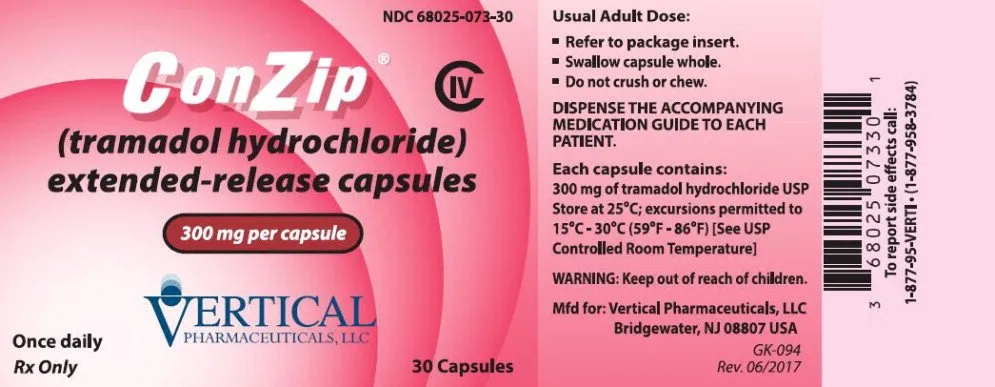
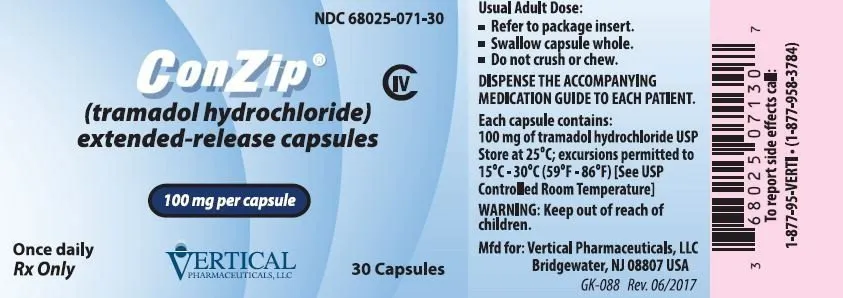
Conzip: An Expert's Guide to Extended-Release Tramadol for Chronic Pain
As an expert Medical SEO Copywriter and Orthopedic Specialist, I understand the critical role effective pain management plays in improving patient quality of life, especially for those suffering from chronic conditions affecting the musculoskeletal system. Conzip, an extended-release formulation of tramadol hydrochloride, represents an important tool in the pharmacotherapeutic arsenal for moderate to moderately severe chronic pain. This comprehensive guide delves into every facet of Conzip, providing authoritative insights for patients, caregivers, and healthcare professionals.
Comprehensive Introduction & Overview: Understanding Conzip
Conzip (tramadol hydrochloride extended-release capsules) is a prescription medication primarily indicated for the management of moderate to moderately severe chronic pain in adults who require around-the-clock treatment for an extended period. Unlike immediate-release formulations, Conzip is designed to deliver its active ingredient, tramadol, consistently over an extended duration, providing sustained pain relief and helping to maintain a more stable analgesic effect throughout the day and night.
Tramadol itself is a synthetic opioid analgesic with a unique dual mechanism of action, making it distinct from traditional opioids. It acts as a weak mu-opioid receptor agonist and also inhibits the reuptake of norepinephrine and serotonin, which are neurotransmitters involved in the body's natural pain modulation pathways. This dual action contributes to its analgesic efficacy. Conzip's extended-release nature is crucial for chronic pain management, as it avoids the peaks and troughs of pain relief often associated with immediate-release medications, thereby reducing the frequency of dosing and potentially improving patient adherence and overall pain control.
Deep-dive into Technical Specifications & Mechanisms
Understanding the intricate workings of Conzip is essential for appreciating its clinical utility and managing its potential risks.
Mechanism of Action: How Conzip Works
The analgesic effect of tramadol, the active ingredient in Conzip, is primarily attributed to two complementary mechanisms:
- Weak Opioid Agonism: Tramadol and its active metabolite, O-desmethyltramadol (M1), bind to mu-opioid receptors in the central nervous system. This binding mimics the action of endogenous opioids, leading to a reduction in pain signal transmission and perception. M1 has a significantly higher affinity for the mu-opioid receptor than tramadol itself, making it a potent contributor to the overall analgesic effect.
- Monoamine Reuptake Inhibition: Tramadol inhibits the neuronal reuptake of norepinephrine and serotonin. These neurotransmitters play a vital role in the descending inhibitory pain pathways, which modulate pain signals originating from the periphery. By increasing the availability of these neurotransmitters in the synaptic cleft, tramadol enhances the body's natural pain-relieving mechanisms.
This dual mechanism distinguishes tramadol from pure opioid agonists and contributes to its efficacy in various types of pain, including those with neuropathic components.
Pharmacokinetics: The Journey of Conzip in the Body
The pharmacokinetic profile of Conzip is tailored for sustained release, influencing its absorption, distribution, metabolism, and elimination.
- Absorption:
- Conzip capsules contain extended-release beads designed to release tramadol gradually over time.
- Following oral administration, tramadol is well absorbed, with an absolute bioavailability of approximately 75% after a single dose of immediate-release tramadol.
- Peak plasma concentrations (Tmax) for Conzip are typically reached between 11 to 12 hours post-dose, reflecting its extended-release properties.
- Food generally does not significantly affect the extent of absorption, but it may slightly prolong the time to peak concentration.
- Distribution:
- Tramadol has a relatively large volume of distribution (approximately 2.7 L/kg), indicating extensive tissue distribution.
- Plasma protein binding is low, approximately 20%, for both tramadol and M1, meaning more free drug is available to exert its effects.
- Metabolism:
- Tramadol is extensively metabolized in the liver, primarily via two main cytochrome P450 (CYP) isoenzymes:
- CYP2D6: Responsible for the O-demethylation of tramadol to O-desmethyltramadol (M1), the active metabolite with significantly higher mu-opioid receptor affinity. Genetic polymorphism of CYP2D6 can impact the formation of M1, affecting efficacy and safety.
- CYP3A4: Involved in the N-demethylation of tramadol to N-desmethyltramadol (M2).
- Both tramadol and M1 undergo further conjugation with glucuronic acid.
- Tramadol is extensively metabolized in the liver, primarily via two main cytochrome P450 (CYP) isoenzymes:
- Elimination:
- Tramadol and its metabolites are primarily excreted renally.
- The elimination half-life of tramadol is approximately 7.9 hours, and for M1, it's about 9.1 hours after a single dose of Conzip.
- In patients with renal or hepatic impairment, the elimination half-life of both tramadol and M1 can be significantly prolonged, necessitating dose adjustments.
Extensive Clinical Indications & Usage
Conzip is a specialized medication, and its use must be carefully considered within specific clinical contexts.
Primary Indication: Moderate to Moderately Severe Chronic Pain
Conzip is specifically indicated for the management of moderate to moderately severe chronic pain in adults. This means it is suitable for conditions that:
- Are chronic: Pain that persists for an extended period, typically three months or longer.
- Require continuous, around-the-clock analgesia: Patients whose pain is persistent enough to necessitate continuous medication, rather than intermittent, as-needed relief.
- Are moderate to moderately severe: Pain that significantly impacts daily function and quality of life but may not warrant the use of stronger, full opioid agonists as a first-line therapy.
Common orthopedic and other chronic pain conditions for which Conzip may be prescribed include:
- Osteoarthritis: Chronic pain associated with degenerative joint disease.
- Chronic Low Back Pain: Persistent pain in the lumbar region, often refractory to non-opioid treatments.
- Neuropathic Pain Components: While not a primary neuropathic pain drug, its monoamine reuptake inhibition mechanism can provide some benefit for pain with neuropathic features.
- Fibromyalgia: For generalized chronic pain, though other treatments are often first-line.
- Post-Surgical Pain: In cases where post-surgical pain transitions to a chronic phase requiring ongoing, consistent relief.
Conzip is not indicated for:
- As-needed (PRN) pain relief.
- Acute pain that is expected to resolve quickly.
- Pain in children younger than 12 years of age.
- Post-operative pain in children younger than 18 years following tonsillectomy and/or adenoidectomy.
Dosage Guidelines and Administration
Precise dosing and administration are critical for optimizing efficacy and minimizing risks.
- Initial Dosing:
- For opioid-naive patients or those not currently taking tramadol, the recommended initial dose is 100 mg once daily.
- For patients currently taking immediate-release tramadol, the total daily dose of Conzip should be rounded down to the nearest 100 mg increment and administered once daily.
- Titration:
- The dose may be titrated in increments of 50 mg every 5 days to achieve an adequate balance between analgesia and tolerability.
- The goal is to find the lowest effective dose.
- Maximum Dose:
- The maximum recommended dose of Conzip is 300 mg once daily. Doses above 300 mg/day have not been studied and are not recommended.
- Administration:
- Conzip capsules should be swallowed whole. They must not be chewed, crushed, or divided, as this can lead to rapid release of a potentially fatal dose of tramadol.
- Conzip can be taken with or without food.
-
Special Populations:
- Elderly Patients (≥65 years): Initiate at the lower end of the dosing range and titrate cautiously due to potential for decreased clearance and increased sensitivity.
- Renal Impairment: For patients with creatinine clearance less than 30 mL/min, Conzip is not recommended.
- Hepatic Impairment: For patients with severe hepatic impairment, Conzip is not recommended.
- CYP2D6 Poor Metabolizers: These individuals may experience reduced analgesia due to decreased conversion to the active M1 metabolite.
- CYP2D6 Ultra-Rapid Metabolizers: These individuals may be at increased risk of opioid toxicity due to increased conversion to M1.
-
Discontinuation:
- Abrupt discontinuation of Conzip after prolonged use can lead to withdrawal symptoms.
- When discontinuing, the dose should be gradually tapered to minimize withdrawal symptoms. A typical tapering schedule involves reducing the dose by 25% to 50% every 2 to 4 days.
Risks, Side Effects, and Contraindications
Like all medications, Conzip carries potential risks and side effects. A thorough understanding is vital for safe prescribing and patient counseling.
Common Side Effects
Many patients experience mild to moderate side effects, especially during initiation or dose titration. These often subside with continued use.
- Nausea
- Constipation
- Dizziness
- Somnolence (drowsiness)
- Headache
- Dry mouth
- Sweating
- Vomiting
- Pruritus (itching)
Serious Adverse Reactions
While less common, several serious adverse reactions are associated with Conzip and tramadol use.
- Respiratory Depression: The most significant risk, especially with overdose or concomitant use of other CNS depressants. Can be life-threatening.
- Serotonin Syndrome: Due to its monoamine reuptake inhibition, tramadol can precipitate serotonin syndrome, particularly when co-administered with other serotonergic drugs (e.g., SSRIs, SNRIs, TCAs, triptans). Symptoms include mental status changes, autonomic instability, neuromuscular abnormalities, and gastrointestinal symptoms.
- Seizures: Tramadol lowers the seizure threshold. The risk is dose-dependent and increased in patients with a history of epilepsy, head trauma, metabolic disorders, or concomitant use of drugs that lower the seizure threshold.
- Anaphylaxis/Hypersensitivity: Rare but severe allergic reactions can occur.
- Adrenal Insufficiency: Chronic opioid use can lead to adrenal insufficiency, characterized by symptoms like nausea, vomiting, anorexia, fatigue, weakness, dizziness, and hypotension.
- Androgen Deficiency: Long-term opioid use may result in decreased libido, impotence, erectile dysfunction, amenorrhea, or infertility.
- Opioid Use Disorder (OUD), Physical Dependence, and Withdrawal: Tramadol has abuse potential. Physical dependence can develop with prolonged use, leading to withdrawal symptoms upon abrupt discontinuation.
- Central Nervous System (CNS) Depression: May impair mental and physical abilities required for driving or operating machinery.
Contraindications: When Conzip MUST NOT Be Used
Conzip is absolutely contraindicated in certain situations due to the high risk of severe adverse outcomes.
- Acute or severe bronchial asthma in an unmonitored setting or in the absence of resuscitative equipment.
- Known or suspected gastrointestinal obstruction, including paralytic ileus.
- Significant respiratory depression.
- Acute intoxication with alcohol, hypnotics, centrally acting analgesics, opioids, or psychotropic drugs.
- Concomitant use of monoamine oxidase inhibitors (MAOIs) or within 14 days following discontinuation of an MAOI. This carries a high risk of serotonin syndrome and seizures.
- Hypersensitivity (e.g., anaphylaxis, angioedema) to tramadol, any other opioid, or any component of the formulation.
- Children younger than 12 years of age.
- Post-operative pain in children younger than 18 years following tonsillectomy and/or adenoidectomy.
Drug Interactions: Important Considerations
Multiple drug interactions can significantly alter the pharmacokinetics or pharmacodynamics of Conzip, leading to increased risk or reduced efficacy.
- MAOIs: Absolutely contraindicated due to the risk of serotonin syndrome and seizures.
- Other CNS Depressants: Co-administration with alcohol, benzodiazepines, sedatives, hypnotics, general anesthetics, phenothiazines, other opioids, or tricyclic antidepressants can lead to additive CNS depression, increased risk of respiratory depression, profound sedation, coma, and death.
- Serotonergic Drugs: Co-administration with SSRIs, SNRIs, TCAs, triptans, 5-HT3 receptor antagonists, mirtazapine, bupropion, St. John's Wort, or other tramadol-containing products increases the risk of serotonin syndrome.
- CYP2D6 Inhibitors: Drugs like quinidine, fluoxetine, paroxetine, and bupropion can inhibit the metabolism of tramadol to its active M1 metabolite, potentially reducing analgesic efficacy.
- CYP2D6 Inducers: While less common, some inducers could theoretically increase M1 formation, but clinical significance is unclear.
- CYP3A4 Inhibitors: Drugs such as ketoconazole, erythromycin, and ritonavir can inhibit the metabolism of tramadol, leading to increased tramadol exposure and an increased risk of adverse effects, including respiratory depression and seizures.
- CYP3A4 Inducers: Carbamazepine, phenytoin, and rifampin can induce tramadol metabolism, potentially reducing its efficacy. Carbamazepine is a specific contraindication for tramadol in some contexts due to significant reduction in tramadol and M1 levels.
- Coumarin Derivatives (e.g., Warfarin): Tramadol can increase the international normalized ratio (INR) in patients taking warfarin, leading to an increased risk of bleeding. Close monitoring is required.
- Drugs that Lower Seizure Threshold: Concomitant use with other drugs that lower the seizure threshold (e.g., antidepressants, antipsychotics, bupropion) increases the risk of seizures.
Warnings for Pregnancy and Lactation
The use of Conzip during pregnancy and lactation requires careful consideration due to potential risks to the fetus and infant.
- Pregnancy:
- Neonatal Opioid Withdrawal Syndrome (NOWS): Prolonged use of Conzip during pregnancy can result in physical dependence in the neonate, leading to NOWS. This syndrome can be life-threatening if not recognized and treated. Symptoms include irritability, hyperactivity, abnormal sleep patterns, high-pitched cry, tremor, vomiting, diarrhea, and failure to gain weight.
- Teratogenic Effects: Animal studies have shown some evidence of adverse developmental effects. Human data are limited, but the risks of opioid exposure in pregnancy are well-documented.
- Labor and Delivery: Conzip is not recommended for use during labor and delivery, as it can cause respiratory depression in the neonate.
- Lactation:
- Tramadol and its active metabolite (M1) are excreted into breast milk.
- There is a risk of serious adverse reactions in breastfed infants, including sedation, respiratory depression, and even death, especially in mothers who are CYP2D6 ultra-rapid metabolizers.
- Therefore, Conzip is generally not recommended for breastfeeding mothers. If used, the infant must be closely monitored for signs of sedation or respiratory depression.
Overdose Management
Tramadol overdose can be severe and potentially fatal. Prompt medical attention is essential.
-
Symptoms of Overdose:
- Respiratory depression (decreased respiratory rate and/or tidal volume)
- Somnolence progressing to stupor or coma
- Seizures
- Pinpoint pupils (miosis)
- Skeletal muscle flaccidity
- Cold and clammy skin
- Bradycardia (slow heart rate)
- Hypotension (low blood pressure)
- Cardiac arrest
- Death
-
Treatment of Overdose:
- Establish a Patent Airway: Ensure adequate ventilation. May require assisted or controlled ventilation.
- Naloxone: Administer naloxone, an opioid antagonist, to reverse respiratory depression. Repeated doses may be necessary due to Conzip's extended-release nature and tramadol's long half-life. However, naloxone may not fully reverse tramadol-induced seizures because of its non-opioid mechanisms.
- Gastric Decontamination: For recent ingestions (within 1 hour), gastric lavage may be considered. Activated charcoal can be administered if indicated.
- Supportive Care: Maintain fluid and electrolyte balance, monitor vital signs, and provide symptomatic treatment.
- Seizure Management: If seizures occur and are not responsive to naloxone, benzodiazepines (e.g., diazepam, lorazepam) may be used.
- Hypotension: Treat with IV fluids, vasopressors, and other supportive measures.
- Dialysis: Hemodialysis removes very little tramadol (less than 7%) and is not considered an effective treatment for overdose.
Frequently Asked Questions (FAQ)
Here are answers to common questions about Conzip:
Q1: What is Conzip used for?
Conzip is used to manage moderate to moderately severe chronic pain in adults who require continuous, around-the-clock pain relief for an extended period. It is not for as-needed pain.
Q2: How is Conzip different from immediate-release tramadol?
Conzip is an extended-release formulation, meaning it releases tramadol gradually over many hours, providing sustained pain relief with once-daily dosing. Immediate-release tramadol provides quicker, but shorter-acting, pain relief and is typically taken multiple times a day.
Q3: Can I crush or chew Conzip capsules?
No, absolutely not. Conzip capsules must be swallowed whole. Crushing, chewing, or dividing the capsules can lead to a rapid release of a potentially fatal dose of tramadol.
Q4: How long does it take for Conzip to start working?
Due to its extended-release formulation, Conzip typically takes longer to reach peak effect compared to immediate-release tramadol, usually around 11-12 hours after a dose. Consistent pain relief builds up over time with regular dosing.
Q5: What should I do if I miss a dose of Conzip?
If you miss a dose, take it as soon as you remember, unless it is almost time for your next scheduled dose. In that case, skip the missed dose and continue with your regular dosing schedule. Do not take two doses at once to make up for a missed dose.
Q6: Is Conzip addictive?
Yes, Conzip (tramadol) is an opioid and can be habit-forming. It has the potential for abuse, addiction, and physical dependence. It's crucial to use it exactly as prescribed by your doctor and to discuss any concerns about dependence or addiction.
Q7: Can I drink alcohol while taking Conzip?
No, you should avoid alcohol while taking Conzip. Alcohol can increase the risk of serious side effects such as respiratory depression, profound sedation, coma, and even death when combined with Conzip.
Q8: What are the most common side effects of Conzip?
Common side effects include nausea, constipation, dizziness, drowsiness, headache, dry mouth, and sweating. These often improve over time.
Q9: Can Conzip cause withdrawal symptoms?
Yes, if you have been taking Conzip regularly for some time and stop suddenly, you can experience withdrawal symptoms such as restlessness, sweating, tremors, anxiety, diarrhea, and muscle aches. It's important to taper off the medication under a doctor's guidance.
Q10: Who should not take Conzip?
Conzip should not be taken by individuals with severe asthma or breathing problems, known or suspected bowel obstruction, acute intoxication with alcohol or other central nervous system depressants, or if you are taking MAO inhibitors or have taken them within the last 14 days. It is also contraindicated in children under 12 and those under 18 post-tonsillectomy/adenoidectomy.
Q11: Is Conzip safe during pregnancy or breastfeeding?
Conzip is generally not recommended during pregnancy due to the risk of neonatal opioid withdrawal syndrome. It is also not recommended for breastfeeding mothers as tramadol and its active metabolite pass into breast milk and can cause serious adverse effects in the infant. Discuss all risks with your doctor.
Q12: How should I store Conzip?
Store Conzip at room temperature, away from moisture and heat. Keep it in a secure location, out of the reach of children and others for whom it has not been prescribed, to prevent accidental ingestion or misuse.
This comprehensive guide aims to equip you with detailed knowledge about Conzip, facilitating informed decisions regarding its use in chronic pain management. Always consult with your healthcare provider for personalized medical advice.