Full Question & Answer Text (for Search Engines)
Question 1:
In the metallurgical design of titanium alloys for orthopaedic implants (such as Ti-6Al-4V), specific elements are added to stabilize different phases of the metal at room temperature. What is the primary role of vanadium in this alloy?
Options:
- It stabilizes the alpha-phase, increasing tensile strength.
- It stabilizes the beta-phase, lowering the modulus of elasticity.
- It promotes passivation by forming a dense oxide layer.
- It acts as an interstitial strengthener to prevent galvanic corrosion.
- It limits stress shielding by increasing the metal's density.
Correct Answer: It stabilizes the beta-phase, lowering the modulus of elasticity.
Explanation:
In the Ti-6Al-4V alloy, titanium undergoes an allotropic phase transformation. Aluminum is added to stabilize the alpha-phase (hexagonal close-packed structure), which provides strength. Vanadium is a beta-phase (body-centered cubic) stabilizer. Retaining the beta-phase at room temperature lowers the overall modulus of elasticity of the implant, bringing it closer to that of cortical bone and thereby reducing stress shielding.
Question 2:
A 12-year-old obese male presents with a unilateral left-sided Slipped Capital Femoral Epiphysis (SCFE) and undergoes in situ pinning. When evaluating the risk of a contralateral slip to determine the need for prophylactic pinning, which of the following radiographic parameters is the strongest predictor of a future contralateral slip?
Options:
- Initial left-sided slip angle > 50 degrees
- Southwick slip angle of the normal right hip > 10 degrees
- Klein's line intersecting less than 20% of the epiphysis on the right
- Modified Oxford bone age score of 16 or less at initial presentation
- Widening of the right proximal femoral physis > 5 mm
Correct Answer: Modified Oxford bone age score of 16 or less at initial presentation
Explanation:
The modified Oxford bone age score uses AP pelvis radiographs to evaluate the maturation of the ilium and the triradiate cartilage. A score of 16 or less indicates significant remaining skeletal growth and has been proven in multiple studies (such as those by Stasikelis et al. and Popejoy et al.) to be a strong independent predictor of subsequent contralateral slip, thus strongly supporting the decision for prophylactic pinning.
Question 3:
During the ilioinguinal approach to the acetabulum for an anterior column fracture, the surgeon must be careful to identify and ligate the 'corona mortis'. This vascular structure represents an anastomosis between the external iliac (or deep inferior epigastric) and obturator vessels. Over which bony structure is this anastomosis most commonly found?
Options:
- Superior pubic ramus
- Inferior pubic ramus
- Iliopectineal eminence
- Ischial spine
- Symphysis pubis
Correct Answer: Superior pubic ramus
Explanation:
The corona mortis is a vascular anastomosis between the external iliac (or deep inferior epigastric) and the obturator systems. It typically crosses the superior pubic ramus at an average of 5 to 7 cm from the pubic symphysis. Iatrogenic injury during the ilioinguinal or intrapelvic approaches can cause massive, difficult-to-control hemorrhage.
Question 4:
A 68-year-old male presents with deteriorating gait, hand clumsiness, and hyperreflexia. He is diagnosed with cervical spondylotic myelopathy. He reports that his balance is so poor he now requires the use of a cane to walk, but he is not restricted to a wheelchair. According to the Nurick classification for cervical myelopathy, what is his grade?
Options:
- Grade I
- Grade II
- Grade III
- Grade IV
- Grade V
Correct Answer: Grade IV
Explanation:
The Nurick classification grades the severity of cervical myelopathy primarily based on ambulatory status: Grade 0 (root signs only), Grade I (signs of spinal cord involvement but normal gait), Grade II (mild gait involvement, able to be employed), Grade III (gait abnormality prevents employment, but walks unassisted), Grade IV (able to ambulate only with assistance/walker/cane), and Grade V (chairbound or bedridden). Requiring a cane corresponds to Grade IV.
Question 5:
A 14-year-old boy presents with a painful mass in his diaphyseal femur. Biopsy reveals sheets of small round blue cells. Molecular testing of the tumor tissue is most likely to reveal which of the following chromosomal translocations?
Options:
- t(11;22)(q24;q12)
- t(X;18)(p11;q11)
- t(12;16)(q13;p11)
- t(2;13)(q35;q14)
- t(9;22)(q34;q11)
Correct Answer: t(11;22)(q24;q12)
Explanation:
The presentation is classic for Ewing sarcoma. Over 90% of Ewing sarcomas are characterized by the t(11;22)(q24;q12) translocation, which results in the fusion of the EWS gene on chromosome 22 with the FLI1 gene on chromosome 11. t(X;18) is seen in synovial sarcoma; t(12;16) in myxoid liposarcoma; t(2;13) in alveolar rhabdomyosarcoma; and t(9;22) in chronic myelogenous leukemia.
Question 6:
Articular cartilage is structurally divided into four distinct zones, each with unique biomechanical properties. Which zone is characterized by the highest concentration of proteoglycans, the lowest water content, and type II collagen fibrils oriented perpendicularly to the subchondral bone?
Options:
- Superficial (tangential) zone
- Middle (transitional) zone
- Deep (radial) zone
- Calcified cartilage zone
- Tidemark
Correct Answer: Deep (radial) zone
Explanation:
The deep (radial) zone of articular cartilage is responsible for providing the greatest resistance to compressive forces. It is characterized by the highest proteoglycan content, the lowest water content, and collagen fibrils that are arranged perpendicular to the articular surface, anchoring the cartilage to the underlying calcified zone and subchondral bone.
Question 7:
A 55-year-old poorly controlled diabetic presents with a swollen, erythematous, and warm foot with a rocker-bottom deformity. Radiographs demonstrate significant periarticular debris, fragmentation of the midfoot bones, and joint subluxation without evidence of consolidation. Pulses are palpable and skin is intact. According to the Eichenholtz classification, what is the most appropriate initial management?
Options:
- Immediate midfoot arthrodesis with robust internal fixation
- Total contact casting and strict non-weight-bearing
- Charcot Restraint Orthotic Walker (CROW) with weight-bearing as tolerated
- Surgical excision of the bony fragments to prevent ulceration
- Intravenous antibiotics for 6 weeks for presumed osteomyelitis
Correct Answer: Total contact casting and strict non-weight-bearing
Explanation:
The patient is in Eichenholtz Stage I (Developmental/Fragmentation phase) of Charcot arthropathy, characterized by warmth, swelling, erythema, and radiographic fragmentation and debris. The standard of care in this acute, active phase is rigid immobilization, typically with a total contact cast (TCC), and non-weight-bearing to prevent further deformity. Surgical reconstruction is generally contraindicated in the acute phase due to high failure rates and soft tissue compromise. CROW boots are used later in the consolidation/coalescence phases.
Question 8:
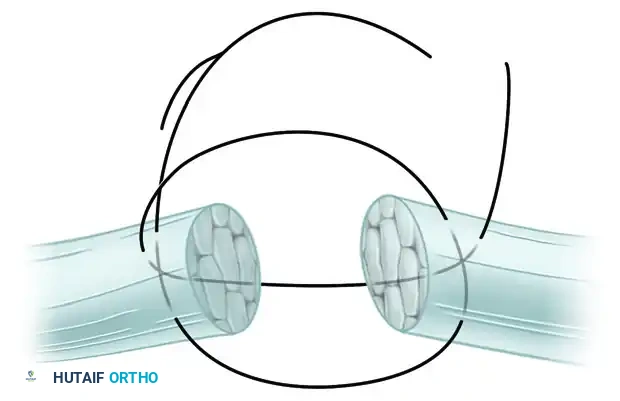
Flexor tendon injuries in the hand are classified by anatomical zones, each with distinct prognostic implications. Historically termed 'no man's land' due to poor surgical outcomes, Zone II encompasses which of the following anatomic boundaries?
Options:
- From the muscle-tendon junction to the proximal edge of the carpal tunnel
- From the proximal edge of the carpal tunnel to the distal palmar crease
- From the A1 pulley (distal palmar crease) to the insertion of the FDS tendon
- From the insertion of the FDS tendon to the insertion of the FDP tendon
- From the distal interphalangeal joint to the fingertip
Correct Answer: From the A1 pulley (distal palmar crease) to the insertion of the FDS tendon
Explanation:
Flexor tendon Zone II begins proximally at the level of the A1 pulley (approximating the distal palmar crease) and ends distally at the insertion of the flexor digitorum superficialis (FDS) on the middle phalanx. It is called 'no man's land' because both the FDS and FDP travel tightly together within the fibro-osseous sheath, making adhesions common after injury and repair.
Question 9:
A 25-year-old male is admitted after a motorcycle accident with a closed highly comminuted tibial shaft fracture. He develops severe leg pain out of proportion to the injury, pain with passive stretch of the toes, and paresthesias. To confirm the diagnosis of acute compartment syndrome using intracompartmental pressure monitoring, which of the following is considered the most reliable threshold for emergent fasciotomy?
Options:
- Absolute compartment pressure > 20 mm Hg
- Absolute compartment pressure > 30 mm Hg
- Delta pressure (Diastolic Blood Pressure - Compartment Pressure) < 30 mm Hg
- Delta pressure (Mean Arterial Pressure - Compartment Pressure) < 40 mm Hg
- Delta pressure (Systolic Blood Pressure - Compartment Pressure) < 30 mm Hg
Correct Answer: Delta pressure (Diastolic Blood Pressure - Compartment Pressure) < 30 mm Hg
Explanation:
McQueen et al. demonstrated that the delta pressure (diastolic blood pressure minus intracompartmental pressure) is the most accurate and reliable indicator for compartment syndrome, avoiding unnecessary fasciotomies that occur when relying solely on absolute pressures. A delta pressure of < 30 mm Hg is an absolute indication for emergent fasciotomy, especially in hypotensive trauma patients.
Question 10:
The healing potential of the anterior cruciate ligament (ACL) is notoriously poor. Which of the following arteries provides the primary blood supply to the native ACL?
Options:
- Medial inferior genicular artery
- Lateral inferior genicular artery
- Middle genicular artery
- Descending genicular artery
- Anterior tibial recurrent artery
Correct Answer: Middle genicular artery
Explanation:
The primary blood supply to the anterior cruciate ligament (ACL) is derived from the middle genicular artery, a branch of the popliteal artery that pierces the posterior capsule to supply the cruciate ligaments. The inferior genicular arteries (medial and lateral) primarily supply the menisci via the perimeniscal capillary plexus.
Question 11:
A 35-year-old patient sustains a vertically oriented femoral neck fracture (Pauwels Type III). From a biomechanical perspective, the use of a sliding hip screw (SHS) with a derotation screw is often favored over three parallel cancellous screws. What is the primary biomechanical advantage of the SHS construct in this specific fracture pattern?
Options:
- Greater resistance to anterior-posterior shear forces
- Greater resistance to vertical shear forces
- Increased rotational stability through the barrel
- Prevention of varus collapse by preserving the lateral femoral wall
- Decreased risk of osteonecrosis of the femoral head
Correct Answer: Greater resistance to vertical shear forces
Explanation:
Pauwels Type III femoral neck fractures have a fracture angle >50 degrees from the horizontal, leading to high vertical shear forces that predispose to varus collapse and nonunion. Biomechanical studies demonstrate that a fixed-angle device, such as a sliding hip screw (SHS), provides superior resistance to these vertical shear forces compared to three parallel cancellous screws.
Question 12:
On an anteroposterior (AP) radiograph of the pelvis in a 6-month-old infant being evaluated for Developmental Dysplasia of the Hip (DDH), Hilgenreiner's line and Perkin's line are drawn to assess the position of the femoral head. In a normal, non-dysplastic hip, the ossific nucleus of the proximal femur should be located in which of the following quadrants?
Options:
- Superomedial quadrant
- Superolateral quadrant
- Inferomedial quadrant
- Inferolateral quadrant
- Centered directly on the intersection of the two lines
Correct Answer: Inferomedial quadrant
Explanation:
Hilgenreiner's line is drawn horizontally through the triradiate cartilages. Perkin's line is drawn perpendicularly downwards from the lateral margin of the acetabulum. In a normal hip, the ossific nucleus of the femoral head (or the medial beak of the metaphysis if unossified) sits in the inferomedial quadrant.
Question 13:
A 15-year-old gymnast complains of chronic low back pain that worsens with hyperextension. Radiographs confirm a grade I L5-S1 spondylolisthesis secondary to bilateral pars interarticularis defects. According to the Wiltse classification of spondylolisthesis, which type does this represent?
Options:
- Type I (Dysplastic)
- Type II (Isthmic)
- Type III (Degenerative)
- Type IV (Traumatic)
- Type V (Pathologic)
Correct Answer: Type II (Isthmic)
Explanation:
The Wiltse classification defines five major types of spondylolisthesis: Type I is Dysplastic (congenital abnormality of the upper sacrum/arch of L5); Type II is Isthmic (defect in the pars interarticularis, typical in young athletes like gymnasts); Type III is Degenerative (due to chronic instability without a pars defect); Type IV is Traumatic (fracture of the neural arch other than the pars); Type V is Pathologic.
Question 14:
When massive cortical bone allografts are used in reconstructive orthopaedic surgery, they incorporate into the host skeleton via a process known as 'creeping substitution'. Which of the following sequences best describes this mechanism at the host-graft interface?
Options:
- Simultaneous bone formation by donor osteoblasts and host osteoblasts
- Osteoblastic new bone formation followed by delayed osteoclastic resorption
- Osteoclastic resorption of the allograft followed by osteoblastic new bone formation
- Formation of a dense avascular fibrous capsule that undergoes cartilaginous ossification
- Direct endochondral ossification mediated by bone morphogenetic proteins in the graft
Correct Answer: Osteoclastic resorption of the allograft followed by osteoblastic new bone formation
Explanation:
Creeping substitution describes the process by which cortical bone allografts and structural autografts are incorporated. It begins with revascularization and osteoclastic resorption of the dead bone of the graft (creating 'cutting cones'), followed by osteoblastic deposition of new living bone on the remaining graft framework. Because resorption precedes formation, cortical grafts temporarily lose mechanical strength before regaining it.
Question 15:
A 52-year-old male underwent a total hip arthroplasty utilizing a ceramic-on-ceramic bearing surface 3 years ago. He presents complaining of a high-pitched 'squeaking' sound coming from his hip during certain movements. There is no pain, and inflammatory markers are normal. What is the most common biomechanical cause of squeaking in ceramic-on-ceramic THA?
Options:
- Component malpositioning leading to cup edge loading
- Subclinical fracture of the ceramic liner
- Third-body wear from retained polymethylmethacrylate cement
- Impingement of the iliopsoas tendon over the anterior rim
- Galvanic corrosion at the head-neck trunnion
Correct Answer: Component malpositioning leading to cup edge loading
Explanation:
Squeaking in ceramic-on-ceramic THA is a well-recognized phenomenon. The most consistent etiology identified in the literature is component malpositioning (particularly abnormal acetabular cup version or steep inclination), which causes loss of fluid film lubrication and 'edge loading' of the ceramic head on the rim of the ceramic liner, generating the high-frequency vibration heard as a squeak.
Question 16:
A hand surgeon performing an open carpal tunnel release under local anesthesia notices that despite a perfect median nerve block at the wrist, the patient retains robust thumb opposition and the thenar muscles continue to contract. The surgeon suspects an anomalous neural innervation pattern. The Martin-Gruber anastomosis is a common anatomical variant that typically involves a crossing of motor fibers from which nerve to which nerve in the forearm?
Options:
- Ulnar nerve to median nerve
- Median nerve to ulnar nerve
- Radial nerve to median nerve
- Median nerve to radial nerve
- Ulnar nerve to radial nerve
Correct Answer: Median nerve to ulnar nerve
Explanation:
The Martin-Gruber anastomosis is a communicating neural branch in the forearm, present in up to 15-20% of the population. It carries motor fibers originating from the median nerve (or anterior interosseous nerve) across to the ulnar nerve. These fibers often go on to innervate the intrinsic muscles of the hand (including thenar muscles in anomalous cases), confusing the clinical picture of nerve blocks or compression neuropathies.
Question 17:
A 28-year-old male presents with a closed spiral fracture of the distal third of the humeral shaft (Holstein-Lewis fracture). On initial examination in the emergency department, his neurological exam is completely normal. However, after closed reduction and application of a coaptation splint, he demonstrates a profound, new-onset inability to actively extend his wrist and fingers. What is the most appropriate next step in management?
Options:
- Reassure the patient and observe the nerve function for 3 months
- Perform an urgent MRI of the humerus to evaluate the nerve
- Surgical exploration of the radial nerve and internal fixation of the fracture
- Order baseline electromyography (EMG) to establish the level of injury
- Adjust the splint to relieve pressure and re-examine in 24 hours
Correct Answer: Surgical exploration of the radial nerve and internal fixation of the fracture
Explanation:
A primary radial nerve palsy present at the time of injury with a closed humeral shaft fracture is generally managed with observation. However, a secondary radial nerve palsy that develops *after* closed reduction maneuvers is a classic, absolute indication for surgical exploration of the nerve. The nerve may be entrapped between the fracture fragments or lacerated, requiring immediate release and stable fracture fixation.
Question 18:
In evaluating a 16-year-old male with a newly diagnosed conventional high-grade osteosarcoma of the distal femur, appropriate staging studies are obtained. Among standard laboratory values, which of the following is considered an independent poor prognostic indicator for overall survival?
Options:
- Elevated serum calcium
- Elevated serum alkaline phosphatase (ALP)
- Decreased serum phosphorus
- Elevated C-reactive protein (CRP)
- Elevated serum uric acid
Correct Answer: Elevated serum alkaline phosphatase (ALP)
Explanation:
In the staging and risk stratification of osteosarcoma, elevated levels of serum alkaline phosphatase (ALP) and lactate dehydrogenase (LDH) at the time of diagnosis have been consistently shown in large cooperative group studies (like the European Osteosarcoma Intergroup) to be independent adverse prognostic factors, correlating with a higher risk of metastasis and poorer overall survival.
Question 19:
A 7-year-old boy is diagnosed with Legg-Calvé-Perthes disease. During the fragmentation stage, an AP pelvis radiograph demonstrates that the lateral pillar of the affected femoral head maintains 40% of its original height. According to the Herring Lateral Pillar classification, which group does this hip fall into?
Options:
- Group A
- Group B
- Group C
- Group B/C border
- Group D
Correct Answer: Group C
Explanation:
The Herring Lateral Pillar classification assesses the height of the lateral pillar of the femoral head on an AP radiograph during the fragmentation stage. Group A has no loss of height. Group B maintains > 50% of lateral pillar height. Group C maintains < 50% of the lateral pillar height. A height of 40% clearly places the hip in Group C, which is associated with a poor prognosis regardless of treatment, especially in older children (> 8 years).
Question 20:
In the evolution of bearing surfaces for total hip arthroplasty, highly cross-linked ultra-high-molecular-weight polyethylene (UHMWPE) was introduced to improve long-term survivorship. The process of irradiating the polyethylene to induce cross-linking primarily improves which of the following material properties?
Options:
- Tensile strength
- Fatigue strength
- Resistance to adhesive and abrasive wear
- Resistance to in vivo oxidation
- Yield strength
Correct Answer: Resistance to adhesive and abrasive wear
Explanation:
The primary purpose of irradiating UHMWPE is to break polymer chains and form cross-links, which vastly improves its resistance to adhesive and abrasive wear (thereby reducing osteolysis). However, this cross-linking comes at a mechanical cost: it actually decreases the material's tensile strength, yield strength, and fatigue resistance. To combat oxidation from free radicals generated during irradiation, the polyethylene is subsequently remelted, annealed, or doped with an antioxidant like Vitamin E.